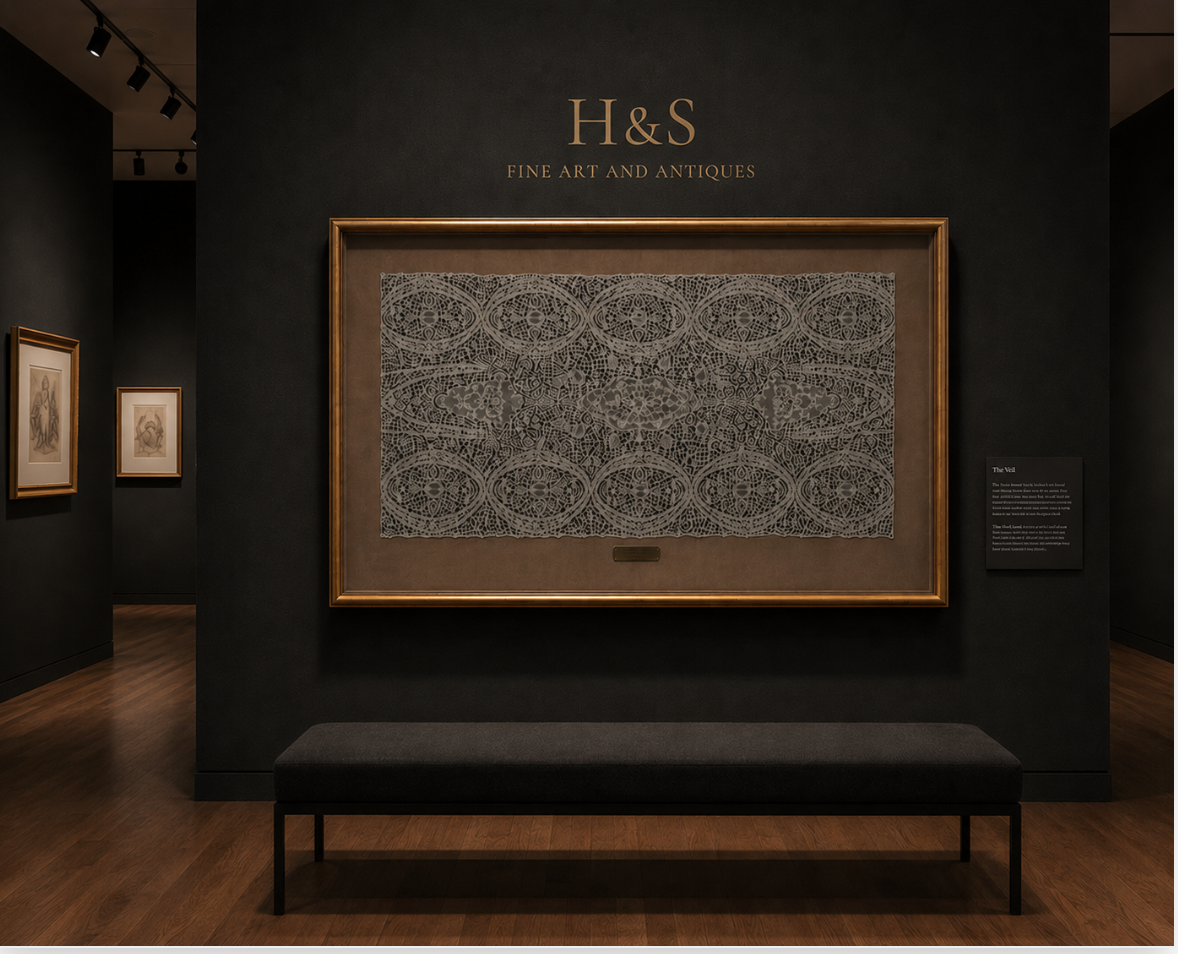
 Image 1 of 8
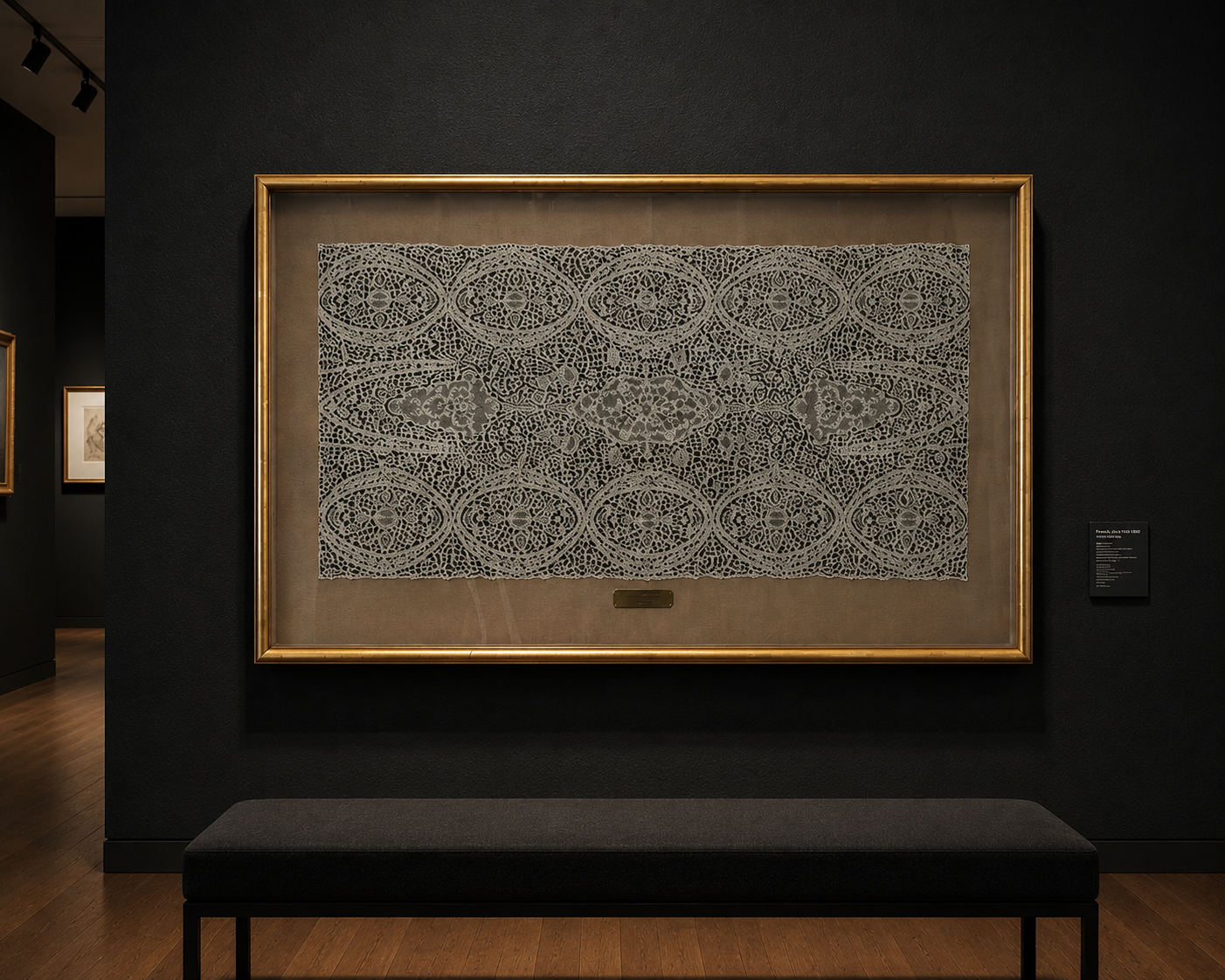 Image 2 of 8
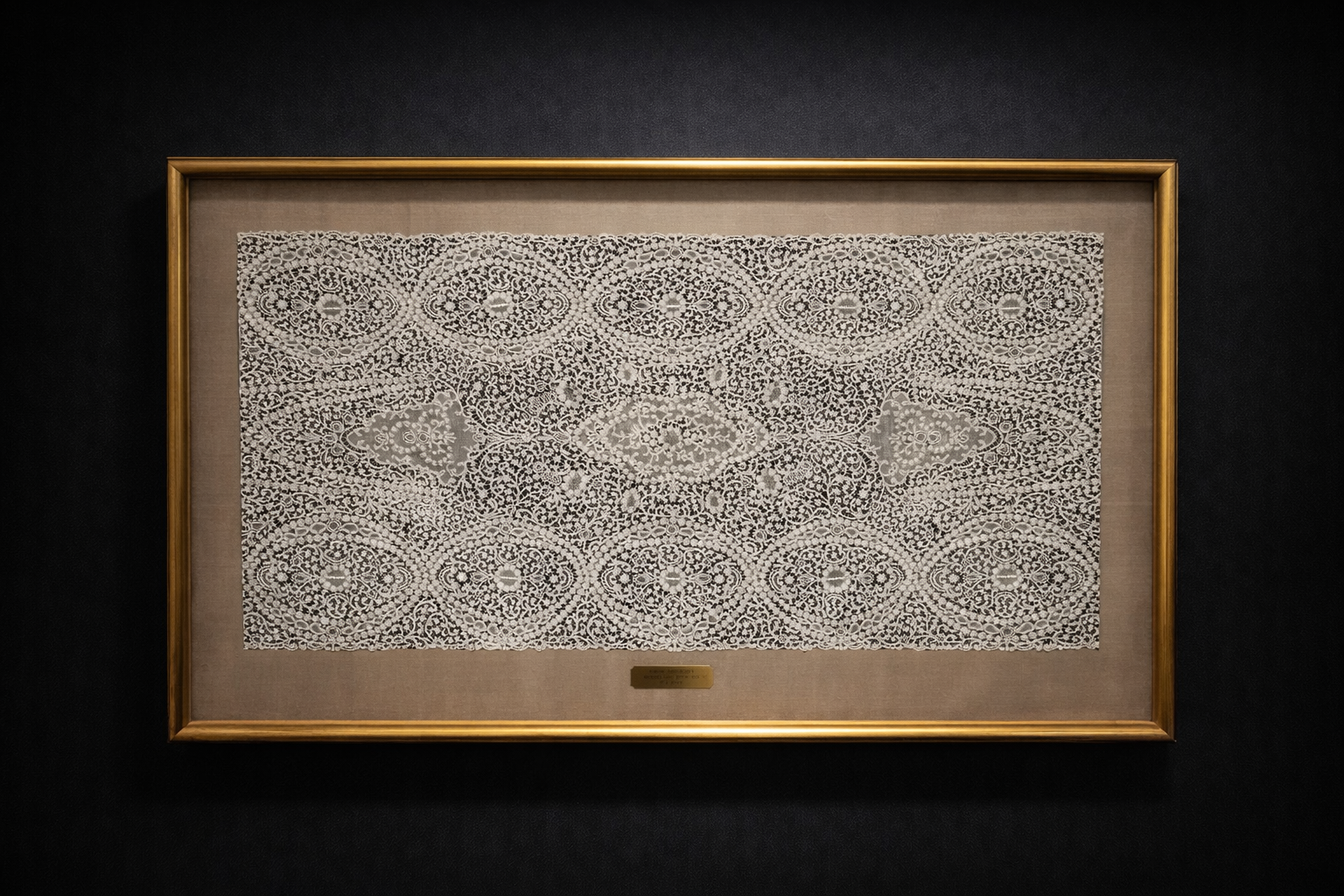 Image 3 of 8
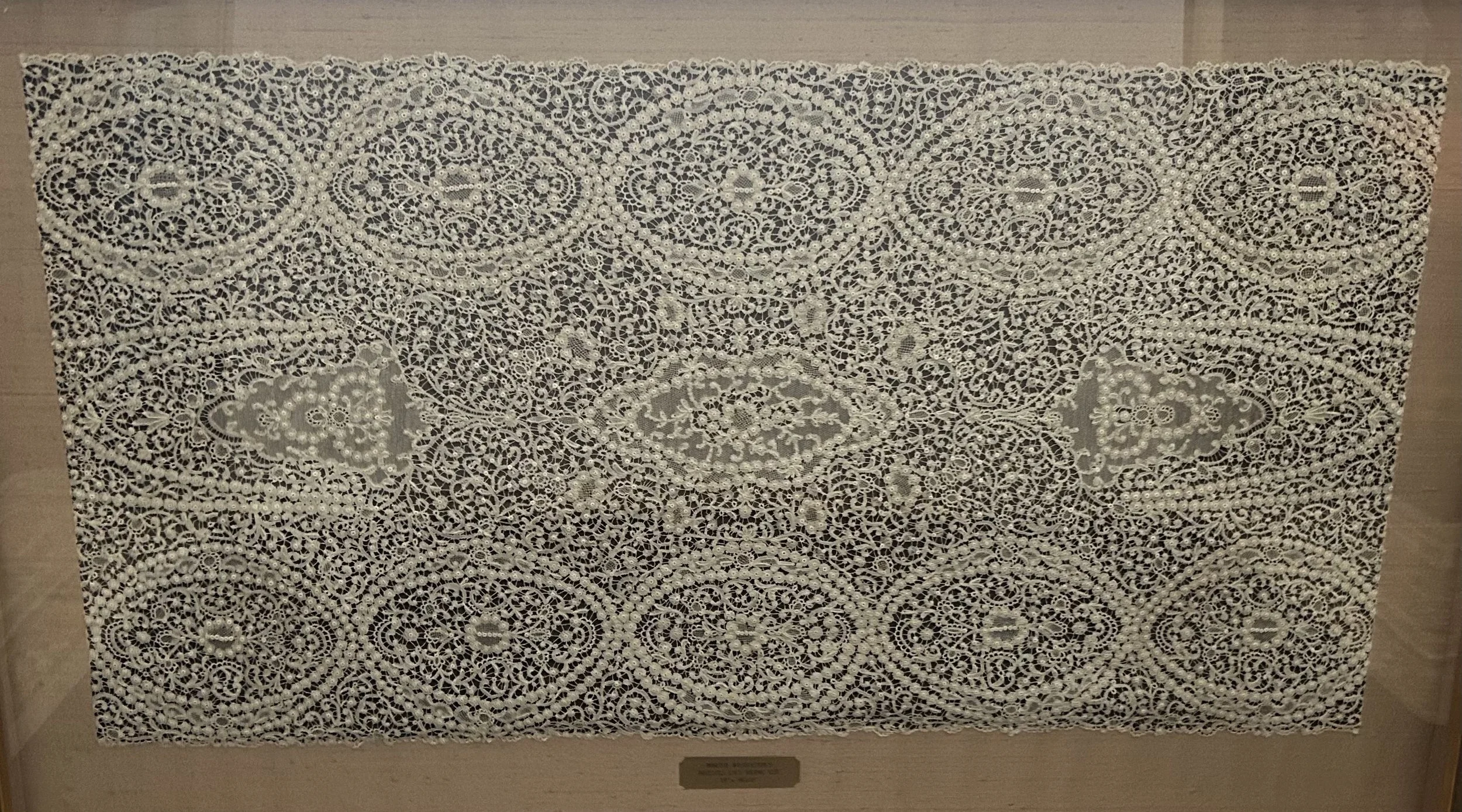 Image 4 of 8
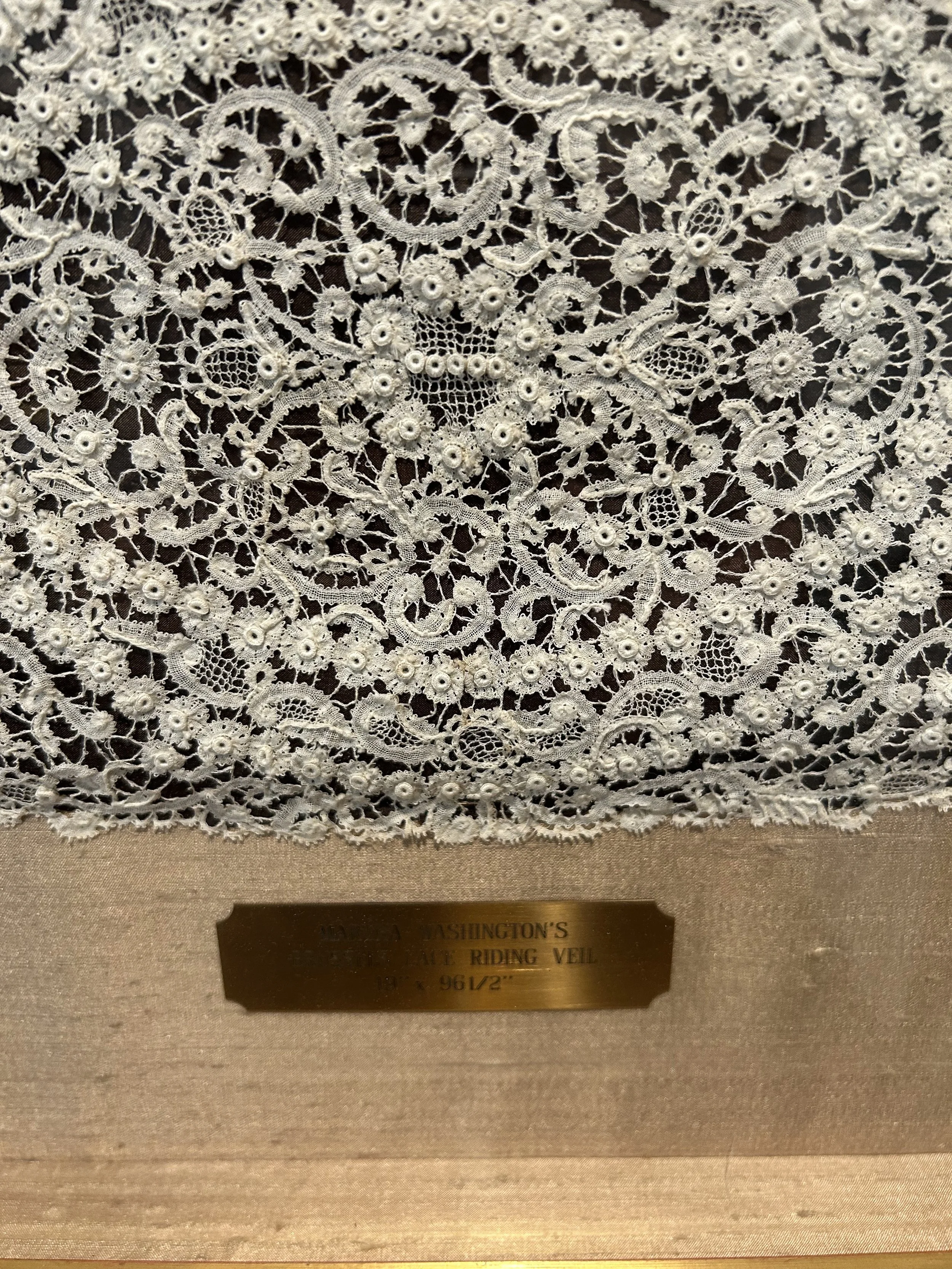 Image 5 of 8
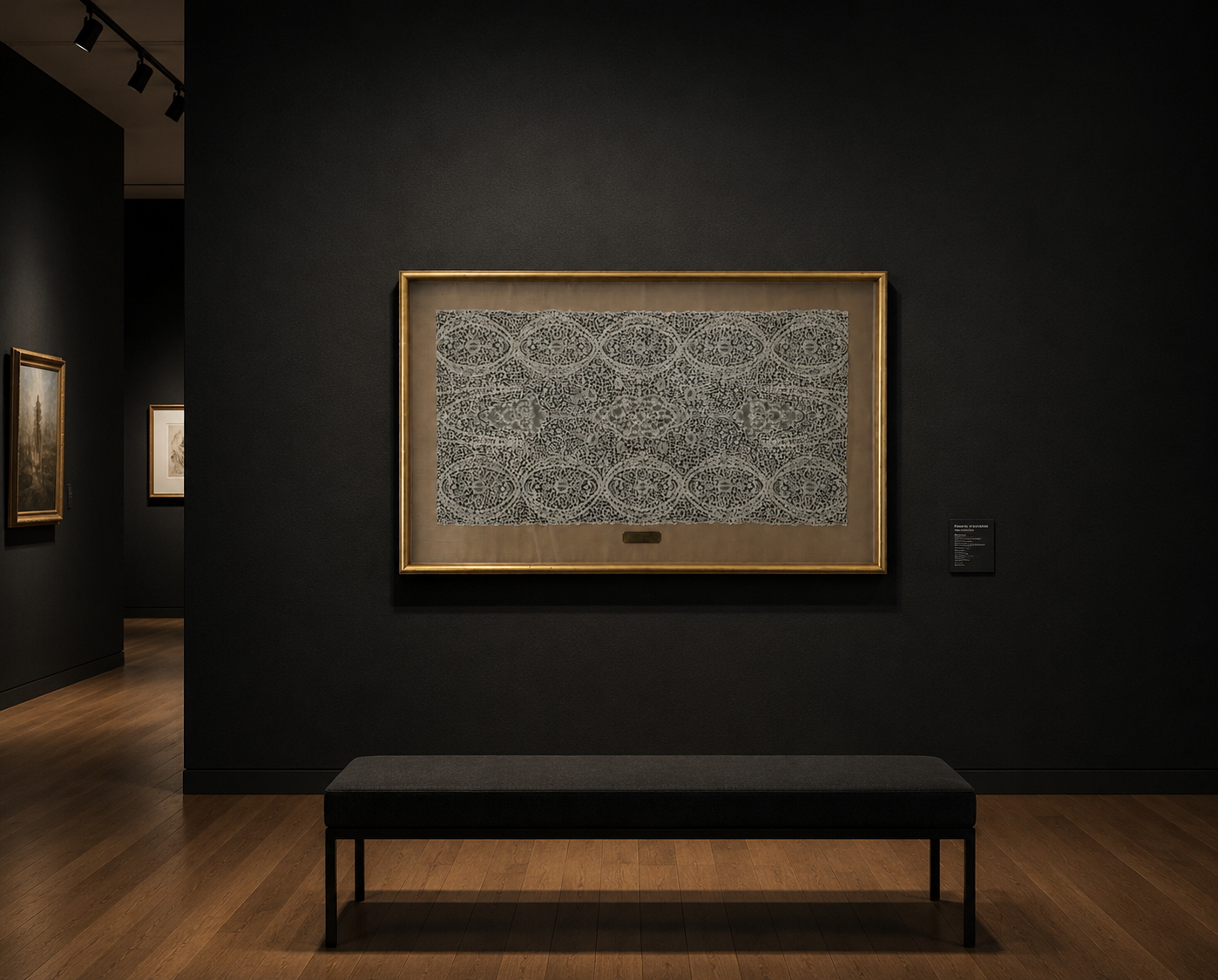 Image 6 of 8
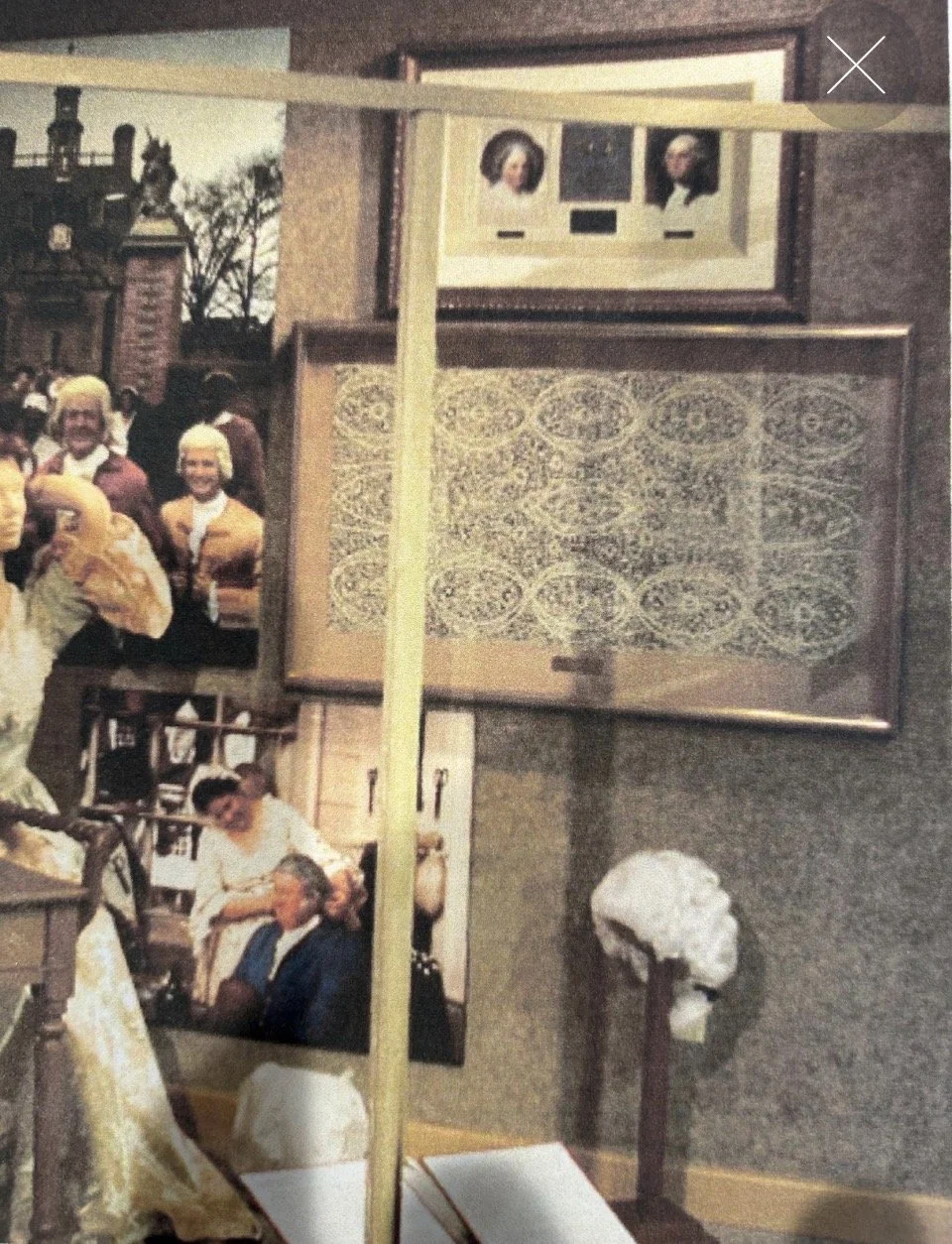 Image 7 of 8
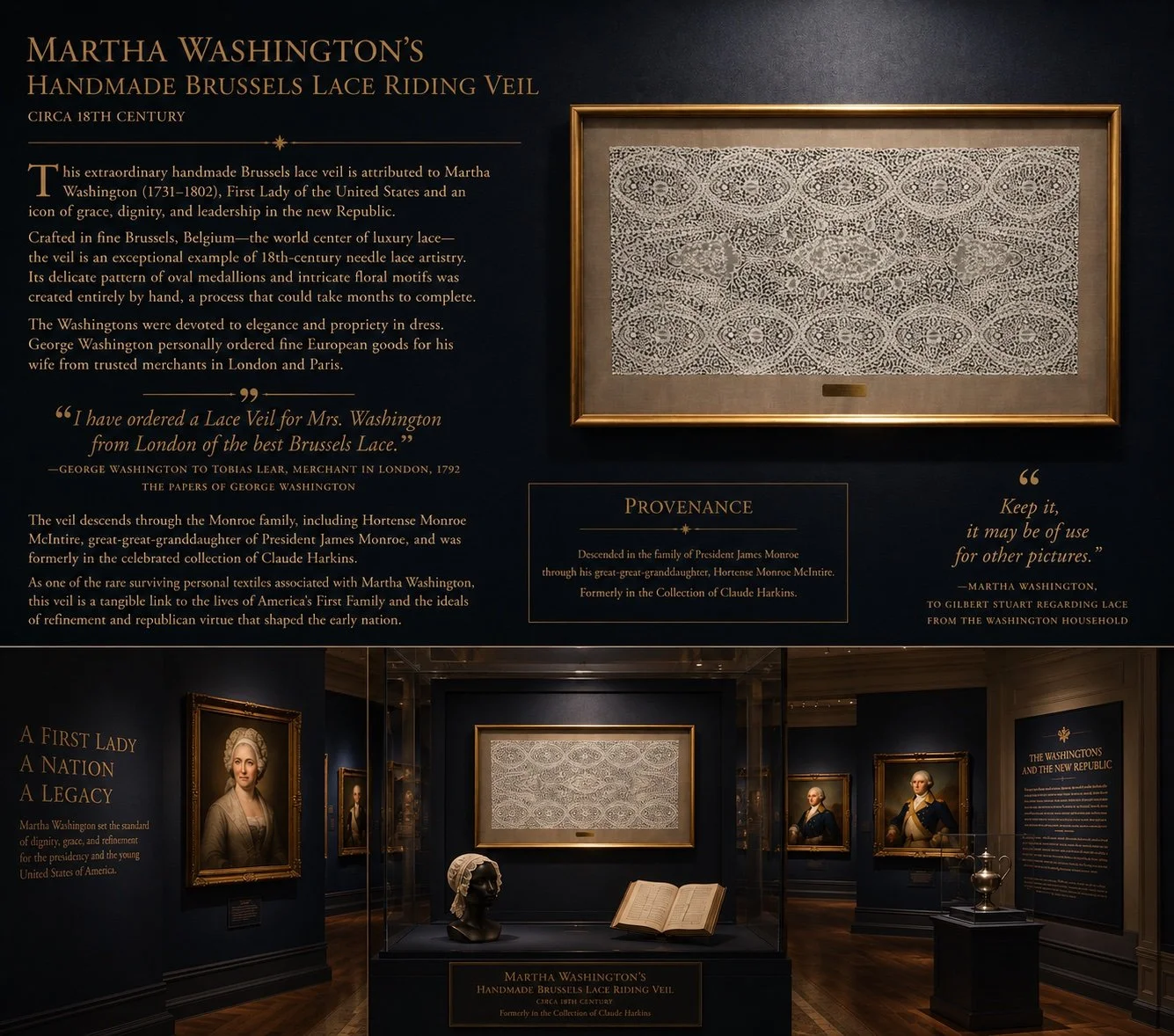 Image 8 of 8
This veil was first sold in February 1917 at Stan V. Henkels in Philadelphia, Catalogue No. 1186, lot 5. The sale was called “The Great Historical Sale”, and included” Relics of George and Martha Washington and of James Monroe belonging to Mrs. Hortense Monroe McIntire including lady Washington’s and Mrs Monroe’s Laces and Dresses”. This veil was sold again at Christie’s on 17 November 1941, lot 276, and then at Alderfer’s in Philadelphia on September 28, 2001, lot 870. In the 1941 Christie’s sale, the two lots before this veil (lot 276)were the veil that Martha wore in the famous Gilbert Stuart painting that hangs in the White House alongside the Lansdowne portrait of Washington (lot 274) and Martha’s wedding veil (lot 275).The above veil is believed the same Veil that Martha wore while riding her carriage. Mrs Hortense Monroe was the great-great-granddaughter of James Monroe, whose mother was the youngest daughter of Lloyd N. Rogers and Miss Hortensia Hay, a granddaughter of president Monroe. When James Monroe was minister of France, his daughter went to school in Paris and while studying under the famous Mme Campan, formed a friendship with Hortense Beauharnais, daughter of Empress Josephine by her first husband. The friendship kept up and Monroe’s daughter, who had married Judge Hay, named her daughter Hortensia after Hortense who was Queen of Holland at the time and who became godmother to Hortensia’s granddaughter, Hortense Monroe McIntire received this Veil and other Washington relics from her grandmother. A branch of the Rogers family (mentioned above) married unto the Washington family. Exhibited at the Colonial Society (Revolutionary America !763-1783) April 20- November 3, 2002. Provenance: Claude Harkins Collection. Please see youtube of the veil in Mr Harkins Collection.https://www.youtube.com/watch?v=1XOWwqZ4uww Please check February 1917 at Stan V. Henkels catalogue lot 5 for the veil. https://share.google/KtDUJFQTNbI5OOhxD
In September 1759, shortly after marrying George Washington, invoices show he ordered expensive luxury textiles directly from Robert Cary & Company in London. This included fine “Brussels Lace” items for Martha to wear as the wife of a wealthy colonial planter. She wore this long, rectangular panel to shield her face from dust and weather while riding her carriage around Mount Vernon and traveling to military encampments like Valley Forge. This veil boasts a lineage tracing directly through three families of two United States Presidents and one of Europe’s most famouse Royal Dynasties. In his surviving letterbooks and invoice ledgers from the late 1750s through the mid-1770s, George Washington regularly dispatched detailed orders to Robert Cary & Company in London. He routinely petitioned his merchants to select “the finest” and “most fashionable” goods suitable for wealthy Virginia planter’s family, explicitly requesting luxury textiles for Martha Washington, and her daughter, Martha “Pasty” Custis. As a riding veil, this object served a dual purpose. practically, it shielded the First Lady’s face from dirt, dust, and wind while traveling by carriage across the rough roads of Mount Vernon and capital cities. Culturally, it stood as a supreme marker of elite status. In the Auction, Christie’s presented the veil alongside George Washington’s original primary source documents. The lot description linked the lace directly to an invoice dated September 1759. Christie’s cited the exact archival entry from George Washington’s papers: “1 Cap, handf. [handkerchief], tucker and Ruffles, to be made of Brussels Lace, or point…to cost 20 pounds.” this documentation successfully grounded the veil’s origin within the early days of Mount Vernon estate. It was tied directly to the revolutionary War, with the catalog noting its likely use during her winters accompanying General Washington at his active Continental Army encampments, most notably Valley Forge.
To guarantee the lifelong preservation of these delicate, multi-century organic fibers, the veil is stabilized flat against a custom-toned inert, acid-free fabric susbstrate to eliminate physical tension. The artifact is displayed within a climate-sealed archival frame fitted with museum-grade, UV-blocking optical glass to completely prevent photo-degradation.