Carved Longquan Celadon Stem Cup
Yuan Dynasty (1279–1368)
Longquan kilns, Zhejiang Province, China
Celadon stoneware with carved decoration
Diameter: 4½ in. (11.4 cm)
Provenance: Dr. Hiroshi Collection; Christie’s, Sale 22642, Lot 935, 21 March 2024. Comparative example: J.J. Lally & Co., Sale 20461, Lot 892, 23 March 2023.
An Elegantly Carved Vessel of Yuan Court Taste
This refined Longquan celadon stem cup embodies the technical brilliance and aesthetic sophistication achieved by the potters of Longquan during the Yuan dynasty (1279–1368). The cup combines a gracefully rounded bowl, carved with stylized petal lappets, and an unusually elegant bamboo-form stem, divided into three sections by horizontal ribs that imitate the nodes of a bamboo stalk.
The vessel's luminous celadon glaze, varying subtly between pale sea-green and jade-green tones, is characteristic of the finest Longquan wares produced during the late thirteenth and fourteenth centuries. The glaze pools gently within the carved decoration, accentuating the floral motifs and creating a soft play of light and shadow that recalls the translucency of polished nephrite jade.
Although modest in scale, the stem cup represents one of the most intellectually and aesthetically sophisticated ceramic forms of medieval China.
Historical Context: The Yuan Dynasty
The Yuan dynasty was founded by Kublai Khan (1215–1294), grandson of Genghis Khan and founder of the Mongol Empire's Chinese branch. In 1271, Kublai proclaimed the Yuan dynasty and completed the conquest of Southern Song China in 1279.
Under Mongol rule, China became the center of an immense Eurasian empire stretching from Korea to Eastern Europe. The unprecedented stability of the empire facilitated:
Expansion of maritime trade
Increased cultural exchanges between East and West
Flourishing luxury industries
Development of large-scale ceramic production
The Longquan kilns greatly benefited from these conditions. Their celadons became some of China's most desired export wares, reaching:
Japan
Southeast Asia
India
Persia
The Islamic world
East Africa
Archaeological excavations have uncovered Longquan celadons in shipwrecks and trading ports across the Indian Ocean, demonstrating their extraordinary international popularity.
The Longquan Kilns
The Longquan kilns of southern Zhejiang Province were among the largest and most technologically advanced ceramic production centers in the world.
Operating continuously from the Northern Song through the Ming dynasties, these kilns specialized in producing stonewares covered in thick feldspathic glazes known today as Longquan celadons.
The finest examples possess:
To Chinese collectors, these ceramics were admired because they evoked the appearance of ancient jade, the material most associated with virtue, nobility, and antiquity.
The Symbolism of Bamboo
One of the most remarkable aspects of this cup is its bamboo-form stem.
The stem is carefully divided by horizontal ridges that imitate the segmented growth of bamboo. The motif was far more than decorative.
As noted by Jessica Harrison-Hall in Ming Ceramics in the British Museum (London, 2001):
"Bamboo is assigned Confucian qualities which are much admired in a man—it does not break under pressure and is constant, never losing its colour even in adverse conditions."
In Confucian philosophy, bamboo symbolizes:
These virtues were particularly meaningful during the Yuan period, when many Chinese scholars and officials struggled to maintain cultural identity under foreign Mongol rule. The bamboo motif may therefore have carried subtle moral and intellectual associations.
The Carved Lotus Petals
Unlike many surviving Longquan stem cups, whose bowls are plain, the present example is embellished with carved petal lappets.
The lotus occupied a central place in Chinese visual culture.
Its symbolism includes:
Purity
Spiritual enlightenment
Rebirth
Harmony
Transcendence
Because the lotus rises unsullied from muddy water, it became an enduring metaphor for virtue and moral perfection.
The combination of:
Bamboo (moral integrity)
and
Lotus (purity and spiritual transcendence)
creates a vessel that is simultaneously decorative, philosophical, and symbolic.
Function and Use
Stem cups were used in several contexts:
Ceremonial Drinking
Small stem cups served wine during formal gatherings and banquets.
Religious Use
The elevated form made them suitable for ritual offerings and temple ceremonies.
Scholar's Objects
Their elegant proportions and symbolic decoration also appealed to literati collectors.
During the Yuan dynasty, such vessels often crossed boundaries between courtly, religious, and scholarly use.
Imperial and International Taste
The Yuan court favored ceramics possessing:
Longquan celadons became especially prized among both Chinese and foreign elites. Persian rulers and merchants collected Longquan wares in considerable numbers, and examples survive today in important Middle Eastern collections.
The form of this stem cup also anticipates stem cups produced during the early Ming period, demonstrating continuity between Yuan and Ming ceramic traditions.
Provenance
Dr. Hiroshi Collection
Private Japanese collections have played a vital role in preserving Chinese ceramics. Japanese appreciation for Longquan celadon dates back many centuries, when these wares were imported and treasured in Buddhist temples and tea ceremonies.
Christie's
Sale 22642
Lot 935
21 March 2024
Comparative Example
J.J. Lally & Co.
Sale 20461
Lot 892
23 March 2023
The cup's distinguished provenance places it within an important tradition of scholarly collecting and connoisseurship.
Comparable Examples in Museum Collections
Comparable Longquan celadon stem cups are preserved in major international institutions, including:
Examples from these museums demonstrate the enduring appeal of the form and establish the present cup within one of the most important traditions of Chinese ceramic production.
Literature and References
Jessica Harrison-Hall, Ming Ceramics in the British Museum, London, 2001, pp. 463–464, nos. 16:2–16:5.
The Charles B. Hoyt Collection Memorial Exhibition, Museum of Fine Arts, Boston, 1952, p. 57, no. 227.
Catalogue of Tokyo National Museum: Chinese Ceramics II, Tokyo, 1990, p. 7, no. 19.
John Ayers, The Seligman Collection of Oriental Art, Vol. II, London, 1964, pl. LXI, no. D187, pp. 90–91.
R. Harrison-Hall, Catalogue of the Late Yuan and Ming Ceramics in the British Museum, London, 2001.
Carved Longquan Celadon Stem Cup
Yuan Dynasty (1279–1368)
Longquan kilns, Zhejiang Province, China
Celadon stoneware with carved decoration
Diameter: 4½ in. (11.4 cm)
Provenance: Dr. Hiroshi Collection; Christie’s, Sale 22642, Lot 935, 21 March 2024. Comparative example: J.J. Lally & Co., Sale 20461, Lot 892, 23 March 2023.
An Elegantly Carved Vessel of Yuan Court Taste
This refined Longquan celadon stem cup embodies the technical brilliance and aesthetic sophistication achieved by the potters of Longquan during the Yuan dynasty (1279–1368). The cup combines a gracefully rounded bowl, carved with stylized petal lappets, and an unusually elegant bamboo-form stem, divided into three sections by horizontal ribs that imitate the nodes of a bamboo stalk.
The vessel's luminous celadon glaze, varying subtly between pale sea-green and jade-green tones, is characteristic of the finest Longquan wares produced during the late thirteenth and fourteenth centuries. The glaze pools gently within the carved decoration, accentuating the floral motifs and creating a soft play of light and shadow that recalls the translucency of polished nephrite jade.
Although modest in scale, the stem cup represents one of the most intellectually and aesthetically sophisticated ceramic forms of medieval China.
Historical Context: The Yuan Dynasty
The Yuan dynasty was founded by Kublai Khan (1215–1294), grandson of Genghis Khan and founder of the Mongol Empire's Chinese branch. In 1271, Kublai proclaimed the Yuan dynasty and completed the conquest of Southern Song China in 1279.
Under Mongol rule, China became the center of an immense Eurasian empire stretching from Korea to Eastern Europe. The unprecedented stability of the empire facilitated:
Expansion of maritime trade
Increased cultural exchanges between East and West
Flourishing luxury industries
Development of large-scale ceramic production
The Longquan kilns greatly benefited from these conditions. Their celadons became some of China's most desired export wares, reaching:
Japan
Southeast Asia
India
Persia
The Islamic world
East Africa
Archaeological excavations have uncovered Longquan celadons in shipwrecks and trading ports across the Indian Ocean, demonstrating their extraordinary international popularity.
The Longquan Kilns
The Longquan kilns of southern Zhejiang Province were among the largest and most technologically advanced ceramic production centers in the world.
Operating continuously from the Northern Song through the Ming dynasties, these kilns specialized in producing stonewares covered in thick feldspathic glazes known today as Longquan celadons.
The finest examples possess:
To Chinese collectors, these ceramics were admired because they evoked the appearance of ancient jade, the material most associated with virtue, nobility, and antiquity.
The Symbolism of Bamboo
One of the most remarkable aspects of this cup is its bamboo-form stem.
The stem is carefully divided by horizontal ridges that imitate the segmented growth of bamboo. The motif was far more than decorative.
As noted by Jessica Harrison-Hall in Ming Ceramics in the British Museum (London, 2001):
"Bamboo is assigned Confucian qualities which are much admired in a man—it does not break under pressure and is constant, never losing its colour even in adverse conditions."
In Confucian philosophy, bamboo symbolizes:
These virtues were particularly meaningful during the Yuan period, when many Chinese scholars and officials struggled to maintain cultural identity under foreign Mongol rule. The bamboo motif may therefore have carried subtle moral and intellectual associations.
The Carved Lotus Petals
Unlike many surviving Longquan stem cups, whose bowls are plain, the present example is embellished with carved petal lappets.
The lotus occupied a central place in Chinese visual culture.
Its symbolism includes:
Purity
Spiritual enlightenment
Rebirth
Harmony
Transcendence
Because the lotus rises unsullied from muddy water, it became an enduring metaphor for virtue and moral perfection.
The combination of:
Bamboo (moral integrity)
and
Lotus (purity and spiritual transcendence)
creates a vessel that is simultaneously decorative, philosophical, and symbolic.
Function and Use
Stem cups were used in several contexts:
Ceremonial Drinking
Small stem cups served wine during formal gatherings and banquets.
Religious Use
The elevated form made them suitable for ritual offerings and temple ceremonies.
Scholar's Objects
Their elegant proportions and symbolic decoration also appealed to literati collectors.
During the Yuan dynasty, such vessels often crossed boundaries between courtly, religious, and scholarly use.
Imperial and International Taste
The Yuan court favored ceramics possessing:
Longquan celadons became especially prized among both Chinese and foreign elites. Persian rulers and merchants collected Longquan wares in considerable numbers, and examples survive today in important Middle Eastern collections.
The form of this stem cup also anticipates stem cups produced during the early Ming period, demonstrating continuity between Yuan and Ming ceramic traditions.
Provenance
Dr. Hiroshi Collection
Private Japanese collections have played a vital role in preserving Chinese ceramics. Japanese appreciation for Longquan celadon dates back many centuries, when these wares were imported and treasured in Buddhist temples and tea ceremonies.
Christie's
Sale 22642
Lot 935
21 March 2024
Comparative Example
J.J. Lally & Co.
Sale 20461
Lot 892
23 March 2023
The cup's distinguished provenance places it within an important tradition of scholarly collecting and connoisseurship.
Comparable Examples in Museum Collections
Comparable Longquan celadon stem cups are preserved in major international institutions, including:
Examples from these museums demonstrate the enduring appeal of the form and establish the present cup within one of the most important traditions of Chinese ceramic production.
Literature and References
Jessica Harrison-Hall, Ming Ceramics in the British Museum, London, 2001, pp. 463–464, nos. 16:2–16:5.
The Charles B. Hoyt Collection Memorial Exhibition, Museum of Fine Arts, Boston, 1952, p. 57, no. 227.
Catalogue of Tokyo National Museum: Chinese Ceramics II, Tokyo, 1990, p. 7, no. 19.
John Ayers, The Seligman Collection of Oriental Art, Vol. II, London, 1964, pl. LXI, no. D187, pp. 90–91.
R. Harrison-Hall, Catalogue of the Late Yuan and Ming Ceramics in the British Museum, London, 2001.
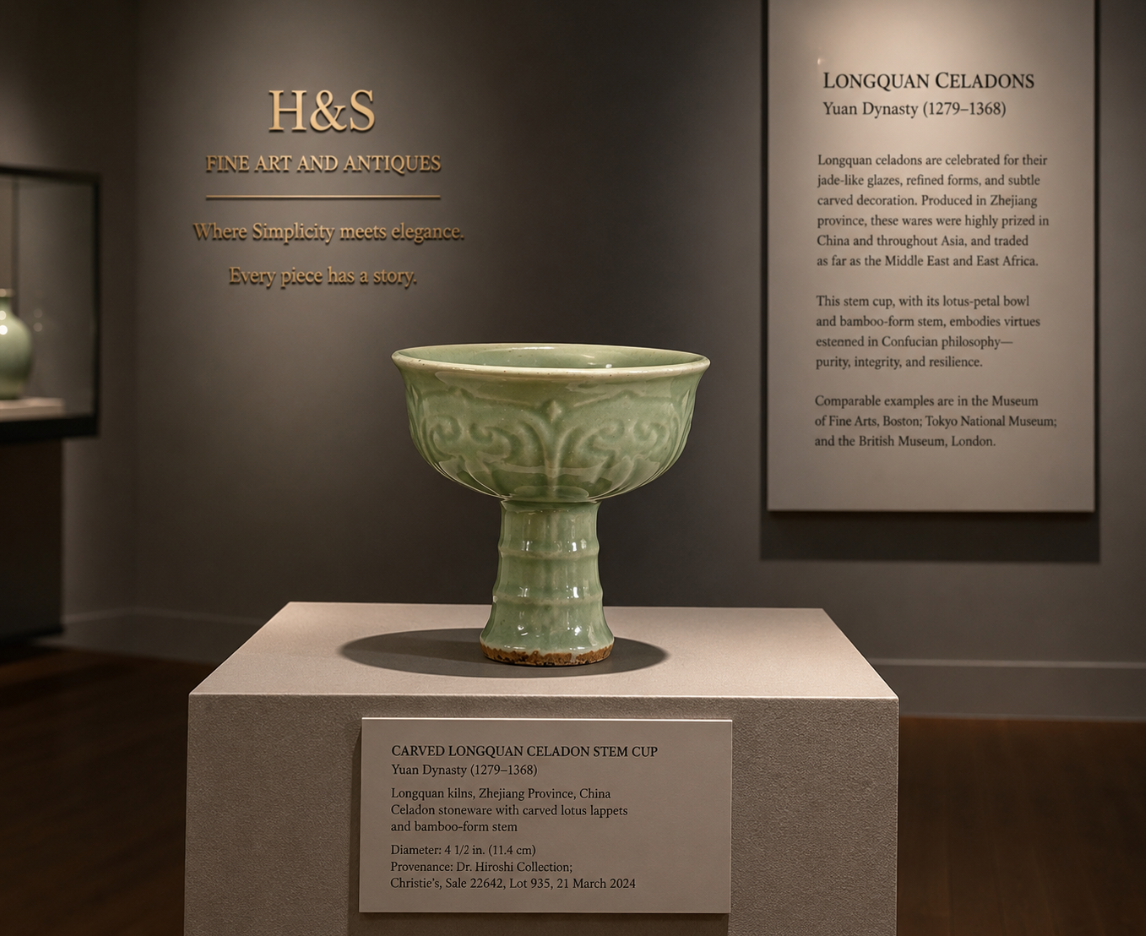 Image 1 of 4
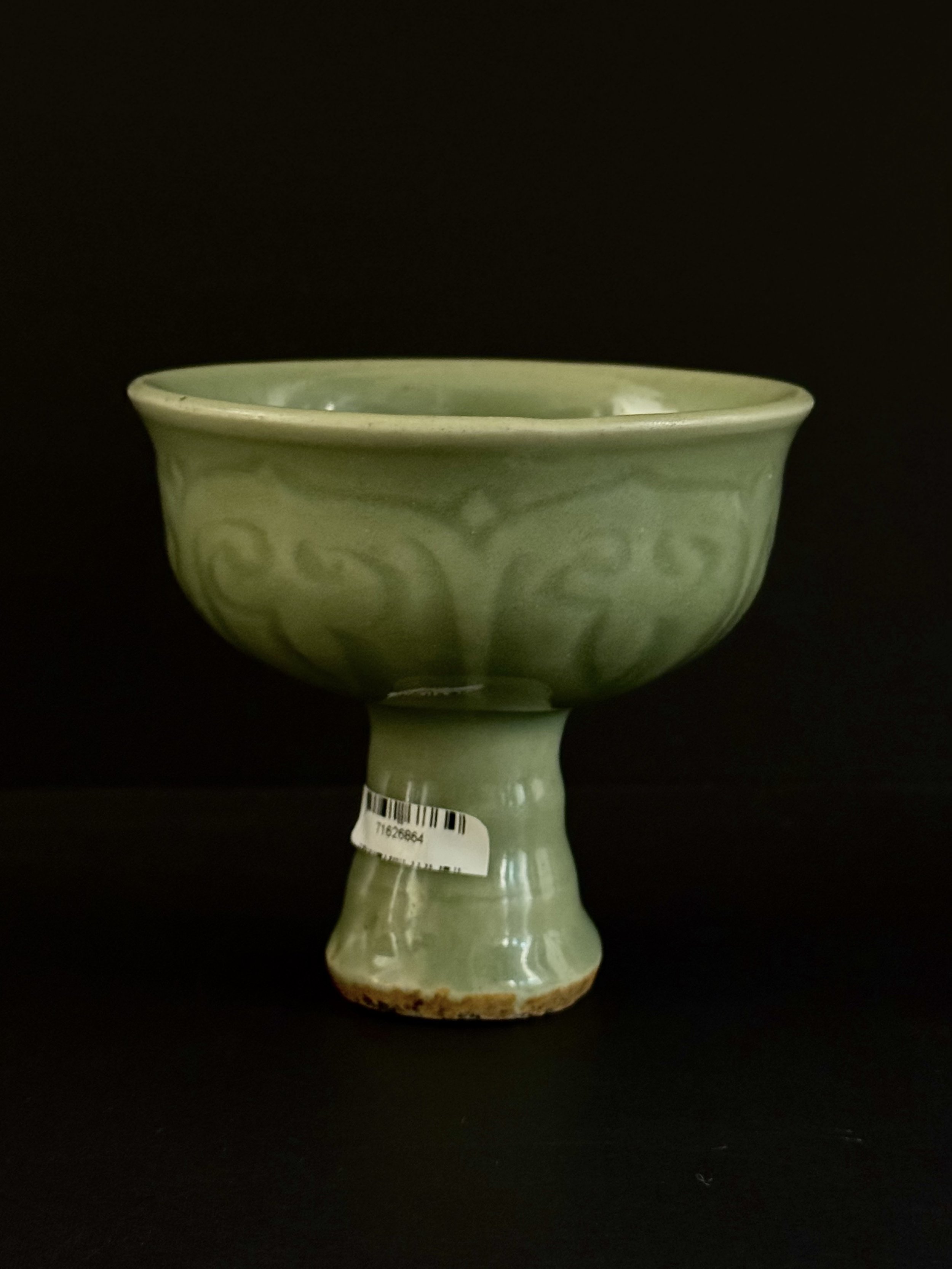 Image 2 of 4
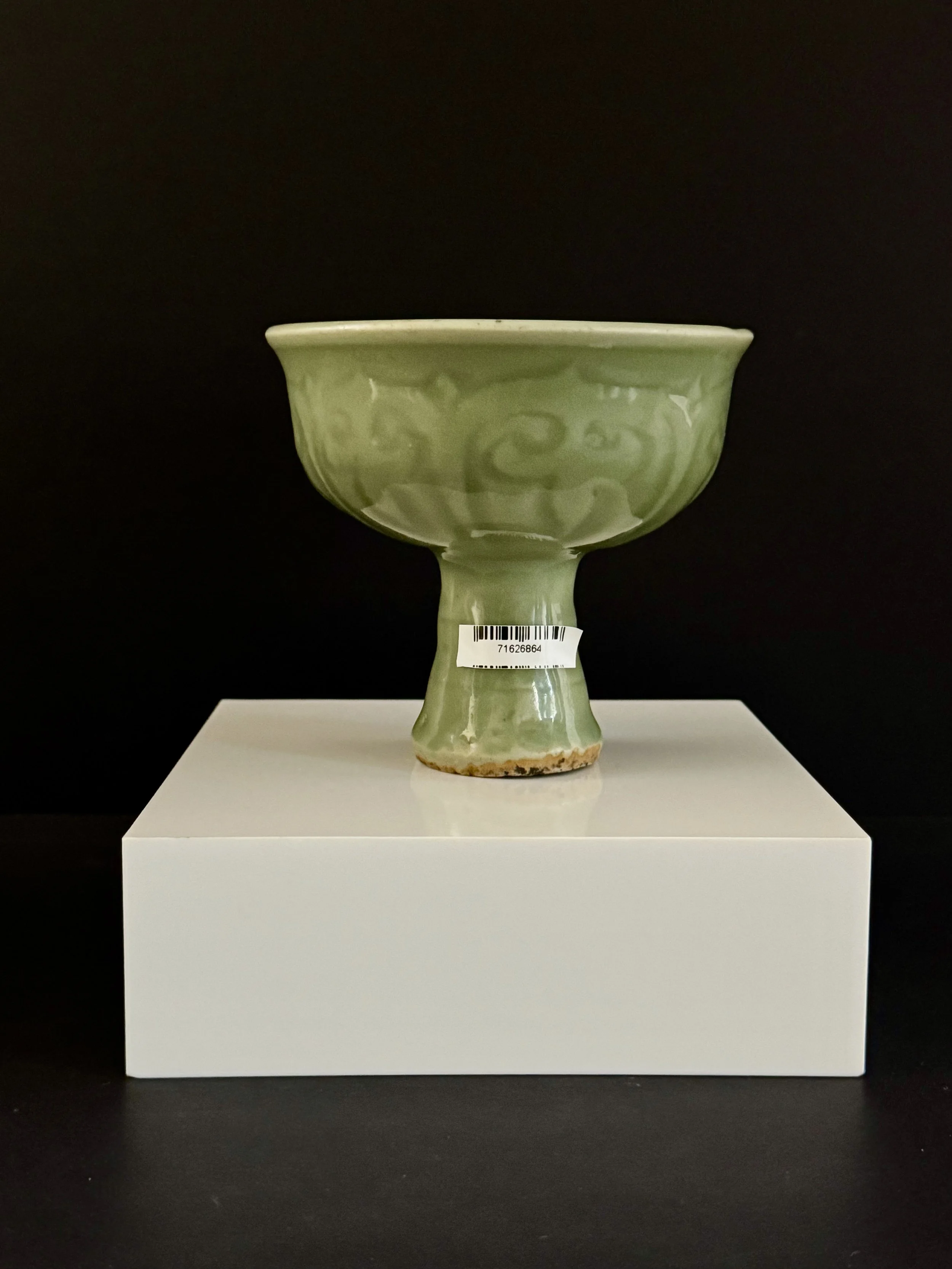 Image 3 of 4
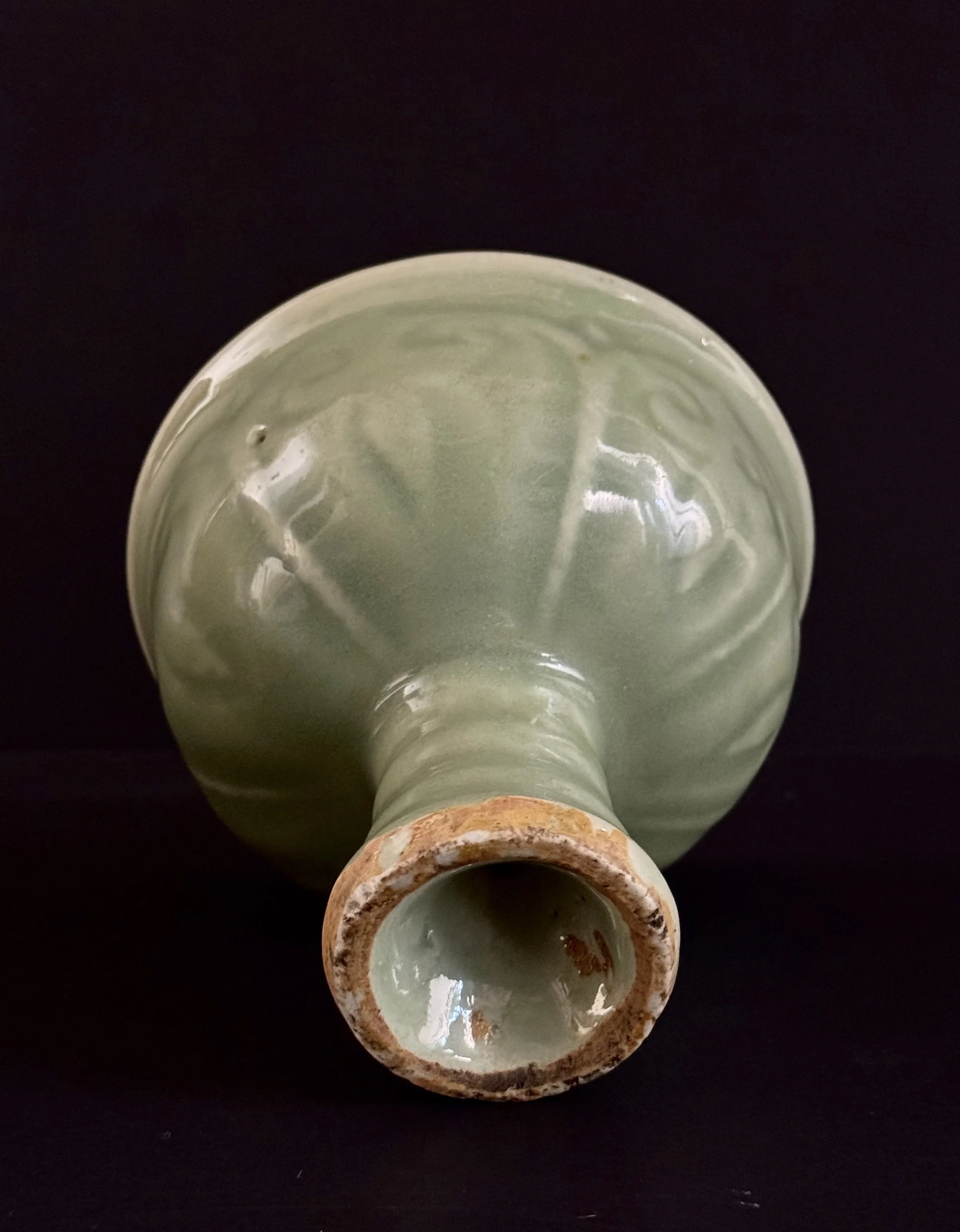 Image 4 of 4