 Image 1 of 5
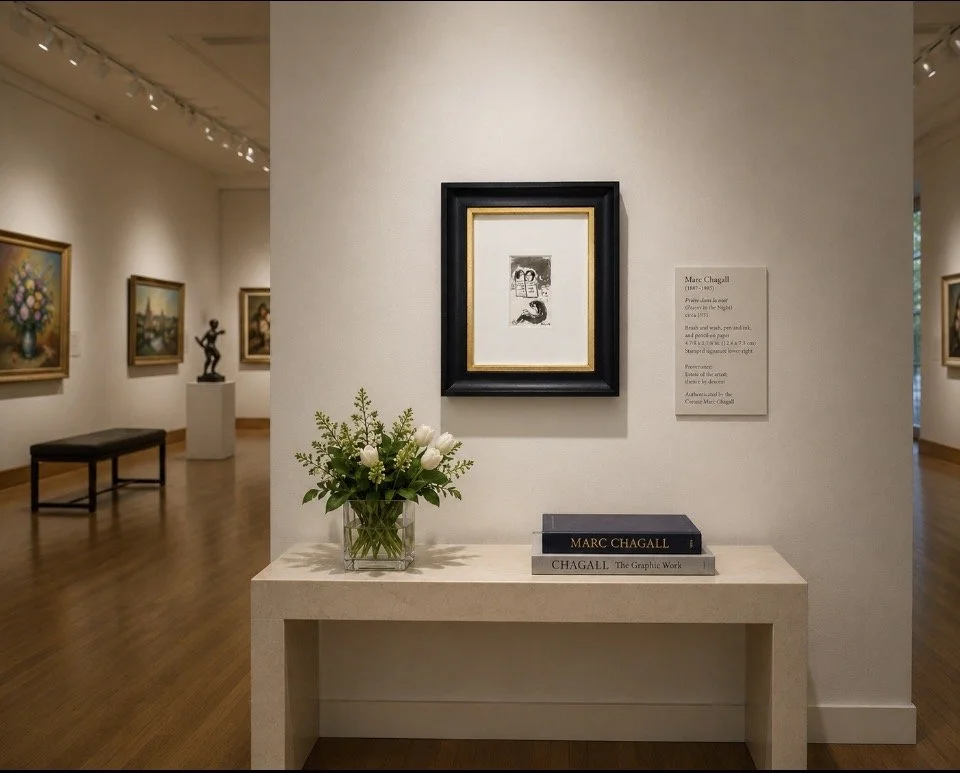 Image 2 of 5
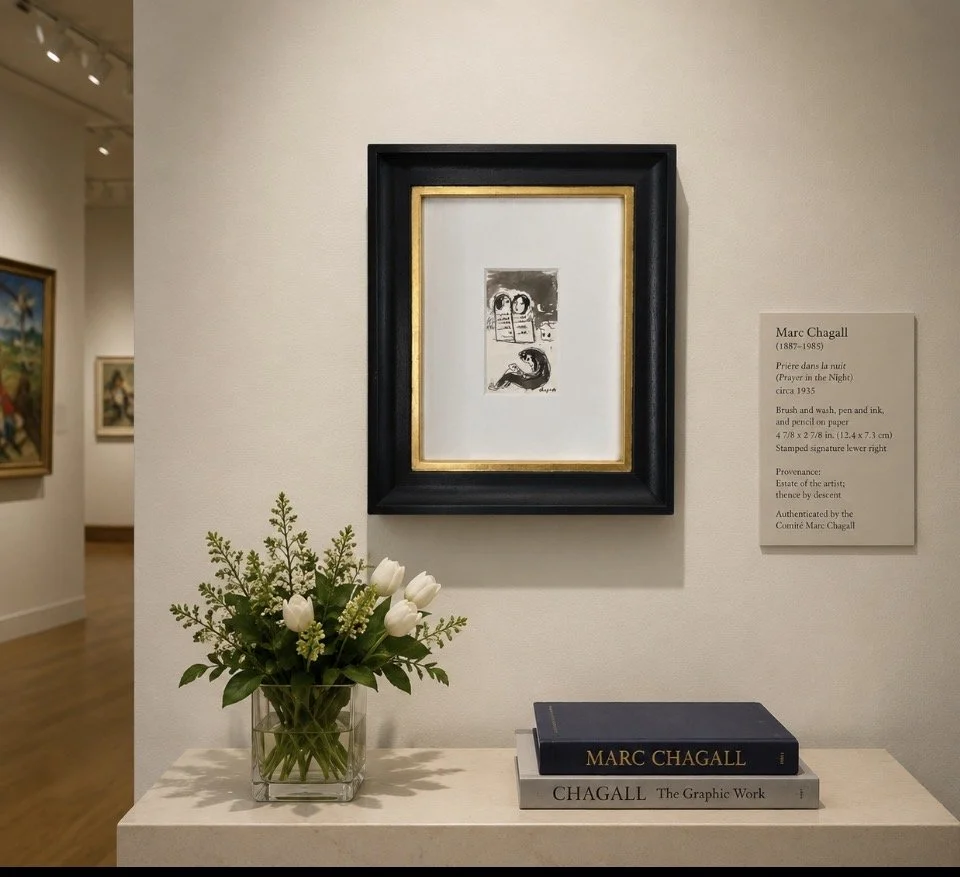 Image 3 of 5
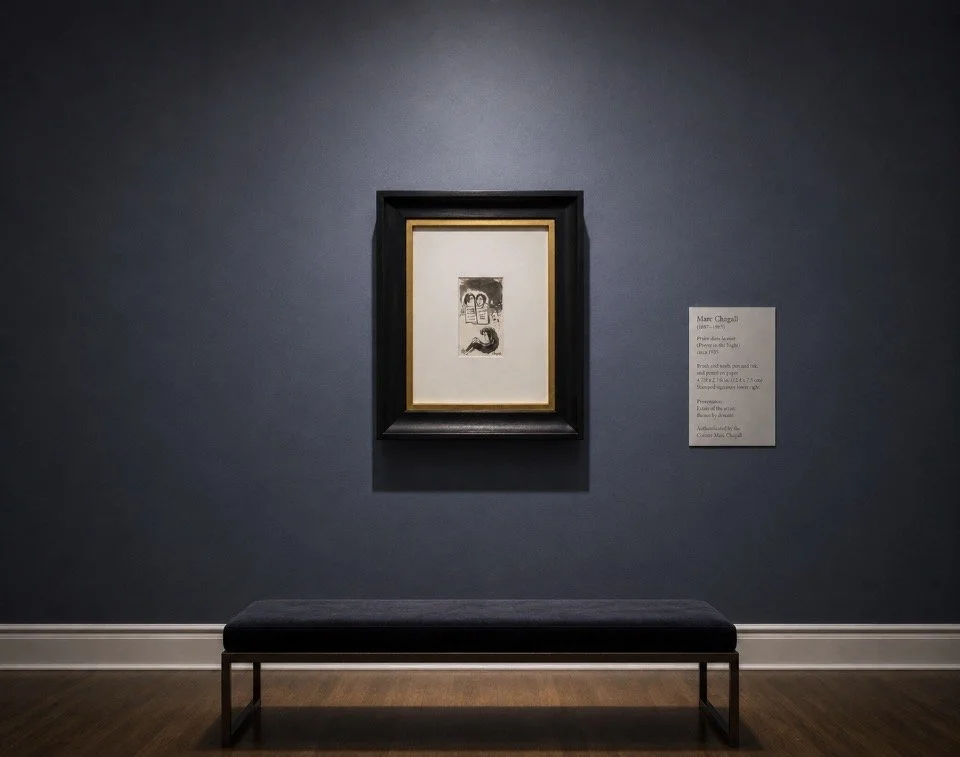 Image 4 of 5
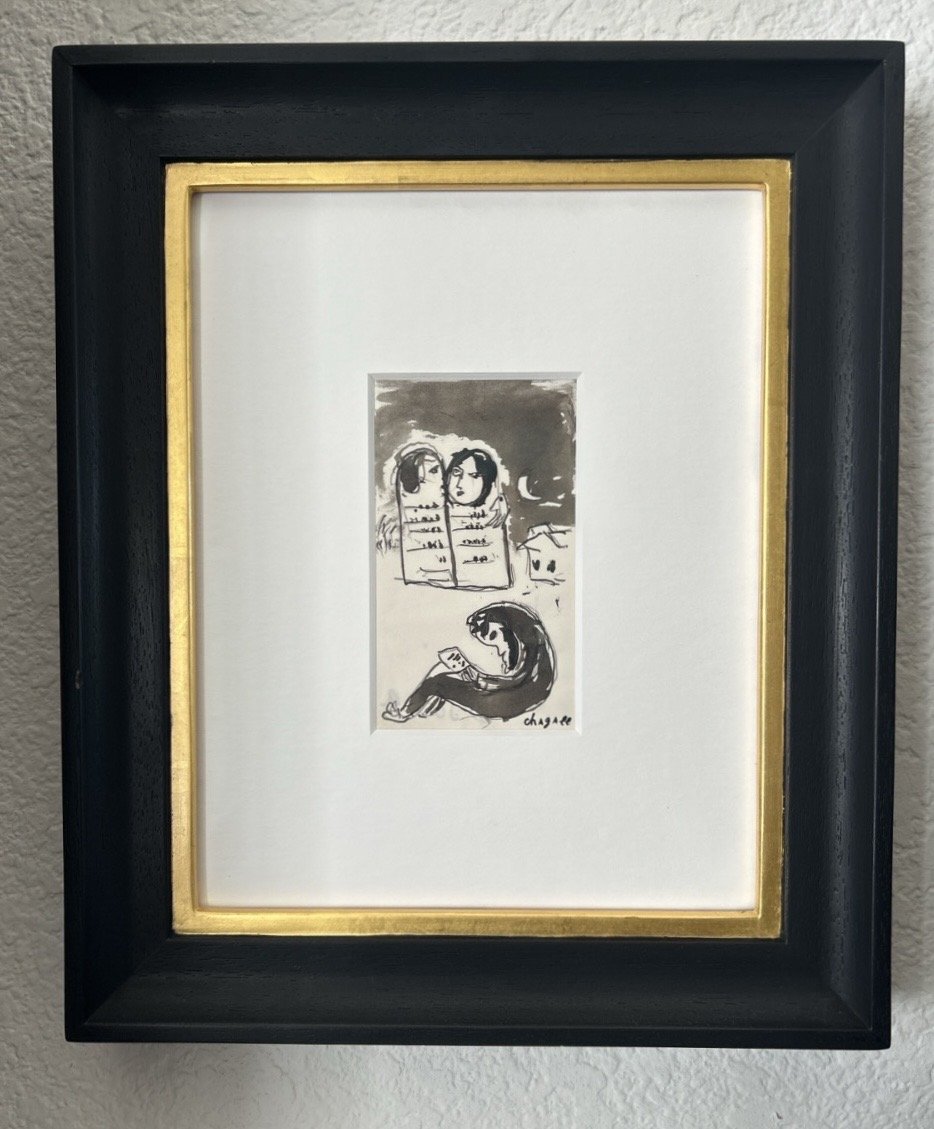 Image 5 of 5
Marc Chagall (1887–1985)
Prière dans la nuit (Prayer in the Night)
Circa 1935
Brush and wash, pen and ink, and pencil on paper
4⅞ × 2⅞ inches (12.4 × 7.3 cm)
Stamped with the artist's signature lower right.
Provenance
Estate of the artist; thence by descent.
Authentication
The Comité Marc Chagall has confirmed the authenticity of this work.
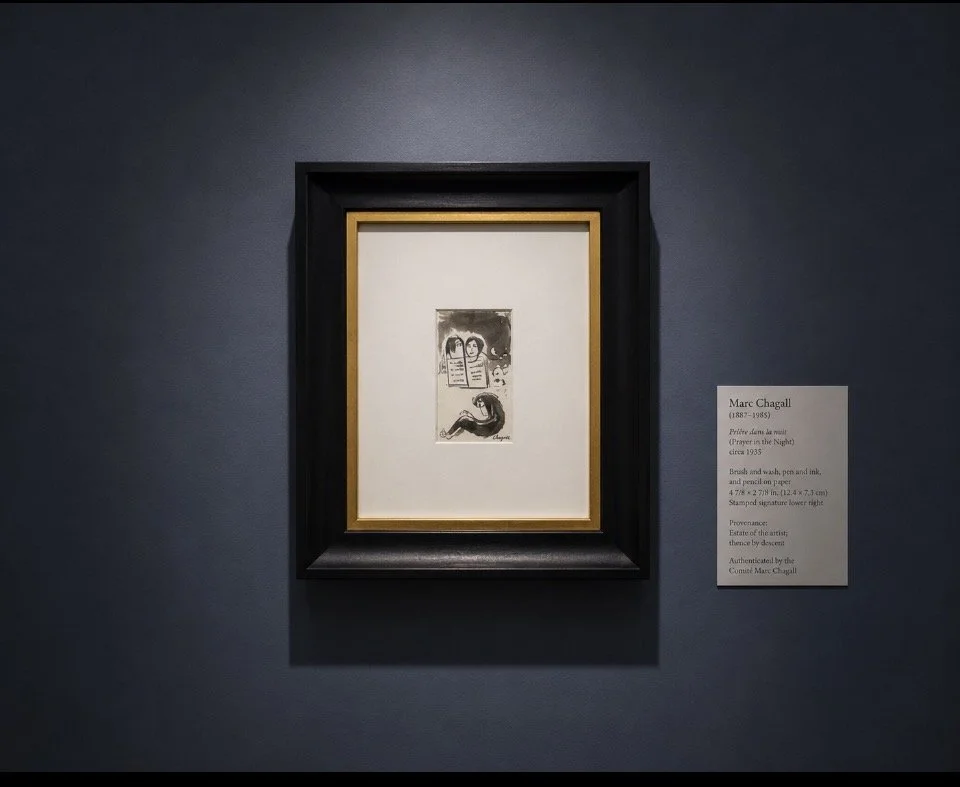
In this intimate composition, Chagall transforms a simple arrangement of figures into a meditation on spirituality and human connection. The seated figure absorbed in prayer or reading, together with the ethereal faces hovering above, evokes the artist's lifelong fascination with memory, faith, and the mysteries of the night. Executed with fluid brushwork and expressive lines, the drawing exemplifies the poetic language that made Chagall one of the most beloved artists of the twentieth century.
Created during the turbulent decade preceding the Second World War, Prière dans la nuit reflects Chagall's enduring attachment to spirituality and the traditions of his Jewish heritage. Throughout his career, the artist returned repeatedly to themes of love, faith, and the mysterious interconnectedness of humanity. In this work, those universal themes are distilled into a composition of remarkable intimacy and grace.
Although monochromatic, the drawing radiates the same vitality and imaginative power found in Chagall's celebrated paintings. The artist's unmistakable visual language—part dream, part memory, and part spiritual revelation—imbues the composition with timeless resonance.
Fresh from the artist's estate and authenticated by the Comité Marc Chagall, Prière dans la nuit stands as an exceptionally appealing example of the master's works on paper and a testament to the poetic vision that established Marc Chagall as one of the most beloved artists of the twentieth century.
The year 1935 occupies an important place in Chagall's career. Europe was entering a period of growing political uncertainty and anti-Semitism. Chagall increasingly turned inward, producing deeply personal and spiritual imagery rooted in memory, faith, and the poetic traditions of his Jewish upbringing in Vitebsk.
Unlike his monumental paintings and stained-glass commissions of later decades, these intimate drawings reveal the artist at his most spontaneous. Working with pen and diluted ink washes, Chagall could capture fleeting emotions and dreamlike visions with remarkable economy.
The solitary seated figure appears absorbed in reading or prayer. Chagall frequently portrayed figures engaged with sacred texts, recalling Jewish traditions and his own childhood memories.
The surrounding washes create an atmosphere of darkness pierced by spiritual light. Night in Chagall's work was rarely threatening; rather, it was a realm where dreams, memories, and the sacred coexisted.
Small works like this were never intended merely as preparatory sketches. They are independent artistic statements and often provide a more intimate glimpse into Chagall's imagination than his larger paintings.
Because this drawing:
dates to the highly desirable pre-war period (circa 1935),
remained in the artist's estate,
comes fresh to the market,
bears the stamped signature,
and is confirmed by the Comité Marc Chagall,
it possesses considerable scholarly and collecting importance despite its modest size.
Marc Chagall (1887–1985)
Prière dans la nuit (Prayer in the Night)
Circa 1935
Brush and wash, pen and ink, and pencil on paper
4⅞ × 2⅞ inches (12.4 × 7.3 cm)
Stamped with the artist's signature lower right.
Provenance
Estate of the artist; thence by descent.
Authentication
The Comité Marc Chagall has confirmed the authenticity of this work.
In this intimate composition, Chagall transforms a simple arrangement of figures into a meditation on spirituality and human connection. The seated figure absorbed in prayer or reading, together with the ethereal faces hovering above, evokes the artist's lifelong fascination with memory, faith, and the mysteries of the night. Executed with fluid brushwork and expressive lines, the drawing exemplifies the poetic language that made Chagall one of the most beloved artists of the twentieth century.
Created during the turbulent decade preceding the Second World War, Prière dans la nuit reflects Chagall's enduring attachment to spirituality and the traditions of his Jewish heritage. Throughout his career, the artist returned repeatedly to themes of love, faith, and the mysterious interconnectedness of humanity. In this work, those universal themes are distilled into a composition of remarkable intimacy and grace.
Although monochromatic, the drawing radiates the same vitality and imaginative power found in Chagall's celebrated paintings. The artist's unmistakable visual language—part dream, part memory, and part spiritual revelation—imbues the composition with timeless resonance.
Fresh from the artist's estate and authenticated by the Comité Marc Chagall, Prière dans la nuit stands as an exceptionally appealing example of the master's works on paper and a testament to the poetic vision that established Marc Chagall as one of the most beloved artists of the twentieth century.
The year 1935 occupies an important place in Chagall's career. Europe was entering a period of growing political uncertainty and anti-Semitism. Chagall increasingly turned inward, producing deeply personal and spiritual imagery rooted in memory, faith, and the poetic traditions of his Jewish upbringing in Vitebsk.
Unlike his monumental paintings and stained-glass commissions of later decades, these intimate drawings reveal the artist at his most spontaneous. Working with pen and diluted ink washes, Chagall could capture fleeting emotions and dreamlike visions with remarkable economy.
The solitary seated figure appears absorbed in reading or prayer. Chagall frequently portrayed figures engaged with sacred texts, recalling Jewish traditions and his own childhood memories.
The surrounding washes create an atmosphere of darkness pierced by spiritual light. Night in Chagall's work was rarely threatening; rather, it was a realm where dreams, memories, and the sacred coexisted.
Small works like this were never intended merely as preparatory sketches. They are independent artistic statements and often provide a more intimate glimpse into Chagall's imagination than his larger paintings.
Because this drawing:
dates to the highly desirable pre-war period (circa 1935),
remained in the artist's estate,
comes fresh to the market,
bears the stamped signature,
and is confirmed by the Comité Marc Chagall,
it possesses considerable scholarly and collecting importance despite its modest size.