Late 18th Century Ship’s Carved Eagle Figurehead. Stunning ship’s handcarved wooden figurehead (14” x 27” x 12”) in the form of Federal Eagle, with open beak and scrolled shoulders. Forensic examination by Scientific Analysis of Fine Art, LLC (on file and available on request) of paint indicating piece predates the 19th century with restoration having been applied after the second decade of the 19th century. This remarkable figurehead was discovered in a barn in Bath, Maine. Museum grade mounting structurally supporting and mounted on a wood, tear-drop-shaped base and finished in black. A rare and extraordinary piece. Provenance: The Claude Harkins Collection of Americana; Thomaston Auction Place Galleries, 8/25/12, lot 80.
Among the most compelling survivors of early American maritime art, this rare carved eagle figurehead embodies the spirit and symbolism of the young republic. Executed during the Federal period and retaining remnants of its original painted surface, the sculpture presents the national eagle with an open beak, boldly carved feathers, and elegant scrolled shoulders, conveying both strength and movement.
Discovered in a barn in Bath, Maine—one of America's foremost shipbuilding centers—the carving is believed to have originated from an important vessel operating during the formative years of the United States. Owing to its early date and scale, scholars have suggested that it may have adorned a United States Revenue Cutter, the predecessor of today's United States Coast Guard. While no specific vessel has yet been identified, the figurehead's design and period strongly support an association with the nation's earliest maritime traditions.
Scientific examination performed by Jennifer L. Mass, Ph.D., Scientific Analysis of Fine Art, LLC (Report No. 1299-12, December 27, 2012), determined that the surviving paint layers predate the nineteenth century and indicate restoration undertaken after the second decade of the 1800s. The report provides physical evidence supporting the carving's exceptional age and authenticity.
Historical Context
Following the adoption of the Great Seal of the United States in 1782, the eagle quickly became the most powerful emblem of the young republic. American shipbuilders and carvers incorporated the eagle into figureheads, stern decorations, and trailboards to symbolize national pride, strength, and commercial independence.
By the late eighteenth century, ship carving had become highly sophisticated in ports such as:
The survival of any figurehead from this early period is uncommon, and examples retaining traces of original paint are especially rare.
Discovery in Bath, Maine
According to accompanying documentation, the figurehead was discovered in a barn in Bath, Maine, one of the most important shipbuilding centers in America. Bath earned the nickname:
"City of Ships."
During the late eighteenth and early nineteenth centuries, Bath launched hundreds of vessels ranging from merchant ships to government cutters and naval craft.
The discovery of this eagle in such a location strongly supports a maritime origin and suggests it may have been removed from an obsolete vessel and preserved unintentionally for generations.
The figurehead was discovered in Bath, Maine and later entered the marketplace through Thomaston Auction Place Galleries. Its significance was recognized following spirited bidding and was noted in the September 18, 2012 issue of Antique Trader. The sculpture subsequently became part of the distinguished Claude S. Harkins Collection of Americana, one of the finest private collections devoted to early American folk art and historic artifacts.
Possible Connection to the Revenue Cutter Service
The scale and early style have led observers to speculate that the carving may have originated from a vessel of the United States Revenue Cutter Service, founded in 1790 under Treasury Secretary Alexander Hamilton.
Revenue cutters:
Their vessels frequently displayed patriotic imagery, and eagle carvings became important symbols of federal authority.
Although no specific vessel has been identified, the age and dimensions of this carving make such an attribution plausible.
Scientific Examination
A report prepared by Jennifer L. Mass, Ph.D., Scientific Analysis of Fine Art, LLC, Report No. 1299-12 (December 27, 2012), concluded that:
The paint layers indicate the object predates the nineteenth century.
Restoration was applied after approximately the second decade of the nineteenth century.
Traces of original surface material survive beneath later interventions.
Scientific paint analysis is particularly important because it provides physical evidence supporting the object's great age and distinguishes original finishes from subsequent restoration.
Accompanying the figurehead are the Scientific Analysis of Fine Art report prepared by Jennifer L. Mass, Ph.D., together with a letter from the dealer who originally discovered the carving in Bath, Maine, providing an unusually complete and compelling documentary record.
Rarely does an object combine such sculptural power, documented history, scientific examination, and distinguished provenance. A remarkable survivor from the age of George Washington and the earliest decades of the American Republic, this Federal eagle figurehead stands as both a work of art and an enduring symbol of the nation's maritime heritage.
Provenance
Discovered in a barn, Bath, Maine.
Thomaston Auction Place Galleries, August 25, 2012, Lot 80.
Published in Antique Trader, September 18, 2012.
The Claude S. Harkins Collection of Americana.
Private Collection.
Literature
Antique Trader, September 18, 2012.
Scientific Analysis of Fine Art, LLC, Report No. 1299-12, Jennifer L. Mass, Ph.D., December 27, 2012.
Among early American maritime carvings, few objects combine such strong provenance, scientific authentication, and sculptural presence. This figurehead stands as a survivor from the age of George Washington and the formative years of the United States.
Artistic Qualities
Several characteristics point to an early date:
Bold and simplified Federal form.
Deeply cut overlapping feathers.
Strongly hooked beak.
Animated eye and open mouth.
Elegant scrolled shoulder treatment.
Hand-tool marks and asymmetrical carving typical of eighteenth-century craftsmanship.
Unlike later Victorian ship carvings, this eagle possesses a restrained neoclassical character associated with the Federal period.
Rarity
Large surviving American figureheads are rare. Smaller eagle heads such as this are rarer still, especially examples:
With documented discovery history.
Retaining early paint evidence.
Supported by scientific analysis.
Associated with a major Americana collection.
Accompanied by period documentation and dealer correspondence.
Its importance lies not merely in its sculptural beauty, but in its embodiment of the spirit of the young American republic and the nation's early maritime traditions.
Late 18th Century Ship’s Carved Eagle Figurehead. Stunning ship’s handcarved wooden figurehead (14” x 27” x 12”) in the form of Federal Eagle, with open beak and scrolled shoulders. Forensic examination by Scientific Analysis of Fine Art, LLC (on file and available on request) of paint indicating piece predates the 19th century with restoration having been applied after the second decade of the 19th century. This remarkable figurehead was discovered in a barn in Bath, Maine. Museum grade mounting structurally supporting and mounted on a wood, tear-drop-shaped base and finished in black. A rare and extraordinary piece. Provenance: The Claude Harkins Collection of Americana; Thomaston Auction Place Galleries, 8/25/12, lot 80.
Among the most compelling survivors of early American maritime art, this rare carved eagle figurehead embodies the spirit and symbolism of the young republic. Executed during the Federal period and retaining remnants of its original painted surface, the sculpture presents the national eagle with an open beak, boldly carved feathers, and elegant scrolled shoulders, conveying both strength and movement.
Discovered in a barn in Bath, Maine—one of America's foremost shipbuilding centers—the carving is believed to have originated from an important vessel operating during the formative years of the United States. Owing to its early date and scale, scholars have suggested that it may have adorned a United States Revenue Cutter, the predecessor of today's United States Coast Guard. While no specific vessel has yet been identified, the figurehead's design and period strongly support an association with the nation's earliest maritime traditions.
Scientific examination performed by Jennifer L. Mass, Ph.D., Scientific Analysis of Fine Art, LLC (Report No. 1299-12, December 27, 2012), determined that the surviving paint layers predate the nineteenth century and indicate restoration undertaken after the second decade of the 1800s. The report provides physical evidence supporting the carving's exceptional age and authenticity.
Historical Context
Following the adoption of the Great Seal of the United States in 1782, the eagle quickly became the most powerful emblem of the young republic. American shipbuilders and carvers incorporated the eagle into figureheads, stern decorations, and trailboards to symbolize national pride, strength, and commercial independence.
By the late eighteenth century, ship carving had become highly sophisticated in ports such as:
The survival of any figurehead from this early period is uncommon, and examples retaining traces of original paint are especially rare.
Discovery in Bath, Maine
According to accompanying documentation, the figurehead was discovered in a barn in Bath, Maine, one of the most important shipbuilding centers in America. Bath earned the nickname:
"City of Ships."
During the late eighteenth and early nineteenth centuries, Bath launched hundreds of vessels ranging from merchant ships to government cutters and naval craft.
The discovery of this eagle in such a location strongly supports a maritime origin and suggests it may have been removed from an obsolete vessel and preserved unintentionally for generations.
The figurehead was discovered in Bath, Maine and later entered the marketplace through Thomaston Auction Place Galleries. Its significance was recognized following spirited bidding and was noted in the September 18, 2012 issue of Antique Trader. The sculpture subsequently became part of the distinguished Claude S. Harkins Collection of Americana, one of the finest private collections devoted to early American folk art and historic artifacts.
Possible Connection to the Revenue Cutter Service
The scale and early style have led observers to speculate that the carving may have originated from a vessel of the United States Revenue Cutter Service, founded in 1790 under Treasury Secretary Alexander Hamilton.
Revenue cutters:
Their vessels frequently displayed patriotic imagery, and eagle carvings became important symbols of federal authority.
Although no specific vessel has been identified, the age and dimensions of this carving make such an attribution plausible.
Scientific Examination
A report prepared by Jennifer L. Mass, Ph.D., Scientific Analysis of Fine Art, LLC, Report No. 1299-12 (December 27, 2012), concluded that:
The paint layers indicate the object predates the nineteenth century.
Restoration was applied after approximately the second decade of the nineteenth century.
Traces of original surface material survive beneath later interventions.
Scientific paint analysis is particularly important because it provides physical evidence supporting the object's great age and distinguishes original finishes from subsequent restoration.
Accompanying the figurehead are the Scientific Analysis of Fine Art report prepared by Jennifer L. Mass, Ph.D., together with a letter from the dealer who originally discovered the carving in Bath, Maine, providing an unusually complete and compelling documentary record.
Rarely does an object combine such sculptural power, documented history, scientific examination, and distinguished provenance. A remarkable survivor from the age of George Washington and the earliest decades of the American Republic, this Federal eagle figurehead stands as both a work of art and an enduring symbol of the nation's maritime heritage.
Provenance
Discovered in a barn, Bath, Maine.
Thomaston Auction Place Galleries, August 25, 2012, Lot 80.
Published in Antique Trader, September 18, 2012.
The Claude S. Harkins Collection of Americana.
Private Collection.
Literature
Antique Trader, September 18, 2012.
Scientific Analysis of Fine Art, LLC, Report No. 1299-12, Jennifer L. Mass, Ph.D., December 27, 2012.
Among early American maritime carvings, few objects combine such strong provenance, scientific authentication, and sculptural presence. This figurehead stands as a survivor from the age of George Washington and the formative years of the United States.
Artistic Qualities
Several characteristics point to an early date:
Bold and simplified Federal form.
Deeply cut overlapping feathers.
Strongly hooked beak.
Animated eye and open mouth.
Elegant scrolled shoulder treatment.
Hand-tool marks and asymmetrical carving typical of eighteenth-century craftsmanship.
Unlike later Victorian ship carvings, this eagle possesses a restrained neoclassical character associated with the Federal period.
Rarity
Large surviving American figureheads are rare. Smaller eagle heads such as this are rarer still, especially examples:
With documented discovery history.
Retaining early paint evidence.
Supported by scientific analysis.
Associated with a major Americana collection.
Accompanied by period documentation and dealer correspondence.
Its importance lies not merely in its sculptural beauty, but in its embodiment of the spirit of the young American republic and the nation's early maritime traditions.
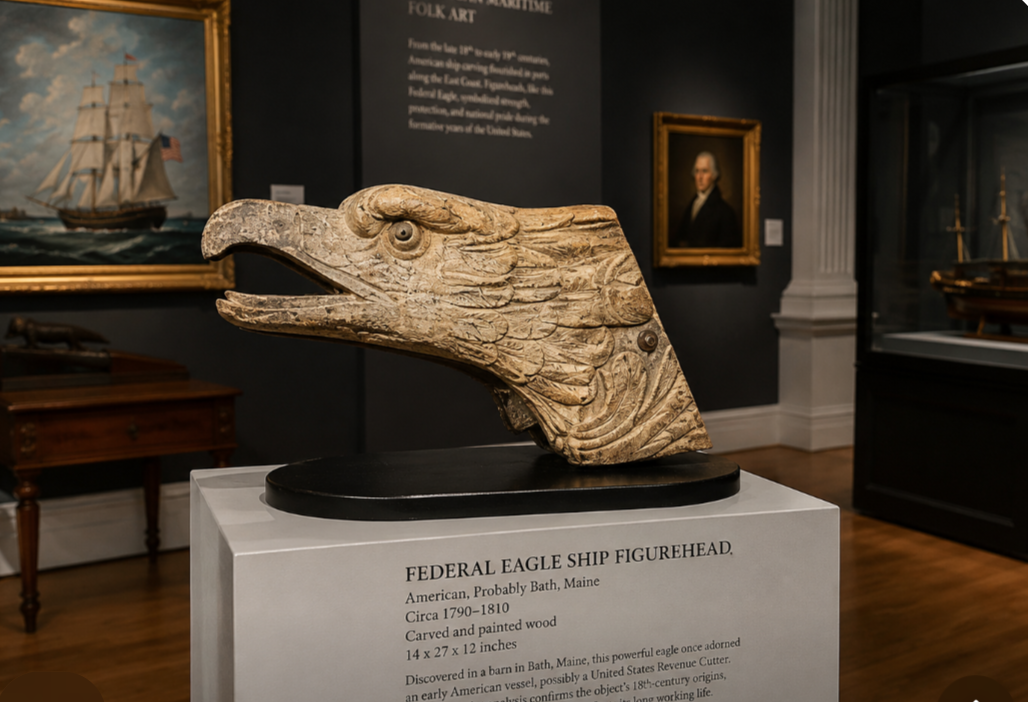 Image 1 of 10
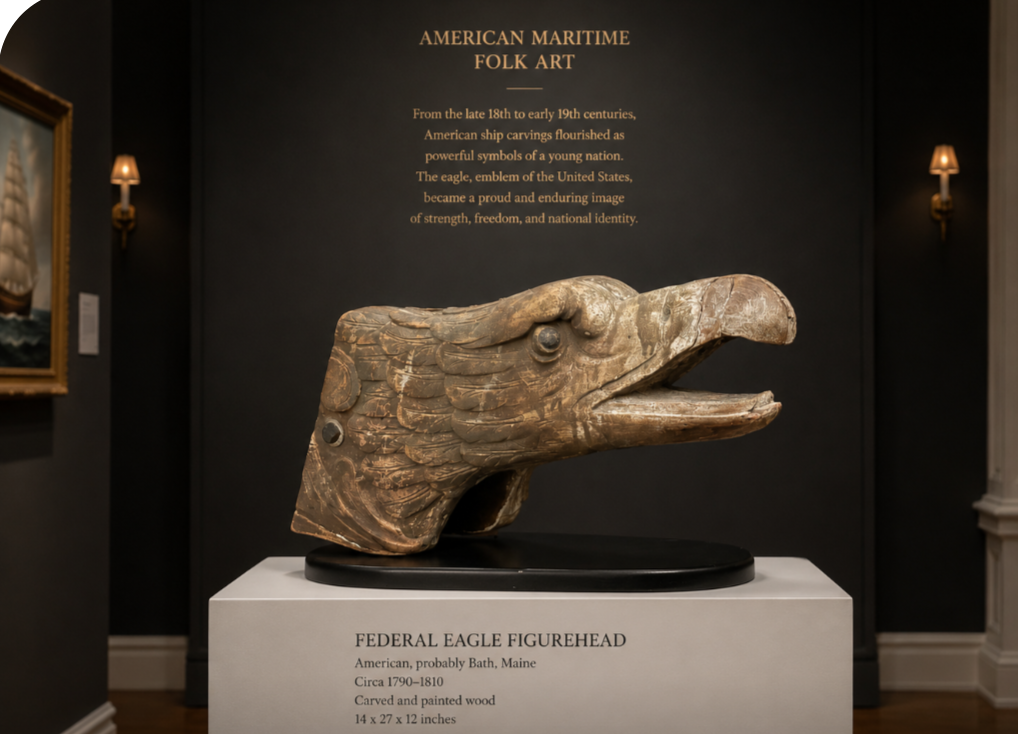 Image 2 of 10
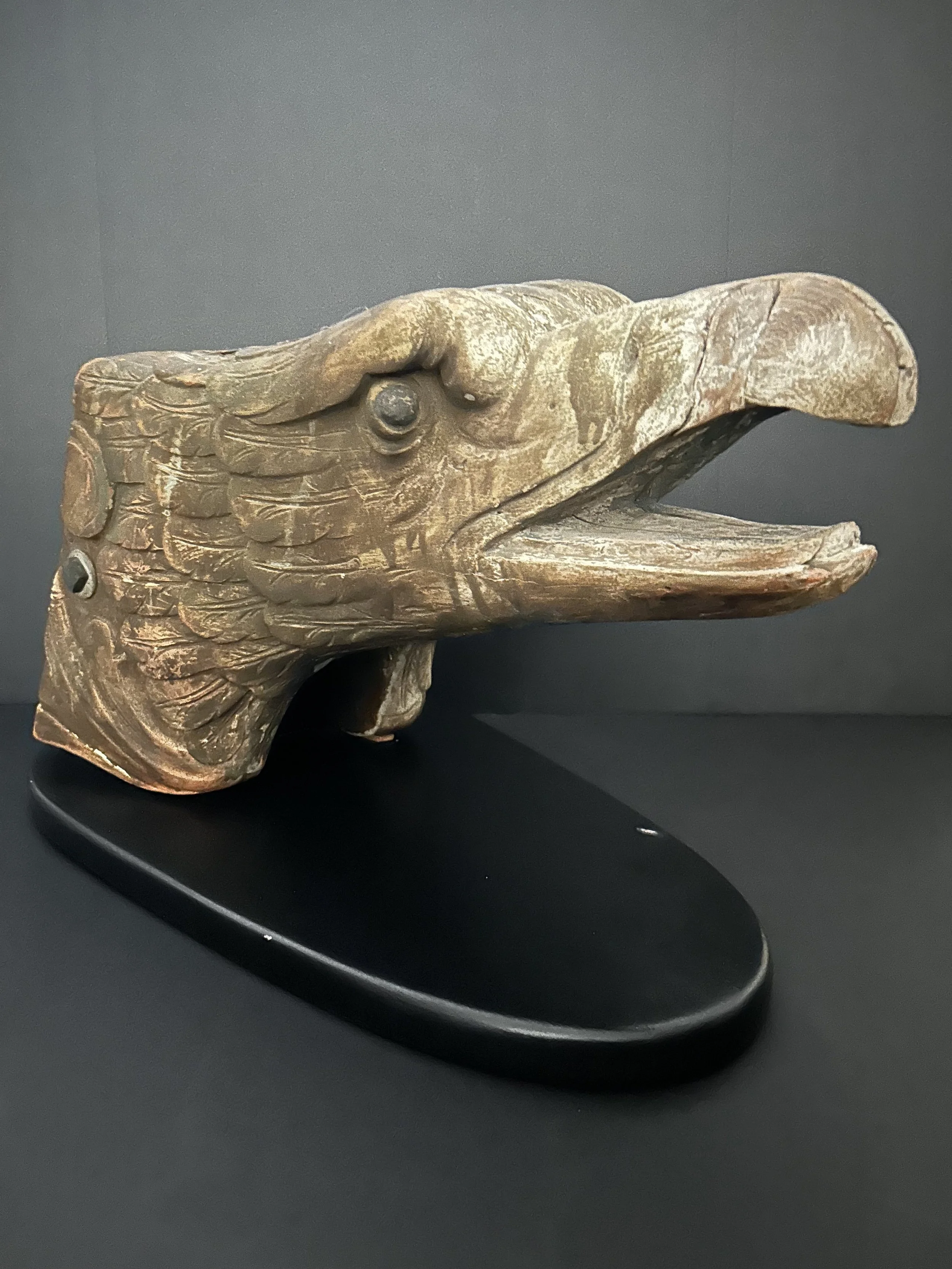 Image 3 of 10
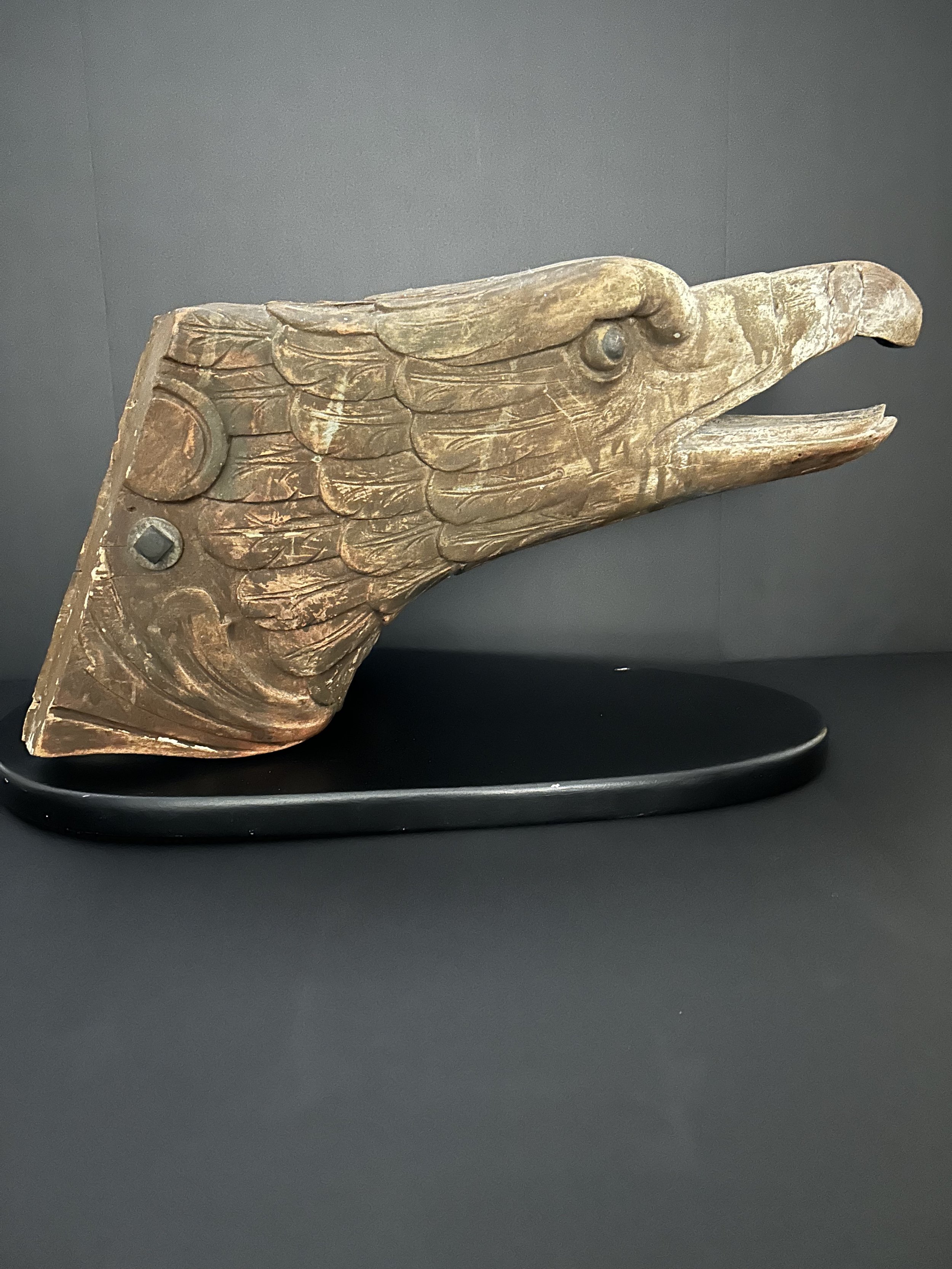 Image 4 of 10
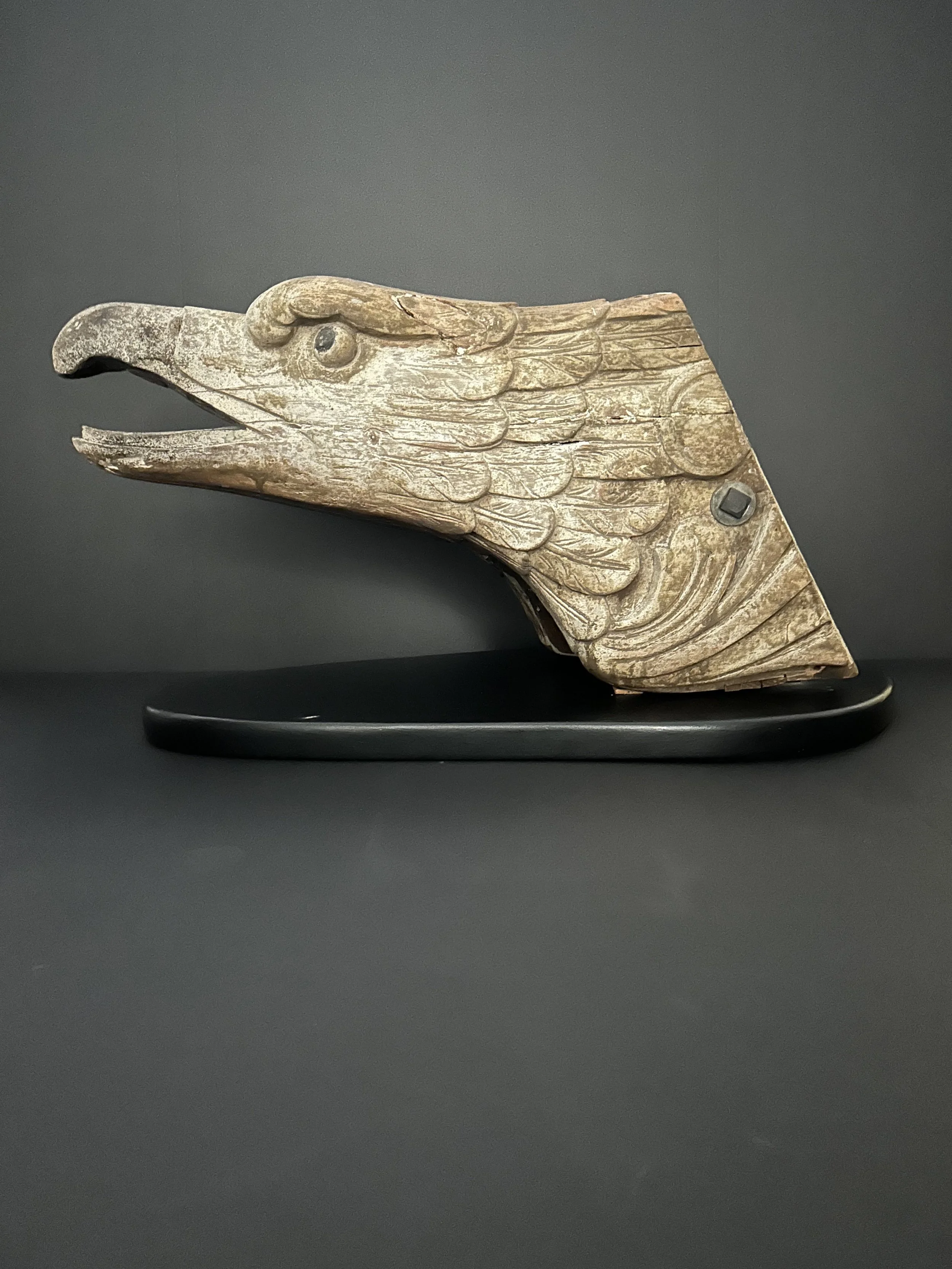 Image 5 of 10
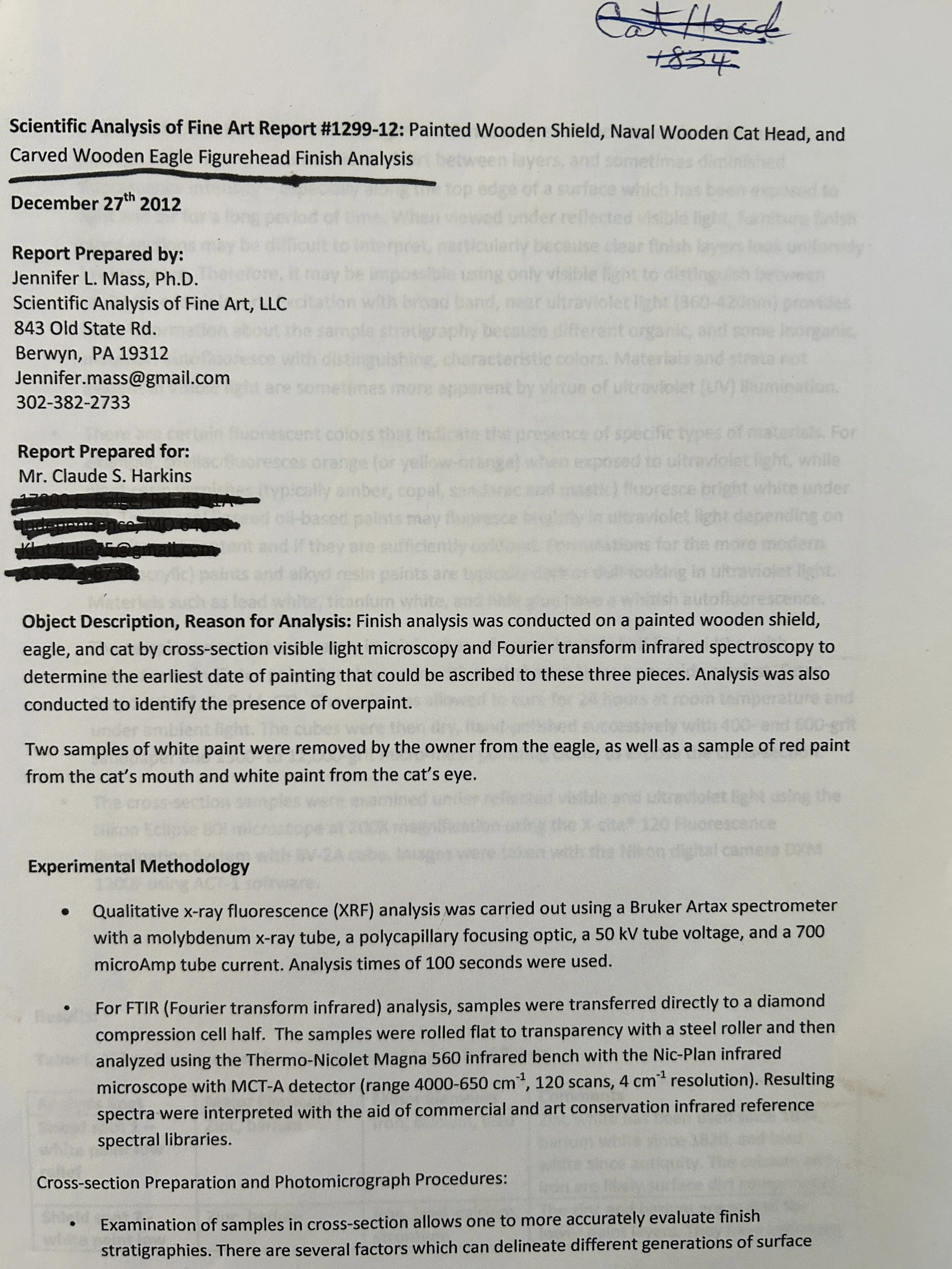 Image 6 of 10
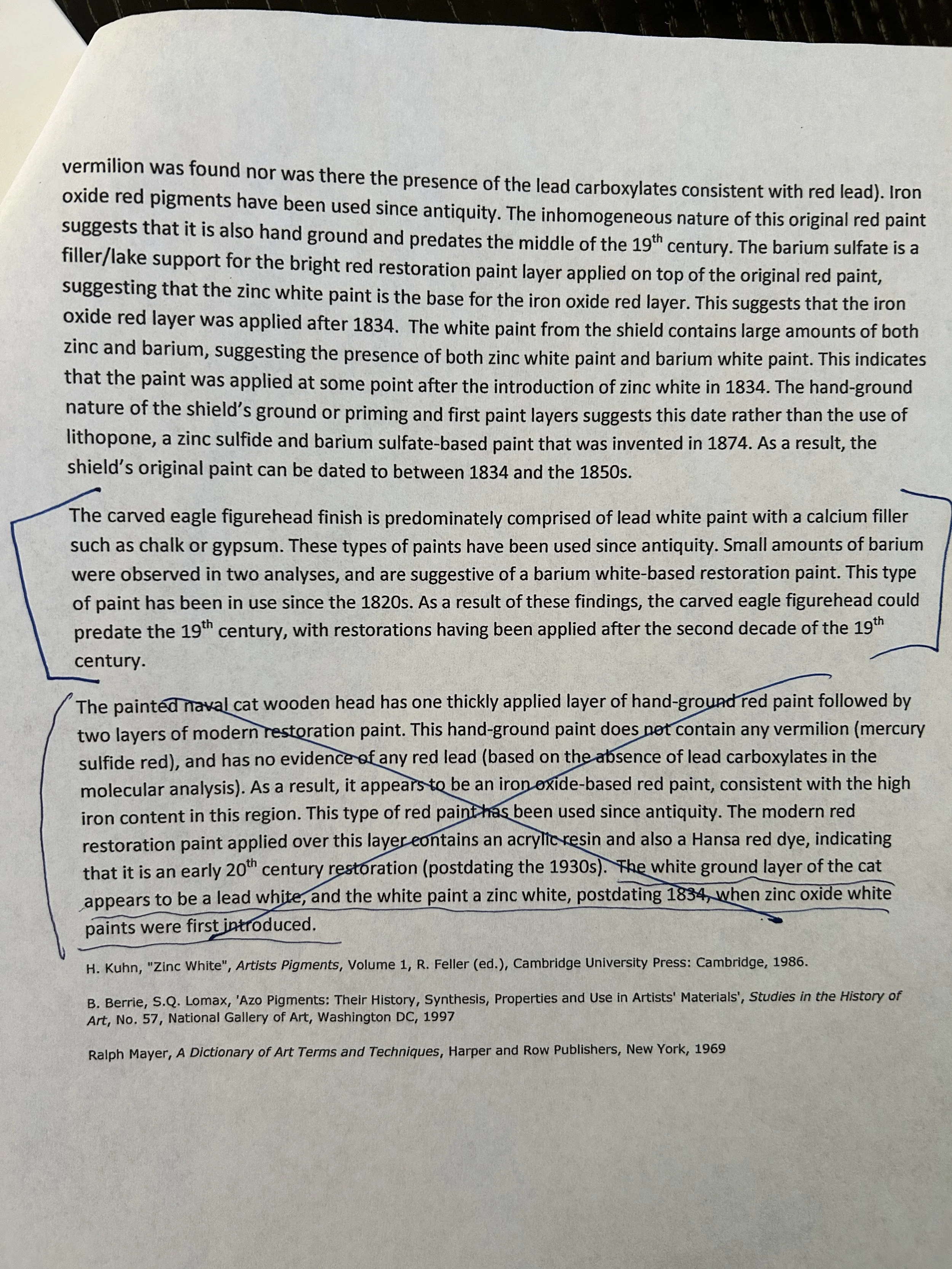 Image 7 of 10
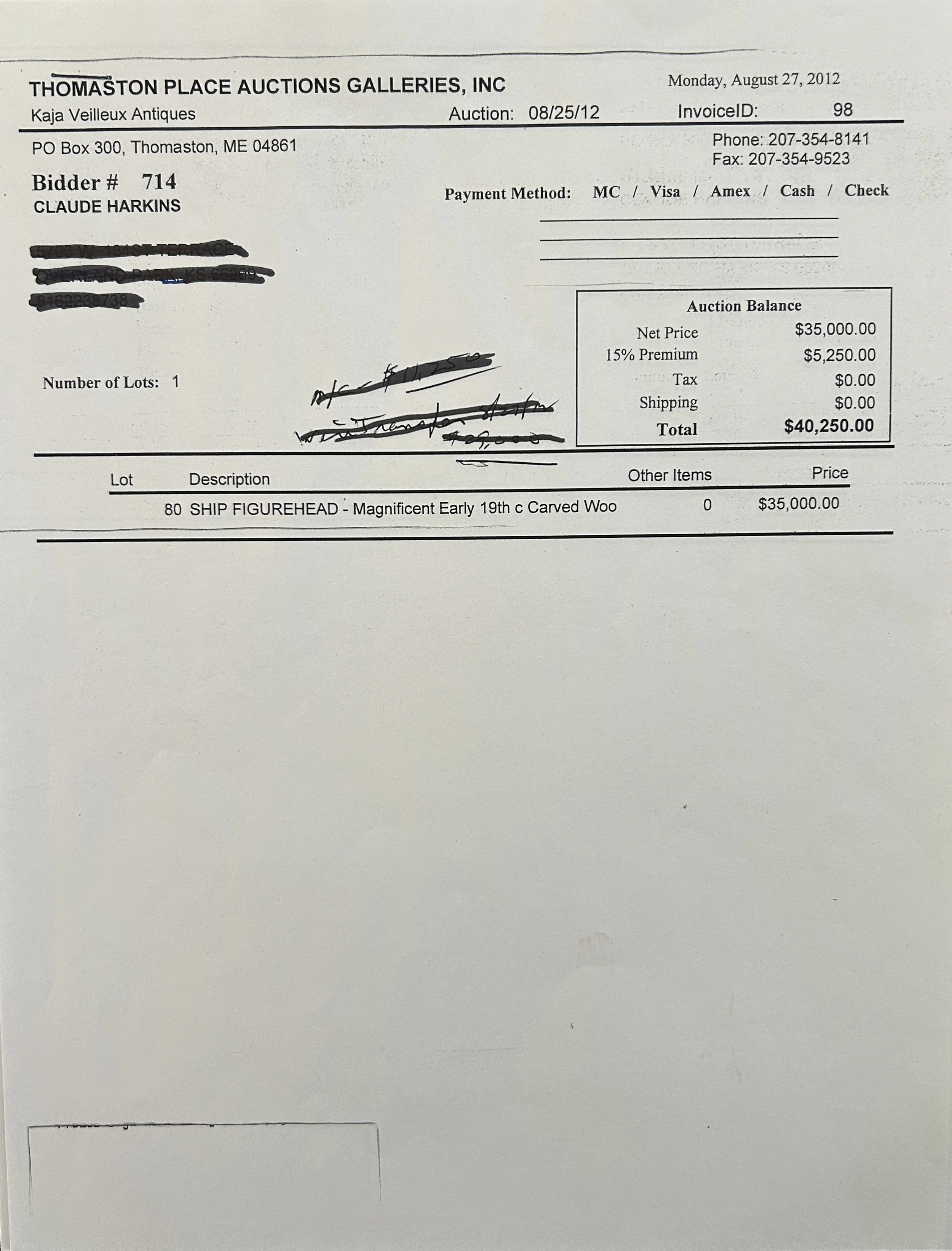 Image 8 of 10
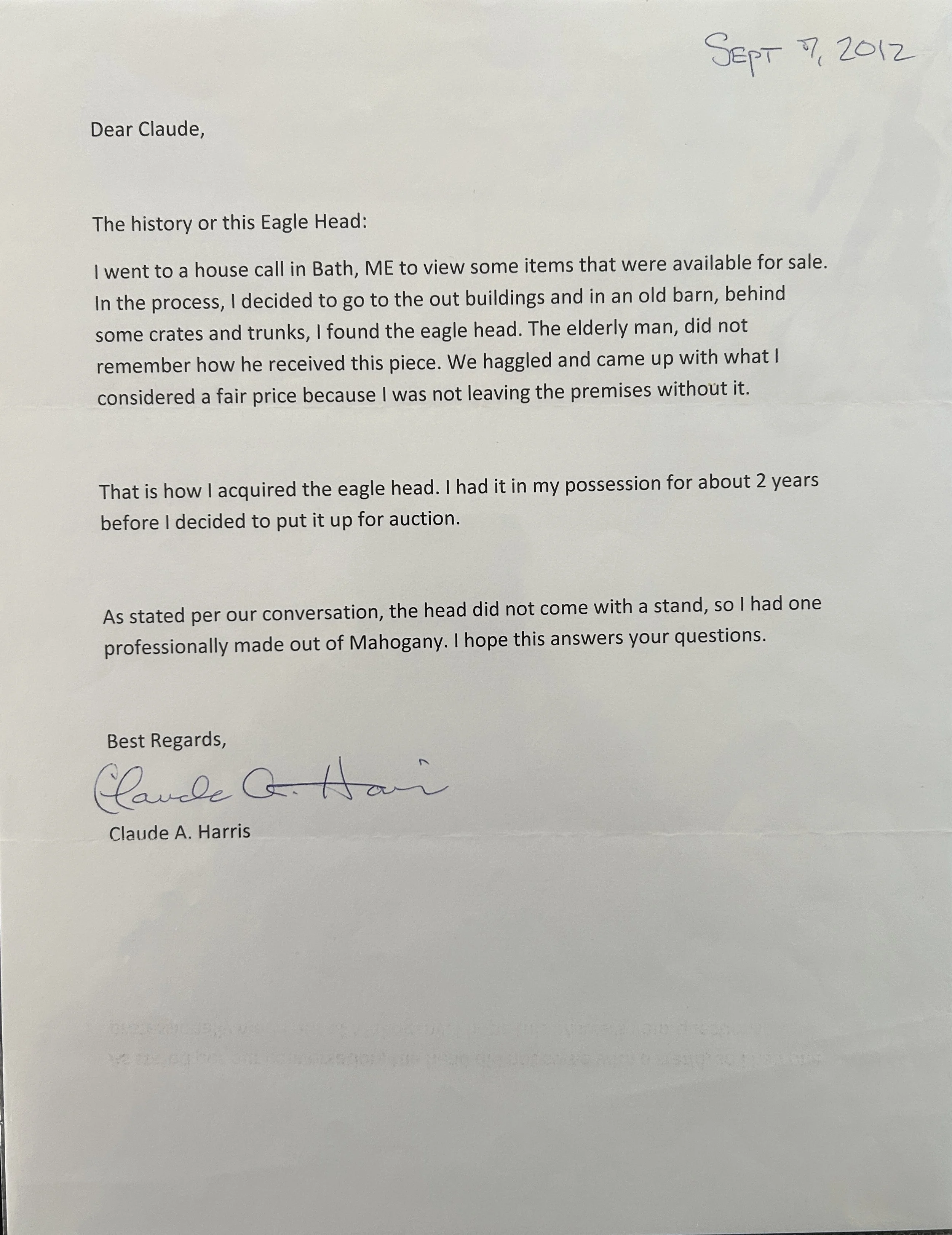 Image 9 of 10
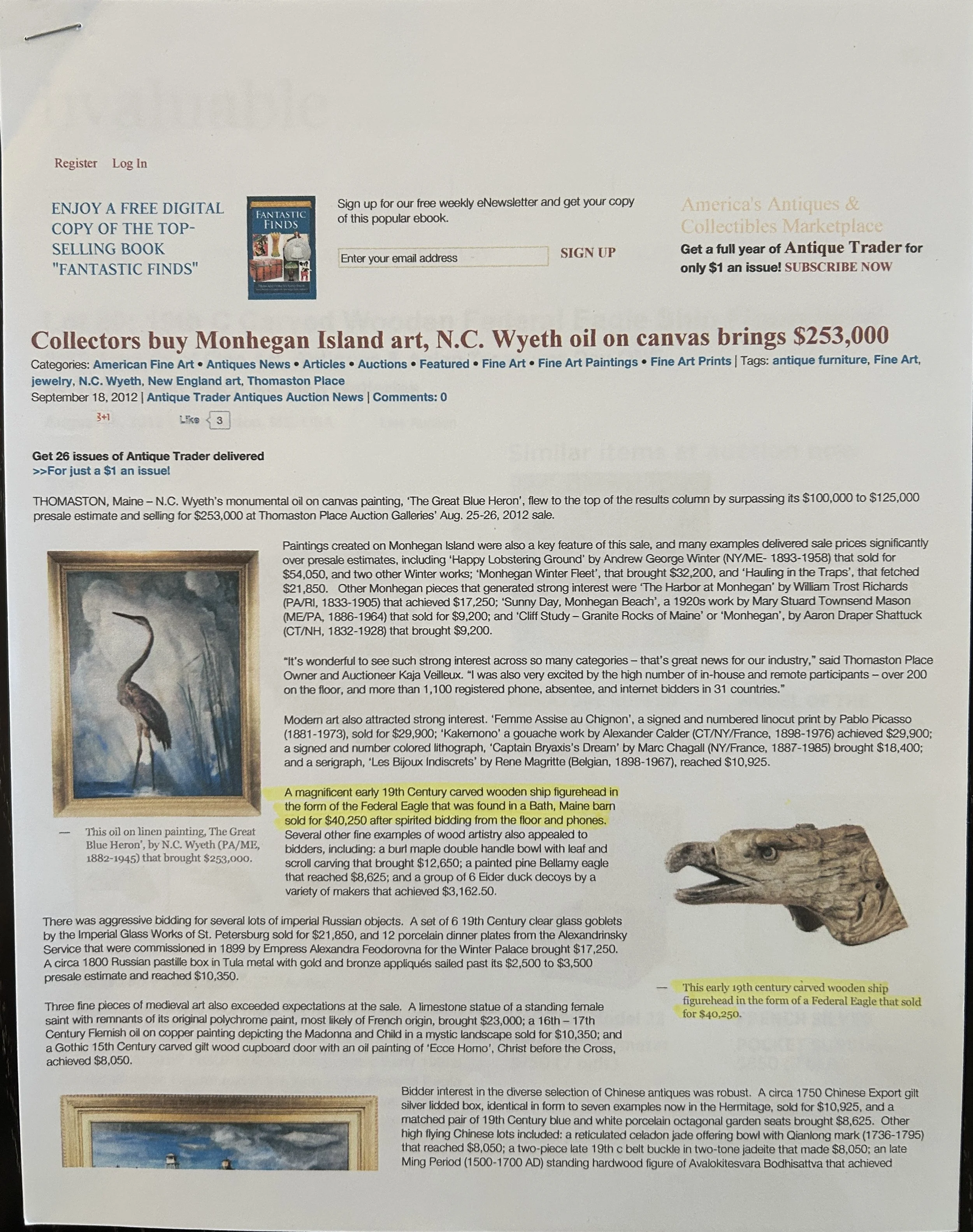 Image 10 of 10