42-STAR 7TH U.S. CAVALRY PARADE GUIDON
Fort Sheridan, Illinois | Circa 1889–1890
Printed and Stencil-Painted Cotton
24 ½ x 18 ¼ Inches
Among the most evocative surviving symbols of the American frontier Army, few objects capture the romance, hardship, and mythology of the nineteenth-century cavalry better than the military guidon. This exceptionally rare 42-star parade guidon, boldly overprinted with the numeral "7," crossed cavalry sabers, and the letters "US," was produced for the famed 7th United States Cavalry Regiment during the closing years of the Indian Wars era.
The swallowtail form seen here was unique to mounted troops. Unlike larger infantry colors, cavalry guidons were designed to be carried on horseback, their forked tails allowing the flag to fly freely and remain visible while soldiers maneuvered across open terrain. Serving as both a practical military marker and a powerful symbol of regimental identity, the guidon occupied a central place in cavalry tradition. It was the flag around which troopers rallied, marched, and celebrated the achievements of their regiment.
This example dates to the brief period when the United States flag officially bore forty-two stars, following the admission of Washington, Montana, North Dakota, and South Dakota to the Union in 1889. Because this star count remained official for only a short time before additional western states entered the Union, surviving 42-star military flags are considerably scarcer than their Civil War and later counterparts.
The stencil-painted insignia identifies this flag as belonging to the celebrated 7th United States Cavalry Regiment. Established in 1866 in the aftermath of the Civil War, the regiment became one of the most recognizable military units in American history. During the decades following its formation, the 7th Cavalry participated in nearly every major campaign of the western frontier, serving across the Great Plains and throughout the American West. Its service became inseparably linked to the history of frontier expansion, Native American resistance, and the dramatic military campaigns that defined the closing chapter of the frontier era.
While the regiment is most famously associated with Lieutenant Colonel George Armstrong Custer and the Battle of the Little Bighorn in 1876, this guidon belongs to a later chapter in the regiment's distinguished history. By the time this flag was produced, the 7th Cavalry had already entered the national imagination as one of the Army's most storied organizations. The regiment continued to serve throughout the final years of the Indian Wars, maintaining a visible presence at military posts across the expanding western frontier.
Particularly important is the guidon's exceptional provenance. Accompanying documentation from Lieutenant Colonel Daniel R. Stice, USAR (Ret.), records that this flag originated at Fort Sheridan, Illinois, one of the principal Army installations of the late nineteenth century. According to Colonel Stice, numerous unit-designated guidons and military flags were discovered in storage after having been removed from headquarters buildings shortly after the First World War. These flags had originally been displayed within Fort Sheridan's administrative buildings and used during ceremonial reviews, parades, and official military functions.
The documentation further records that the flags were preserved together for decades before being dispersed, explaining the survival of this remarkable group of regimentally marked military colors. Such direct provenance linking an object to a specific military installation is increasingly rare and provides an important historical context seldom retained with nineteenth-century military textiles.
The visual impact of the guidon remains extraordinary. The deep blue canton, vivid red stripes, and boldly stenciled cavalry insignia create a graphic presence that transcends its original military purpose. Simultaneously patriotic and deeply historical, the flag serves as a tangible reminder of the soldiers who carried the traditions of the United States Army across the American frontier during one of the nation's most transformative periods.
Today, this guidon survives as more than a military artifact. It stands as a rare witness to the final decades of the frontier Army, the traditions of mounted cavalry service, and the enduring legacy of one of the most celebrated regiments in American military history.
Historical Significance
Rare 42-star United States flag period (1889–1890)
Marked for the famed 7th U.S. Cavalry Regiment
Original crossed-saber cavalry insignia
Fort Sheridan, Illinois provenance
Accompanied by original historical documentation
Published example illustrated in War and Peace
Surviving artifact of the Indian Wars era
Exceptional display and collector appeal
Provenance
Fort Sheridan, Illinois.
Acquired from a documented group of military guidons and flags formerly displayed in Fort Sheridan headquarters buildings and later dispersed through government surplus channels.
Accompanied by signed historical correspondence from Lieutenant Colonel Daniel R. Stice, USAR (Ret.), detailing the discovery and preservation of the Fort Sheridan guidon group.
Published in War and Peace, page 63.
42-STAR 7TH U.S. CAVALRY PARADE GUIDON
Fort Sheridan, Illinois | Circa 1889–1890
Printed and Stencil-Painted Cotton
24 ½ x 18 ¼ Inches
Among the most evocative surviving symbols of the American frontier Army, few objects capture the romance, hardship, and mythology of the nineteenth-century cavalry better than the military guidon. This exceptionally rare 42-star parade guidon, boldly overprinted with the numeral "7," crossed cavalry sabers, and the letters "US," was produced for the famed 7th United States Cavalry Regiment during the closing years of the Indian Wars era.
The swallowtail form seen here was unique to mounted troops. Unlike larger infantry colors, cavalry guidons were designed to be carried on horseback, their forked tails allowing the flag to fly freely and remain visible while soldiers maneuvered across open terrain. Serving as both a practical military marker and a powerful symbol of regimental identity, the guidon occupied a central place in cavalry tradition. It was the flag around which troopers rallied, marched, and celebrated the achievements of their regiment.
This example dates to the brief period when the United States flag officially bore forty-two stars, following the admission of Washington, Montana, North Dakota, and South Dakota to the Union in 1889. Because this star count remained official for only a short time before additional western states entered the Union, surviving 42-star military flags are considerably scarcer than their Civil War and later counterparts.
The stencil-painted insignia identifies this flag as belonging to the celebrated 7th United States Cavalry Regiment. Established in 1866 in the aftermath of the Civil War, the regiment became one of the most recognizable military units in American history. During the decades following its formation, the 7th Cavalry participated in nearly every major campaign of the western frontier, serving across the Great Plains and throughout the American West. Its service became inseparably linked to the history of frontier expansion, Native American resistance, and the dramatic military campaigns that defined the closing chapter of the frontier era.
While the regiment is most famously associated with Lieutenant Colonel George Armstrong Custer and the Battle of the Little Bighorn in 1876, this guidon belongs to a later chapter in the regiment's distinguished history. By the time this flag was produced, the 7th Cavalry had already entered the national imagination as one of the Army's most storied organizations. The regiment continued to serve throughout the final years of the Indian Wars, maintaining a visible presence at military posts across the expanding western frontier.
Particularly important is the guidon's exceptional provenance. Accompanying documentation from Lieutenant Colonel Daniel R. Stice, USAR (Ret.), records that this flag originated at Fort Sheridan, Illinois, one of the principal Army installations of the late nineteenth century. According to Colonel Stice, numerous unit-designated guidons and military flags were discovered in storage after having been removed from headquarters buildings shortly after the First World War. These flags had originally been displayed within Fort Sheridan's administrative buildings and used during ceremonial reviews, parades, and official military functions.
The documentation further records that the flags were preserved together for decades before being dispersed, explaining the survival of this remarkable group of regimentally marked military colors. Such direct provenance linking an object to a specific military installation is increasingly rare and provides an important historical context seldom retained with nineteenth-century military textiles.
The visual impact of the guidon remains extraordinary. The deep blue canton, vivid red stripes, and boldly stenciled cavalry insignia create a graphic presence that transcends its original military purpose. Simultaneously patriotic and deeply historical, the flag serves as a tangible reminder of the soldiers who carried the traditions of the United States Army across the American frontier during one of the nation's most transformative periods.
Today, this guidon survives as more than a military artifact. It stands as a rare witness to the final decades of the frontier Army, the traditions of mounted cavalry service, and the enduring legacy of one of the most celebrated regiments in American military history.
Historical Significance
Rare 42-star United States flag period (1889–1890)
Marked for the famed 7th U.S. Cavalry Regiment
Original crossed-saber cavalry insignia
Fort Sheridan, Illinois provenance
Accompanied by original historical documentation
Published example illustrated in War and Peace
Surviving artifact of the Indian Wars era
Exceptional display and collector appeal
Provenance
Fort Sheridan, Illinois.
Acquired from a documented group of military guidons and flags formerly displayed in Fort Sheridan headquarters buildings and later dispersed through government surplus channels.
Accompanied by signed historical correspondence from Lieutenant Colonel Daniel R. Stice, USAR (Ret.), detailing the discovery and preservation of the Fort Sheridan guidon group.
Published in War and Peace, page 63.
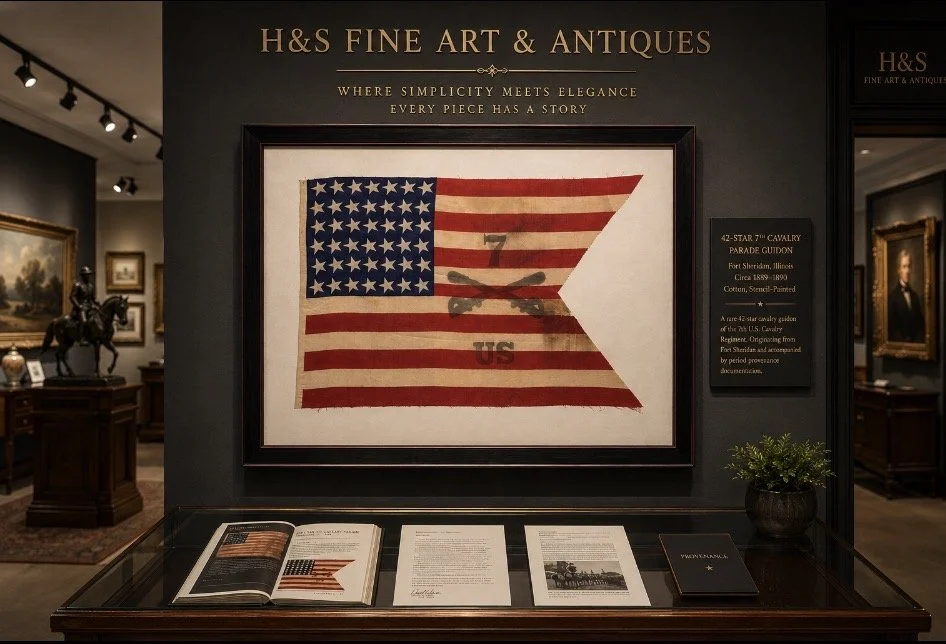 Image 1 of 7
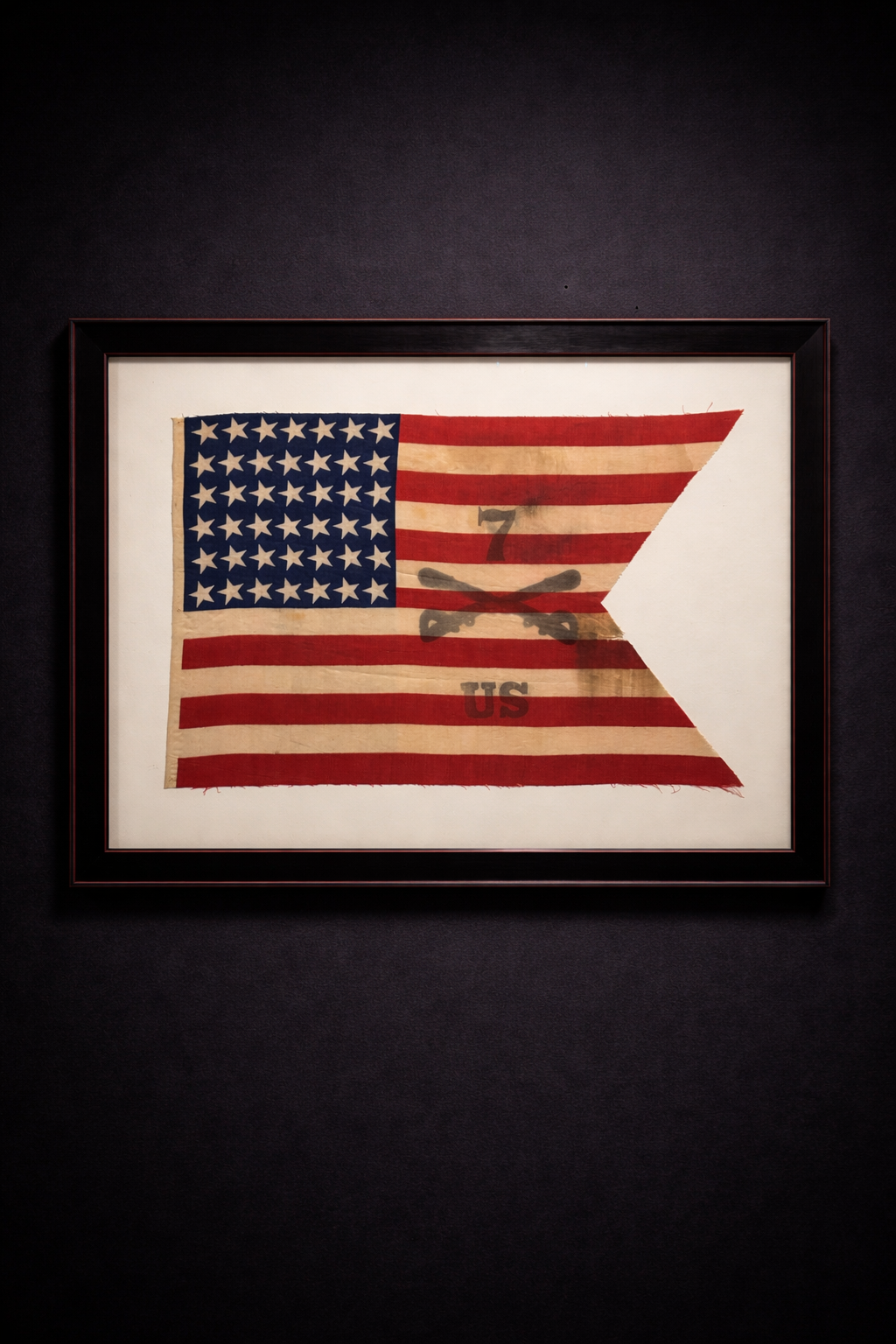 Image 2 of 7
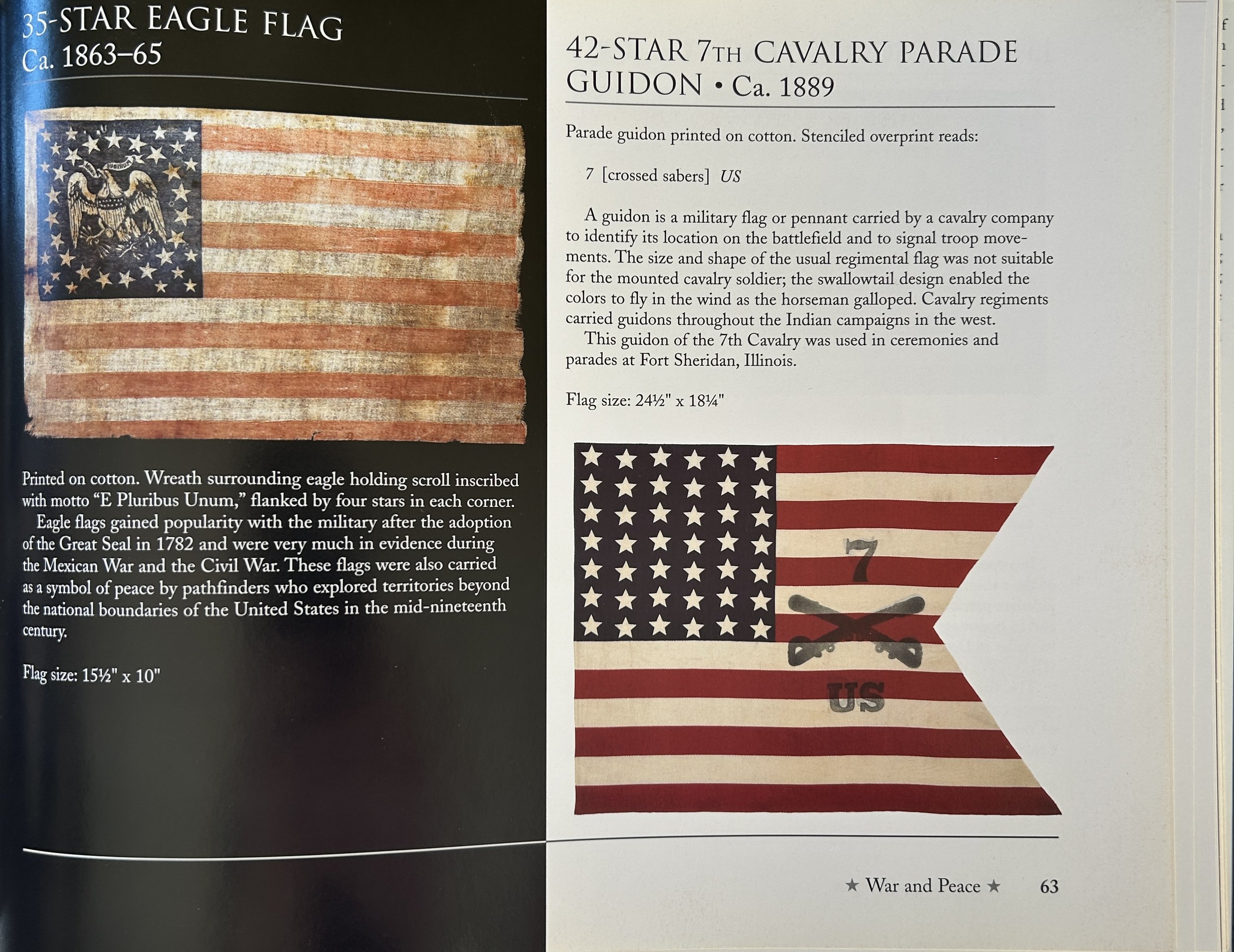 Image 3 of 7
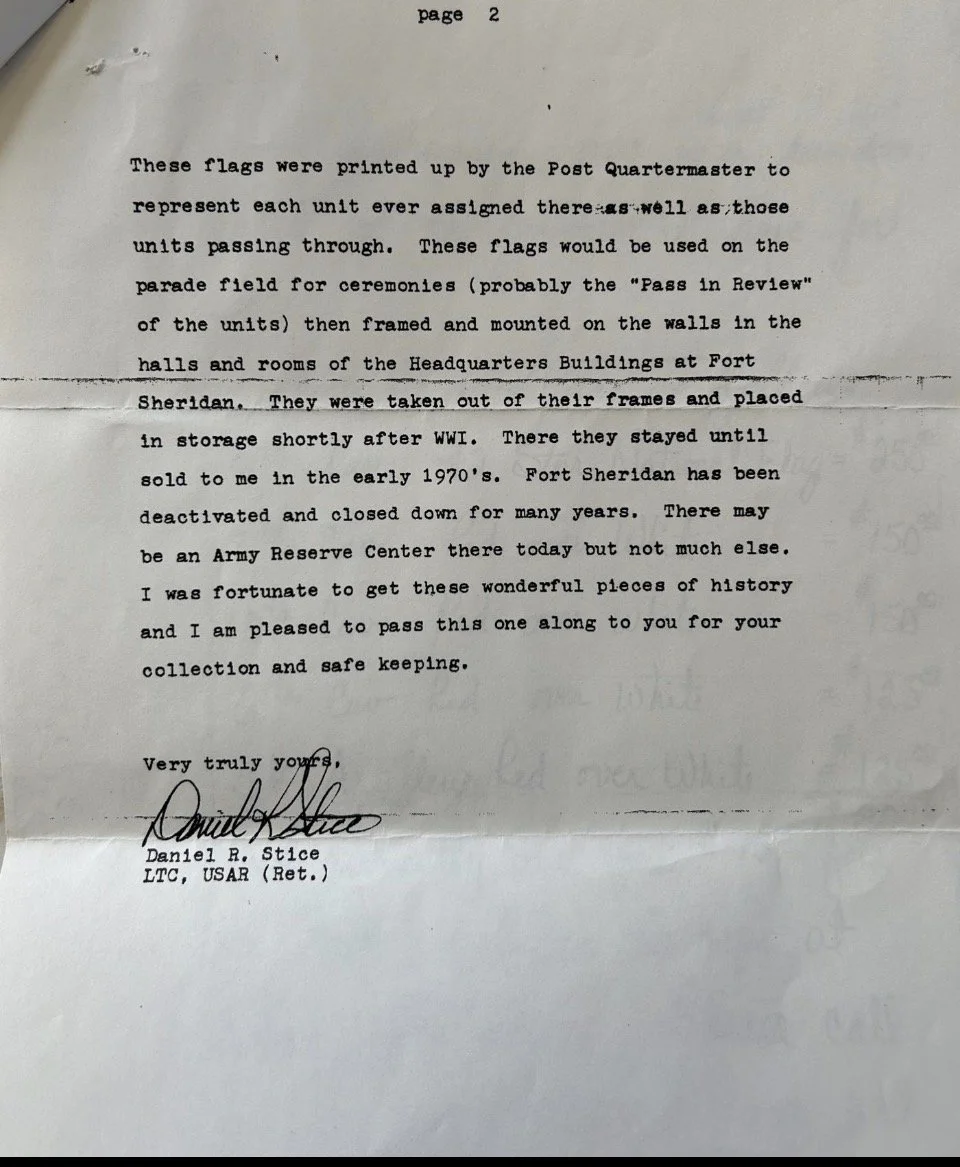 Image 4 of 7
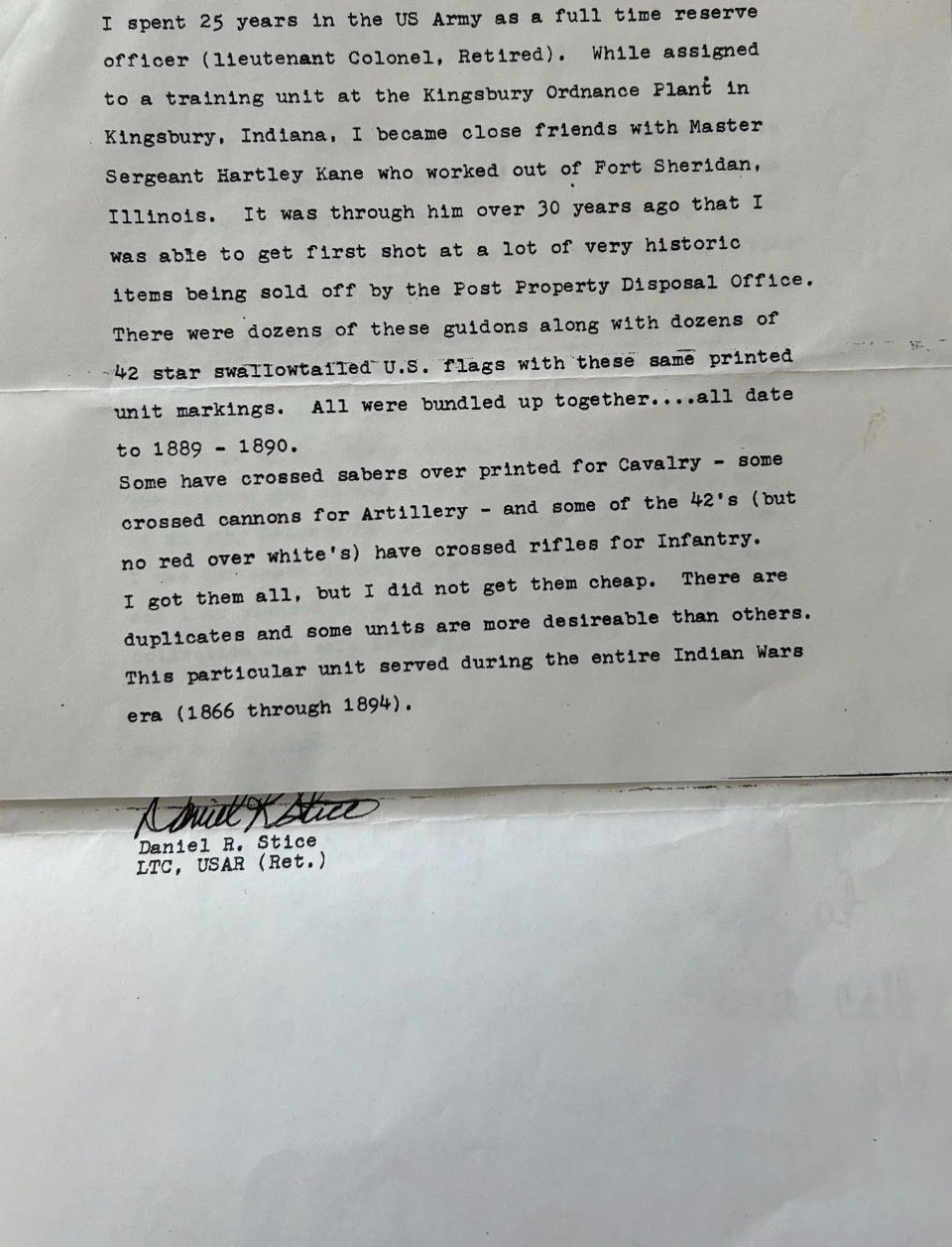 Image 5 of 7
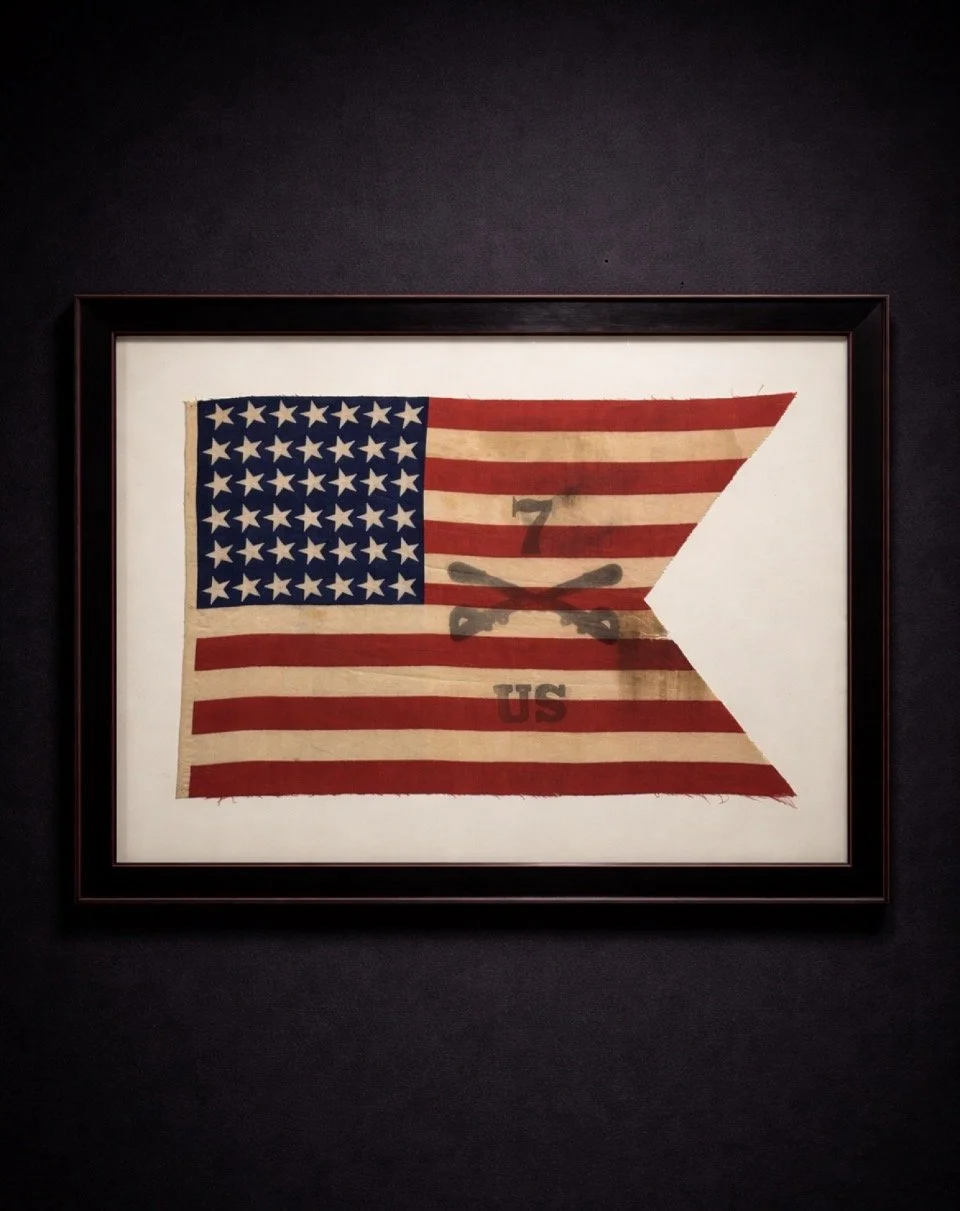 Image 6 of 7
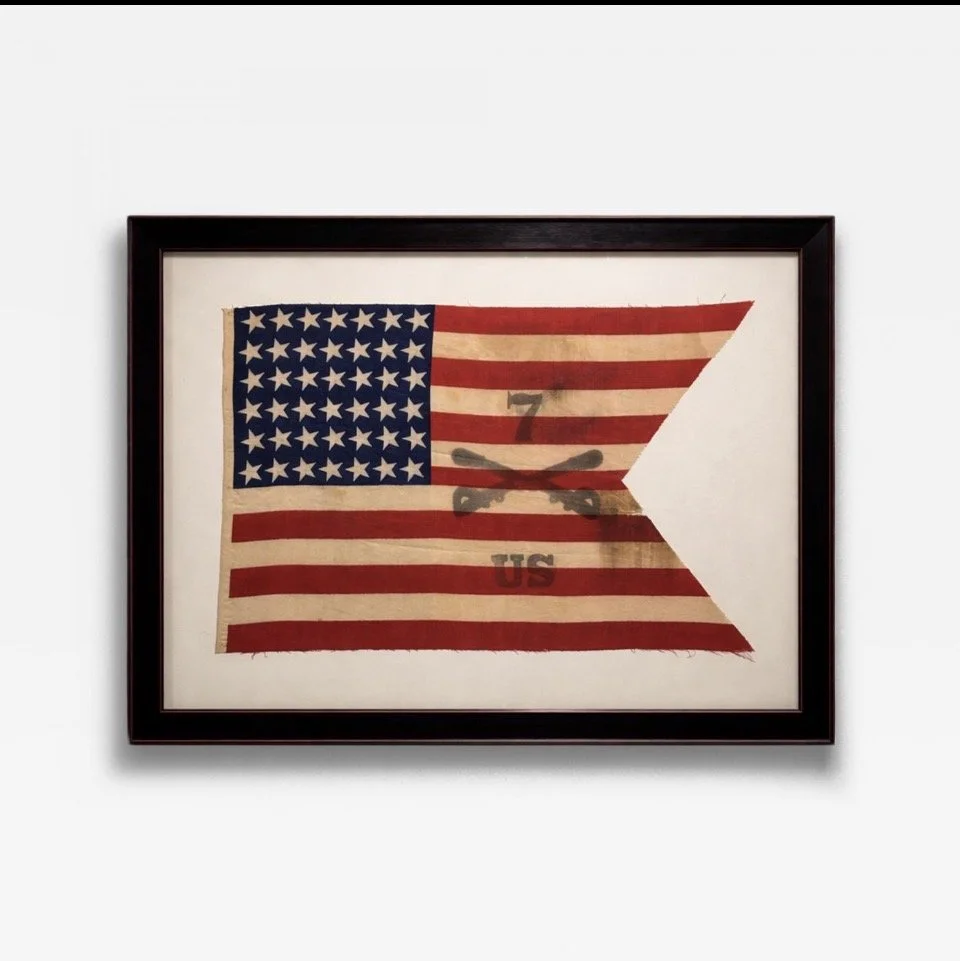 Image 7 of 7