HENRI MATISSE (1869–1954)
Léda et le cygne (Study for the Anchorena Commission)
Circa 1945
Pencil on paper
10⅝ x 8¼ in. (27 x 21 cm.)
Stamped HM lower left
Provenance:
Estate of the Artist; by descent through the Matisse family; authenticated by Georges Matisse; Private collection.
The present drawing belongs to one of the most important decorative projects of Henri Matisse's final decade and provides a rare glimpse into the creative process behind his celebrated masterpiece, Léda et le cygne (Leda and the Swan). https://www.youtube.com/watch?v=iYgDY74fqWs
The significance of the Anchorena commission within Matisse's oeuvre cannot be overstated. Scholarly literature records that the project became a central artistic preoccupation during the final years of the Second World War and anticipated many of the formal innovations that would define the artist's late career. Contemporary photographs of the work in progress show the monumental panels standing in Matisse's studio while the artist developed the composition through a series of preparatory studies and revisions.
The finished triptych, Léda et le cygne, achieved an important place within twentieth-century art history. It was exhibited at Galerie Maeght in Paris, included in major retrospectives devoted to Matisse, reproduced in numerous scholarly publications, and discussed extensively in the literature surrounding the artist's late decorative commissions. The composition appears in studies by Alfred H. Barr Jr., Louis Aragon, Pierre Schneider, Jack Flam, Hilary Spurling, and numerous exhibition catalogues devoted to the artist's mature work.
The present drawing is particularly important because it preserves the moment in which Matisse reduced the composition to its essential visual structure. Here the artist abandons descriptive detail in favor of pure line. The resulting image possesses a remarkable sense of spontaneity while simultaneously revealing the discipline and refinement that underlay Matisse's creative process. Such studies provide invaluable evidence of the artist's search for what he described as the perfect balance between feeling, form, and decorative expression.
An additional layer of significance derives from the later history of the monumental painting itself. Following its early exhibition history, Léda et le cygne entered one of the most distinguished private collections of modern art assembled in the United States, the celebrated Pritzker Collection. The painting's inclusion within that collection underscores its importance among Matisse's late masterpieces and further enhances the historical relevance of surviving preparatory studies connected to the project.Unlike the finished decorative panels, which were intended to function as architectural elements within an interior environment, the present drawing offers direct access to Matisse's hand and thought process. The viewer encounters the artist at the moment of invention, witnessing the transformation of a classical subject into a modern visual language that would profoundly influence generations of artists.
Retained within the artist's family, authenticated by Georges Matisse, and connected to one of the most celebrated decorative projects of Matisse's late career, this drawing stands as both an independent work of exceptional elegance and a significant document in the evolution of a twentieth-century masterpiece.
Selected References: Alfred H. Barr Jr., Matisse: His Art and His Public.
Louis Aragon, Henri Matisse: A Novel.
Pierre Schneider, Matisse.
Jack Flam, Matisse on Art.
Hilary Spurling, Matisse the Master.
Fondation Maeght, À la rencontre de Matisse, 1969.
Catalogue de l'oeuvre peint de Henri Matisse.
Christie's, Henri Matisse, Léda et le cygne, authenticated by Georges Matisse.
Sotheby's, The Cindy and Jay Pritzker Collection, Léda et le cygne.
https://www.youtube.com/watch?v=iYgDY74fqWs
Essay
Among the most revealing works by Henri Matisse are the intimate drawings that document the evolution of his greatest decorative projects. This elegant pencil study, executed circa 1945, belongs to the celebrated creative cycle surrounding Léda et le cygne (Leda and the Swan), one of the artist's most ambitious late commissions.
The subject derives from the ancient Greek myth of Leda, who was visited by Zeus in the form of a swan. For centuries the story inspired artists ranging from Leonardo da Vinci and Michelangelo to Rubens. Matisse, however, approached the theme through a radically modern lens. Rather than narrating the myth in traditional academic fashion, he distilled the composition into a lyrical arrangement of flowing contours and rhythmic forms.
This drawing was created during the development of the monumental three-panel decorative work commissioned by Argentine diplomat Marcelo Fernández Anchorena and his wife Hortensia González de Fernández Anchorena for their Paris residence. Executed between 1944 and 1946, the finished Léda et le cygne became one of the defining achievements of Matisse's final decade and marked an important transition toward the simplified visual language that would culminate in his celebrated cut-outs.
The present study demonstrates Matisse's extraordinary ability to convey volume, movement, and emotion with the most economical means. A few continuous lines define both the female figure and the swan, transforming a classical narrative into an abstract meditation on grace and harmony. The reduction of form to pure contour represents one of the central innovations of Matisse's mature style.
Scholarly research has established the significance of the Anchorena commission within Matisse's late career. The monumental painting was extensively exhibited and published, appearing in major museum exhibitions and important scholarly publications devoted to the artist. Preparatory drawings such as the present example provide rare insight into the evolution of one of Matisse's most celebrated decorative compositions.
Unlike many finished works that conceal the artist's process, this drawing preserves the immediacy of creation. Here the viewer witnesses Matisse refining the essential relationships between figure, movement, and space. The economy of line, confidence of execution, and remarkable sense of balance demonstrate why Matisse remains one of the most influential artists of the twentieth century.
Retained within the artist's family and later authenticated by Georges Matisse, this work possesses an exceptional provenance that directly connects it to the artist and to one of the most important decorative projects of his final years. More than a preparatory sketch, it is a tangible record of Matisse's creative imagination at work and a rare surviving witness to the conception of a major masterpiece.
HENRI MATISSE (1869–1954)
Léda et le cygne (Study for the Anchorena Commission)
Circa 1945
Pencil on paper
10⅝ x 8¼ in. (27 x 21 cm.)
Stamped HM lower left
Provenance:
Estate of the Artist; by descent through the Matisse family; authenticated by Georges Matisse; Private collection.
The present drawing belongs to one of the most important decorative projects of Henri Matisse's final decade and provides a rare glimpse into the creative process behind his celebrated masterpiece, Léda et le cygne (Leda and the Swan). https://www.youtube.com/watch?v=iYgDY74fqWs
The significance of the Anchorena commission within Matisse's oeuvre cannot be overstated. Scholarly literature records that the project became a central artistic preoccupation during the final years of the Second World War and anticipated many of the formal innovations that would define the artist's late career. Contemporary photographs of the work in progress show the monumental panels standing in Matisse's studio while the artist developed the composition through a series of preparatory studies and revisions.
The finished triptych, Léda et le cygne, achieved an important place within twentieth-century art history. It was exhibited at Galerie Maeght in Paris, included in major retrospectives devoted to Matisse, reproduced in numerous scholarly publications, and discussed extensively in the literature surrounding the artist's late decorative commissions. The composition appears in studies by Alfred H. Barr Jr., Louis Aragon, Pierre Schneider, Jack Flam, Hilary Spurling, and numerous exhibition catalogues devoted to the artist's mature work.
The present drawing is particularly important because it preserves the moment in which Matisse reduced the composition to its essential visual structure. Here the artist abandons descriptive detail in favor of pure line. The resulting image possesses a remarkable sense of spontaneity while simultaneously revealing the discipline and refinement that underlay Matisse's creative process. Such studies provide invaluable evidence of the artist's search for what he described as the perfect balance between feeling, form, and decorative expression.
An additional layer of significance derives from the later history of the monumental painting itself. Following its early exhibition history, Léda et le cygne entered one of the most distinguished private collections of modern art assembled in the United States, the celebrated Pritzker Collection. The painting's inclusion within that collection underscores its importance among Matisse's late masterpieces and further enhances the historical relevance of surviving preparatory studies connected to the project.Unlike the finished decorative panels, which were intended to function as architectural elements within an interior environment, the present drawing offers direct access to Matisse's hand and thought process. The viewer encounters the artist at the moment of invention, witnessing the transformation of a classical subject into a modern visual language that would profoundly influence generations of artists.
Retained within the artist's family, authenticated by Georges Matisse, and connected to one of the most celebrated decorative projects of Matisse's late career, this drawing stands as both an independent work of exceptional elegance and a significant document in the evolution of a twentieth-century masterpiece.
Selected References: Alfred H. Barr Jr., Matisse: His Art and His Public.
Louis Aragon, Henri Matisse: A Novel.
Pierre Schneider, Matisse.
Jack Flam, Matisse on Art.
Hilary Spurling, Matisse the Master.
Fondation Maeght, À la rencontre de Matisse, 1969.
Catalogue de l'oeuvre peint de Henri Matisse.
Christie's, Henri Matisse, Léda et le cygne, authenticated by Georges Matisse.
Sotheby's, The Cindy and Jay Pritzker Collection, Léda et le cygne.
https://www.youtube.com/watch?v=iYgDY74fqWs
Essay
Among the most revealing works by Henri Matisse are the intimate drawings that document the evolution of his greatest decorative projects. This elegant pencil study, executed circa 1945, belongs to the celebrated creative cycle surrounding Léda et le cygne (Leda and the Swan), one of the artist's most ambitious late commissions.
The subject derives from the ancient Greek myth of Leda, who was visited by Zeus in the form of a swan. For centuries the story inspired artists ranging from Leonardo da Vinci and Michelangelo to Rubens. Matisse, however, approached the theme through a radically modern lens. Rather than narrating the myth in traditional academic fashion, he distilled the composition into a lyrical arrangement of flowing contours and rhythmic forms.
This drawing was created during the development of the monumental three-panel decorative work commissioned by Argentine diplomat Marcelo Fernández Anchorena and his wife Hortensia González de Fernández Anchorena for their Paris residence. Executed between 1944 and 1946, the finished Léda et le cygne became one of the defining achievements of Matisse's final decade and marked an important transition toward the simplified visual language that would culminate in his celebrated cut-outs.
The present study demonstrates Matisse's extraordinary ability to convey volume, movement, and emotion with the most economical means. A few continuous lines define both the female figure and the swan, transforming a classical narrative into an abstract meditation on grace and harmony. The reduction of form to pure contour represents one of the central innovations of Matisse's mature style.
Scholarly research has established the significance of the Anchorena commission within Matisse's late career. The monumental painting was extensively exhibited and published, appearing in major museum exhibitions and important scholarly publications devoted to the artist. Preparatory drawings such as the present example provide rare insight into the evolution of one of Matisse's most celebrated decorative compositions.
Unlike many finished works that conceal the artist's process, this drawing preserves the immediacy of creation. Here the viewer witnesses Matisse refining the essential relationships between figure, movement, and space. The economy of line, confidence of execution, and remarkable sense of balance demonstrate why Matisse remains one of the most influential artists of the twentieth century.
Retained within the artist's family and later authenticated by Georges Matisse, this work possesses an exceptional provenance that directly connects it to the artist and to one of the most important decorative projects of his final years. More than a preparatory sketch, it is a tangible record of Matisse's creative imagination at work and a rare surviving witness to the conception of a major masterpiece.
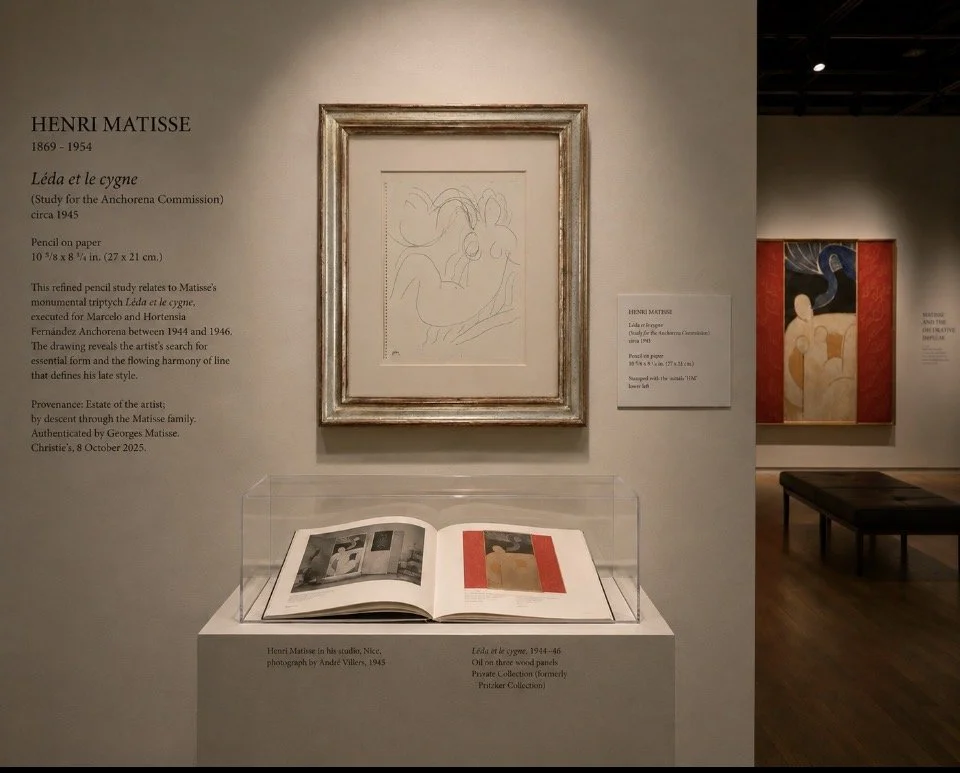 Image 1 of 8
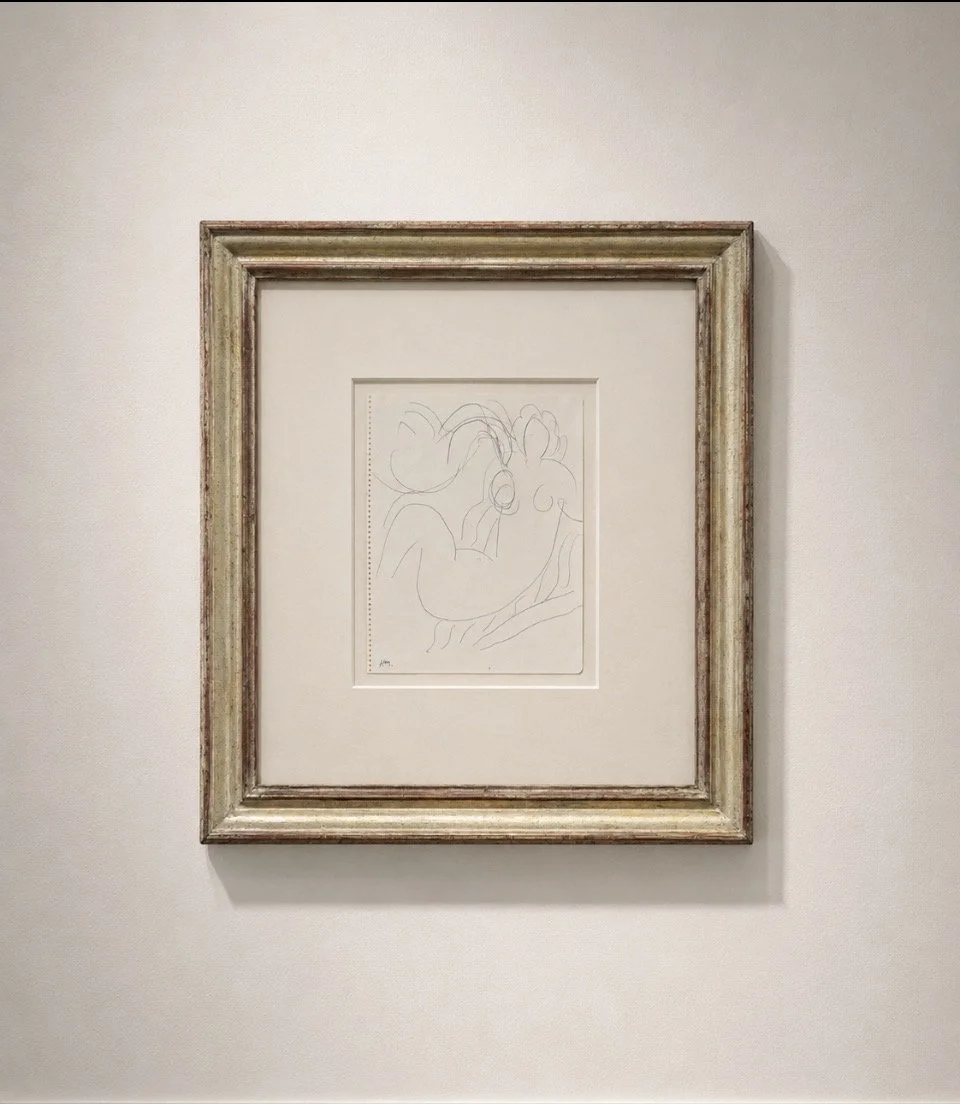 Image 2 of 8
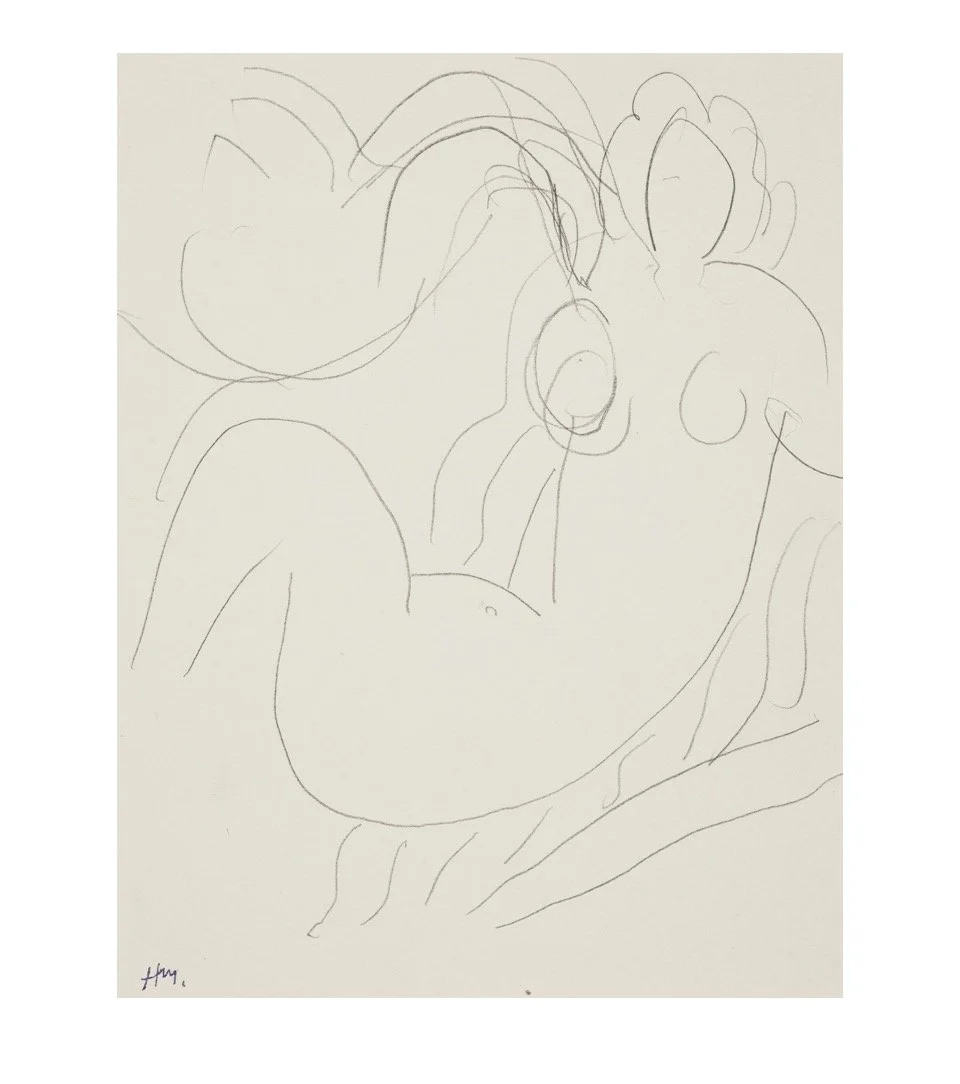 Image 3 of 8
 Image 4 of 8
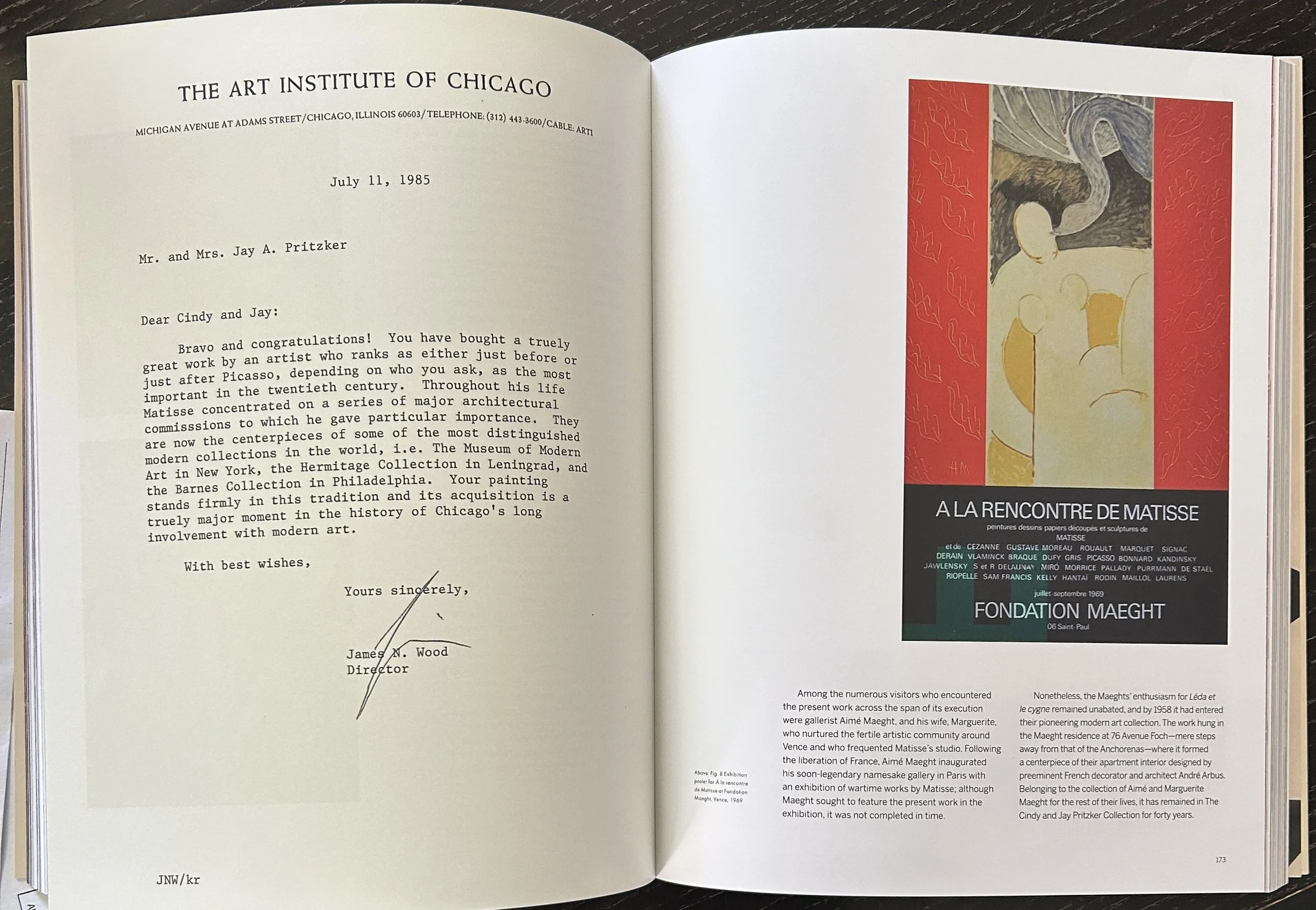 Image 5 of 8
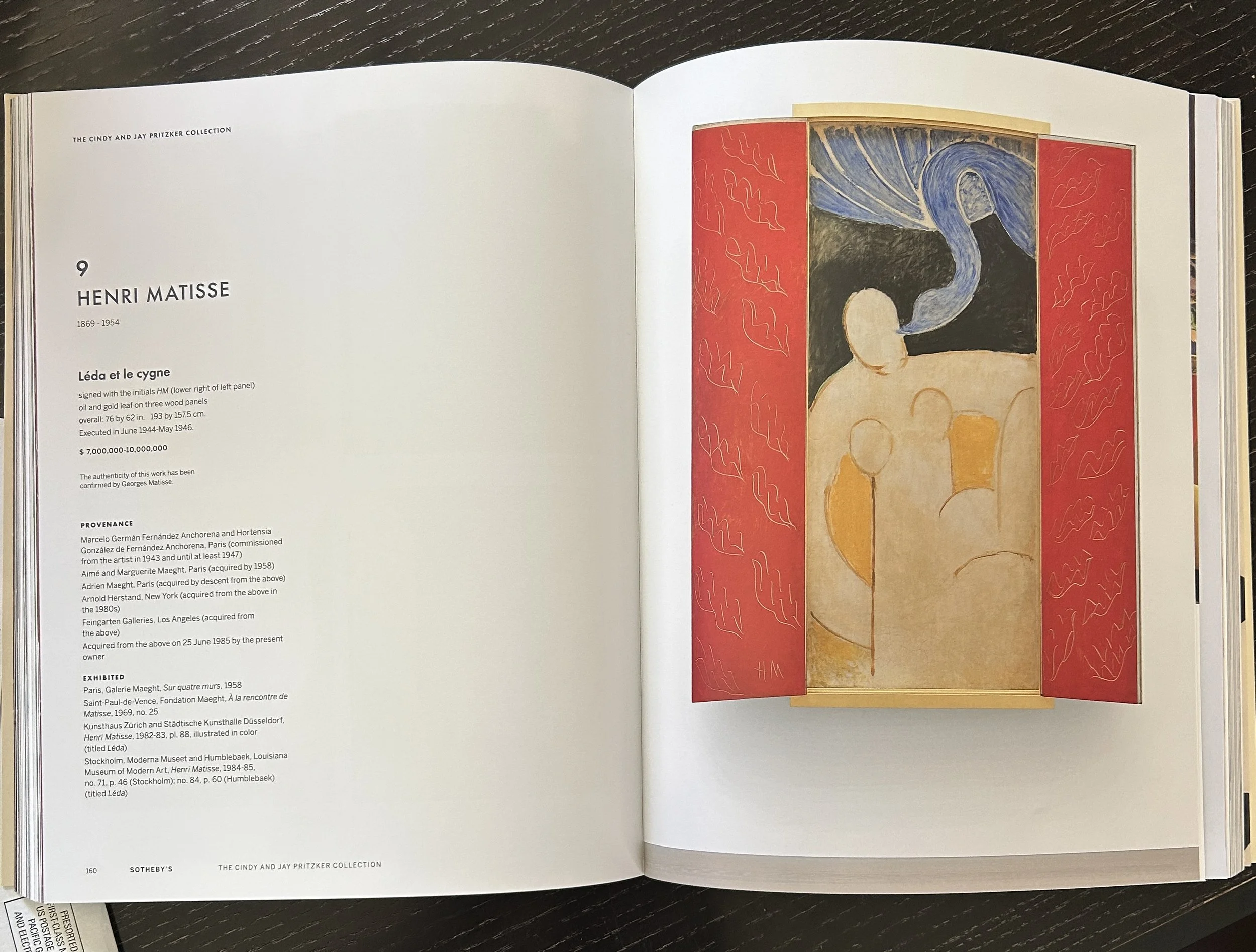 Image 6 of 8
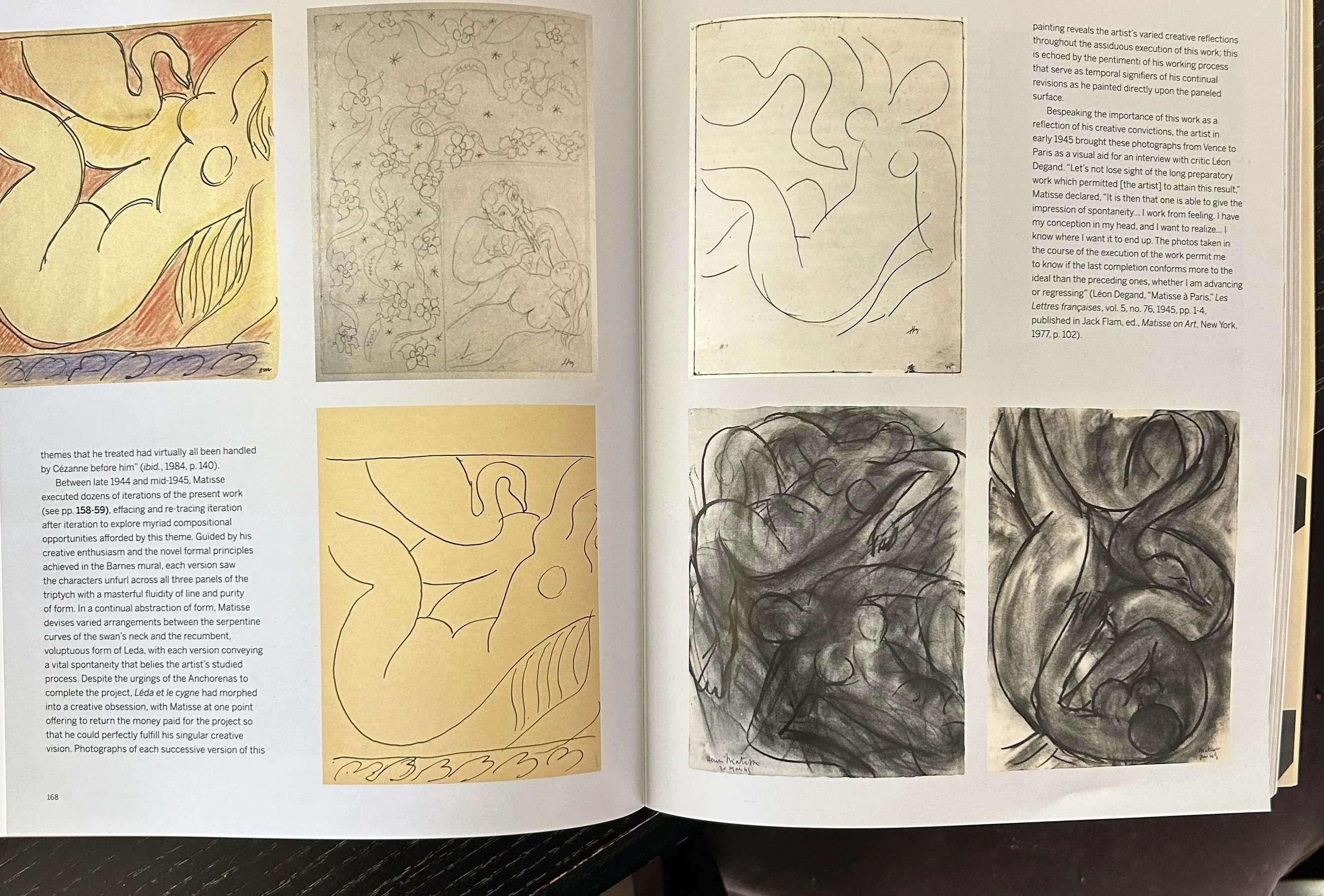 Image 7 of 8