Felix Degherty
George Washington on Horseback
Dated May 18, 1810
Watercolor, pen and ink on paper
10 × 12 inches
Provenance
James Maroney, New York;
Sotheby’s, New York, October 24, 1993, lot 137;
Sotheby’s, New York, 2005, lot 993;
Property of a Distinguished American Collector;
Christie’s, New York, December 11–12, 2013, lot 800.
Exhibition Description
This rare and engaging early nineteenth-century watercolor depicts George Washington mounted on horseback, presented not merely as the first President of the United States, but as the victorious commander, national patriarch, and enduring symbol of the American Republic.
Signed lower left by Felix Degherty and dated lower right “pinxit May 18, 1810,” the drawing was executed only eleven years after Washington’s death in 1799. Its early date gives the work particular historical importance, placing it within the first generation of American commemorative imagery created in Washington’s memory.
Washington is shown in military dress, seated upright on a carefully rendered bay horse. His blue coat, buff waistcoat, white breeches, sword, and bicorne hat connect him visually to his role as Commander-in-Chief of the Continental Army during the American Revolution. The composition presents him as a disciplined and dignified leader, calm in authority and restrained in power.
The horse is central to the strength of the image. Washington was widely admired in his lifetime as an exceptional horseman, and equestrian imagery became an important part of his heroic identity. Here, the horse’s arched neck, lifted leg, flowing tail, and elegant posture lend the composition movement and nobility. The mounted format recalls European traditions of military portraiture, but Degherty transforms that tradition into a distinctly American image of republican virtue.
The work combines refined Federal-period patriotism with the charm and directness of American folk art. The use of pen-and-ink outline, transparent watercolor, decorative ground, and simplified modeling gives the drawing a personal and intimate quality. Unlike grand oil portraits intended for public institutions, this watercolor likely reflects the type of patriotic image cherished in an early American home or private collection.
The Sitter: George Washington
George Washington remains one of the central figures in American history. As Commander-in-Chief of the Continental Army, he led the colonies through the Revolutionary War. As president of the Constitutional Convention, he helped shape the structure of the new nation. As the first President of the United States, he established many of the customs of the American presidency.
By 1810, Washington had already become a national icon. His image appeared in paintings, engravings, prints, household objects, and memorial works. To Americans of the early Republic, Washington represented courage, unity, moderation, public service, and the peaceful transfer of power.
This drawing belongs to that important tradition of early Washington imagery. It is not only a likeness of a man, but a visual expression of national memory.
The Artist: Felix Degherty
Little is currently known about Felix Degherty, which adds to the intrigue and rarity of the drawing. The signed inscription and date are especially valuable because many early American folk and provincial works on paper are unsigned.
The Latin term “pinxit,” meaning “painted by,” suggests that Degherty wished to identify the work as a finished artistic creation rather than a simple copy or decorative drawing. His careful attention to costume, pose, horse, and patriotic subject matter indicates familiarity with the visual culture of Washington portraiture circulating in prints and engravings during the early nineteenth century.
Documented signed works by Degherty appear to be rare, making this watercolor an important example of early American patriotic works on paper by an identified artist.
Importance
This drawing is significant for several reasons:
It is an early dated image of George Washington, created in 1810, close to the founding generation.
It is signed by the artist, Felix Degherty, giving the work added documentary value.
It presents Washington in equestrian form, one of the most powerful and historically meaningful formats of military portraiture.
It combines Washingtoniana, early American folk art, Federal-period patriotism, and works on paper.
It carries a strong auction provenance through Sotheby’s and Christie’s, with ownership history connected to a distinguished American collection.
Gallery Statement
George Washington on Horseback is a rare survival of early American patriotic art. Intimate in scale yet powerful in subject, the drawing captures the reverence Americans felt for Washington in the years following his death. Through its combination of history, folk-art character, signed authorship, early date, and distinguished provenance, this watercolor stands as a compelling work for collectors of Washingtoniana, Americana, and early American works on paper.
Felix Degherty
George Washington on Horseback
Dated May 18, 1810
Watercolor, pen and ink on paper
10 × 12 inches
Provenance
James Maroney, New York;
Sotheby’s, New York, October 24, 1993, lot 137;
Sotheby’s, New York, 2005, lot 993;
Property of a Distinguished American Collector;
Christie’s, New York, December 11–12, 2013, lot 800.
Exhibition Description
This rare and engaging early nineteenth-century watercolor depicts George Washington mounted on horseback, presented not merely as the first President of the United States, but as the victorious commander, national patriarch, and enduring symbol of the American Republic.
Signed lower left by Felix Degherty and dated lower right “pinxit May 18, 1810,” the drawing was executed only eleven years after Washington’s death in 1799. Its early date gives the work particular historical importance, placing it within the first generation of American commemorative imagery created in Washington’s memory.
Washington is shown in military dress, seated upright on a carefully rendered bay horse. His blue coat, buff waistcoat, white breeches, sword, and bicorne hat connect him visually to his role as Commander-in-Chief of the Continental Army during the American Revolution. The composition presents him as a disciplined and dignified leader, calm in authority and restrained in power.
The horse is central to the strength of the image. Washington was widely admired in his lifetime as an exceptional horseman, and equestrian imagery became an important part of his heroic identity. Here, the horse’s arched neck, lifted leg, flowing tail, and elegant posture lend the composition movement and nobility. The mounted format recalls European traditions of military portraiture, but Degherty transforms that tradition into a distinctly American image of republican virtue.
The work combines refined Federal-period patriotism with the charm and directness of American folk art. The use of pen-and-ink outline, transparent watercolor, decorative ground, and simplified modeling gives the drawing a personal and intimate quality. Unlike grand oil portraits intended for public institutions, this watercolor likely reflects the type of patriotic image cherished in an early American home or private collection.
The Sitter: George Washington
George Washington remains one of the central figures in American history. As Commander-in-Chief of the Continental Army, he led the colonies through the Revolutionary War. As president of the Constitutional Convention, he helped shape the structure of the new nation. As the first President of the United States, he established many of the customs of the American presidency.
By 1810, Washington had already become a national icon. His image appeared in paintings, engravings, prints, household objects, and memorial works. To Americans of the early Republic, Washington represented courage, unity, moderation, public service, and the peaceful transfer of power.
This drawing belongs to that important tradition of early Washington imagery. It is not only a likeness of a man, but a visual expression of national memory.
The Artist: Felix Degherty
Little is currently known about Felix Degherty, which adds to the intrigue and rarity of the drawing. The signed inscription and date are especially valuable because many early American folk and provincial works on paper are unsigned.
The Latin term “pinxit,” meaning “painted by,” suggests that Degherty wished to identify the work as a finished artistic creation rather than a simple copy or decorative drawing. His careful attention to costume, pose, horse, and patriotic subject matter indicates familiarity with the visual culture of Washington portraiture circulating in prints and engravings during the early nineteenth century.
Documented signed works by Degherty appear to be rare, making this watercolor an important example of early American patriotic works on paper by an identified artist.
Importance
This drawing is significant for several reasons:
It is an early dated image of George Washington, created in 1810, close to the founding generation.
It is signed by the artist, Felix Degherty, giving the work added documentary value.
It presents Washington in equestrian form, one of the most powerful and historically meaningful formats of military portraiture.
It combines Washingtoniana, early American folk art, Federal-period patriotism, and works on paper.
It carries a strong auction provenance through Sotheby’s and Christie’s, with ownership history connected to a distinguished American collection.
Gallery Statement
George Washington on Horseback is a rare survival of early American patriotic art. Intimate in scale yet powerful in subject, the drawing captures the reverence Americans felt for Washington in the years following his death. Through its combination of history, folk-art character, signed authorship, early date, and distinguished provenance, this watercolor stands as a compelling work for collectors of Washingtoniana, Americana, and early American works on paper.
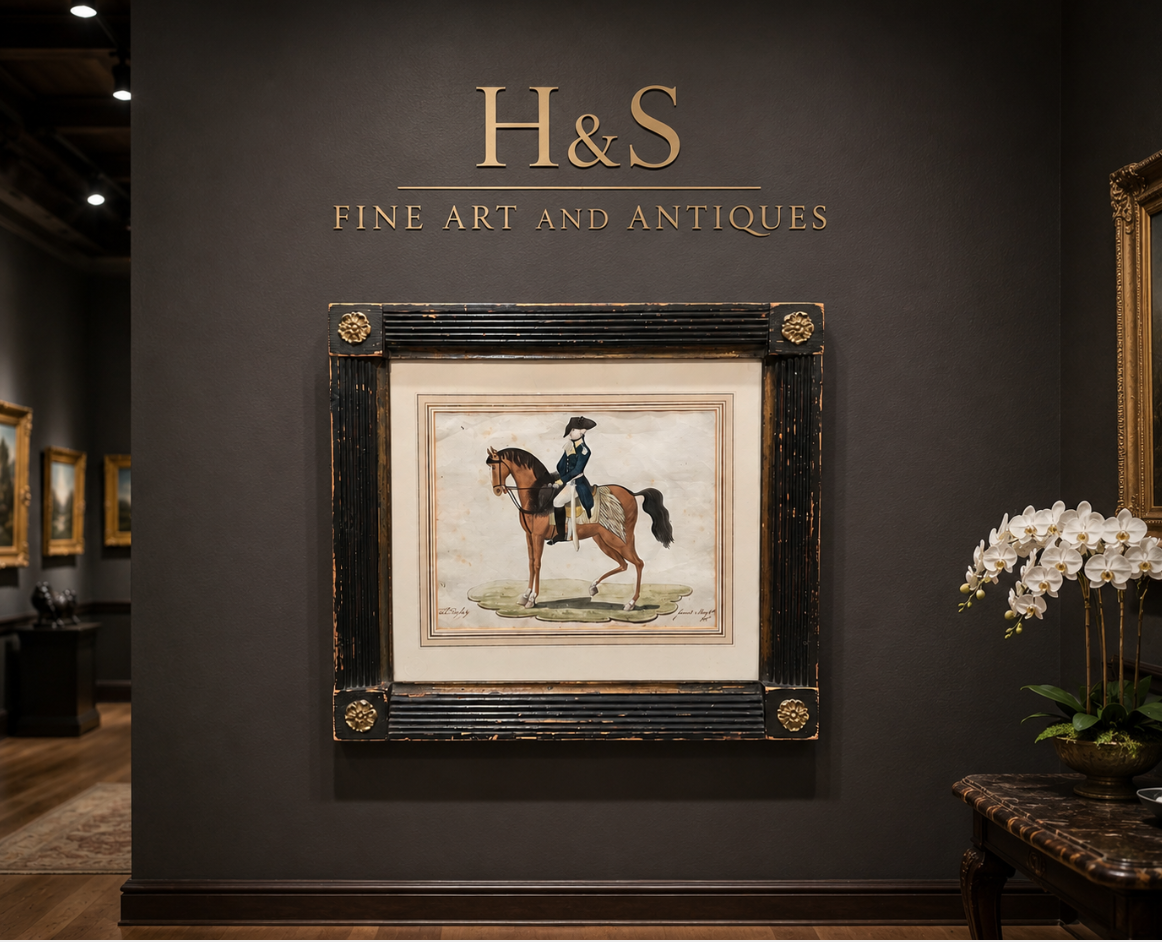 Image 1 of 6
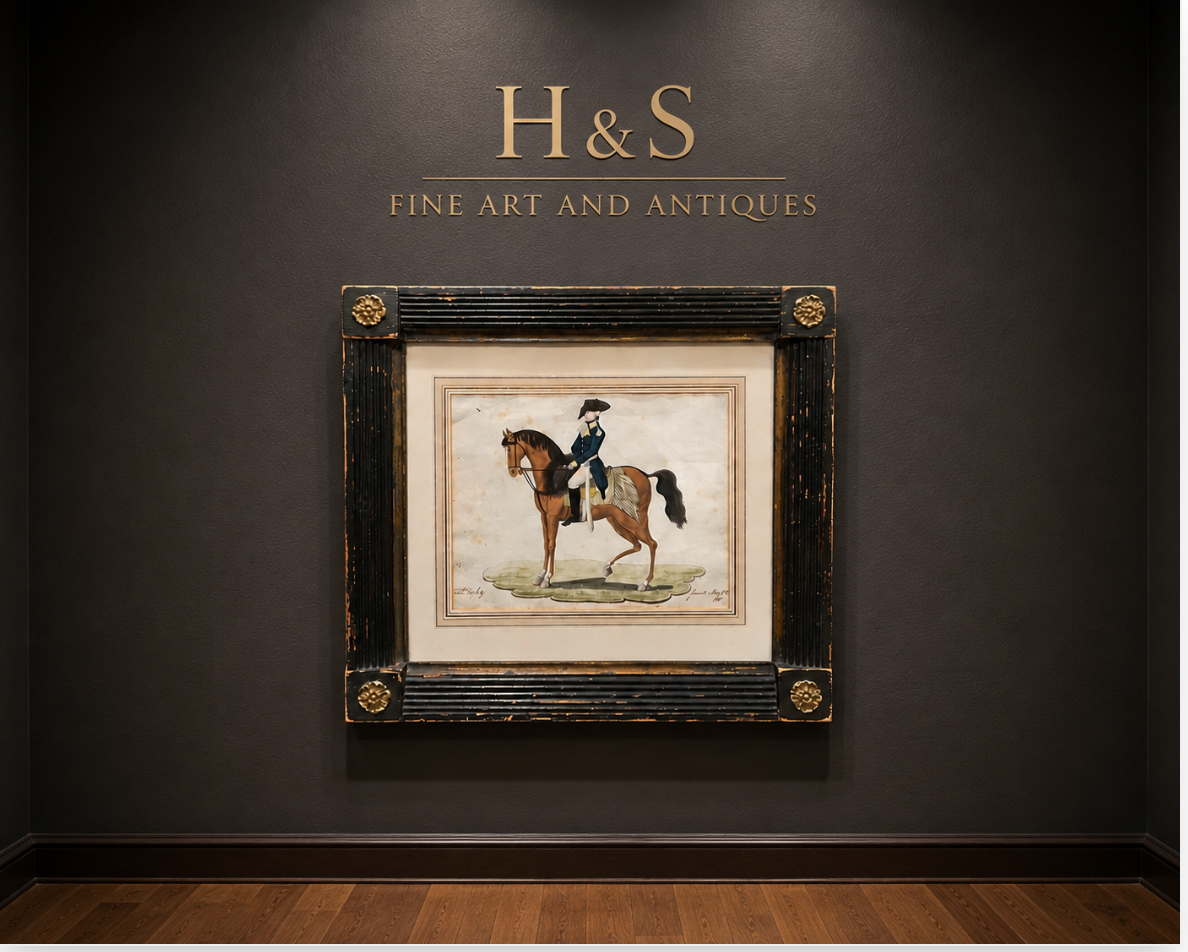 Image 2 of 6
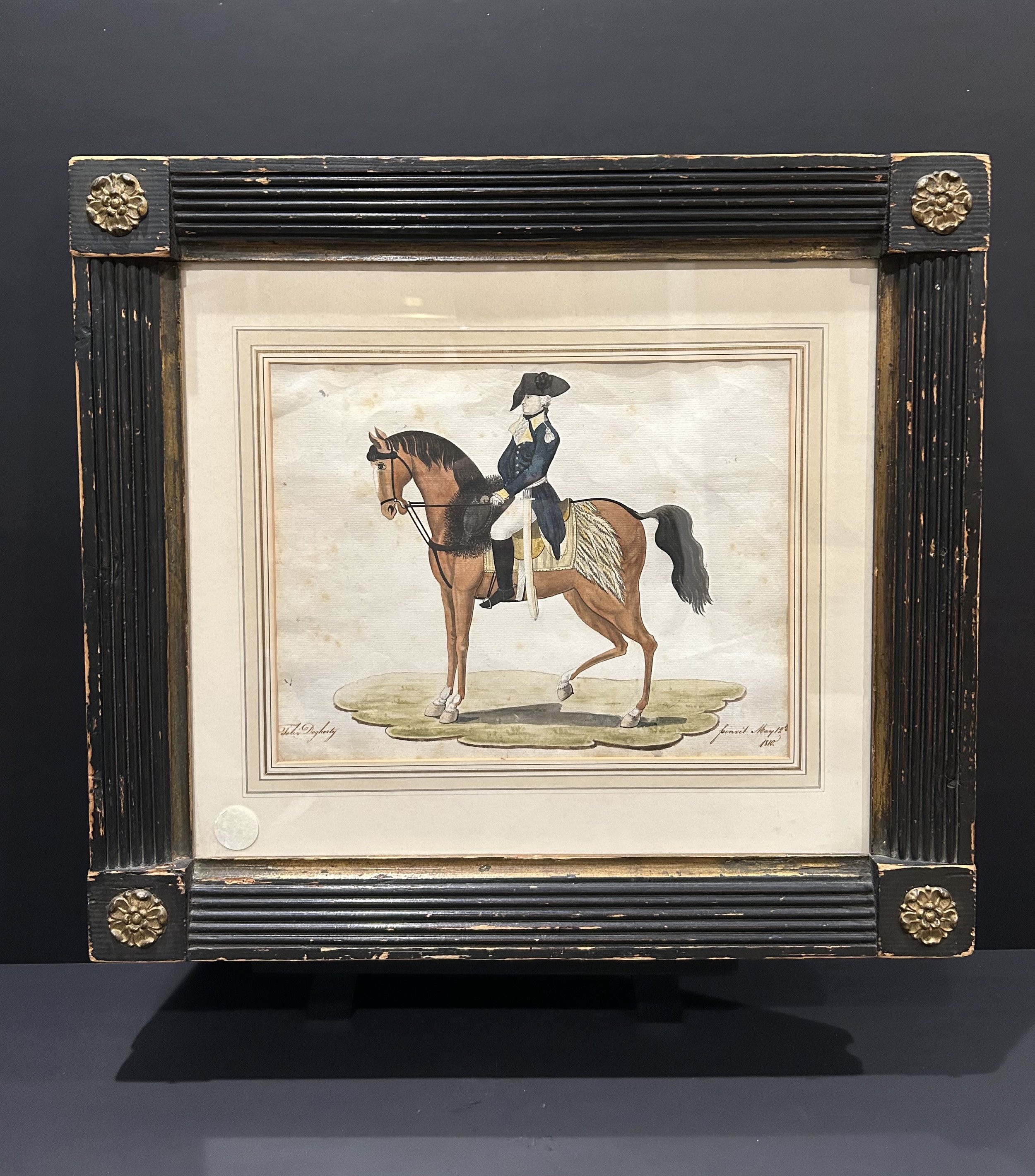 Image 3 of 6
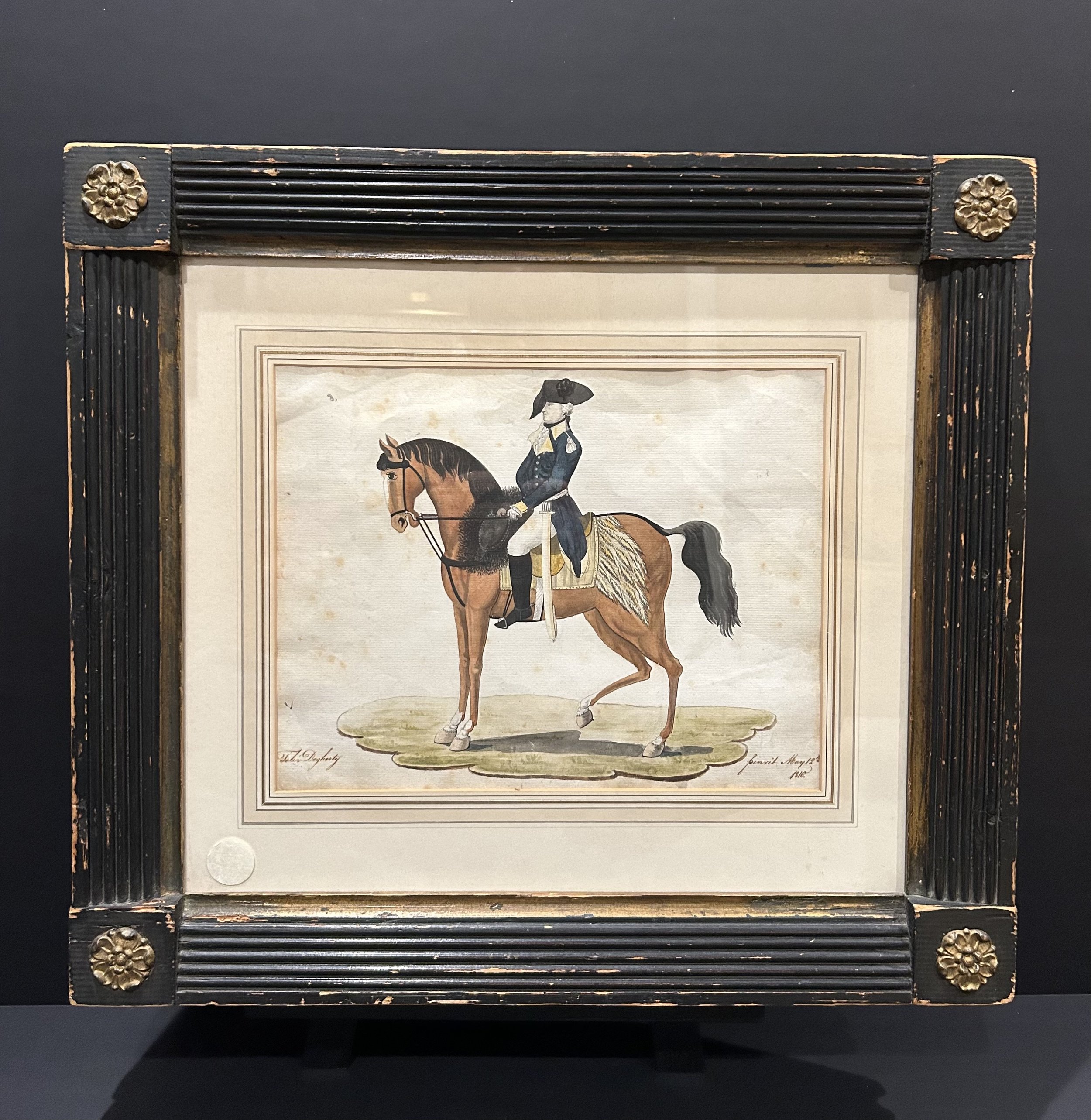 Image 4 of 6
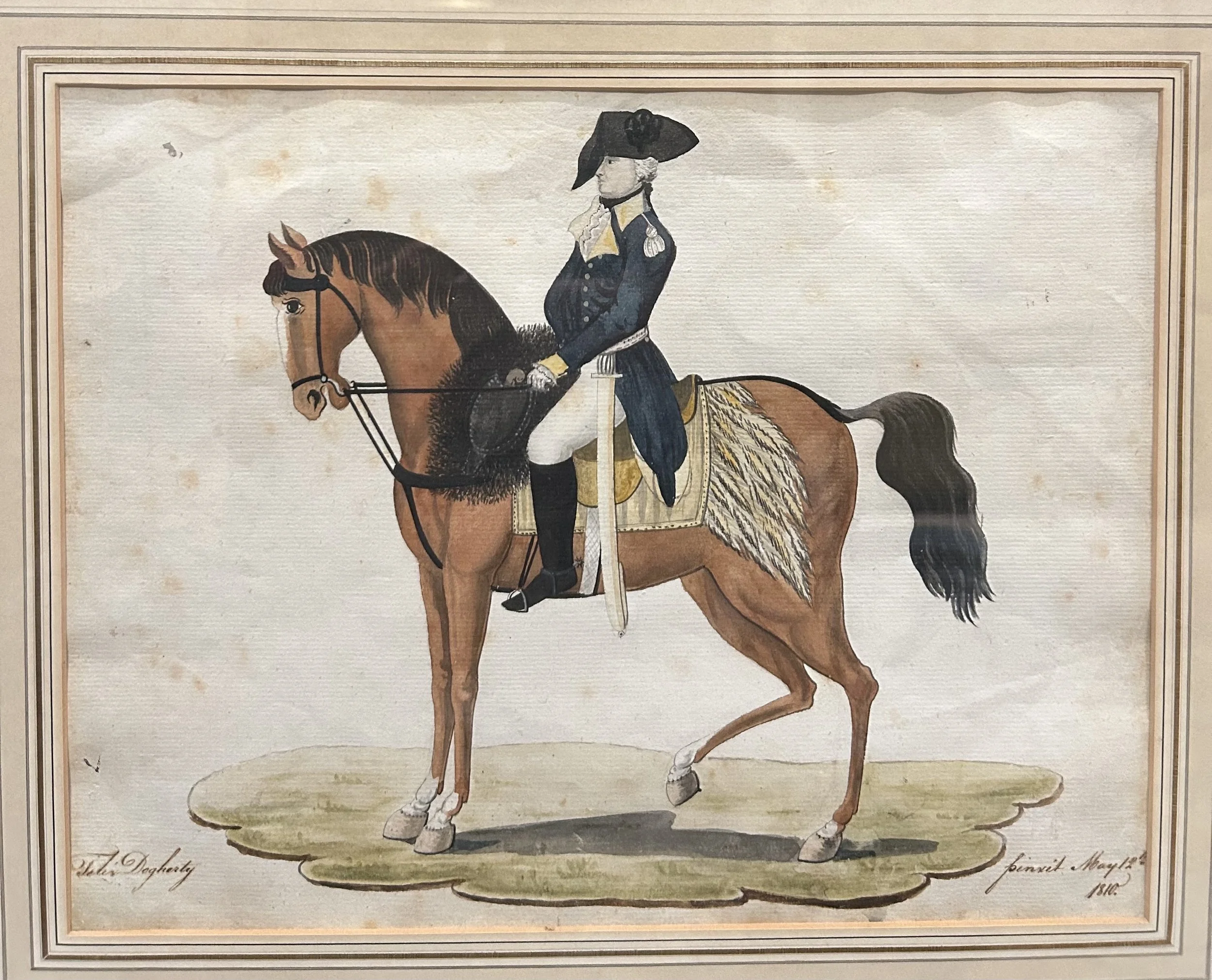 Image 5 of 6
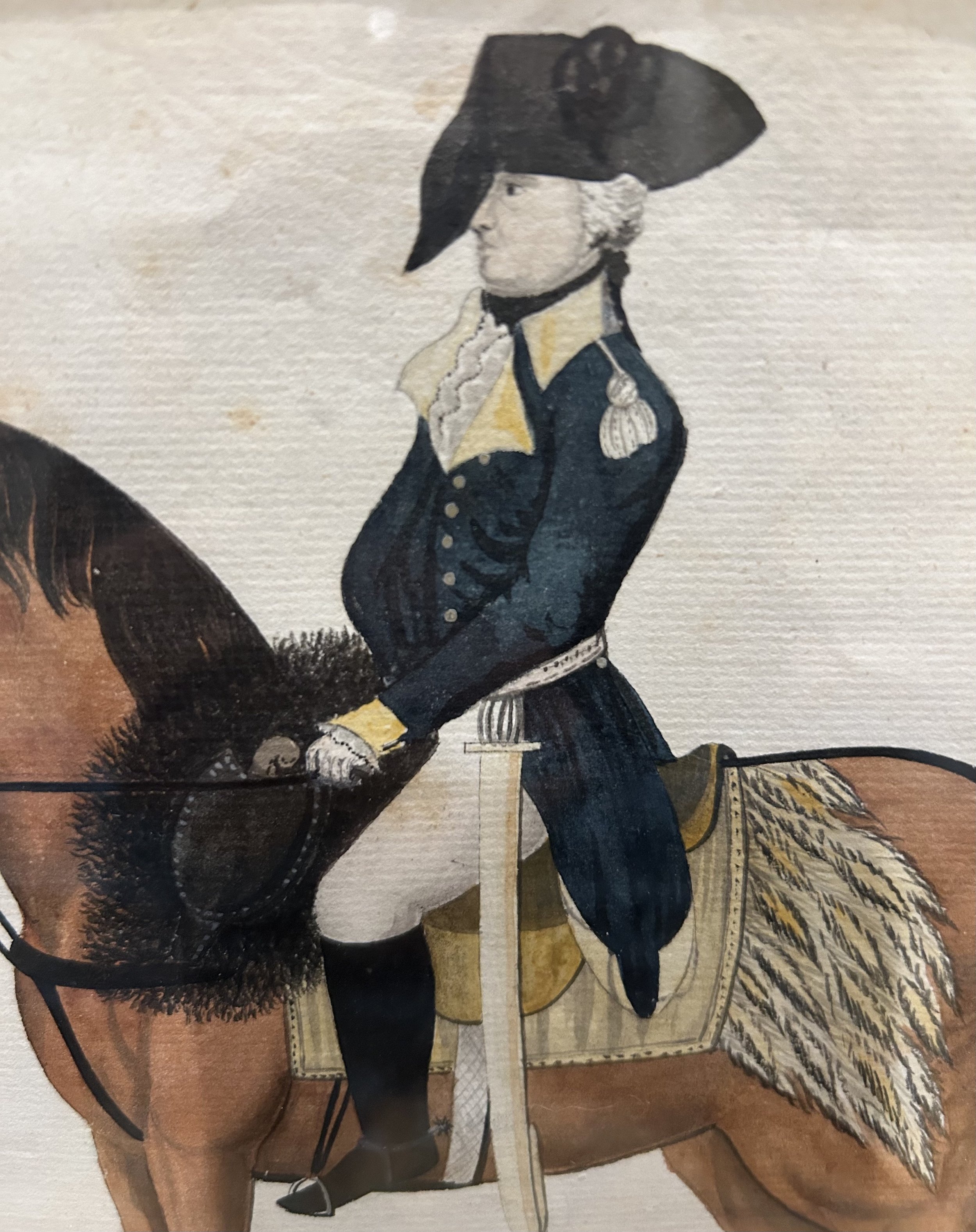 Image 6 of 6