THE AMERICAN CLIPPER SHIP MATCHLESS OFF VICTORIA, HONG KONG
Chinese School, Hong Kong, circa 1875
Oil on canvas
Published: Martyn Gregory, Treaty Port Views: Historical Pictures by Chinese and Western Artists 1750–1950, Catalogue 83, London, 2007–2008, p.118, no.193.
Provenance
Martyn Gregory, London.
Description
Against the dramatic backdrop of Victoria Harbour, Hong Kong, the American clipper Matchless appears under full sail, her towering masts carrying a magnificent spread of canvas while colorful signal flags rise above the foremast. The dark hull contrasts with the luminous sea and soft atmosphere of the distant mountains and harbor settlement, creating a striking balance between technical precision and poetic beauty.
Executed by an anonymous Chinese export artist working in Hong Kong during the late nineteenth century, the painting belongs to the distinguished tradition of treaty-port marine painting produced for Western captains, merchants, and shipowners. These artists were renowned for their ability to combine remarkable accuracy with atmospheric elegance, preserving vessels that often spent their lives far from home.
A pennant bearing the inscription "MATCHLESS" flies proudly above the vessel, while the American flag identifies her nationality. To the right lies the city of Victoria, Hong Kong, one of the principal crossroads of international commerce and among the most important centers for Chinese export marine painting.
History of the Vessel
The Matchless was a 1,198-ton American clipper built in 1870 by Curtis, Smith & Cushman of East Boston, Massachusetts. Although constructed after the golden age of the clipper ship, she belonged to the final generation of great American sailing vessels that continued to carry commerce across the Pacific and Indian Oceans.
Captain James H. Dawes, one of the vessel's principal owners, commanded the ship during most of her career, with command later passing to his son. The Dawes family maintained close ties to the ship throughout her existence, giving Matchless an unusual continuity of ownership and command.
During her service she undertook several voyages connected with San Francisco, linking New England and California with the ports of China and the Far East. These voyages formed part of the immense commercial network that connected the United States with Asia during the final decades of the nineteenth century.
Heroic Rescue off Cape Horn
One of the most dramatic episodes in the ship's history occurred in August 1870 when the vessel Japan, built at Bath, Maine in 1868 and commanded by Captain Emmons, caught fire while carrying coal from Cardiff to San Francisco. Near Cape Horn, Captain James H. Dawes brought the Matchless to the assistance of the stricken vessel and rescued her crew. This act of seamanship and humanity attracted considerable attention and was later immortalized in a remarkable reverse-glass painting by the Belgian marine artist Petrus Cornelis Weyts. The work survives and constitutes one of the rare artistic commemorations of an American maritime rescue.
Unfortunately, the names and subsequent careers of the rescued sailors of the Japan appear to have gone largely unrecorded, and no notable passengers or famous individuals are presently known to have been aboard either vessel during the incident. Nevertheless, the rescue itself stands as a testament to the traditions of mutual aid and courage that characterized nineteenth-century life at sea.
Trade with the Far East and Australia
Following her California voyages, Matchless entered the Eastern and Australian trades, regularly sailing between Hong Kong, China, Southeast Asia, and Australia. By this time steamships had begun to eclipse sailing vessels, yet American clippers such as Matchless continued to demonstrate the endurance and economy that had made them legends of maritime commerce.
Loss of the Ship
In 1883 the career of the Matchless came to an end when she drifted onto a reef in the Straits of Sunda between Java and Sumatra. The vessel foundered, but the captain and crew escaped in the ship's boats and reached Anjer safely. Although the ship herself was lost, no lives were sacrificed.
Condition
The painting survives in a very attractive state. The composition retains excellent clarity and color harmony, with finely preserved details of the rigging, sails, signal flags, and harbor setting. The canvas presents with a luminous surface and displays the delicate tonal transitions characteristic of Chinese export marine painting. Minor evidence of age and handling is consistent with a work of this period. Housed in an elegant black and gilt frame, the painting possesses exceptional decorative appeal while preserving its historical and documentary significance.
Significance
Named ship portraits of American clipper vessels are increasingly rare. Examples possessing a published history, an identified captain, documented voyages to San Francisco, association with Hong Kong, and a connection to a celebrated maritime rescue are particularly desirable. More than a portrait of a vessel, this painting stands as a surviving witness to the final chapter of the great American Age of Sail and to the global maritime world that connected New England, California, China, Australia, and the East Indies.
One additional avenue worth exploring would be Captain James H. Dawes himself. https://www.whalingmuseum.org/research/research-resources/manuscripts/mss-20/
THE AMERICAN CLIPPER SHIP MATCHLESS OFF VICTORIA, HONG KONG
Chinese School, Hong Kong, circa 1875
Oil on canvas
Published: Martyn Gregory, Treaty Port Views: Historical Pictures by Chinese and Western Artists 1750–1950, Catalogue 83, London, 2007–2008, p.118, no.193.
Provenance
Martyn Gregory, London.
Description
Against the dramatic backdrop of Victoria Harbour, Hong Kong, the American clipper Matchless appears under full sail, her towering masts carrying a magnificent spread of canvas while colorful signal flags rise above the foremast. The dark hull contrasts with the luminous sea and soft atmosphere of the distant mountains and harbor settlement, creating a striking balance between technical precision and poetic beauty.
Executed by an anonymous Chinese export artist working in Hong Kong during the late nineteenth century, the painting belongs to the distinguished tradition of treaty-port marine painting produced for Western captains, merchants, and shipowners. These artists were renowned for their ability to combine remarkable accuracy with atmospheric elegance, preserving vessels that often spent their lives far from home.
A pennant bearing the inscription "MATCHLESS" flies proudly above the vessel, while the American flag identifies her nationality. To the right lies the city of Victoria, Hong Kong, one of the principal crossroads of international commerce and among the most important centers for Chinese export marine painting.
History of the Vessel
The Matchless was a 1,198-ton American clipper built in 1870 by Curtis, Smith & Cushman of East Boston, Massachusetts. Although constructed after the golden age of the clipper ship, she belonged to the final generation of great American sailing vessels that continued to carry commerce across the Pacific and Indian Oceans.
Captain James H. Dawes, one of the vessel's principal owners, commanded the ship during most of her career, with command later passing to his son. The Dawes family maintained close ties to the ship throughout her existence, giving Matchless an unusual continuity of ownership and command.
During her service she undertook several voyages connected with San Francisco, linking New England and California with the ports of China and the Far East. These voyages formed part of the immense commercial network that connected the United States with Asia during the final decades of the nineteenth century.
Heroic Rescue off Cape Horn
One of the most dramatic episodes in the ship's history occurred in August 1870 when the vessel Japan, built at Bath, Maine in 1868 and commanded by Captain Emmons, caught fire while carrying coal from Cardiff to San Francisco. Near Cape Horn, Captain James H. Dawes brought the Matchless to the assistance of the stricken vessel and rescued her crew. This act of seamanship and humanity attracted considerable attention and was later immortalized in a remarkable reverse-glass painting by the Belgian marine artist Petrus Cornelis Weyts. The work survives and constitutes one of the rare artistic commemorations of an American maritime rescue.
Unfortunately, the names and subsequent careers of the rescued sailors of the Japan appear to have gone largely unrecorded, and no notable passengers or famous individuals are presently known to have been aboard either vessel during the incident. Nevertheless, the rescue itself stands as a testament to the traditions of mutual aid and courage that characterized nineteenth-century life at sea.
Trade with the Far East and Australia
Following her California voyages, Matchless entered the Eastern and Australian trades, regularly sailing between Hong Kong, China, Southeast Asia, and Australia. By this time steamships had begun to eclipse sailing vessels, yet American clippers such as Matchless continued to demonstrate the endurance and economy that had made them legends of maritime commerce.
Loss of the Ship
In 1883 the career of the Matchless came to an end when she drifted onto a reef in the Straits of Sunda between Java and Sumatra. The vessel foundered, but the captain and crew escaped in the ship's boats and reached Anjer safely. Although the ship herself was lost, no lives were sacrificed.
Condition
The painting survives in a very attractive state. The composition retains excellent clarity and color harmony, with finely preserved details of the rigging, sails, signal flags, and harbor setting. The canvas presents with a luminous surface and displays the delicate tonal transitions characteristic of Chinese export marine painting. Minor evidence of age and handling is consistent with a work of this period. Housed in an elegant black and gilt frame, the painting possesses exceptional decorative appeal while preserving its historical and documentary significance.
Significance
Named ship portraits of American clipper vessels are increasingly rare. Examples possessing a published history, an identified captain, documented voyages to San Francisco, association with Hong Kong, and a connection to a celebrated maritime rescue are particularly desirable. More than a portrait of a vessel, this painting stands as a surviving witness to the final chapter of the great American Age of Sail and to the global maritime world that connected New England, California, China, Australia, and the East Indies.
One additional avenue worth exploring would be Captain James H. Dawes himself. https://www.whalingmuseum.org/research/research-resources/manuscripts/mss-20/
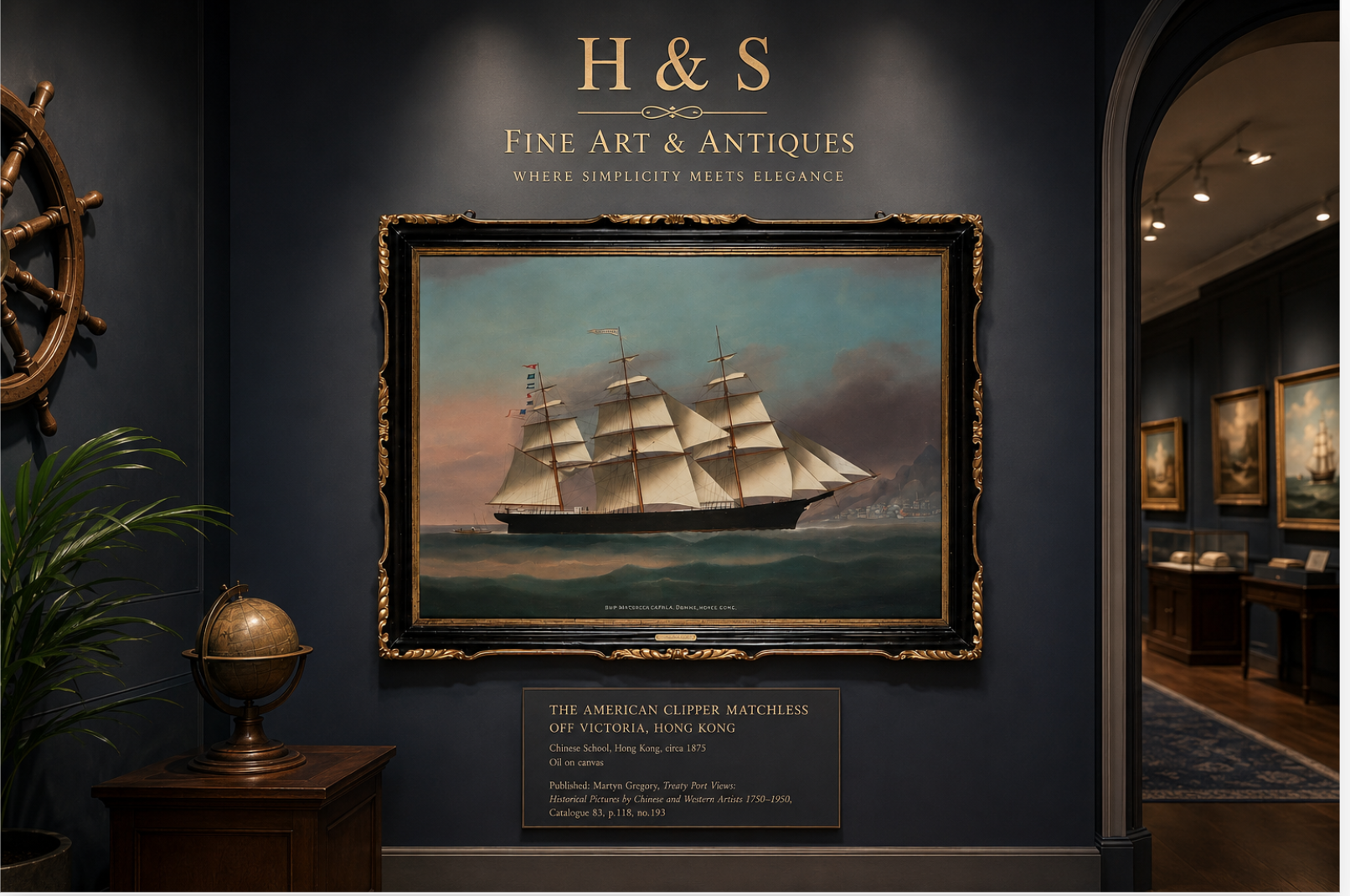 Image 1 of 7
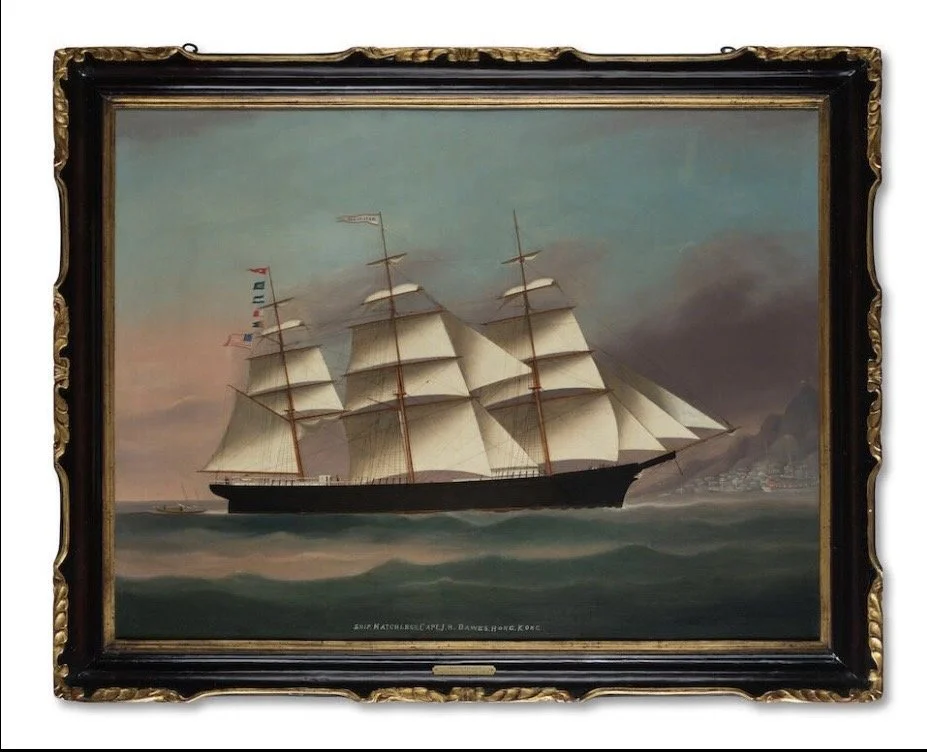 Image 2 of 7
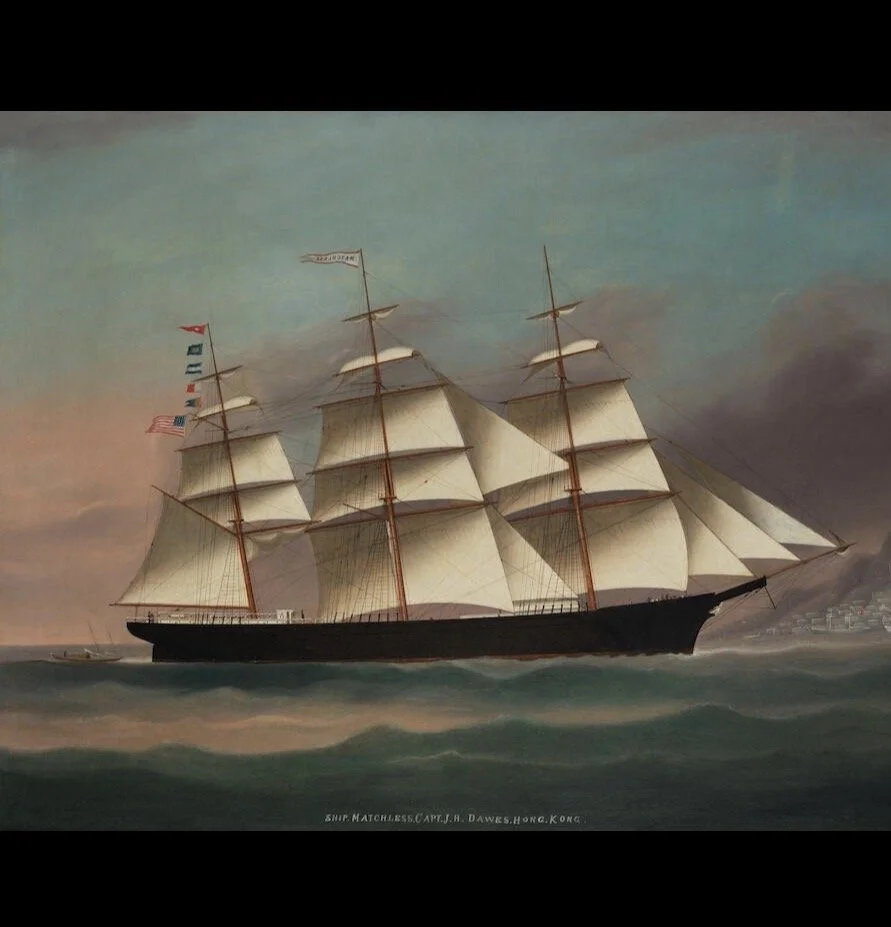 Image 3 of 7
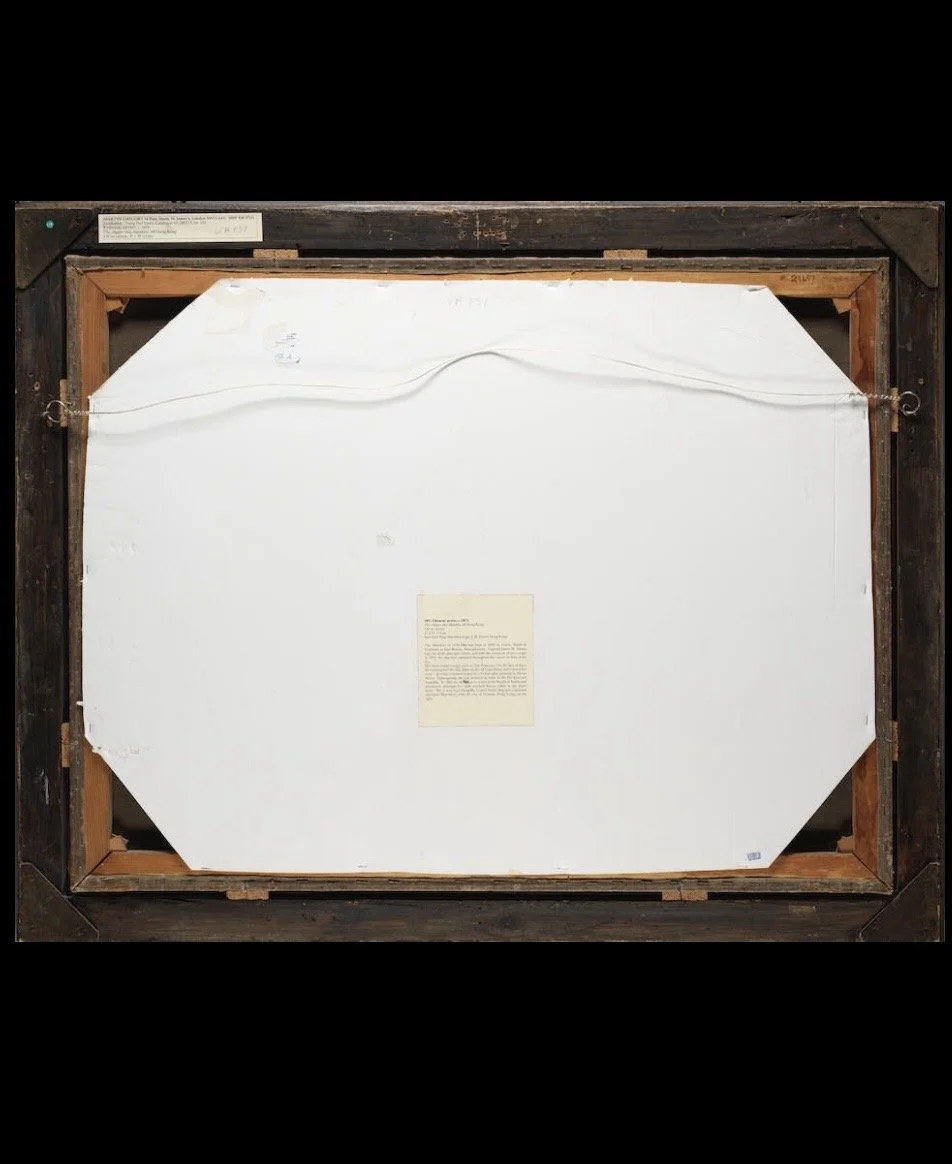 Image 4 of 7
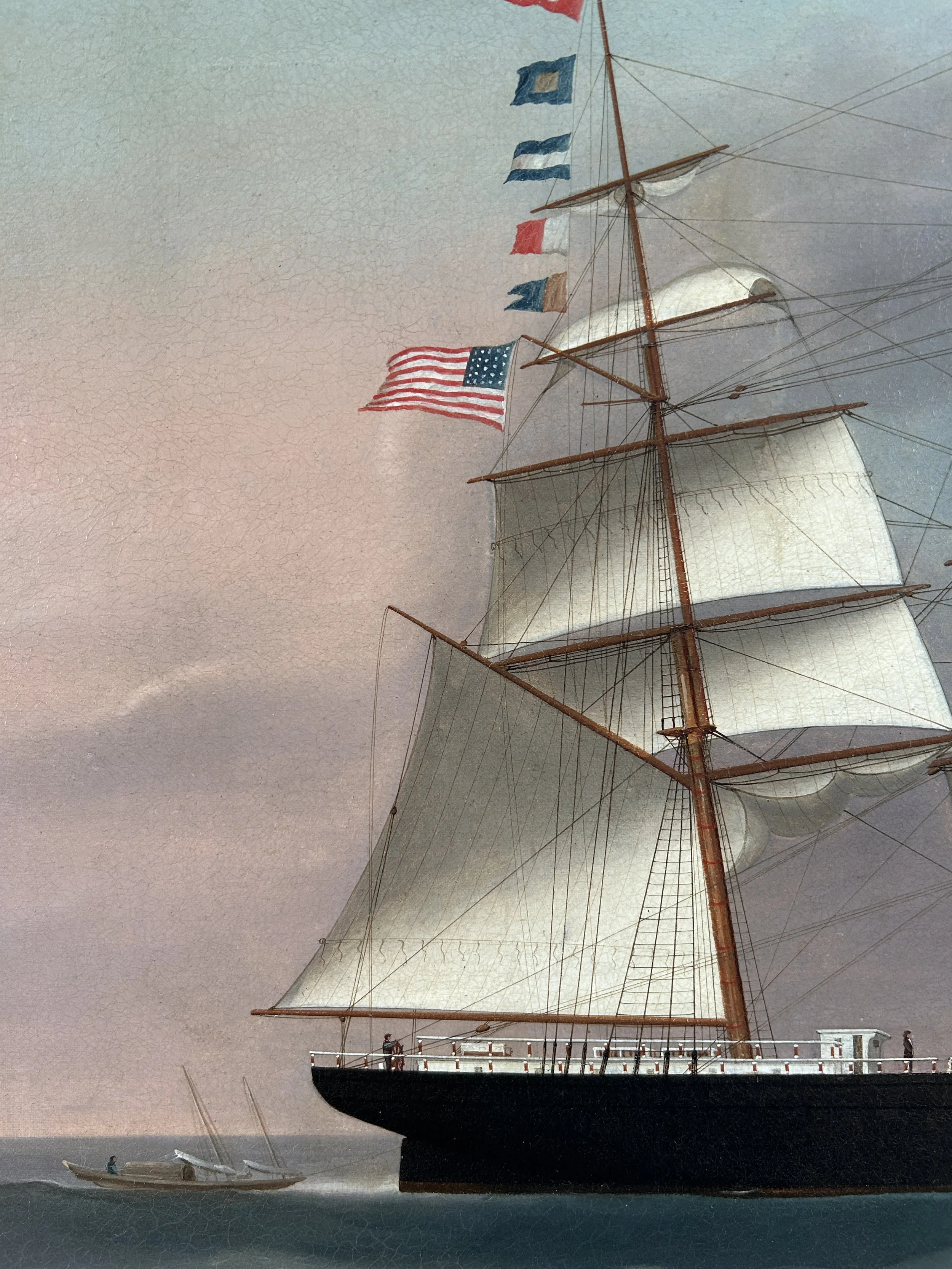 Image 5 of 7
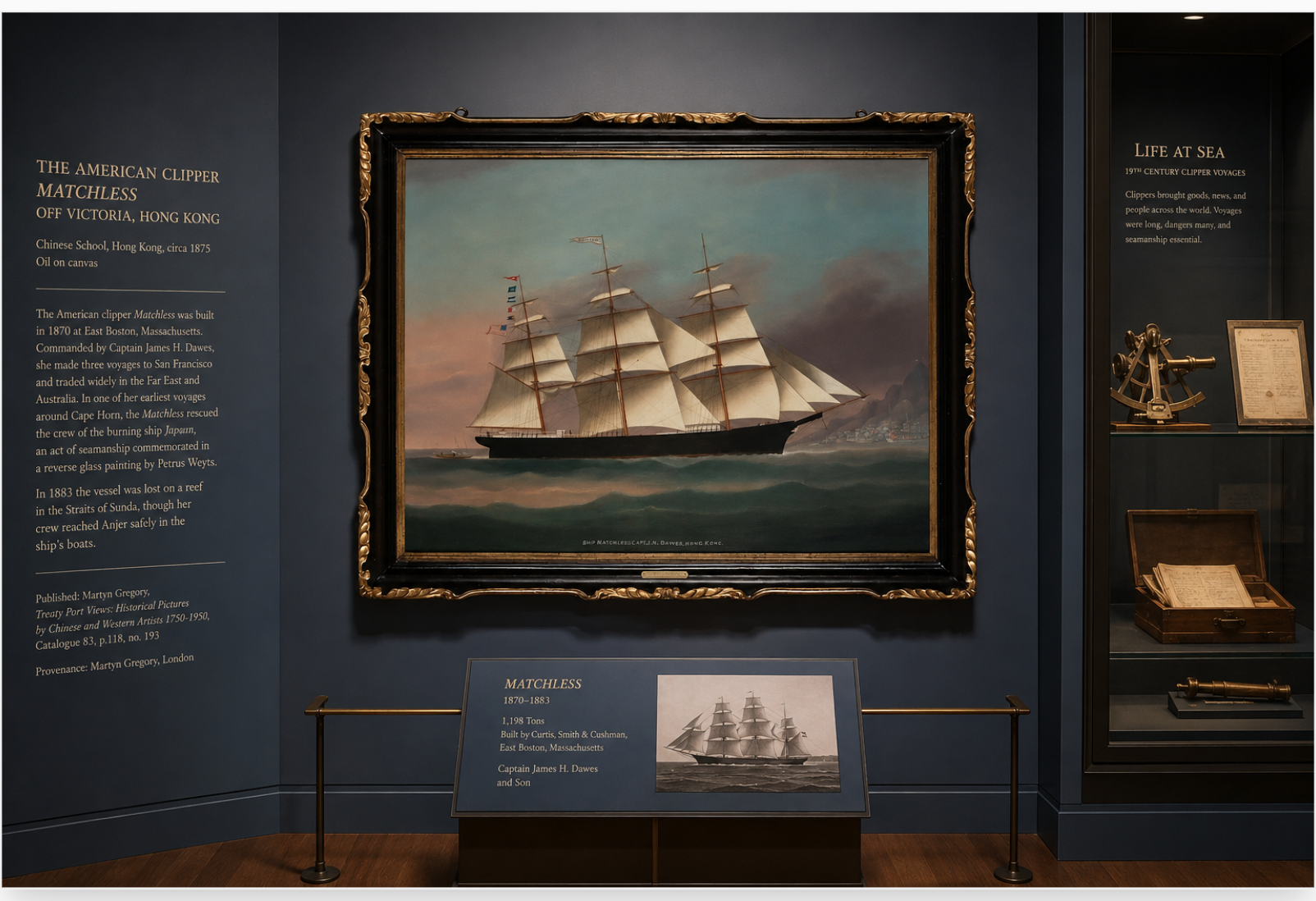 Image 6 of 7
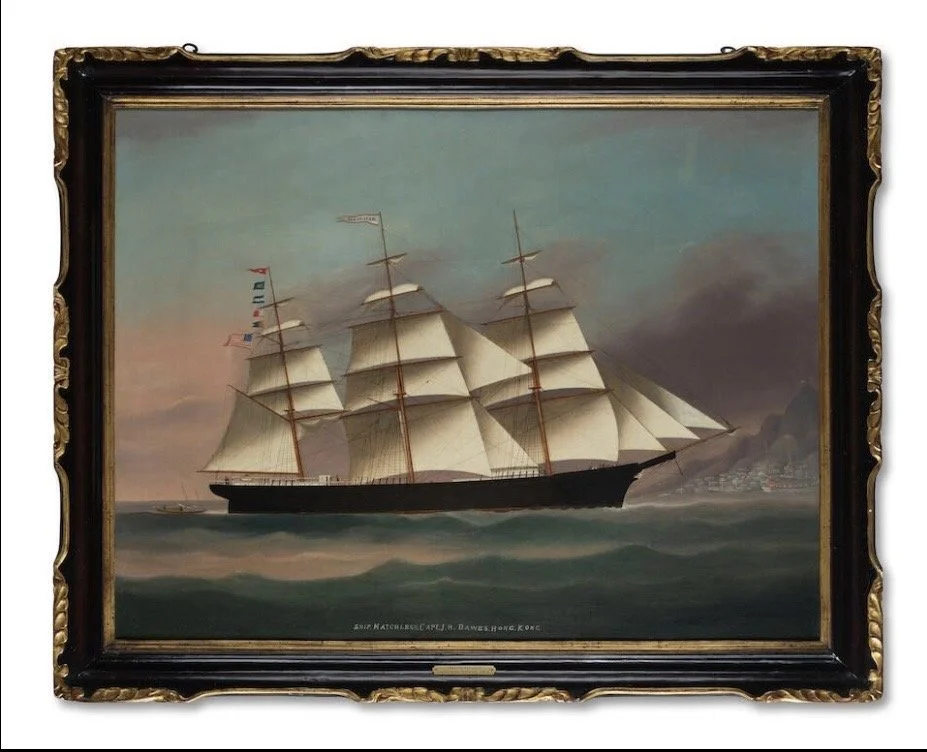 Image 7 of 7