 Image 1 of 5
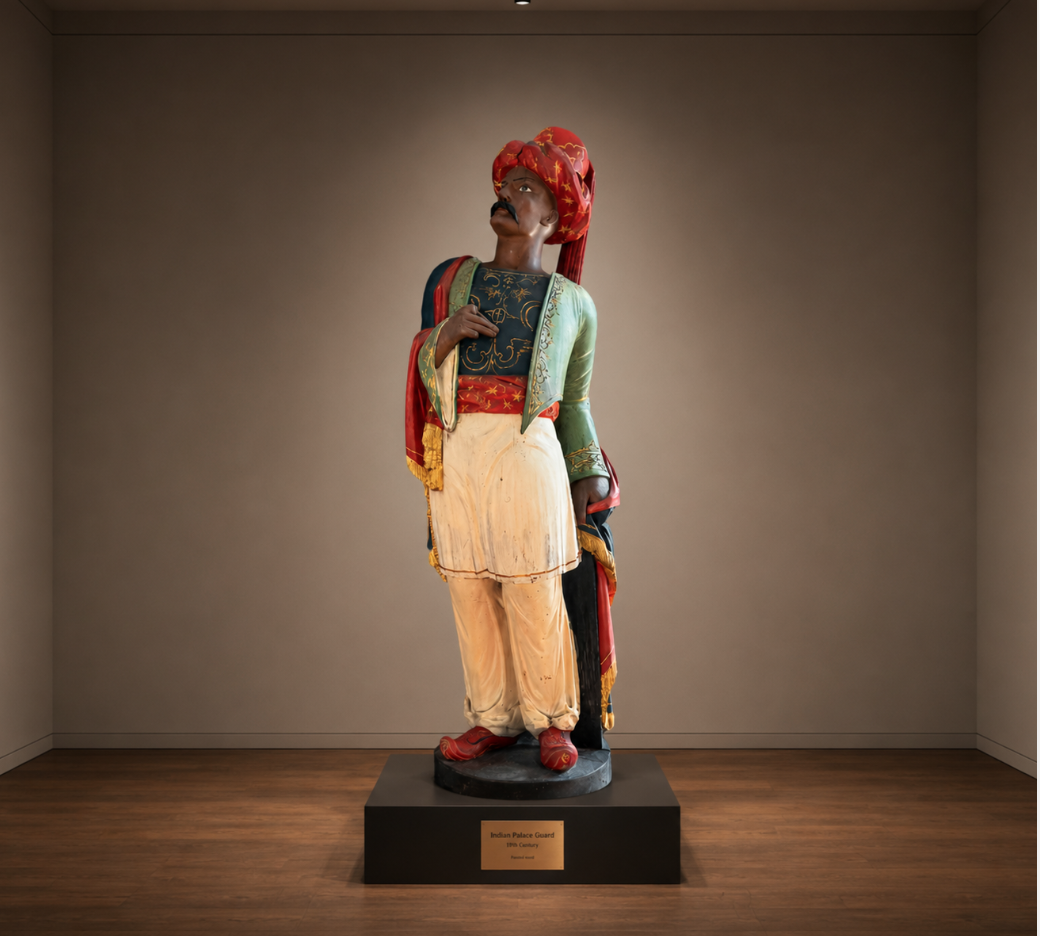 Image 2 of 5
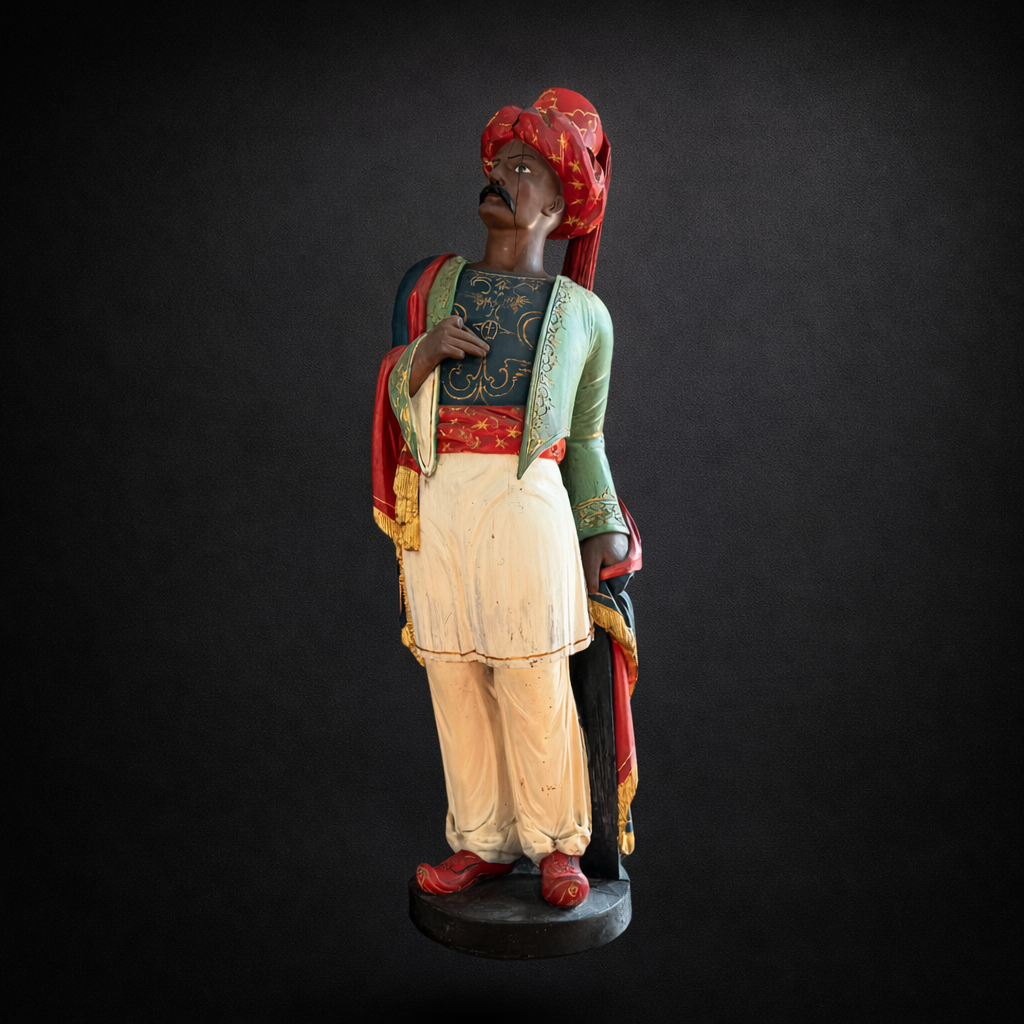 Image 3 of 5
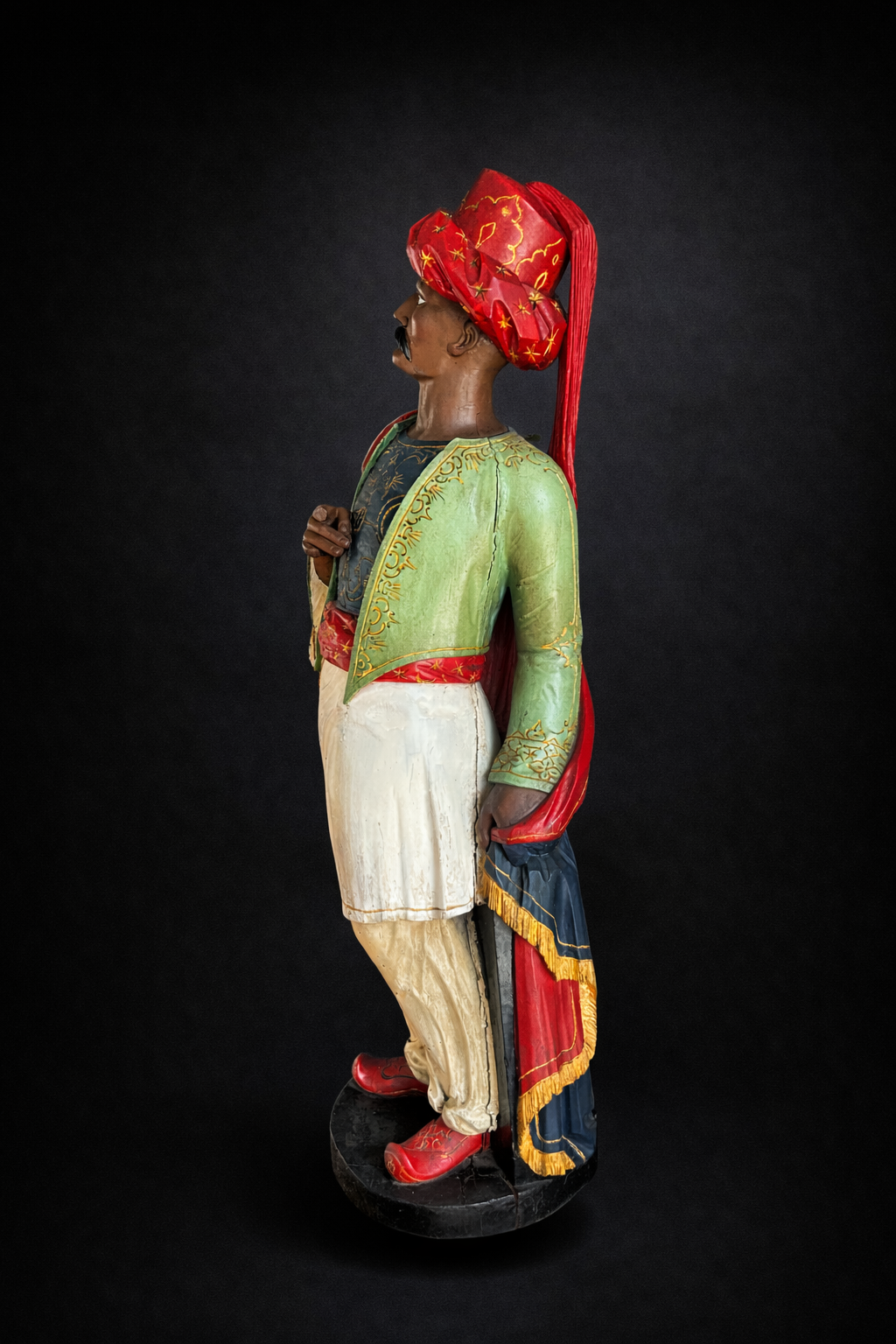 Image 4 of 5
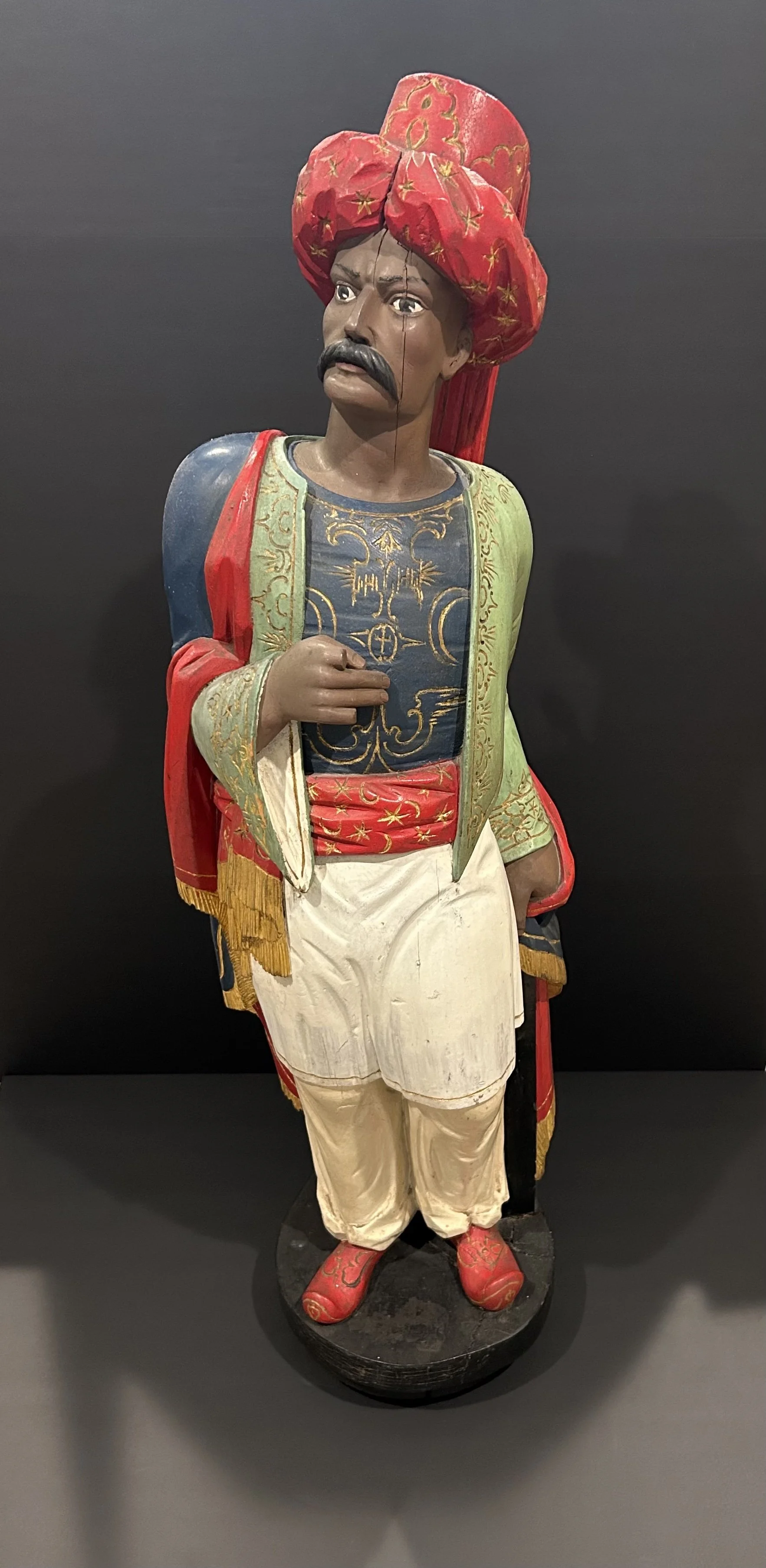 Image 5 of 5
The Jewel of the Tobacconist A Rare Carved and Painted Countertop Sultana Attributed to William Demuth & Company New York, circa 1880
Carved and painted pine with gilt decoration
Height: 32 inches
Provenance
John Bell, Aberdeen, Scotland, 1952
Mystic Seaport Museum, Museum of America and the Sea
Commerce Elevated to Art
During the nineteenth century, America's tobacconists transformed the simple act of purchasing cigars into an experience of refinement and spectacle. Elaborately carved advertising figures stood outside shops and upon counters, inviting customers into establishments where luxury, craftsmanship, and imagination were inseparable.
Among the most beautiful and least frequently encountered of these creations are the exotic "Sultanas" and Oriental attendants. Inspired by Victorian fascination with the cultures of the Ottoman Empire and the Near East, such figures embodied romance, elegance, and worldly sophistication. Rich fabrics, embroidered garments, jeweled turbans, and theatrical poses evoked the luxury associated with imported tobacco and fine cigars.
Far rarer than the familiar cigar store Indian, these Oriental figures rank among the most artistic expressions of nineteenth-century American advertising sculpture.
William Demuth and the Rise of an Empire
This magnificent Sultana is attributed to the renowned New York firm of William Demuth & Company, one of the foremost manufacturers of pipes, cigar holders, and tobacconist advertising figures in America.
Born in Rimbach near Darmstadt, Germany, in 1835, William Demuth arrived in America at the age of sixteen with little more than determination and ambition. Through perseverance and exceptional business acumen, he established William Demuth & Company in 1863. By the late nineteenth century the firm had become internationally recognized for producing some of the finest carved figures and smoking accessories in the world.
Demuth established his workshops near the shipyards and carving trades of lower Manhattan. These neighborhoods were populated by craftsmen skilled in architectural carving and maritime ornamentation. Their influence brought an extraordinary sculptural quality to the firm's advertising figures.By the 1880s William Demuth & Company had become synonymous with excellence, supplying tobacconists throughout the United States with elaborate carvings that elevated commercial display to the level of fine art.
Samuel A. Robb and America's Greatest Carver
Among the talented artisans associated with William Demuth's workshops was Samuel Anderson Robb (1851–1928), widely considered the greatest American carver of tobacconist figures.
Born in County Down, Ireland, Robb immigrated to America in 1868 and entered the employ of William Demuth. Working at 403 Broadway, he mastered the craft of carving advertising figures before opening his own celebrated studio on Canal Street.
Robb's creations became the standard by which all American tobacconist carvings are judged. His remarkable ability to combine theatrical presence with refined sculptural modeling transformed commercial art into enduring works of American folk sculpture.
The graceful drapery, elegant pose, and rich decorative details displayed by this Sultana reveal the influence of the same artistic traditions that gave rise to Robb's masterpieces.
A Figure of Grace and Elegance
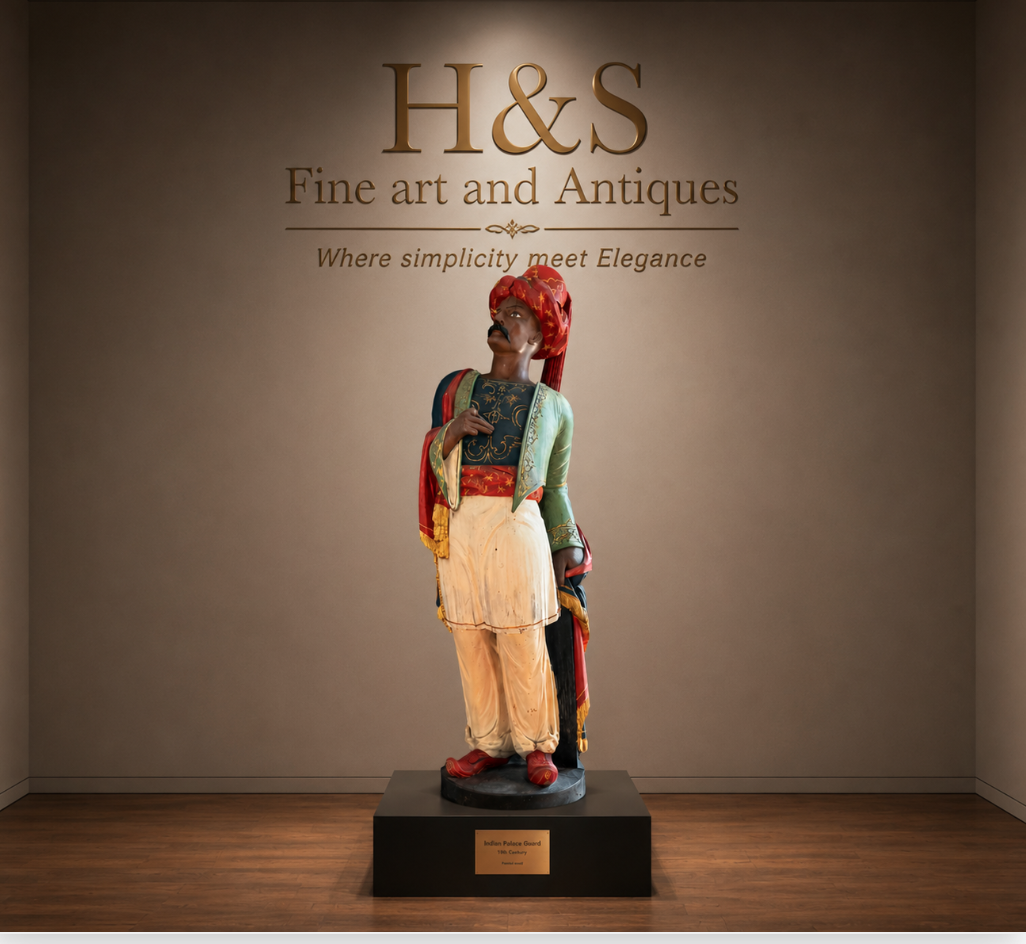
Standing in a dignified contrapposto stance, the Sultana gazes upward with a noble expression. His embroidered costume, gilt slippers, and richly ornamented turban display the remarkable attention to detail characteristic of the finest nineteenth-century carving.
The flowing cloak cascading down his back demonstrates an understanding of movement and form more commonly associated with academic sculpture than with commercial advertising.
Executed in pine and retaining much of its original polychrome and gilt decoration, the figure possesses extraordinary visual presence. The deep folds of the drapery and the subtle modeling of the face reveal the hand of a highly accomplished artisan.
Far beyond its original function as an advertising device, the sculpture stands today as an important example of Victorian American decorative art.
Distinguished Provenance
The history of ownership further enhances the importance of this remarkable figure.
The Sultana belonged to John Bell of Aberdeen, Scotland, one of the earliest and most respected collectors and dealers of American folk art. In 1952 the figure entered his collection before eventually becoming part of the holdings of the Mystic Seaport Museum, one of America's leading institutions dedicated to preserving the nation's maritime and decorative arts heritage.
Museum provenance of this caliber is rarely encountered and places the sculpture among the most distinguished surviving examples of nineteenth-century tobacconist carving.
The Survival of an American Treasure
Few countertop figures survive with such remarkable preservation, original paint, artistic quality, and documented history.
Created during America's Gilded Age, this Sultana represents the marriage of commerce and craftsmanship, when even objects intended for advertising were executed with extraordinary artistry.
Today, he stands not simply as a relic of the tobacco trade, but as a testament to the skill of immigrant craftsmen, the ambitions of Victorian merchants, and the enduring beauty of nineteenth-century American folk sculpture.
More than a century after his creation, this extraordinary figure continues to captivate viewers with the same elegance and theatrical presence that first attracted customers to the tobacconists of New York.
Artistic Qualities
Sultana displays many characteristics associated with the finest work of William Demuth & Co.:
Richly painted costume with gilt decoration.
Elaborately carved turban with star-incised gold ornament.
Graceful contrapposto stance.
Draped cloak falling behind the figure in deep folds.
Red slippers and embroidered garments executed with remarkable attention to detail.
Expressive upward gaze giving the sculpture a theatrical presence.
The sculptor clearly intended to create an image of dignity and nobility rather than caricature.
Provenance
The provenance is particularly impressive:
John Bell Collection
Aberdeen, Scotland, 1952.
John Bell was one of the earliest and most respected collectors and dealers of American folk art and tobacconist figures.
Mystic Seaport Museum
The figure subsequently entered the collection of the Mystic Seaport Museum, one of America's foremost institutions devoted to maritime and American decorative arts.
Museum provenance significantly enhances both scholarly importance and desirability.
Construction
The figure is carved from pine.
. Original circular base.
Extensive original polychromy with gilt highlights.
The mounting bracket visible at the rear suggests it was secured to a countertop or display fixture
Rarity
Countertop Sultanas are considerably rarer than life-size cigar store Indians. Few survive with:
Their original paint.
Complete drapery.
Undamaged turban tassel.
Strong provenance.
Museum history.
Carved and painted pine with gilt decoration
Height: 32 inches
Provenance
John Bell, Aberdeen, Scotland, 1952
Mystic Seaport Museum, Museum of America and the Sea
Commerce Elevated to Art
During the nineteenth century, America's tobacconists transformed the simple act of purchasing cigars into an experience of refinement and spectacle. Elaborately carved advertising figures stood outside shops and upon counters, inviting customers into establishments where luxury, craftsmanship, and imagination were inseparable.
Among the most beautiful and least frequently encountered of these creations are the exotic "Sultanas" and Oriental attendants. Inspired by Victorian fascination with the cultures of the Ottoman Empire and the Near East, such figures embodied romance, elegance, and worldly sophistication. Rich fabrics, embroidered garments, jeweled turbans, and theatrical poses evoked the luxury associated with imported tobacco and fine cigars.
Far rarer than the familiar cigar store Indian, these Oriental figures rank among the most artistic expressions of nineteenth-century American advertising sculpture.
William Demuth and the Rise of an Empire
This magnificent Sultana is attributed to the renowned New York firm of William Demuth & Company, one of the foremost manufacturers of pipes, cigar holders, and tobacconist advertising figures in America.
Born in Rimbach near Darmstadt, Germany, in 1835, William Demuth arrived in America at the age of sixteen with little more than determination and ambition. Through perseverance and exceptional business acumen, he established William Demuth & Company in 1863. By the late nineteenth century the firm had become internationally recognized for producing some of the finest carved figures and smoking accessories in the world.
Demuth established his workshops near the shipyards and carving trades of lower Manhattan. These neighborhoods were populated by craftsmen skilled in architectural carving and maritime ornamentation. Their influence brought an extraordinary sculptural quality to the firm's advertising figures.By the 1880s William Demuth & Company had become synonymous with excellence, supplying tobacconists throughout the United States with elaborate carvings that elevated commercial display to the level of fine art.
Samuel A. Robb and America's Greatest Carver
Among the talented artisans associated with William Demuth's workshops was Samuel Anderson Robb (1851–1928), widely considered the greatest American carver of tobacconist figures.
Born in County Down, Ireland, Robb immigrated to America in 1868 and entered the employ of William Demuth. Working at 403 Broadway, he mastered the craft of carving advertising figures before opening his own celebrated studio on Canal Street.
Robb's creations became the standard by which all American tobacconist carvings are judged. His remarkable ability to combine theatrical presence with refined sculptural modeling transformed commercial art into enduring works of American folk sculpture.
The graceful drapery, elegant pose, and rich decorative details displayed by this Sultana reveal the influence of the same artistic traditions that gave rise to Robb's masterpieces.
A Figure of Grace and Elegance
Standing in a dignified contrapposto stance, the Sultana gazes upward with a noble expression. His embroidered costume, gilt slippers, and richly ornamented turban display the remarkable attention to detail characteristic of the finest nineteenth-century carving.
The flowing cloak cascading down his back demonstrates an understanding of movement and form more commonly associated with academic sculpture than with commercial advertising.
Executed in pine and retaining much of its original polychrome and gilt decoration, the figure possesses extraordinary visual presence. The deep folds of the drapery and the subtle modeling of the face reveal the hand of a highly accomplished artisan.
Far beyond its original function as an advertising device, the sculpture stands today as an important example of Victorian American decorative art.
Distinguished Provenance
The history of ownership further enhances the importance of this remarkable figure.
The Sultana belonged to John Bell of Aberdeen, Scotland, one of the earliest and most respected collectors and dealers of American folk art. In 1952 the figure entered his collection before eventually becoming part of the holdings of the Mystic Seaport Museum, one of America's leading institutions dedicated to preserving the nation's maritime and decorative arts heritage.
Museum provenance of this caliber is rarely encountered and places the sculpture among the most distinguished surviving examples of nineteenth-century tobacconist carving.
The Survival of an American Treasure
Few countertop figures survive with such remarkable preservation, original paint, artistic quality, and documented history.
Created during America's Gilded Age, this Sultana represents the marriage of commerce and craftsmanship, when even objects intended for advertising were executed with extraordinary artistry.
Today, he stands not simply as a relic of the tobacco trade, but as a testament to the skill of immigrant craftsmen, the ambitions of Victorian merchants, and the enduring beauty of nineteenth-century American folk sculpture.
More than a century after his creation, this extraordinary figure continues to captivate viewers with the same elegance and theatrical presence that first attracted customers to the tobacconists of New York.
Artistic Qualities
Sultana displays many characteristics associated with the finest work of William Demuth & Co.:
Richly painted costume with gilt decoration.
Elaborately carved turban with star-incised gold ornament.
Graceful contrapposto stance.
Draped cloak falling behind the figure in deep folds.
Red slippers and embroidered garments executed with remarkable attention to detail.
Expressive upward gaze giving the sculpture a theatrical presence.
The sculptor clearly intended to create an image of dignity and nobility rather than caricature.
Provenance
The provenance is particularly impressive:
John Bell Collection
Aberdeen, Scotland, 1952.
John Bell was one of the earliest and most respected collectors and dealers of American folk art and tobacconist figures.
Mystic Seaport Museum
The figure subsequently entered the collection of the Mystic Seaport Museum, one of America's foremost institutions devoted to maritime and American decorative arts.
Museum provenance significantly enhances both scholarly importance and desirability.
Construction
The figure is carved from pine.
. Original circular base.
Extensive original polychromy with gilt highlights.
The mounting bracket visible at the rear suggests it was secured to a countertop or display fixture
Rarity
Countertop Sultanas are considerably rarer than life-size cigar store Indians. Few survive with:
Their original paint.
Complete drapery.
Undamaged turban tassel.
Strong provenance.
Museum history.