ANTONIO NICOLO GASPARO JACOBSEN (1850–1921)
Steamship Concord, 1912
Oil on board
19 ¾ x 35 ½ inches
Signed lower right: A. Jacobsen
Provenance
Private Collection, East Coast, United States.
Sold: Christie's, New York, 19 January 2023, Lot 445.
Thereafter Private Collection.
The Artist
Antonio Nicolo Gasparo Jacobsen stands among the most important marine painters in American history. Born in Copenhagen in 1850, Jacobsen immigrated to the United States in 1873 and settled in West Hoboken, New Jersey, overlooking New York Harbor. From this vantage point he documented the great age of American maritime commerce, creating more than six thousand ship portraits over the course of nearly five decades.
Often referred to as the “Dean of American Marine Painters” and the “Audubon of Steam Vessels,” Jacobsen possessed an extraordinary ability to combine technical precision with artistic sensitivity. Ship owners, captains, and maritime companies commissioned his paintings not only as works of art but as permanent records of their vessels. Today his paintings reside in major museum, maritime, and private collections throughout the United States and abroad.
Painted in 1912, Steamship Concord belongs to Jacobsen's mature period, when his compositions achieved a balance between documentary accuracy and atmospheric beauty. The vessel is rendered with meticulous attention to detail while dramatic skies and rolling seas elevate the work beyond simple portraiture.
The Steamship Concord
The vessel depicted is the celebrated passenger steamer Concord, one of the elegant coastal steamships that served American waters during the final golden age of steam navigation.
Originally built in 1891 and first known as Norfolk, the vessel was later renamed Concord. She operated during a period when large passenger steamers were essential links between cities and coastal communities before the widespread adoption of the automobile and modern highways. These floating palaces transported travelers in comfort while serving as symbols of technological progress and commercial prosperity.
Jacobsen faithfully records the vessel's distinctive profile, including her towering smokestack, expansive passenger decks, company pennants, lifeboats, and the American ensign flying proudly astern. Such details were of great importance to ship owners who sought accurate visual records of their vessels.
By the time this painting was executed in 1912, America stood at the height of the steam age. Massive ocean liners dominated international travel while elegant coastal steamers such as Concord connected regional ports and carried thousands of passengers annually. Jacobsen's painting preserves a chapter of transportation history that would soon disappear with the rise of automobiles, improved highways, and later commercial aviation.
Artistic Significance
Jacobsen's marine portraits occupy a unique place within American art. They serve simultaneously as works of fine art, historical documents, and records of industrial achievement. Few artists captured the transformation of American maritime commerce as comprehensively as Jacobsen.
In Steamship Concord, the artist demonstrates the qualities that made him the foremost marine painter of his generation: precision of draftsmanship, mastery of maritime detail, and an ability to evoke the grandeur of life at sea. The luminous sky and carefully modeled waters frame the vessel with dignity and monumentality, transforming a working steamship into an enduring symbol of American enterprise.
Provenance and Collecting History
The painting remained in a private East Coast collection before appearing at Christie's, New York, in January 2023. Its inclusion in one of the world's leading auction houses confirms its recognition within the established market for American marine painting.
Works by Jacobsen continue to be sought after by collectors of maritime history, Americana, transportation history, and American art. Paintings depicting identifiable vessels with documented histories are particularly desirable because they bridge the worlds of fine art and historical preservation.
Exhibition Note
More than a century after its creation, Steamship Concord remains both a compelling work of art and a remarkable historical document. Through Jacobsen's hand, the vessel survives as a vivid reminder of the age when steamships connected the American coastline and represented the height of modern travel. The painting captures not only a specific ship, but an entire era of American maritime achievement.
ANTONIO NICOLO GASPARO JACOBSEN (1850–1921)
Steamship Concord, 1912
Oil on board
19 ¾ x 35 ½ inches
Signed lower right: A. Jacobsen
Provenance
Private Collection, East Coast, United States.
Sold: Christie's, New York, 19 January 2023, Lot 445.
Thereafter Private Collection.
The Artist
Antonio Nicolo Gasparo Jacobsen stands among the most important marine painters in American history. Born in Copenhagen in 1850, Jacobsen immigrated to the United States in 1873 and settled in West Hoboken, New Jersey, overlooking New York Harbor. From this vantage point he documented the great age of American maritime commerce, creating more than six thousand ship portraits over the course of nearly five decades.
Often referred to as the “Dean of American Marine Painters” and the “Audubon of Steam Vessels,” Jacobsen possessed an extraordinary ability to combine technical precision with artistic sensitivity. Ship owners, captains, and maritime companies commissioned his paintings not only as works of art but as permanent records of their vessels. Today his paintings reside in major museum, maritime, and private collections throughout the United States and abroad.
Painted in 1912, Steamship Concord belongs to Jacobsen's mature period, when his compositions achieved a balance between documentary accuracy and atmospheric beauty. The vessel is rendered with meticulous attention to detail while dramatic skies and rolling seas elevate the work beyond simple portraiture.
The Steamship Concord
The vessel depicted is the celebrated passenger steamer Concord, one of the elegant coastal steamships that served American waters during the final golden age of steam navigation.
Originally built in 1891 and first known as Norfolk, the vessel was later renamed Concord. She operated during a period when large passenger steamers were essential links between cities and coastal communities before the widespread adoption of the automobile and modern highways. These floating palaces transported travelers in comfort while serving as symbols of technological progress and commercial prosperity.
Jacobsen faithfully records the vessel's distinctive profile, including her towering smokestack, expansive passenger decks, company pennants, lifeboats, and the American ensign flying proudly astern. Such details were of great importance to ship owners who sought accurate visual records of their vessels.
By the time this painting was executed in 1912, America stood at the height of the steam age. Massive ocean liners dominated international travel while elegant coastal steamers such as Concord connected regional ports and carried thousands of passengers annually. Jacobsen's painting preserves a chapter of transportation history that would soon disappear with the rise of automobiles, improved highways, and later commercial aviation.
Artistic Significance
Jacobsen's marine portraits occupy a unique place within American art. They serve simultaneously as works of fine art, historical documents, and records of industrial achievement. Few artists captured the transformation of American maritime commerce as comprehensively as Jacobsen.
In Steamship Concord, the artist demonstrates the qualities that made him the foremost marine painter of his generation: precision of draftsmanship, mastery of maritime detail, and an ability to evoke the grandeur of life at sea. The luminous sky and carefully modeled waters frame the vessel with dignity and monumentality, transforming a working steamship into an enduring symbol of American enterprise.
Provenance and Collecting History
The painting remained in a private East Coast collection before appearing at Christie's, New York, in January 2023. Its inclusion in one of the world's leading auction houses confirms its recognition within the established market for American marine painting.
Works by Jacobsen continue to be sought after by collectors of maritime history, Americana, transportation history, and American art. Paintings depicting identifiable vessels with documented histories are particularly desirable because they bridge the worlds of fine art and historical preservation.
Exhibition Note
More than a century after its creation, Steamship Concord remains both a compelling work of art and a remarkable historical document. Through Jacobsen's hand, the vessel survives as a vivid reminder of the age when steamships connected the American coastline and represented the height of modern travel. The painting captures not only a specific ship, but an entire era of American maritime achievement.
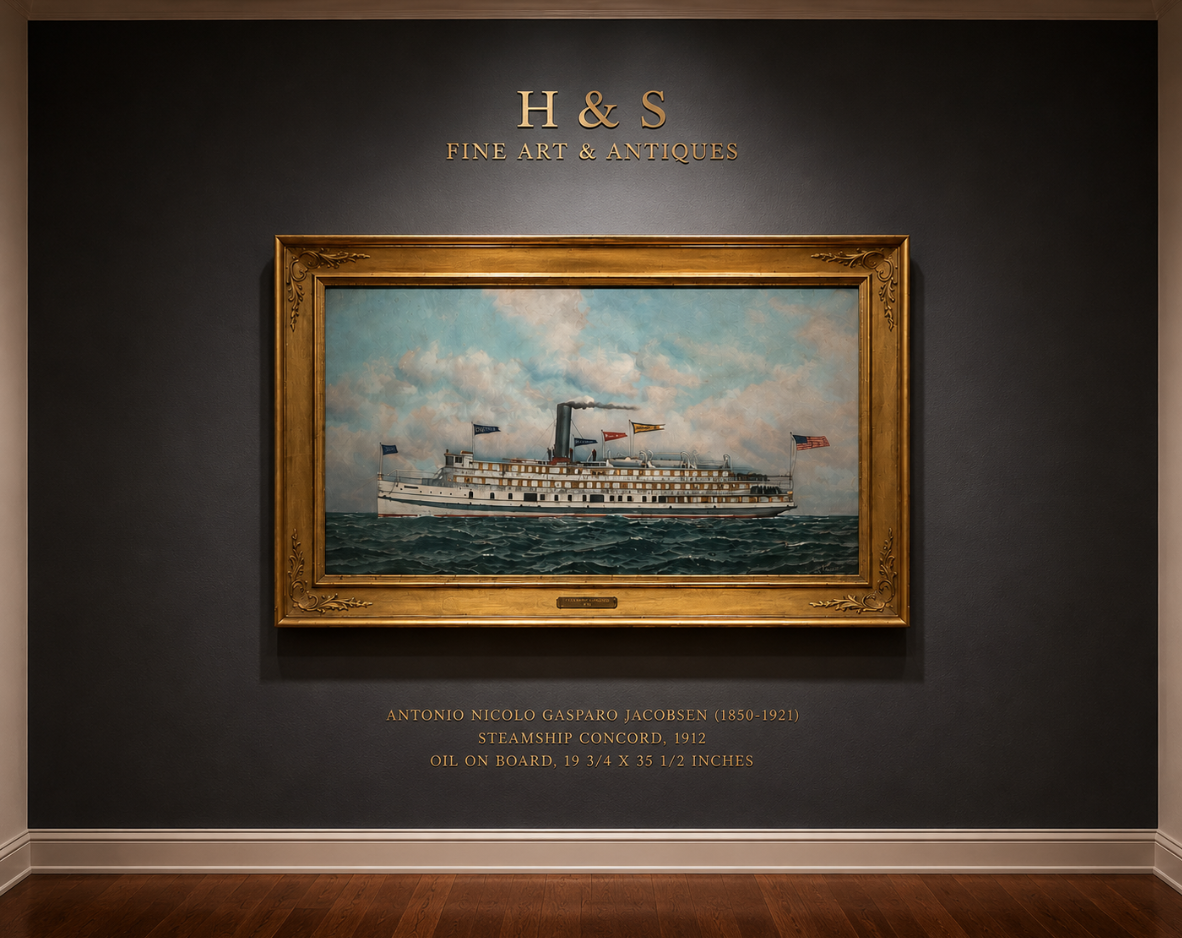 Image 1 of 8
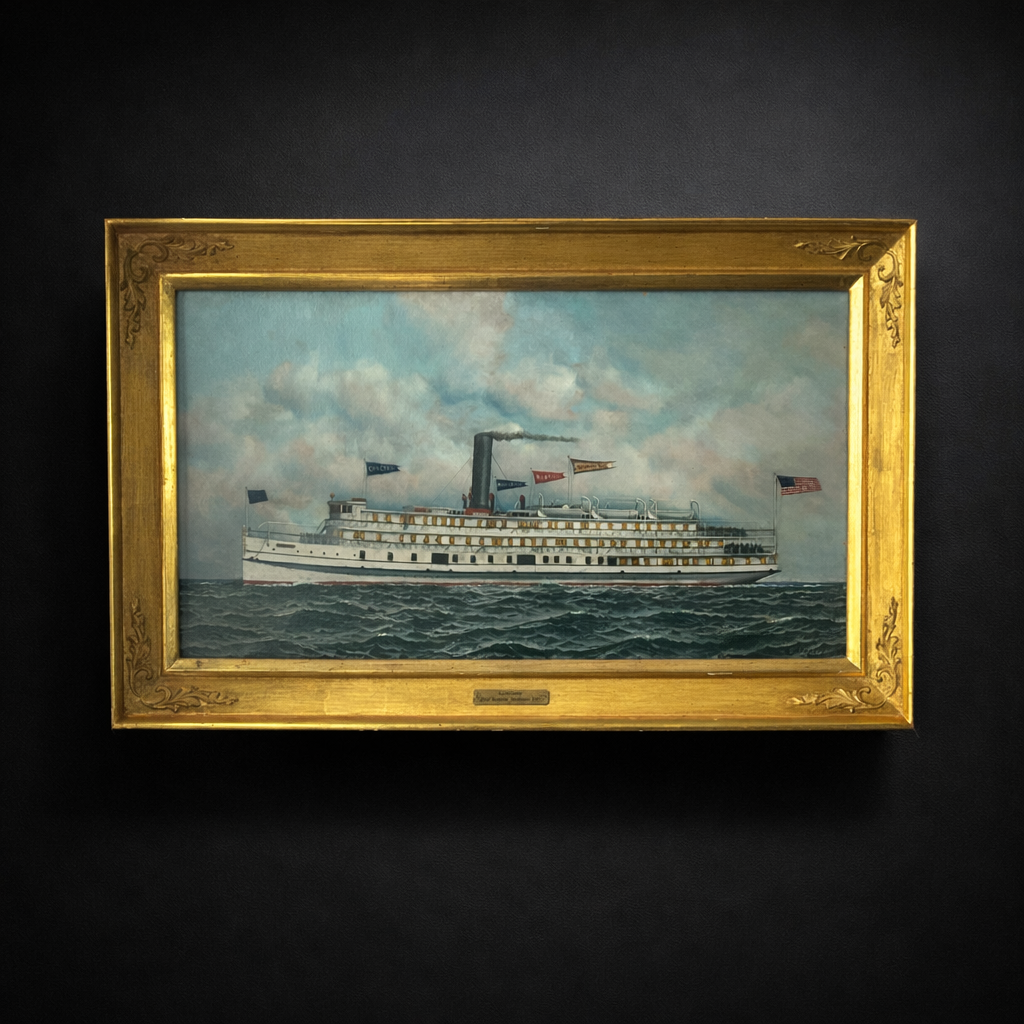 Image 2 of 8
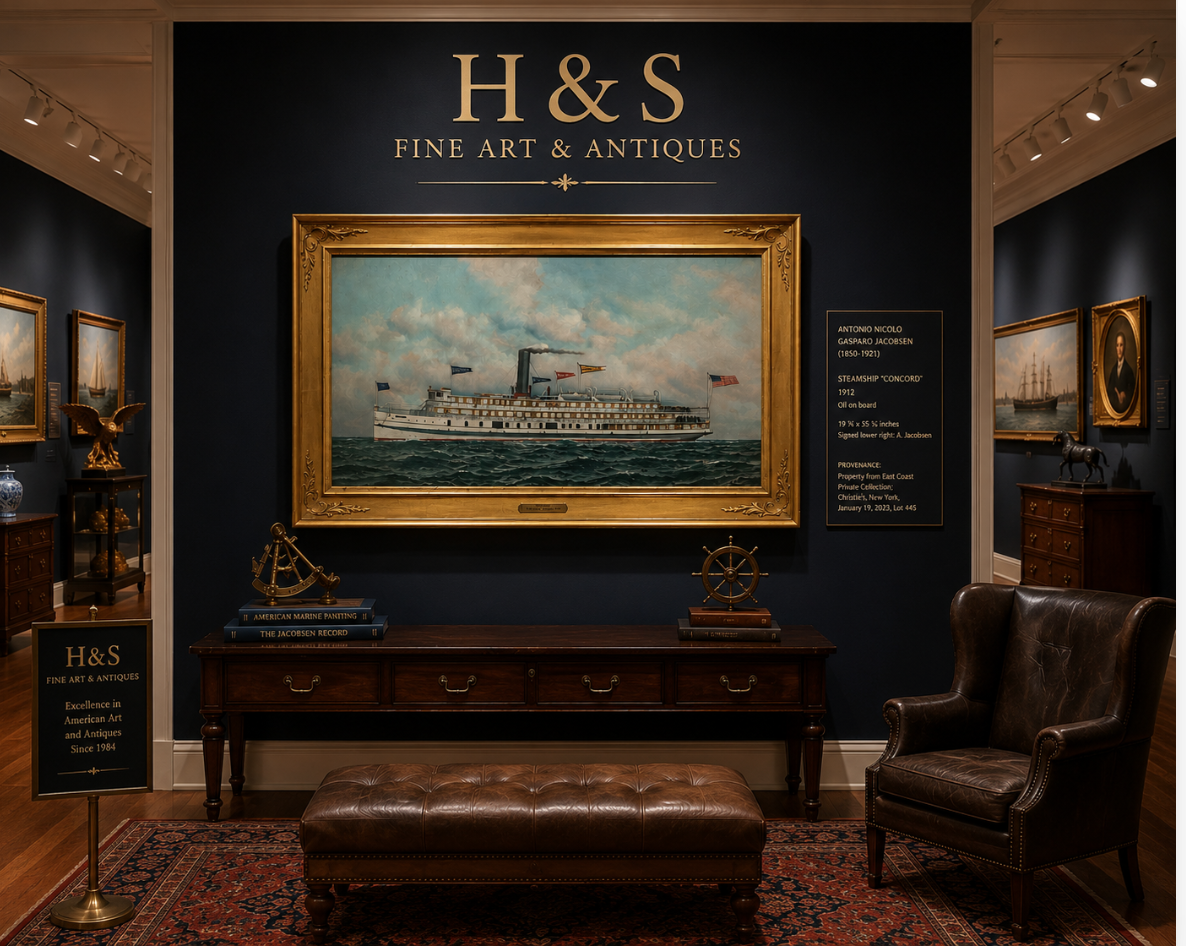 Image 3 of 8
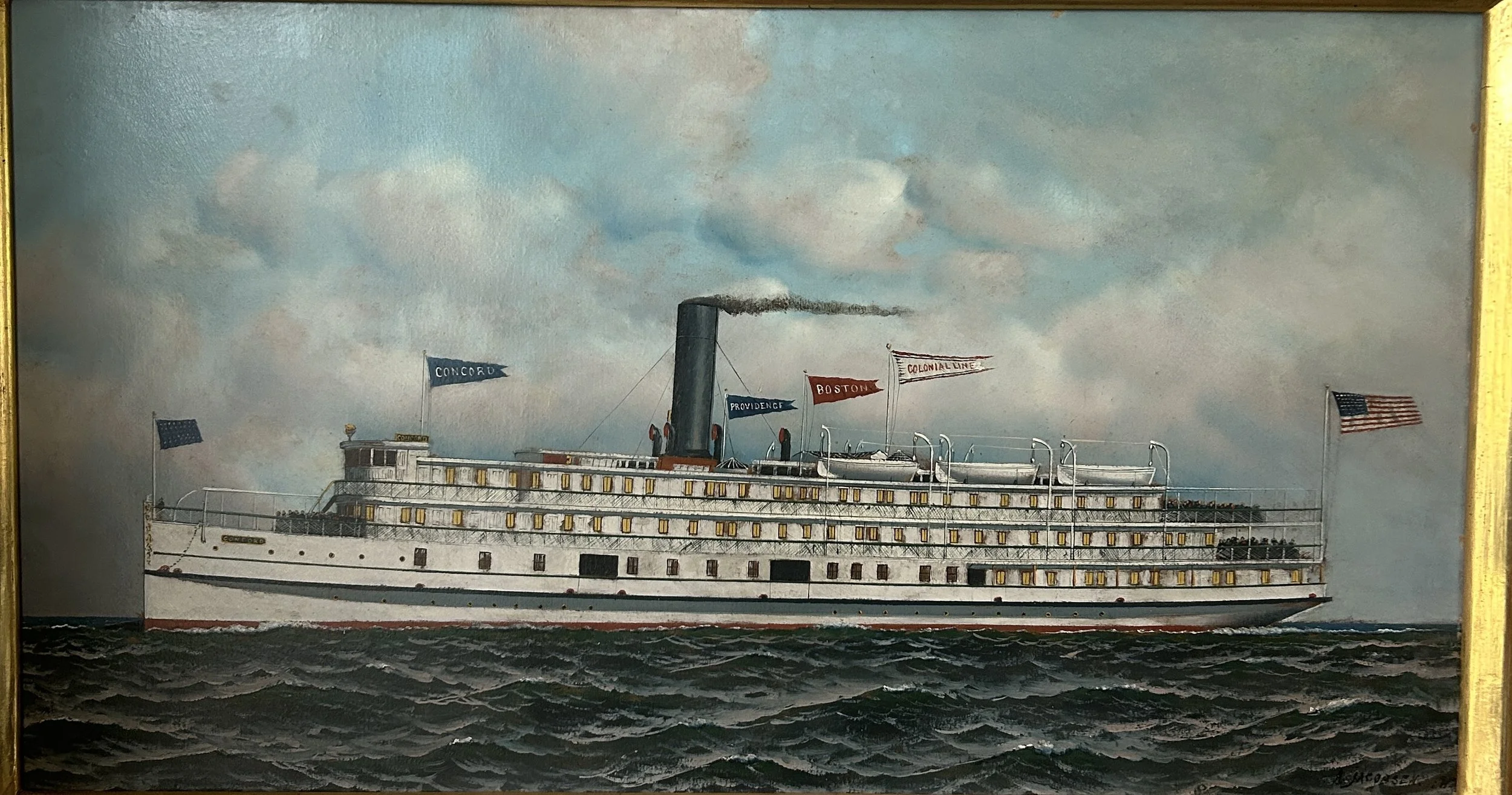 Image 4 of 8
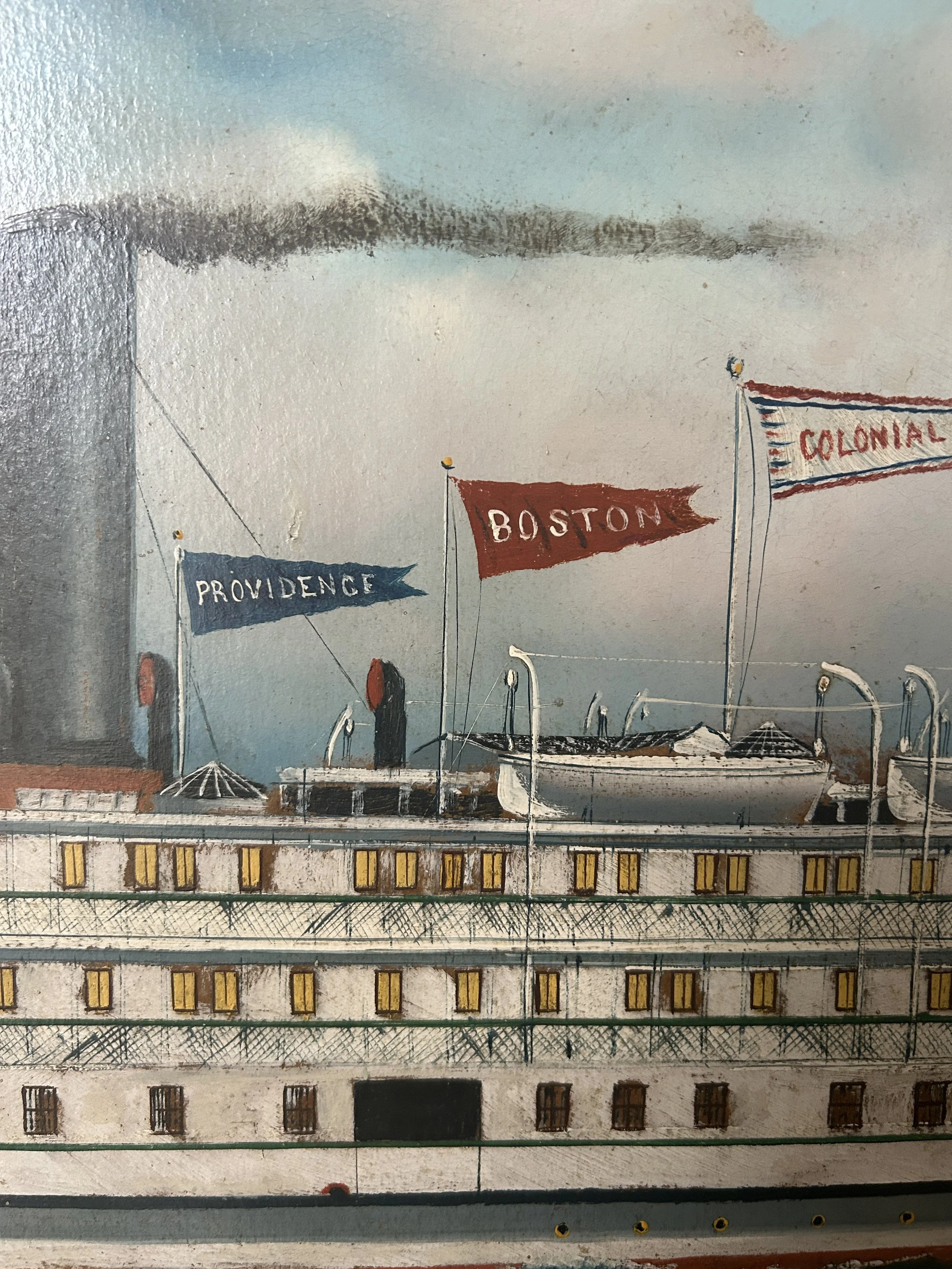 Image 5 of 8
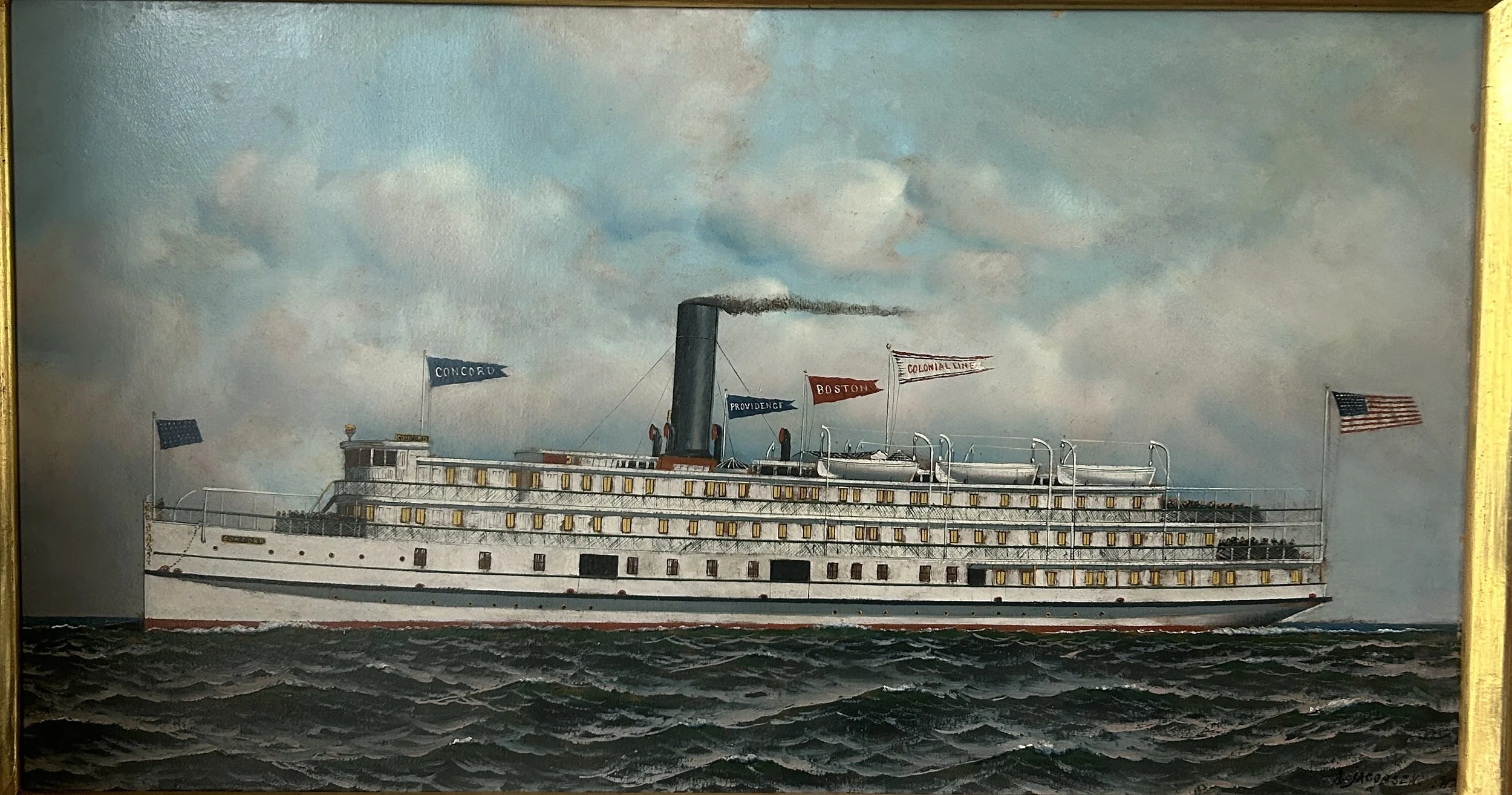 Image 6 of 8
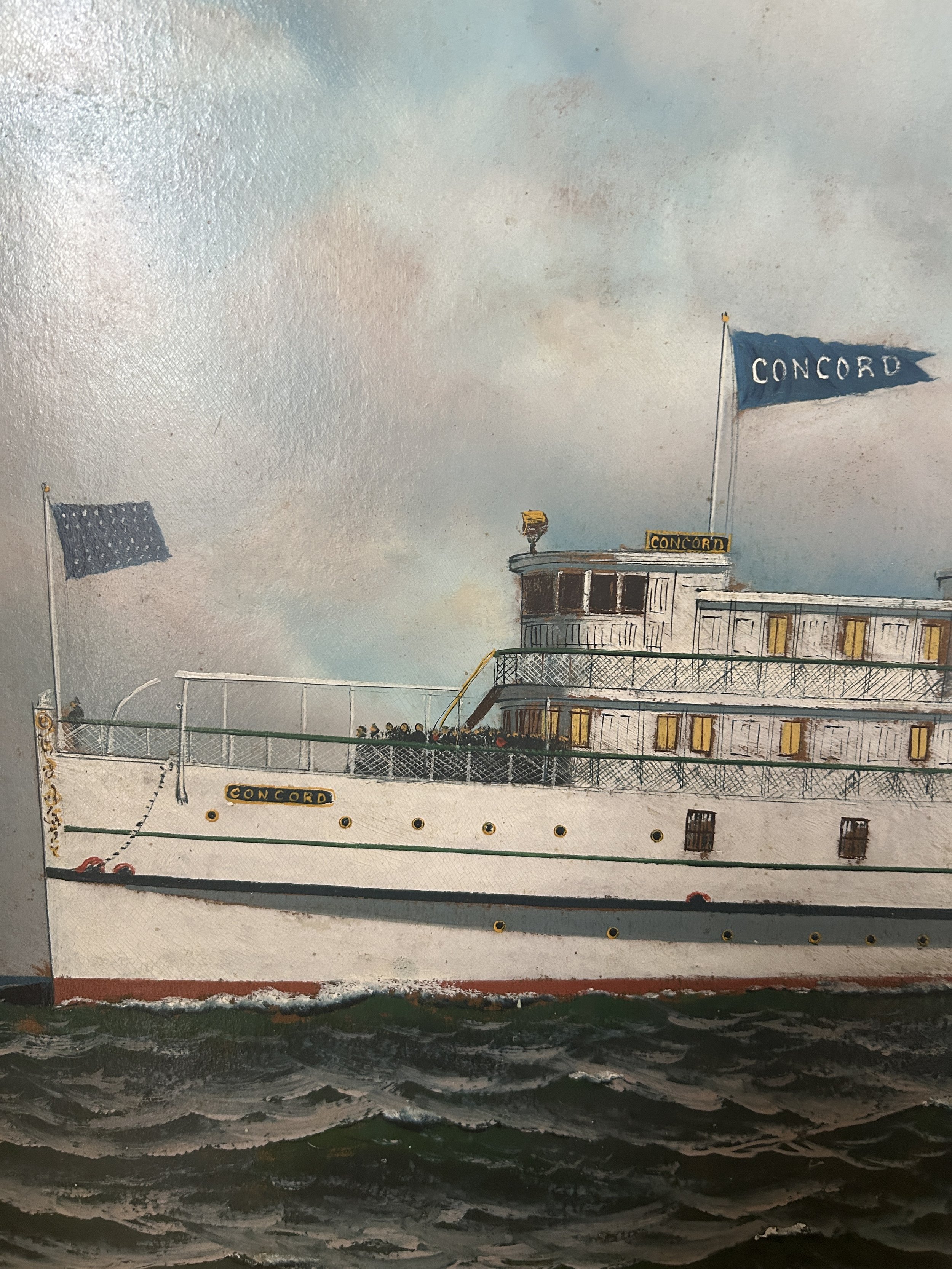 Image 7 of 8
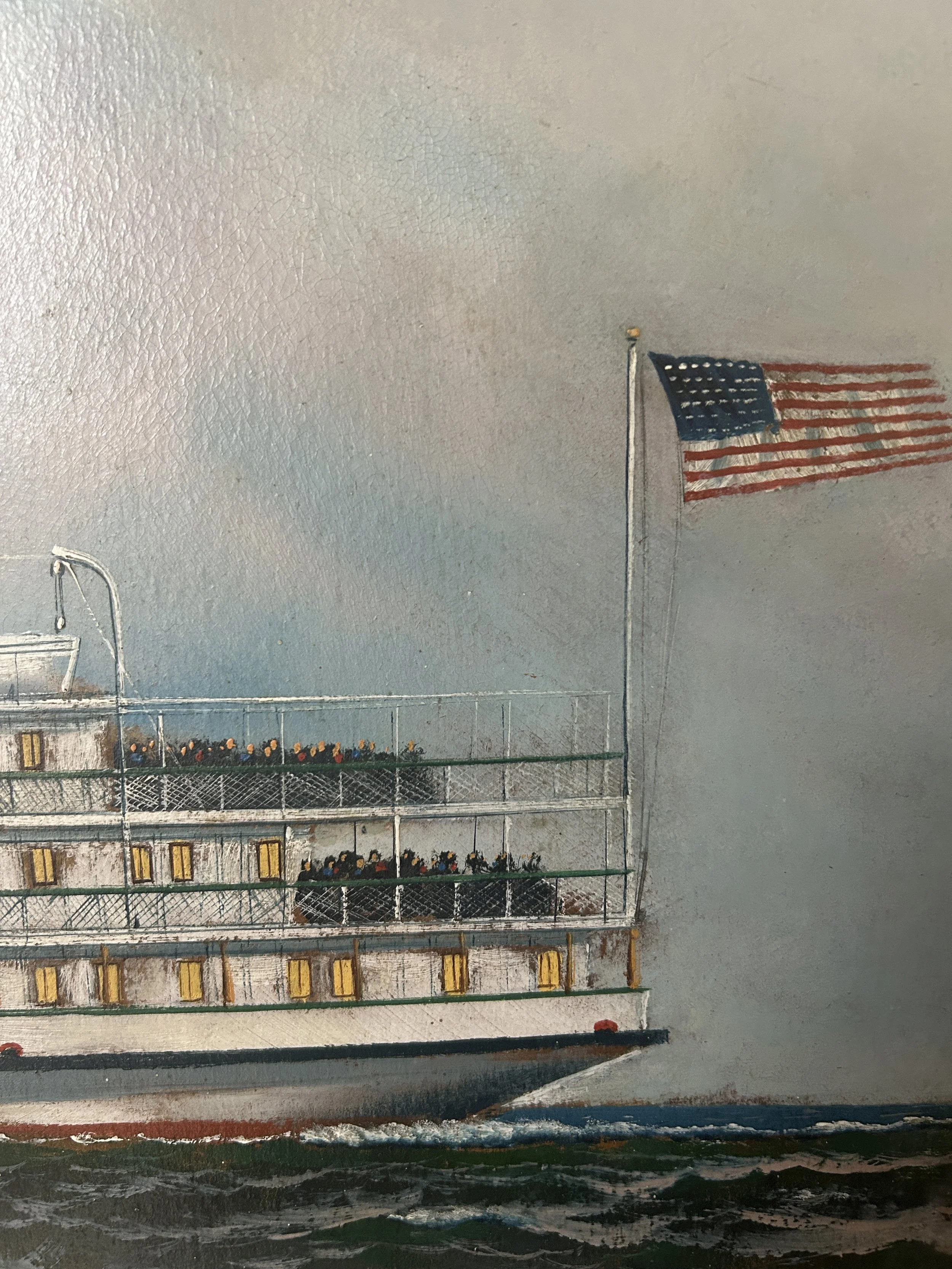 Image 8 of 8