Portrait of a Gentleman Holding a Book of Wesley's Sermons
Circa 1840
Oil on Canvas
33¼ x 27¾ inches
Provenance
Vose Galleries, Boston, Massachusetts;
Property from the Collection of Ralph and Susanne Katz;
Sotheby's, New York, Important American Folk Art from the Ralph and Susanne Katz Collection, 21 January 2017, lot 5071.
The Painting
This compelling portrait depicts a solemn gentleman dressed in a black frock coat and waistcoat, his face illuminated against a rich brown background. In his left hand he holds a substantial volume identified as Wesley's Sermons, while his right hand rests confidently upon a paint-decorated chair. The composition is notable for its restraint and psychological intensity. Every element—the sitter's direct gaze, the simplicity of his attire, and the symbolic presence of the book—has been carefully arranged to communicate learning, piety, and personal dignity.
The portrait belongs to a mature period in the career of Ammi Phillips, when the artist achieved a remarkable balance between economy of form and emotional presence. The sitter's face is modeled with subtle transitions of light, enlivened by touches of rose on the cheeks and ears. The penetrating eyes and firmly closed mouth convey seriousness of purpose and moral conviction.
Although painted by an artist frequently classified as a folk painter, the composition possesses a sophisticated understanding of balance and design. The black garments create a monumental silhouette, while the diagonal placement of the book and chair introduces quiet movement and prevents the composition from becoming static.
The Book of Wesley's Sermons
The inclusion of Wesley's Sermons is of exceptional importance. The sermons of the English theologian John Wesley (1703–1791), founder of the Methodist movement, were among the most influential religious texts in nineteenth-century America.
Wesley's writings emphasized:
• Personal piety and self-examination
• Moral discipline and virtuous living
• Education and literacy
• Religious revival and social responsibility
The book likely identifies the sitter as a Methodist minister, church elder, or a prominent member of his religious community. In early American portraiture, books functioned as attributes that revealed a sitter's character and social identity. Here, the volume serves not merely as an accessory but as a declaration of faith and intellectual achievement.
The portrait therefore transcends likeness and becomes a visual statement about the moral aspirations of the early American Republic.
The Patina and Surface
The painting retains a particularly attractive and dignified surface. The warm brown background has mellowed beautifully with age, producing the soft, luminous tonality so admired in early American portraiture.
The blacks of the coat and waistcoat have developed depth and richness, while the flesh tones exhibit a gentle translucency resulting from nearly two centuries of natural aging. The craquelure and subtle surface variations contribute to the painting's authenticity and historical presence.
The mellowed varnish and softened pigments create precisely the type of patina collectors and museums seek in important examples of American folk portraiture. Rather than diminishing the image, age has enriched its visual character, lending the sitter an extraordinary sense of presence and permanence.
Ammi Phillips: America's Great Democratic Portrait Painter
Today, Ammi Phillips is recognized as one of the foremost portrait painters in American art. Born in Colebrook, Connecticut, in 1788, Phillips's long career spanned the formative years of the United States, from the era of George Washington to the eve of the Civil War.
Unlike academically trained painters who worked in major cities, Phillips developed his career as an itinerant artist, traveling extensively throughout Connecticut, Massachusetts, New York, and the Hudson River Valley. He painted merchants, ministers, farmers, and professional men and women who otherwise would never have had their likenesses recorded.
Phillips's importance lies in his democratization of portraiture. He offered Americans of modest means the opportunity to commission portraits that were both affordable and dignified.
The artist John Vanderlyn recognized Phillips's success and remarked in a letter dated September 9, 1825:
"Indeed moving about through the country as Phillips did and probably still does, must be an agreeable way of passing one's time. I saw four of his works... which seemed to satisfy them."
Such commentary from one of America's most academically accomplished painters demonstrates the esteem Phillips enjoyed during his lifetime and confirms his significant social and economic role within nineteenth-century American society.
Style and Artistic Characteristics
This portrait exhibits many of the characteristics that distinguish Phillips's mature work:
• Monumental simplicity of composition
• Elongated, geometric facial construction
• Penetrating, psychologically direct expression
• Rich contrasts between dark costume and luminous flesh tones
• Minimal background distractions
• Symbolic objects that reveal the sitter's identity
Phillips's portraits possess a remarkable duality: they are both highly individualized and profoundly universal. His sitters appear timeless, embodying ideals of faith, learning, industry, and moral seriousness that defined much of nineteenth-century America.
Provenance
The provenance of this painting significantly enhances its historical and scholarly importance.
Vose Galleries of Boston, founded in 1841, is among America's oldest and most respected dealers in American paintings. The gallery has handled works by Copley, Stuart, Peale, and other major figures of American art.
The painting later entered the distinguished collection of Ralph and Susanne Katz, whose holdings of American folk art were widely admired for their quality and connoisseurship. Their collection included exceptional examples of American portraiture and decorative arts and was dispersed by Sotheby's in New York in January 2017. The inclusion of this portrait in that landmark sale further confirms its desirability and significance within the field of American folk art.
Similar Works
Comparable portraits by Ammi Phillips are found in many of America's leading institutions, including:
• The American Folk Art Museum, New York
• The Metropolitan Museum of Art, New York
• The National Gallery of Art, Washington, D.C.
• The Abby Aldrich Rockefeller Folk Art Museum, Williamsburg, Virginia
• Historic New England collections
Particularly comparable are Phillips's portraits of clergymen, merchants, and professional gentlemen executed during the late 1830s and early 1840s, in which books, furniture, and restrained backgrounds are employed as symbols of education, social standing, and religious conviction.
Portrait of a Gentleman Holding a Book of Wesley's Sermons stands as a refined and intellectually engaging example of nineteenth-century American portraiture. It embodies the democratic spirit of Ammi Phillips's art and preserves the likeness of an individual who wished to be remembered not for wealth or rank, but for learning, faith, and moral character. Nearly two centuries after its creation, the painting continues to communicate the enduring values of the American Republic with remarkable immediacy and quiet power.
Suggested Literature and References
Stacy C. Hollander and Brooke Davis Anderson, American Anthem: Masterworks from the American Folk Art Museum, New York, 2001.
Stacy C. Hollander, Ammi Phillips: Revisiting Fifty Years of American Portraiture, American Folk Art Museum, New York, 1994.
Jean Lipman and Alice Winchester, The Flowering of American Folk Art, New York, 1974.
Mary Black and Jean Lipman, American Folk Painting, New York, 1966.
Sotheby's, Important American Folk Art from the Ralph and Susanne Katz Collection, New York, 21 January 2017.
This portrait would be entirely at home in a museum exhibition devoted to American identity, faith, and portraiture in the early Republic, where it serves both as a remarkable likeness and as an eloquent document of nineteenth-century American intellectual and religious life.
Portrait of a Gentleman Holding a Book of Wesley's Sermons
Circa 1840
Oil on Canvas
33¼ x 27¾ inches
Provenance
Vose Galleries, Boston, Massachusetts;
Property from the Collection of Ralph and Susanne Katz;
Sotheby's, New York, Important American Folk Art from the Ralph and Susanne Katz Collection, 21 January 2017, lot 5071.
The Painting
This compelling portrait depicts a solemn gentleman dressed in a black frock coat and waistcoat, his face illuminated against a rich brown background. In his left hand he holds a substantial volume identified as Wesley's Sermons, while his right hand rests confidently upon a paint-decorated chair. The composition is notable for its restraint and psychological intensity. Every element—the sitter's direct gaze, the simplicity of his attire, and the symbolic presence of the book—has been carefully arranged to communicate learning, piety, and personal dignity.
The portrait belongs to a mature period in the career of Ammi Phillips, when the artist achieved a remarkable balance between economy of form and emotional presence. The sitter's face is modeled with subtle transitions of light, enlivened by touches of rose on the cheeks and ears. The penetrating eyes and firmly closed mouth convey seriousness of purpose and moral conviction.
Although painted by an artist frequently classified as a folk painter, the composition possesses a sophisticated understanding of balance and design. The black garments create a monumental silhouette, while the diagonal placement of the book and chair introduces quiet movement and prevents the composition from becoming static.
The Book of Wesley's Sermons
The inclusion of Wesley's Sermons is of exceptional importance. The sermons of the English theologian John Wesley (1703–1791), founder of the Methodist movement, were among the most influential religious texts in nineteenth-century America.
Wesley's writings emphasized:
• Personal piety and self-examination
• Moral discipline and virtuous living
• Education and literacy
• Religious revival and social responsibility
The book likely identifies the sitter as a Methodist minister, church elder, or a prominent member of his religious community. In early American portraiture, books functioned as attributes that revealed a sitter's character and social identity. Here, the volume serves not merely as an accessory but as a declaration of faith and intellectual achievement.
The portrait therefore transcends likeness and becomes a visual statement about the moral aspirations of the early American Republic.
The Patina and Surface
The painting retains a particularly attractive and dignified surface. The warm brown background has mellowed beautifully with age, producing the soft, luminous tonality so admired in early American portraiture.
The blacks of the coat and waistcoat have developed depth and richness, while the flesh tones exhibit a gentle translucency resulting from nearly two centuries of natural aging. The craquelure and subtle surface variations contribute to the painting's authenticity and historical presence.
The mellowed varnish and softened pigments create precisely the type of patina collectors and museums seek in important examples of American folk portraiture. Rather than diminishing the image, age has enriched its visual character, lending the sitter an extraordinary sense of presence and permanence.
Ammi Phillips: America's Great Democratic Portrait Painter
Today, Ammi Phillips is recognized as one of the foremost portrait painters in American art. Born in Colebrook, Connecticut, in 1788, Phillips's long career spanned the formative years of the United States, from the era of George Washington to the eve of the Civil War.
Unlike academically trained painters who worked in major cities, Phillips developed his career as an itinerant artist, traveling extensively throughout Connecticut, Massachusetts, New York, and the Hudson River Valley. He painted merchants, ministers, farmers, and professional men and women who otherwise would never have had their likenesses recorded.
Phillips's importance lies in his democratization of portraiture. He offered Americans of modest means the opportunity to commission portraits that were both affordable and dignified.
The artist John Vanderlyn recognized Phillips's success and remarked in a letter dated September 9, 1825:
"Indeed moving about through the country as Phillips did and probably still does, must be an agreeable way of passing one's time. I saw four of his works... which seemed to satisfy them."
Such commentary from one of America's most academically accomplished painters demonstrates the esteem Phillips enjoyed during his lifetime and confirms his significant social and economic role within nineteenth-century American society.
Style and Artistic Characteristics
This portrait exhibits many of the characteristics that distinguish Phillips's mature work:
• Monumental simplicity of composition
• Elongated, geometric facial construction
• Penetrating, psychologically direct expression
• Rich contrasts between dark costume and luminous flesh tones
• Minimal background distractions
• Symbolic objects that reveal the sitter's identity
Phillips's portraits possess a remarkable duality: they are both highly individualized and profoundly universal. His sitters appear timeless, embodying ideals of faith, learning, industry, and moral seriousness that defined much of nineteenth-century America.
Provenance
The provenance of this painting significantly enhances its historical and scholarly importance.
Vose Galleries of Boston, founded in 1841, is among America's oldest and most respected dealers in American paintings. The gallery has handled works by Copley, Stuart, Peale, and other major figures of American art.
The painting later entered the distinguished collection of Ralph and Susanne Katz, whose holdings of American folk art were widely admired for their quality and connoisseurship. Their collection included exceptional examples of American portraiture and decorative arts and was dispersed by Sotheby's in New York in January 2017. The inclusion of this portrait in that landmark sale further confirms its desirability and significance within the field of American folk art.
Similar Works
Comparable portraits by Ammi Phillips are found in many of America's leading institutions, including:
• The American Folk Art Museum, New York
• The Metropolitan Museum of Art, New York
• The National Gallery of Art, Washington, D.C.
• The Abby Aldrich Rockefeller Folk Art Museum, Williamsburg, Virginia
• Historic New England collections
Particularly comparable are Phillips's portraits of clergymen, merchants, and professional gentlemen executed during the late 1830s and early 1840s, in which books, furniture, and restrained backgrounds are employed as symbols of education, social standing, and religious conviction.
Portrait of a Gentleman Holding a Book of Wesley's Sermons stands as a refined and intellectually engaging example of nineteenth-century American portraiture. It embodies the democratic spirit of Ammi Phillips's art and preserves the likeness of an individual who wished to be remembered not for wealth or rank, but for learning, faith, and moral character. Nearly two centuries after its creation, the painting continues to communicate the enduring values of the American Republic with remarkable immediacy and quiet power.
Suggested Literature and References
Stacy C. Hollander and Brooke Davis Anderson, American Anthem: Masterworks from the American Folk Art Museum, New York, 2001.
Stacy C. Hollander, Ammi Phillips: Revisiting Fifty Years of American Portraiture, American Folk Art Museum, New York, 1994.
Jean Lipman and Alice Winchester, The Flowering of American Folk Art, New York, 1974.
Mary Black and Jean Lipman, American Folk Painting, New York, 1966.
Sotheby's, Important American Folk Art from the Ralph and Susanne Katz Collection, New York, 21 January 2017.
This portrait would be entirely at home in a museum exhibition devoted to American identity, faith, and portraiture in the early Republic, where it serves both as a remarkable likeness and as an eloquent document of nineteenth-century American intellectual and religious life.
 Image 1 of 5
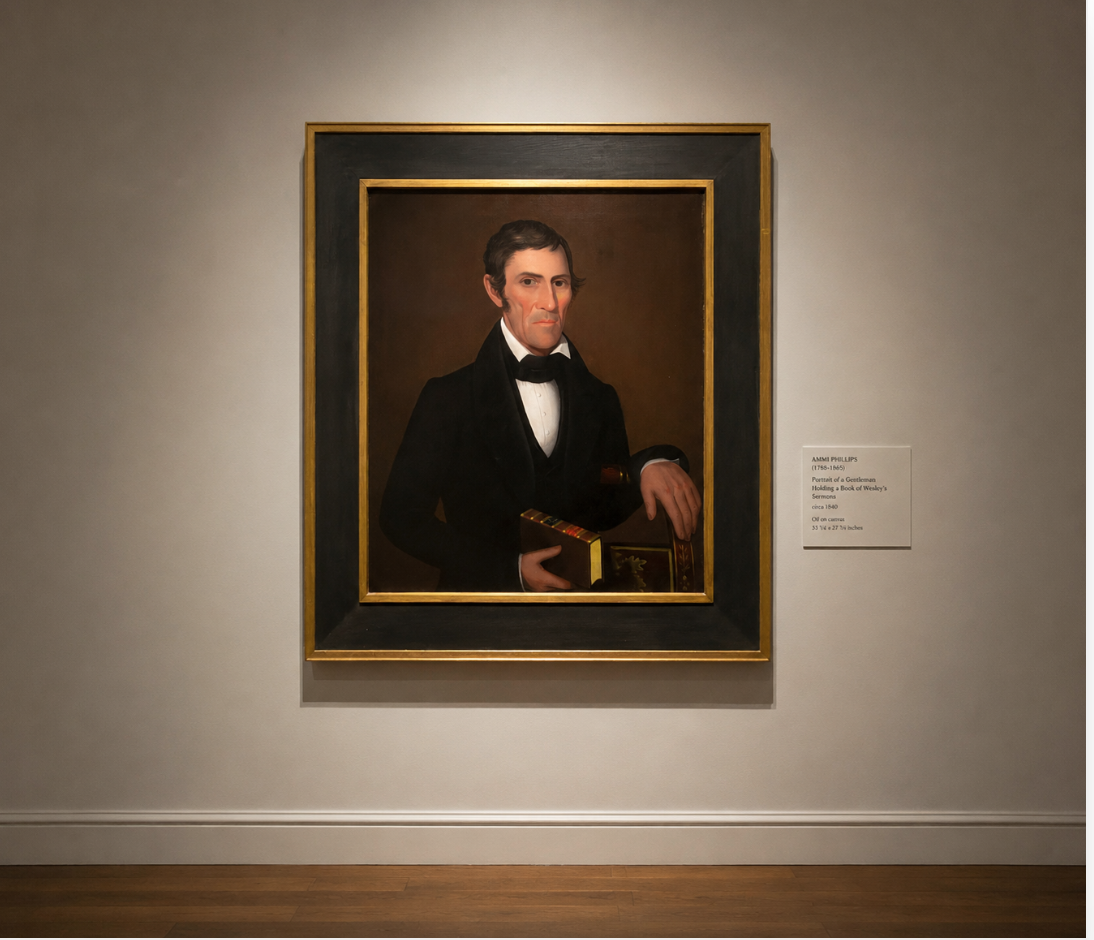 Image 2 of 5
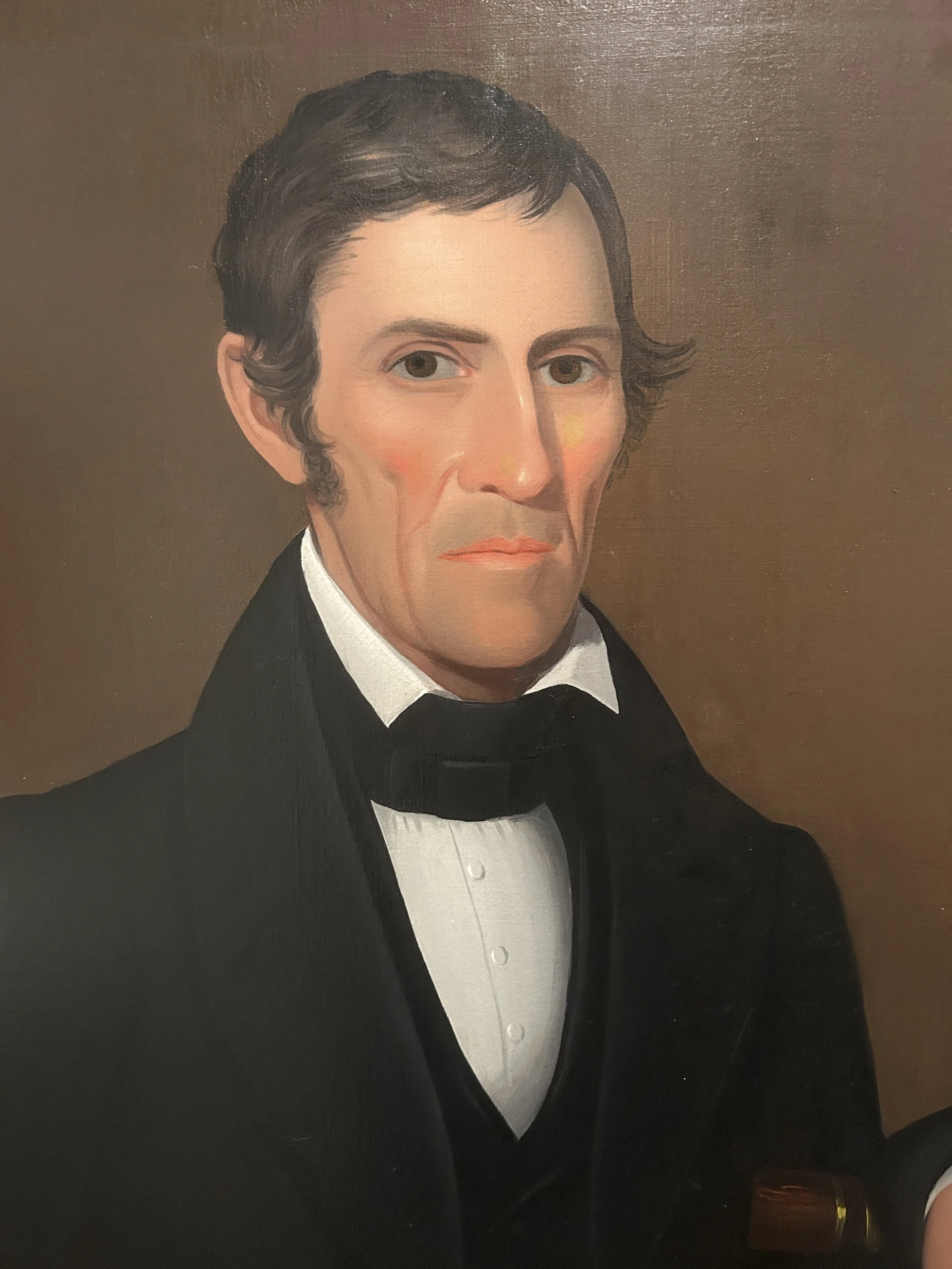 Image 3 of 5
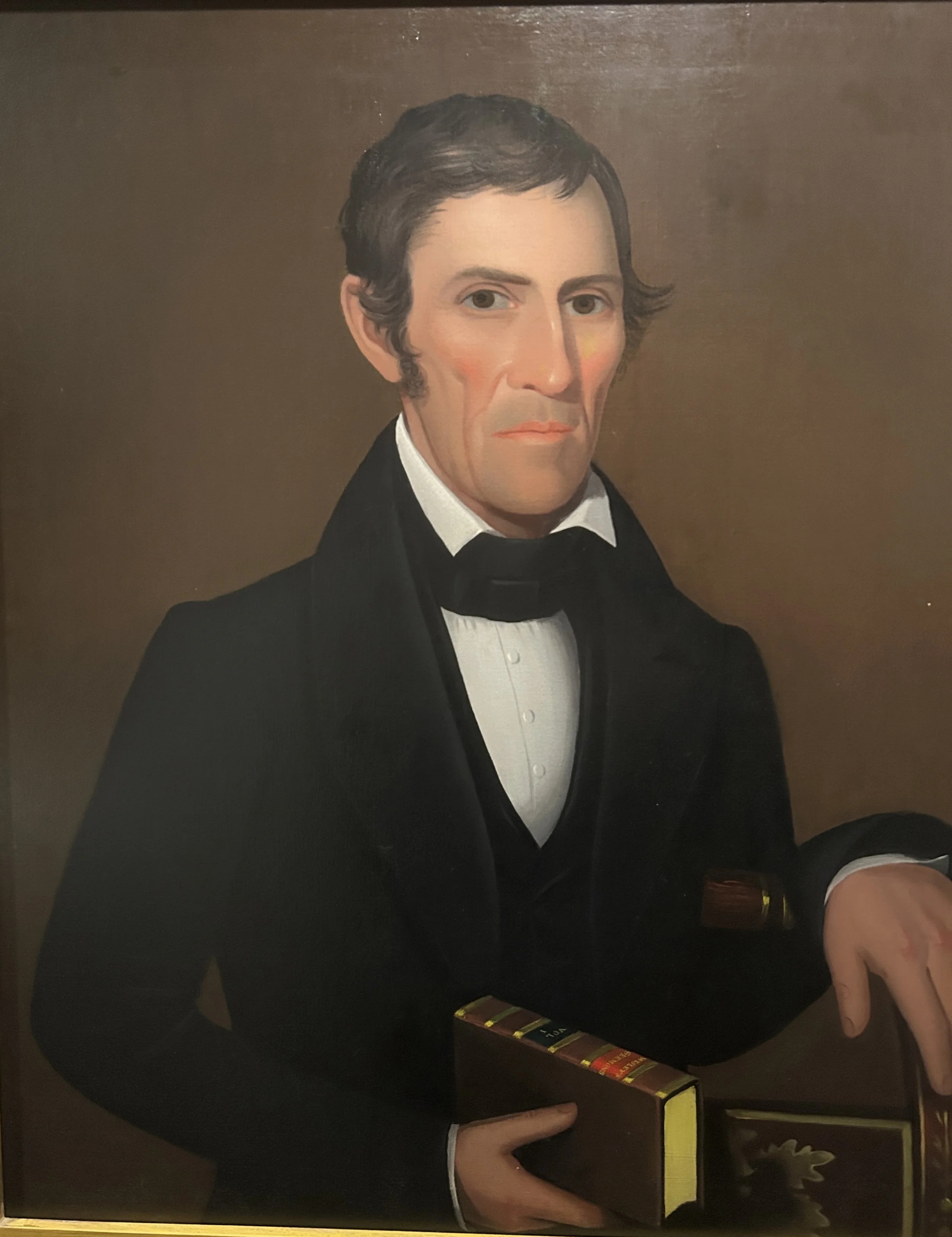 Image 4 of 5
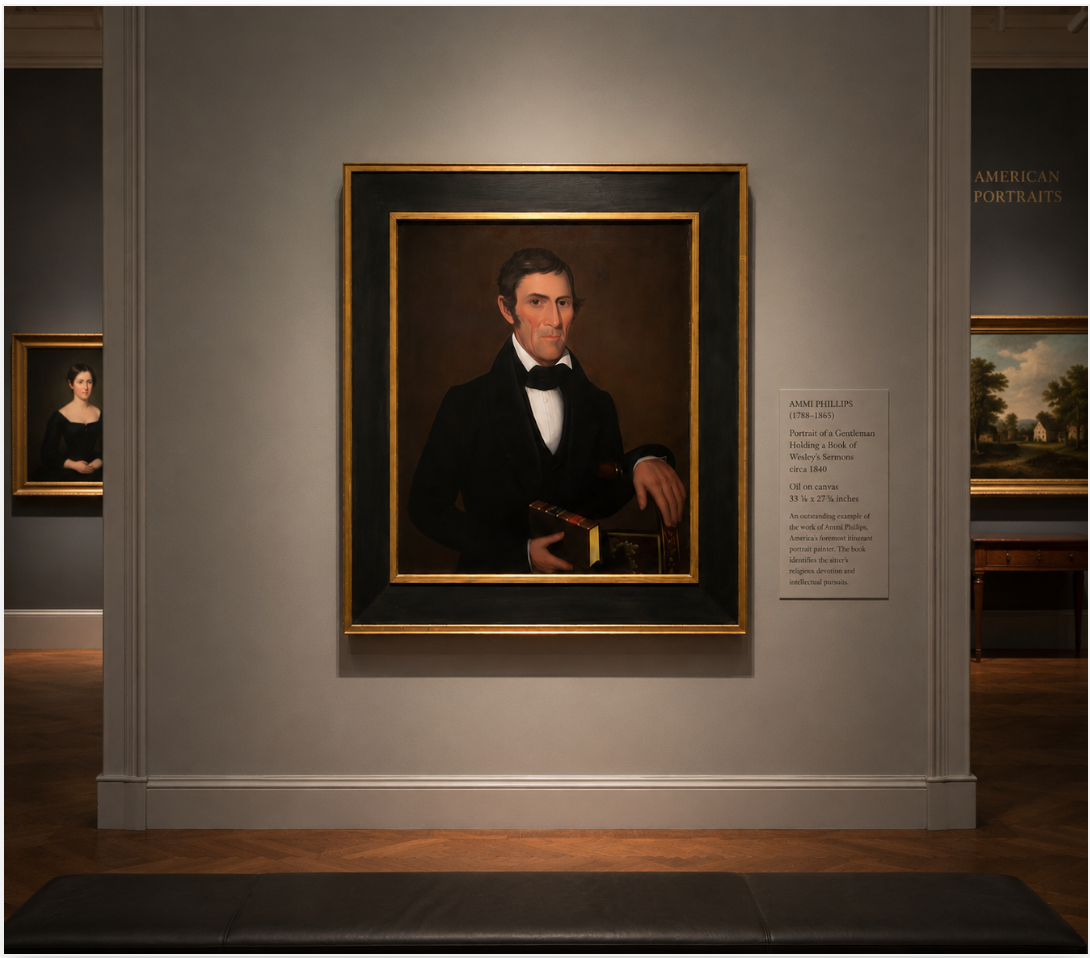 Image 5 of 5