GENERAL HOOKER DURING THE VIRGINIA CAMPAIGN
American School
Circa 1862–1865
Oil on Canvas
17 x 24 1/8 inches
Provenance:
Arnold Seligmann, Rey & Company, New York
French & Company, New York
Bernard Danenberg Galleries, New York
The Estate of Bartlett Burnap
Exhibited: Minneapolis Institute of Art, Minneapolis, Minnesota, 1944
Among the most compelling surviving images of Civil War camp life, General Hooker During the Virginia Campaign offers a remarkably intimate view of the Union Army during one of the defining moments of American history. Rather than depicting the smoke and violence of battle, the unknown artist focuses on the quieter world behind the front lines, where military decisions, social interactions, and the daily realities of war unfolded.
The painting centers upon Major General Joseph Hooker (1814–1879), commander of the Army of the Potomac and one of the most controversial and charismatic Union generals of the Civil War. Standing before a rustic log headquarters in the Virginia wilderness, Hooker is shown interacting with members of his command while officers, attendants, and civilian workers gather around him.
The composition likely dates from Hooker's command of the Army of the Potomac between January and June of 1863, a period immediately following the disastrous Union defeat at Fredericksburg and preceding the Battle of Chancellorsville. President Abraham Lincoln appointed Hooker to restore morale, discipline, and confidence within the Union army. Though remembered today primarily for his defeat by Robert E. Lee at Chancellorsville, Hooker transformed the Army of the Potomac through sweeping reforms in organization, sanitation, supply, and cavalry operations. Historians continue to credit him with rebuilding the army that would ultimately achieve victory at Gettysburg only months later.
The painting's importance extends beyond its portrayal of Hooker. Particularly notable is the inclusion of three African American figures within the headquarters setting. During the Virginia campaigns thousands of formerly enslaved men and women sought refuge within Union lines. Known by the federal government as "contrabands," they served as cooks, laborers, teamsters, guides, servants, and support personnel. Their presence in this painting reflects the profound social transformation underway during the Civil War as slavery began to collapse in areas occupied by Union forces.
One African American figure appears in the doorway of the headquarters structure, while another stands nearby and a third is depicted in the left foreground. Far from incidental additions, these individuals remind viewers that the Union war effort increasingly depended upon the labor and assistance of African Americans. By 1863, many such men would eventually enter military service through the United States Colored Troops, permanently altering the course of the war and the nation itself.
The log structure itself appears to represent a temporary headquarters common to the Army of the Potomac during winter encampments in Virginia. Similar headquarters were erected around Falmouth, Stafford County, and the camps surrounding Chancellorsville. The canvas awning, outdoor table, and orderly arrangement of personnel suggest a functioning command center rather than a battlefield encampment. Such scenes were familiar to contemporary observers but rarely survive in painted form.
Joseph Hooker remains one of the most fascinating personalities of the Civil War. A graduate of West Point, veteran of the Mexican-American War, and fierce battlefield commander, he earned the nickname "Fighting Joe" through newspaper reports praising his aggressive conduct during the Peninsula Campaign and the Battle of Williamsburg. His reputation for confidence and ambition occasionally brought him into conflict with superiors. Upon appointing him commander of the Army of the Potomac, Abraham Lincoln famously wrote to Hooker that while he had heard rumors the general believed the country needed a dictator, only successful generals could become dictators, adding that what the nation required from Hooker was military success.
The painting's distinguished provenance further enhances its significance. Arnold Seligmann, Rey & Company was among the most prestigious art dealerships in America during the twentieth century, handling important European and American works for major museums and collectors. French & Company likewise ranked among New York's leading dealers in fine and decorative arts. Bernard Danenberg Galleries became one of the foremost specialists in American historical paintings, folk art, and nineteenth-century American art. The passage of the painting through these respected firms demonstrates its long-standing recognition within the American art market.
Its exhibition at the Minneapolis Institute of Art provides additional institutional validation. Founded in 1883, the Minneapolis Institute of Art remains one of America's leading encyclopedic museums. Exhibition history within a major museum collection suggests that the painting was considered not merely decorative but historically and culturally significant.
While the artist remains unidentified, the work belongs to a tradition of Civil War historical painting that sought to document military life through observation rather than romanticized heroics. Instead of emphasizing battle, the artist records the complex social world surrounding a Union headquarters: commanding officers, enlisted men, civilian workers, African Americans, and camp followers, all participating in the machinery of war.
Today the painting stands as an important visual record of leadership, race, military organization, and daily life during the American Civil War. It captures a fleeting moment in which the Union Army was being reshaped under Hooker's command while the nation itself was undergoing one of the most profound social transformations in its history. Few surviving Civil War paintings combine military leadership, African American presence, and documented institutional provenance with such effectiveness.
Selected References
Abraham Lincoln, Letter to Major General Joseph Hooker, January 26, 1863.
Bruce Catton,
Mr. Lincoln's Army.
Stephen W. Sears,
Chancellorsville.
James M. McPherson,
Battle Cry of Freedom.
John Hennessy,
Return to Bull Run.
William Marvel,
Lincoln's Autocrat: The Life of Edwin Stanton.
Army of the Potomac winter camp studies and Civil War headquarters photography collections.
Minneapolis Institute of Art exhibition records.
Arnold Seligmann, Rey & Company archives and dealer records.
Additional Curatorial Notes
A few scholarly observations may be worth mentioning in the gallery catalog:
The standing officer behind Hooker may represent a staff officer from Army Headquarters, though no positive identification can be made.
The seated figures likely represent officers rather than enlisted men due to their dress and position at the table.
The African American figures are among the most historically important elements of the composition and elevate the painting beyond a conventional military portrait.
The scene is probably inspired by Hooker's headquarters near Falmouth or during the Chancellorsville campaign rather than an actual battlefield event.
The painting's strongest modern appeal lies in its combination of Civil War history, African American history, military leadership, and documented New York dealer provenance.
GENERAL HOOKER DURING THE VIRGINIA CAMPAIGN
American School
Circa 1862–1865
Oil on Canvas
17 x 24 1/8 inches
Provenance:
Arnold Seligmann, Rey & Company, New York
French & Company, New York
Bernard Danenberg Galleries, New York
The Estate of Bartlett Burnap
Exhibited: Minneapolis Institute of Art, Minneapolis, Minnesota, 1944
Among the most compelling surviving images of Civil War camp life, General Hooker During the Virginia Campaign offers a remarkably intimate view of the Union Army during one of the defining moments of American history. Rather than depicting the smoke and violence of battle, the unknown artist focuses on the quieter world behind the front lines, where military decisions, social interactions, and the daily realities of war unfolded.
The painting centers upon Major General Joseph Hooker (1814–1879), commander of the Army of the Potomac and one of the most controversial and charismatic Union generals of the Civil War. Standing before a rustic log headquarters in the Virginia wilderness, Hooker is shown interacting with members of his command while officers, attendants, and civilian workers gather around him.
The composition likely dates from Hooker's command of the Army of the Potomac between January and June of 1863, a period immediately following the disastrous Union defeat at Fredericksburg and preceding the Battle of Chancellorsville. President Abraham Lincoln appointed Hooker to restore morale, discipline, and confidence within the Union army. Though remembered today primarily for his defeat by Robert E. Lee at Chancellorsville, Hooker transformed the Army of the Potomac through sweeping reforms in organization, sanitation, supply, and cavalry operations. Historians continue to credit him with rebuilding the army that would ultimately achieve victory at Gettysburg only months later.
The painting's importance extends beyond its portrayal of Hooker. Particularly notable is the inclusion of three African American figures within the headquarters setting. During the Virginia campaigns thousands of formerly enslaved men and women sought refuge within Union lines. Known by the federal government as "contrabands," they served as cooks, laborers, teamsters, guides, servants, and support personnel. Their presence in this painting reflects the profound social transformation underway during the Civil War as slavery began to collapse in areas occupied by Union forces.
One African American figure appears in the doorway of the headquarters structure, while another stands nearby and a third is depicted in the left foreground. Far from incidental additions, these individuals remind viewers that the Union war effort increasingly depended upon the labor and assistance of African Americans. By 1863, many such men would eventually enter military service through the United States Colored Troops, permanently altering the course of the war and the nation itself.
The log structure itself appears to represent a temporary headquarters common to the Army of the Potomac during winter encampments in Virginia. Similar headquarters were erected around Falmouth, Stafford County, and the camps surrounding Chancellorsville. The canvas awning, outdoor table, and orderly arrangement of personnel suggest a functioning command center rather than a battlefield encampment. Such scenes were familiar to contemporary observers but rarely survive in painted form.
Joseph Hooker remains one of the most fascinating personalities of the Civil War. A graduate of West Point, veteran of the Mexican-American War, and fierce battlefield commander, he earned the nickname "Fighting Joe" through newspaper reports praising his aggressive conduct during the Peninsula Campaign and the Battle of Williamsburg. His reputation for confidence and ambition occasionally brought him into conflict with superiors. Upon appointing him commander of the Army of the Potomac, Abraham Lincoln famously wrote to Hooker that while he had heard rumors the general believed the country needed a dictator, only successful generals could become dictators, adding that what the nation required from Hooker was military success.
The painting's distinguished provenance further enhances its significance. Arnold Seligmann, Rey & Company was among the most prestigious art dealerships in America during the twentieth century, handling important European and American works for major museums and collectors. French & Company likewise ranked among New York's leading dealers in fine and decorative arts. Bernard Danenberg Galleries became one of the foremost specialists in American historical paintings, folk art, and nineteenth-century American art. The passage of the painting through these respected firms demonstrates its long-standing recognition within the American art market.
Its exhibition at the Minneapolis Institute of Art provides additional institutional validation. Founded in 1883, the Minneapolis Institute of Art remains one of America's leading encyclopedic museums. Exhibition history within a major museum collection suggests that the painting was considered not merely decorative but historically and culturally significant.
While the artist remains unidentified, the work belongs to a tradition of Civil War historical painting that sought to document military life through observation rather than romanticized heroics. Instead of emphasizing battle, the artist records the complex social world surrounding a Union headquarters: commanding officers, enlisted men, civilian workers, African Americans, and camp followers, all participating in the machinery of war.
Today the painting stands as an important visual record of leadership, race, military organization, and daily life during the American Civil War. It captures a fleeting moment in which the Union Army was being reshaped under Hooker's command while the nation itself was undergoing one of the most profound social transformations in its history. Few surviving Civil War paintings combine military leadership, African American presence, and documented institutional provenance with such effectiveness.
Selected References
Abraham Lincoln, Letter to Major General Joseph Hooker, January 26, 1863.
Bruce Catton,
Mr. Lincoln's Army.
Stephen W. Sears,
Chancellorsville.
James M. McPherson,
Battle Cry of Freedom.
John Hennessy,
Return to Bull Run.
William Marvel,
Lincoln's Autocrat: The Life of Edwin Stanton.
Army of the Potomac winter camp studies and Civil War headquarters photography collections.
Minneapolis Institute of Art exhibition records.
Arnold Seligmann, Rey & Company archives and dealer records.
Additional Curatorial Notes
A few scholarly observations may be worth mentioning in the gallery catalog:
The standing officer behind Hooker may represent a staff officer from Army Headquarters, though no positive identification can be made.
The seated figures likely represent officers rather than enlisted men due to their dress and position at the table.
The African American figures are among the most historically important elements of the composition and elevate the painting beyond a conventional military portrait.
The scene is probably inspired by Hooker's headquarters near Falmouth or during the Chancellorsville campaign rather than an actual battlefield event.
The painting's strongest modern appeal lies in its combination of Civil War history, African American history, military leadership, and documented New York dealer provenance.
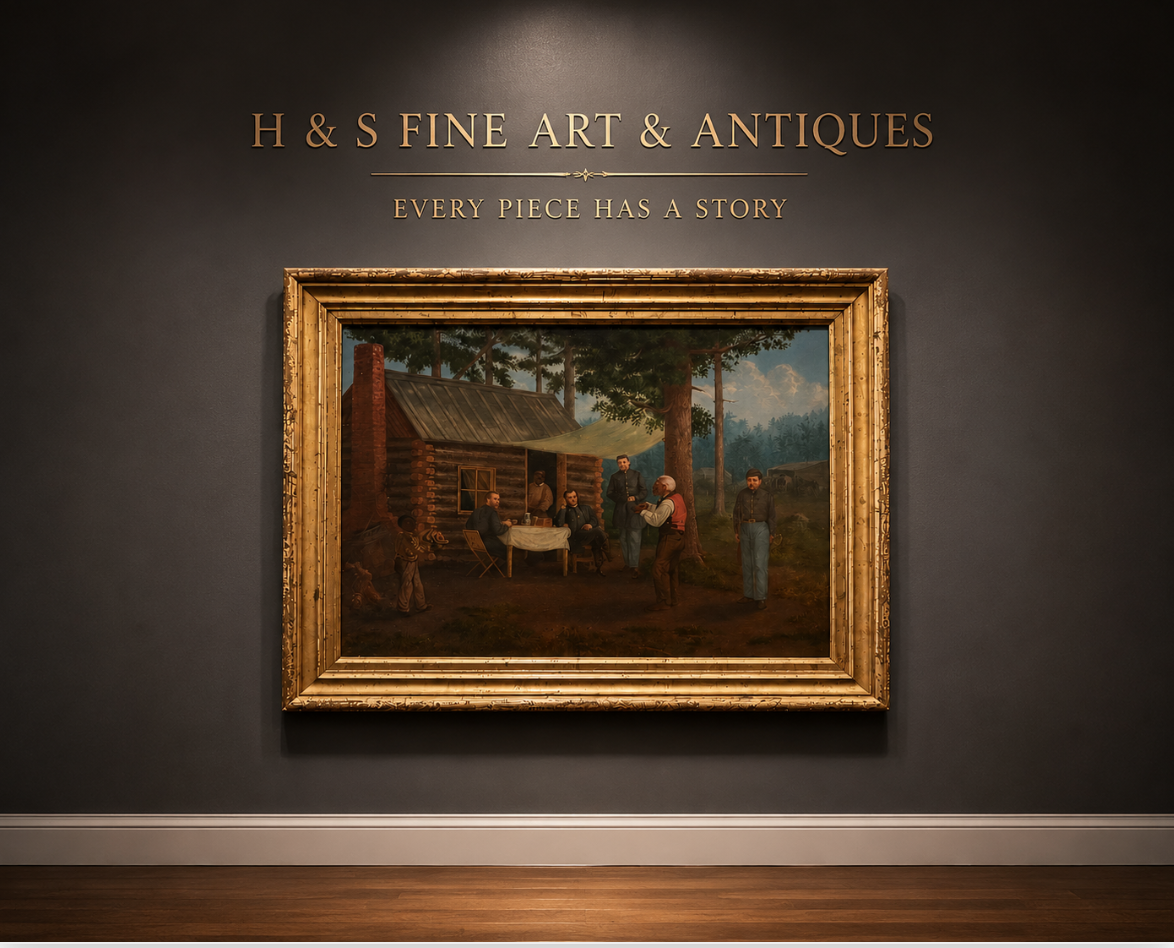 Image 1 of 12
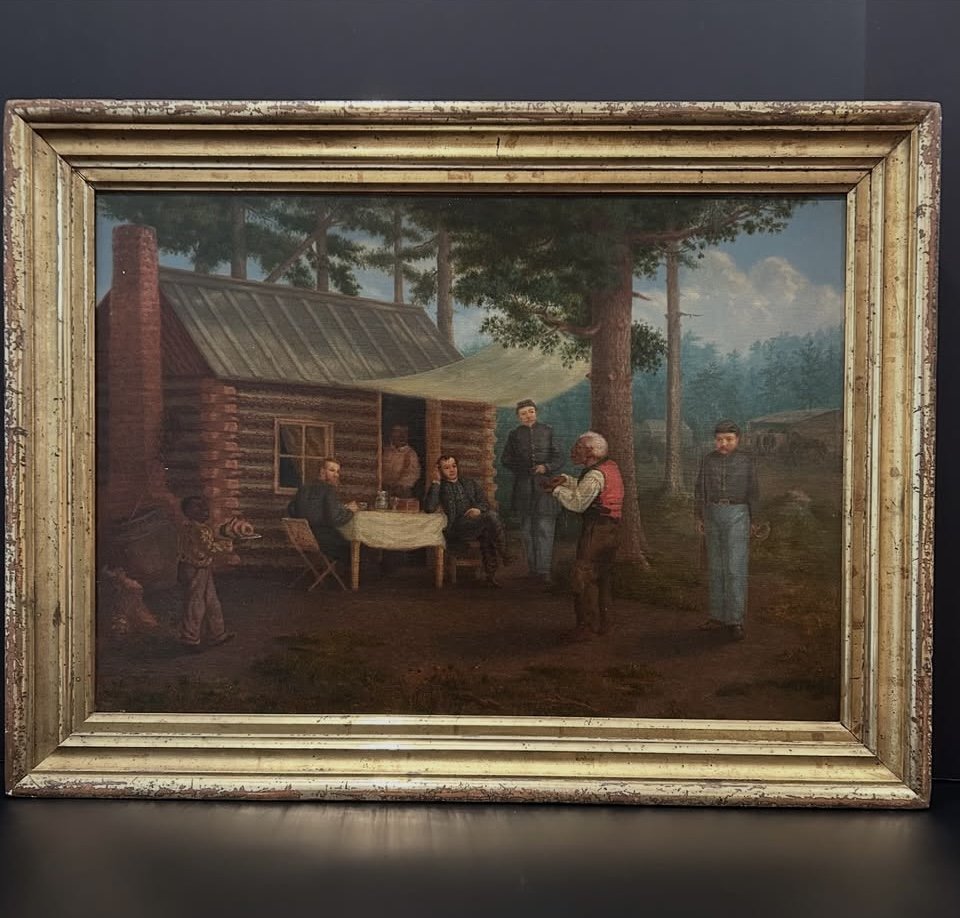 Image 2 of 12
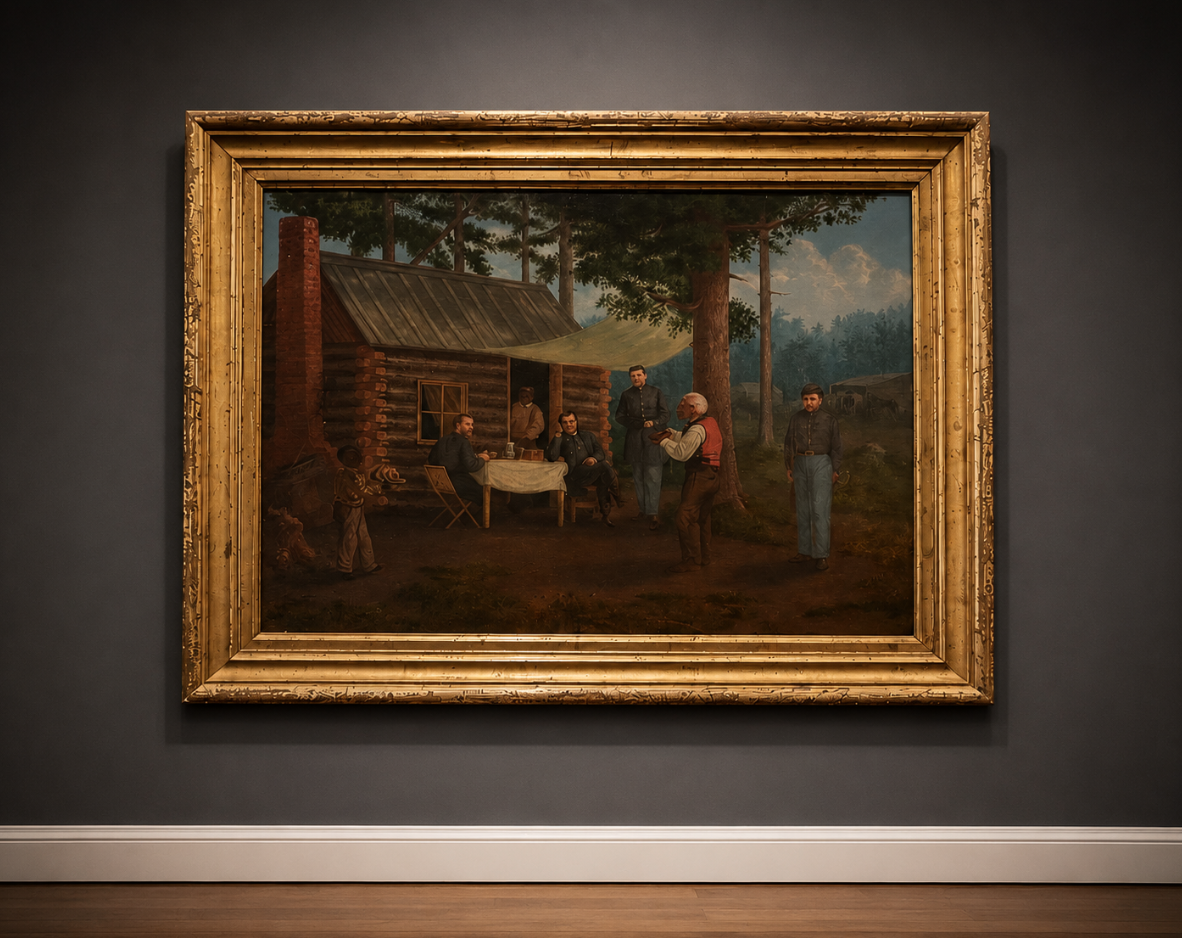 Image 3 of 12
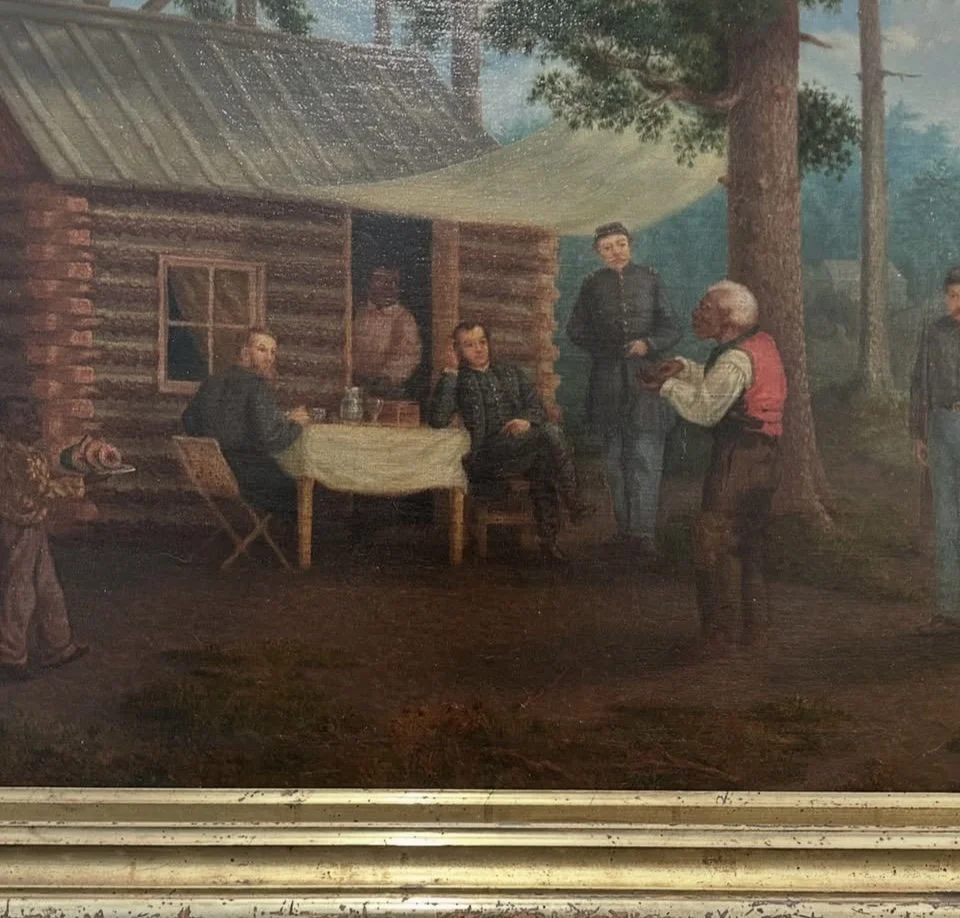 Image 4 of 12
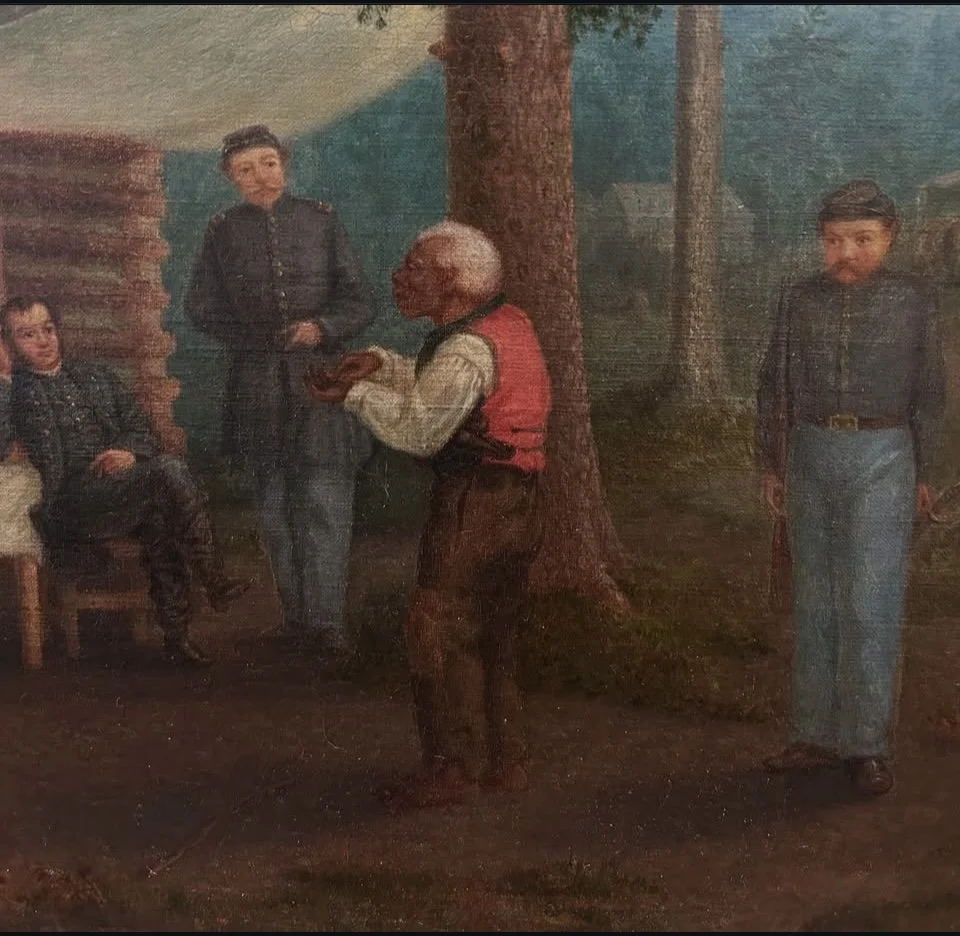 Image 5 of 12
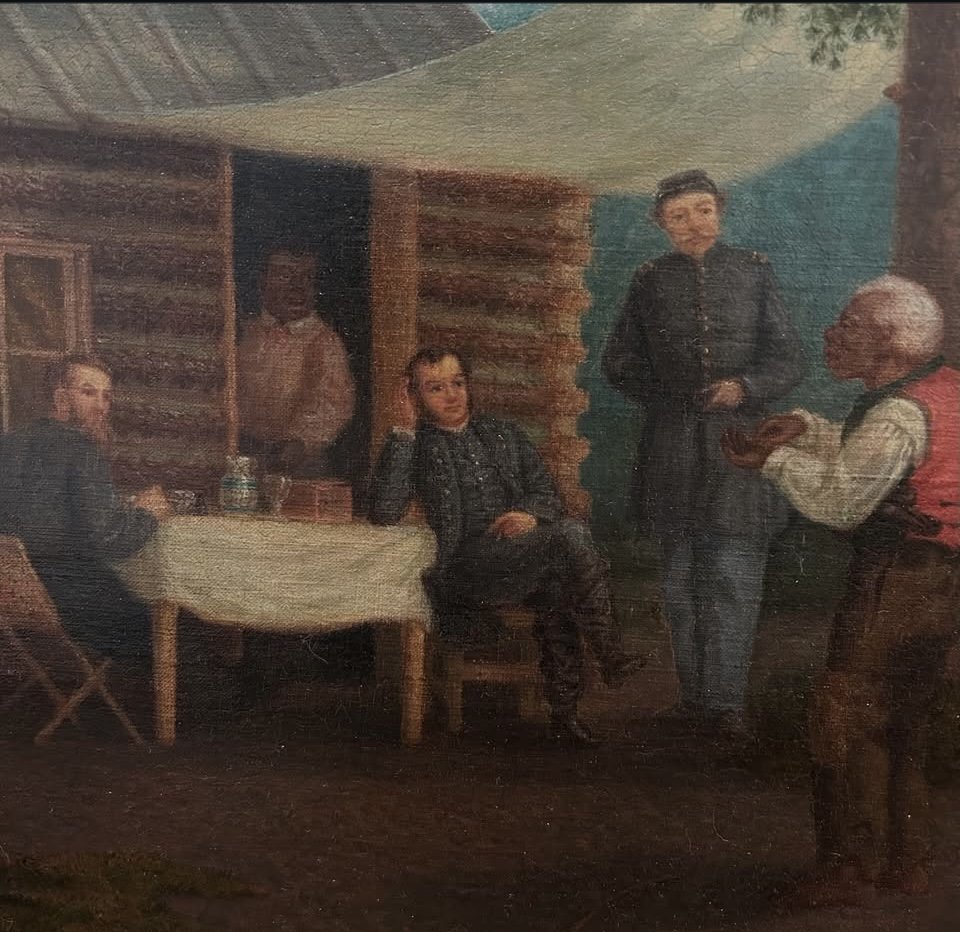 Image 6 of 12
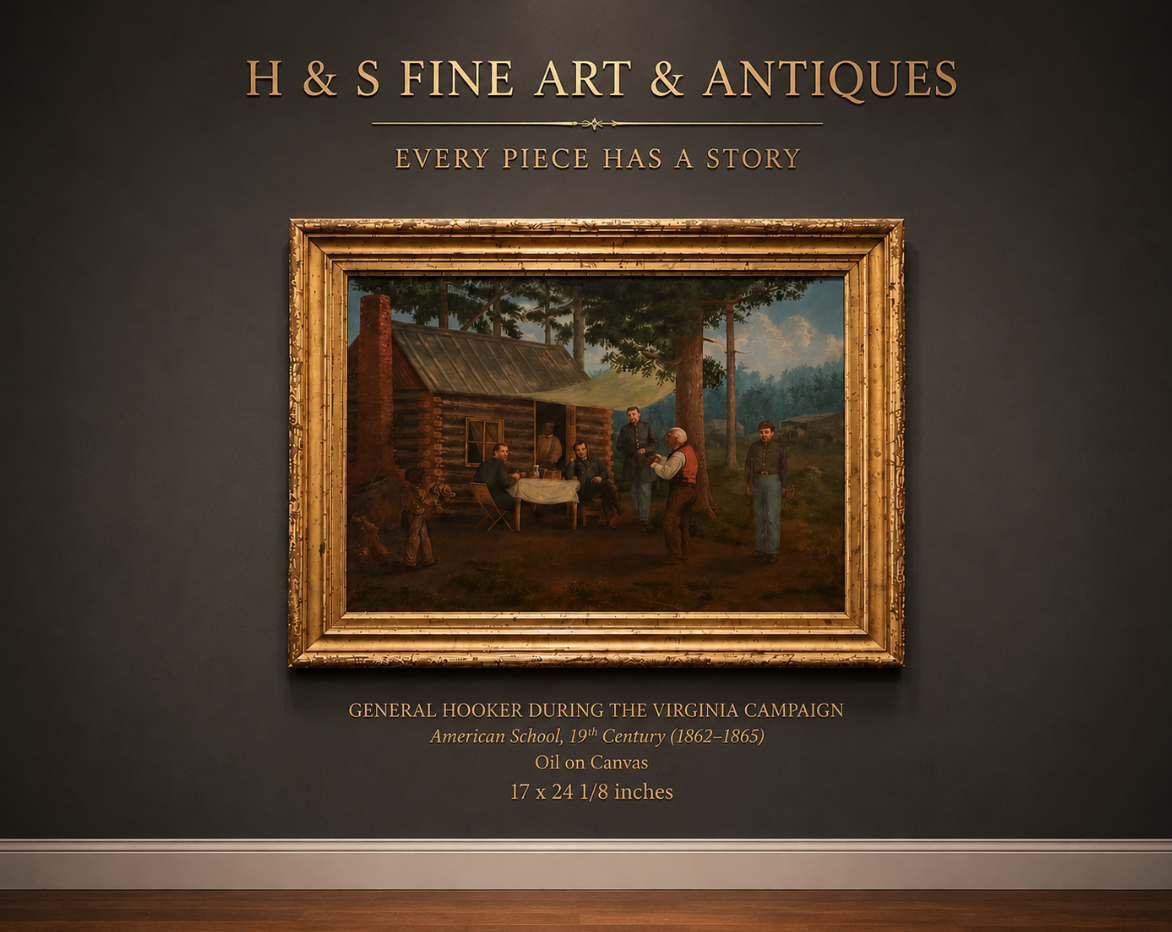 Image 7 of 12
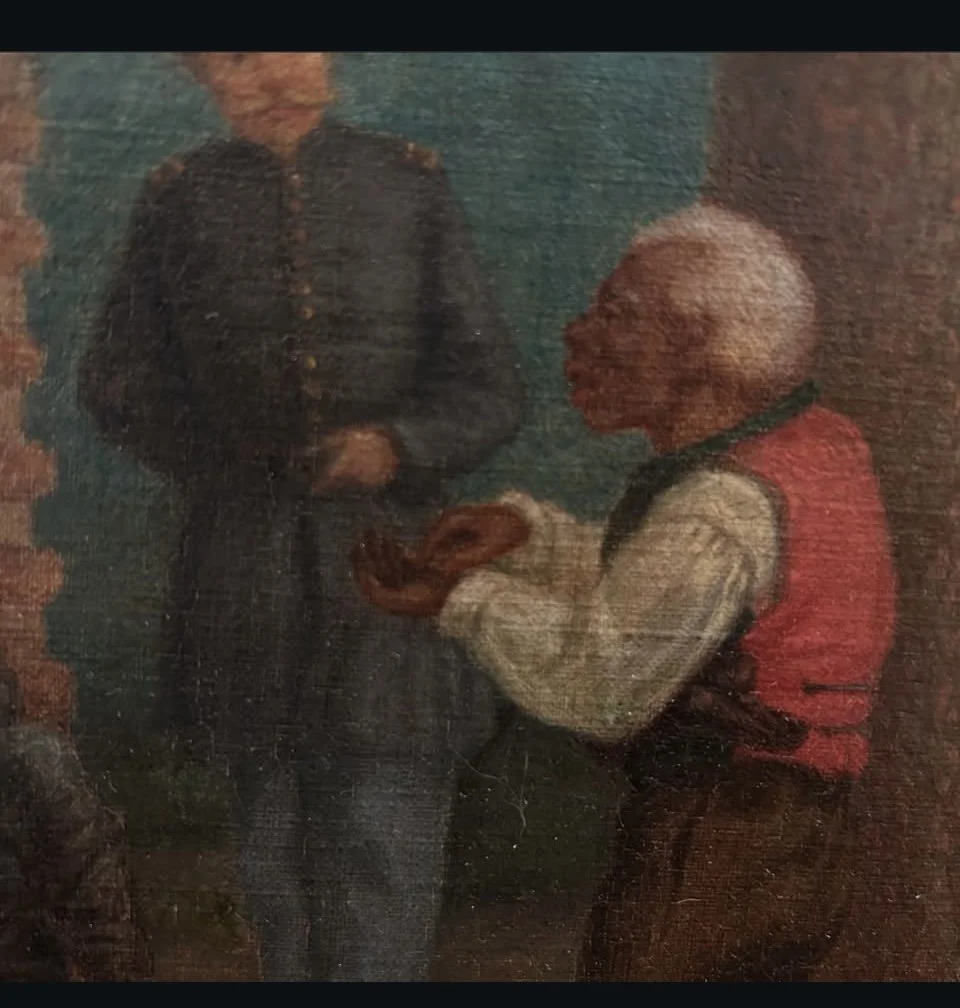 Image 8 of 12
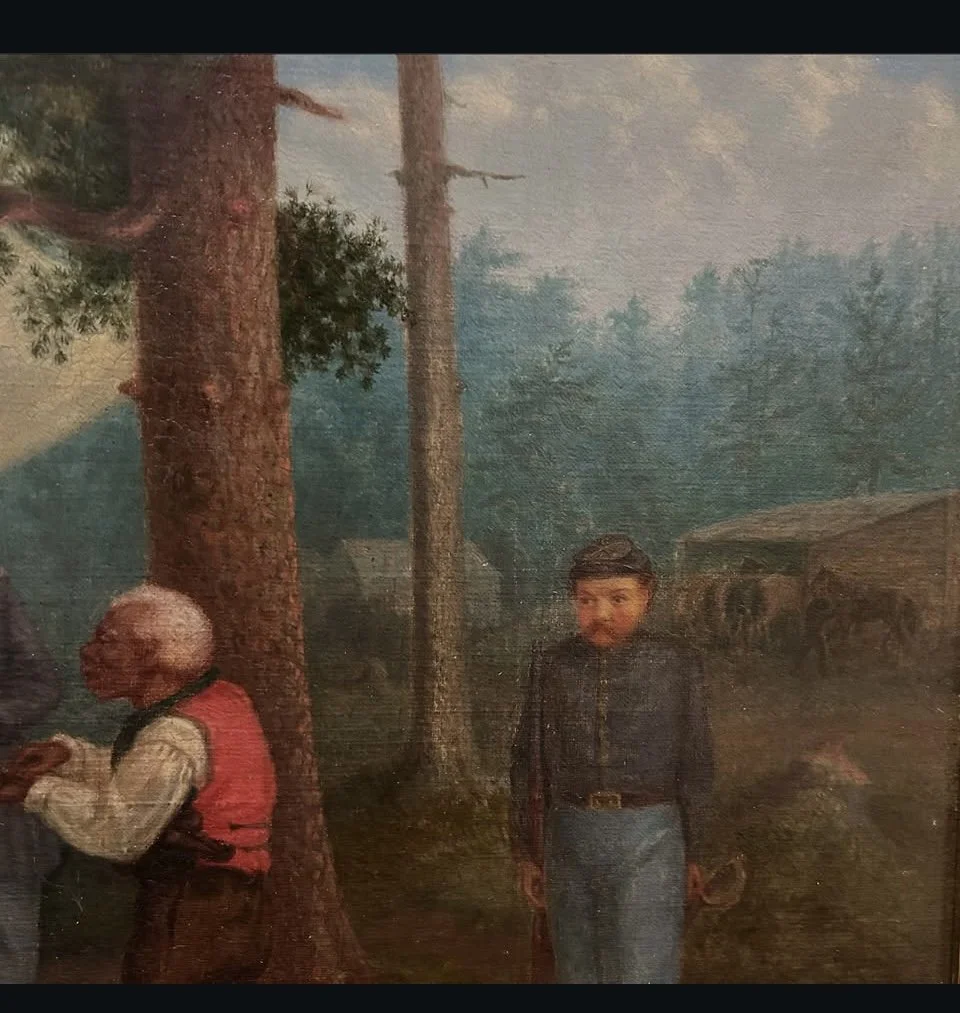 Image 9 of 12
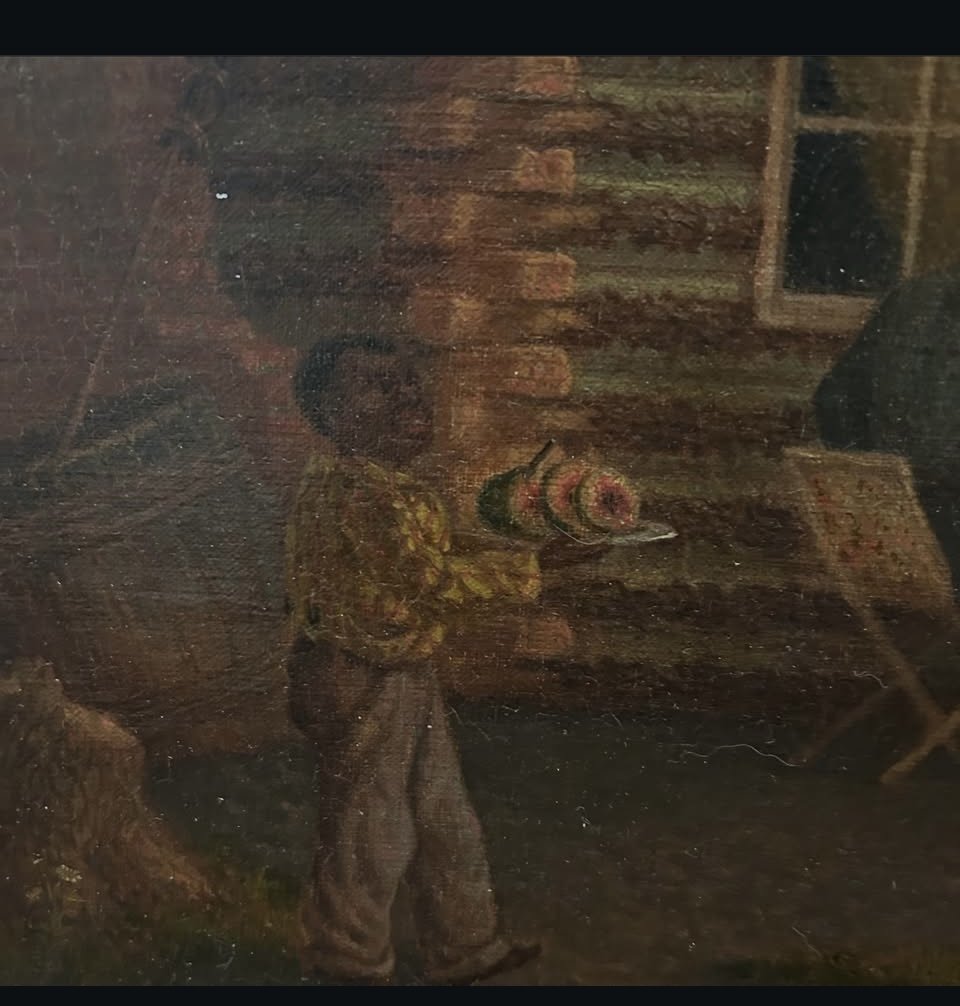 Image 10 of 12
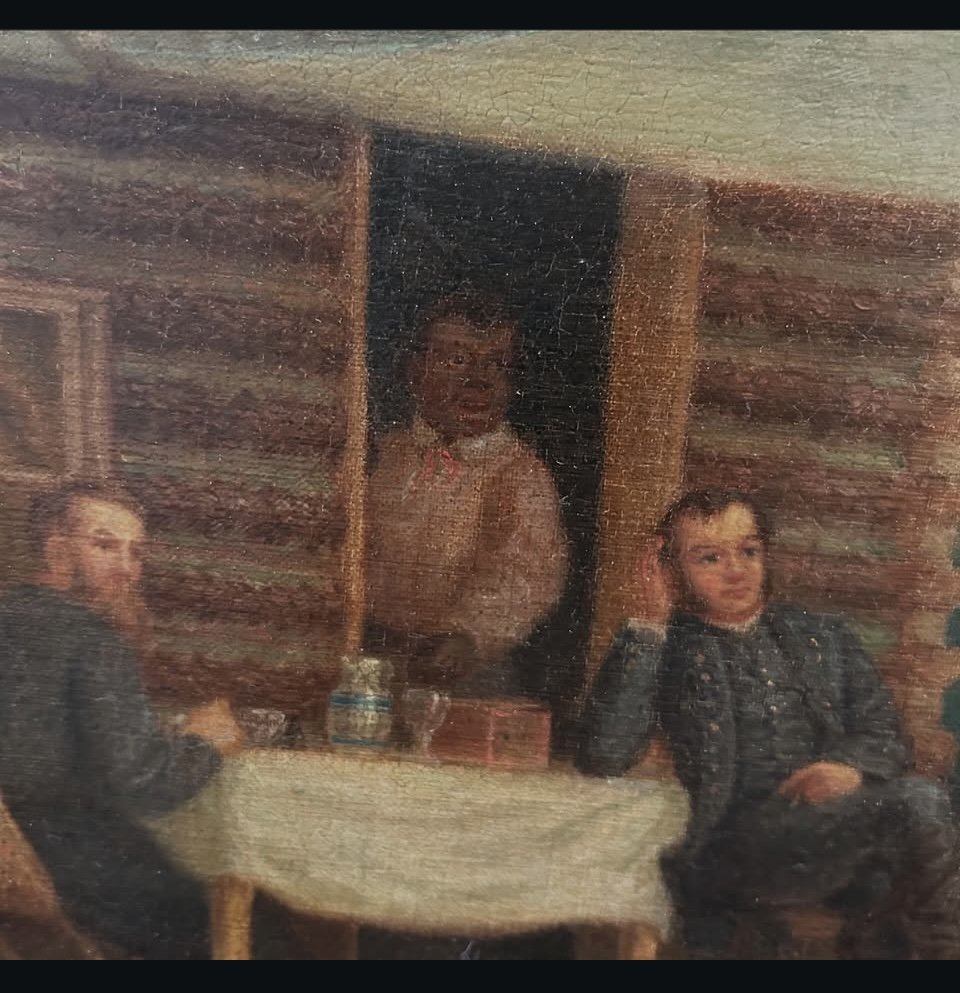 Image 11 of 12
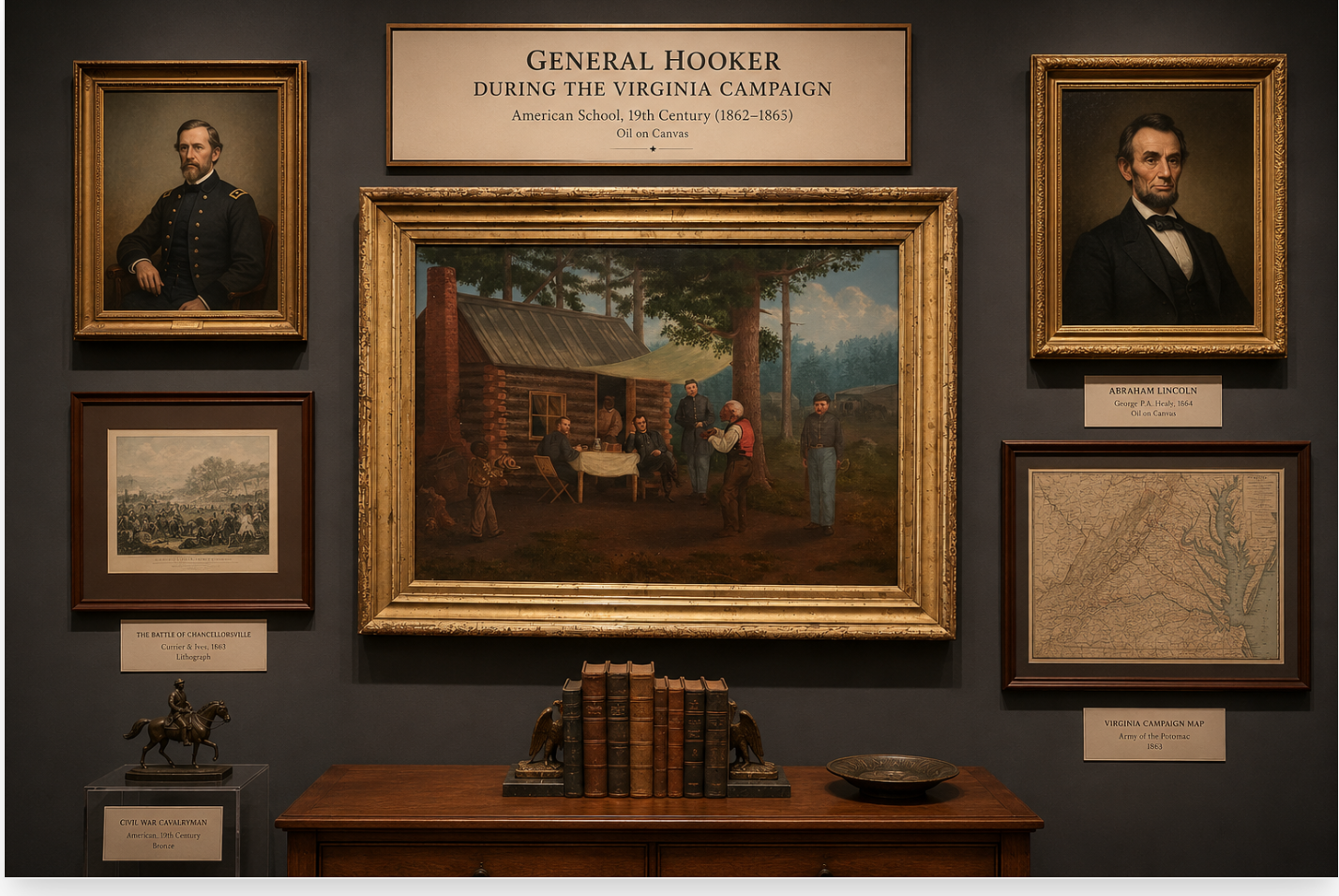 Image 12 of 12