AMERICAN CARVED AND PAINTED SOLDIER WHIRLIGIG
American, circa 1860–1880
Carved and painted wood
Height: 18½ inches; Width: 7 inches
Provenance
Jeff Waingrow, South Salem, New York.
Collection of Joan Oestreich Kendall.
Animated Patriotism: Folk Sculpture in Motion
Among the most engaging creations of nineteenth-century American folk art are whirligigs—objects that united sculpture, engineering, and movement. Intended to be animated by the wind, these whimsical figures once adorned barns, fences, rooftops, and gardens throughout rural America, transforming ordinary landscapes into lively displays of craftsmanship and imagination.
This exceptional Soldier Whirligig exemplifies the ingenuity and artistic spirit of anonymous American craftsmen. Carved entirely by hand and retaining its beautifully aged painted surface, the figure stands with sword raised in one hand and shield in the other, embodying the patriotic imagery that became deeply woven into the nation's identity during the decades surrounding the Civil War.
The maker reduced the human form to its essential elements: a rounded torso, cylindrical limbs, and a remarkably expressive face distinguished by a prominent nose and mustache. Though simple in construction, the sculpture possesses a striking modernity. Its bold forms and direct carving anticipate qualities later celebrated by twentieth-century artists and collectors.
Sculpture Meant for the Wind
Unlike stationary carvings, whirligigs were kinetic objects. Mounted outdoors, their arms revolved with the breeze, bringing the figure to life through motion. Because these objects were exposed to decades of weather, relatively few survived intact. Examples retaining original surfaces and strong sculptural character have become increasingly rare and highly sought after.
Military subjects occupied a special place in nineteenth-century America. Veterans returning from war and communities honoring their service often embraced patriotic imagery. Figures such as this soldier served not only as decorative objects but also as symbols of courage, sacrifice, and national pride.
Folk Art and Modern Aesthetics
What began as a functional object intended to delight passersby has evolved into a celebrated work of American sculpture. The same qualities that once made whirligigs beloved ornaments—their humor, movement, and handcrafted individuality—now place them among the most evocative survivals of nineteenth-century vernacular art.
Today, collectors and museums recognize these animated figures not merely as curiosities but as important expressions of American creativity. Their weathered surfaces and honest construction preserve the spirit of the rural craftsmen who fashioned beauty from simple materials and transformed everyday life into art.
Provenance
Jeff Waingrow, South Salem, New York
The earliest documented owner listed for the whirligig is Jeff Waingrow, a well-known dealer and collector specializing in American folk art and Americana. Based in South Salem, New York, Waingrow handled many exceptional examples of nineteenth-century folk sculpture, weathervanes, whirligigs, and painted objects. Pieces that passed through his hands often entered advanced private collections and museums.
Having a documented connection to Jeff Waingrow is meaningful because collectors recognize his eye for authenticity and quality. His ownership helps establish the whirligig's place within the American folk art market and provides a solid collecting history.
Collection of Joan Oestreich Kend
The whirligig later became part of the collection of Joan Oestreich Kend, a distinguished collector of American folk art and Americana. Objects bearing the designation:
"Property from the Collection of Joan Oestreich Kend"
typically indicate that the piece came from a thoughtfully assembled collection rather than merely passing through the marketplace.
Collectors such as Joan Kend often acquired works through leading dealers and spent decades assembling collections based on rarity, originality, and artistic merit. Objects from named collections are generally considered more desirable because they have a traceable ownership history and have often been carefully preserved.
Possible Earlier History
Although not documented, it is very likely that this whirligig originally stood outdoors on a farmhouse, barn, or fence in the Northeastern United States—possibly New York, Pennsylvania, or New England. Most surviving nineteenth-century whirligigs were made by local craftsmen and remained with families for generations before entering the folk art market during the mid-twentieth century.
Many important collectors and dealers—including Herbert Waide Hemphill Jr. and other pioneers of the American folk art movement—helped elevate these once-humble objects into recognized works of art.
Importance Ranking
For a nineteenth-century whirligig, I would consider this provenance:
AMERICAN CARVED AND PAINTED SOLDIER WHIRLIGIG
American, circa 1860–1880
Carved and painted wood
Height: 18½ inches; Width: 7 inches
Provenance
Jeff Waingrow, South Salem, New York.
Collection of Joan Oestreich Kendall.
Animated Patriotism: Folk Sculpture in Motion
Among the most engaging creations of nineteenth-century American folk art are whirligigs—objects that united sculpture, engineering, and movement. Intended to be animated by the wind, these whimsical figures once adorned barns, fences, rooftops, and gardens throughout rural America, transforming ordinary landscapes into lively displays of craftsmanship and imagination.
This exceptional Soldier Whirligig exemplifies the ingenuity and artistic spirit of anonymous American craftsmen. Carved entirely by hand and retaining its beautifully aged painted surface, the figure stands with sword raised in one hand and shield in the other, embodying the patriotic imagery that became deeply woven into the nation's identity during the decades surrounding the Civil War.
The maker reduced the human form to its essential elements: a rounded torso, cylindrical limbs, and a remarkably expressive face distinguished by a prominent nose and mustache. Though simple in construction, the sculpture possesses a striking modernity. Its bold forms and direct carving anticipate qualities later celebrated by twentieth-century artists and collectors.
Sculpture Meant for the Wind
Unlike stationary carvings, whirligigs were kinetic objects. Mounted outdoors, their arms revolved with the breeze, bringing the figure to life through motion. Because these objects were exposed to decades of weather, relatively few survived intact. Examples retaining original surfaces and strong sculptural character have become increasingly rare and highly sought after.
Military subjects occupied a special place in nineteenth-century America. Veterans returning from war and communities honoring their service often embraced patriotic imagery. Figures such as this soldier served not only as decorative objects but also as symbols of courage, sacrifice, and national pride.
Folk Art and Modern Aesthetics
What began as a functional object intended to delight passersby has evolved into a celebrated work of American sculpture. The same qualities that once made whirligigs beloved ornaments—their humor, movement, and handcrafted individuality—now place them among the most evocative survivals of nineteenth-century vernacular art.
Today, collectors and museums recognize these animated figures not merely as curiosities but as important expressions of American creativity. Their weathered surfaces and honest construction preserve the spirit of the rural craftsmen who fashioned beauty from simple materials and transformed everyday life into art.
Provenance
Jeff Waingrow, South Salem, New York
The earliest documented owner listed for the whirligig is Jeff Waingrow, a well-known dealer and collector specializing in American folk art and Americana. Based in South Salem, New York, Waingrow handled many exceptional examples of nineteenth-century folk sculpture, weathervanes, whirligigs, and painted objects. Pieces that passed through his hands often entered advanced private collections and museums.
Having a documented connection to Jeff Waingrow is meaningful because collectors recognize his eye for authenticity and quality. His ownership helps establish the whirligig's place within the American folk art market and provides a solid collecting history.
Collection of Joan Oestreich Kend
The whirligig later became part of the collection of Joan Oestreich Kend, a distinguished collector of American folk art and Americana. Objects bearing the designation:
"Property from the Collection of Joan Oestreich Kend"
typically indicate that the piece came from a thoughtfully assembled collection rather than merely passing through the marketplace.
Collectors such as Joan Kend often acquired works through leading dealers and spent decades assembling collections based on rarity, originality, and artistic merit. Objects from named collections are generally considered more desirable because they have a traceable ownership history and have often been carefully preserved.
Possible Earlier History
Although not documented, it is very likely that this whirligig originally stood outdoors on a farmhouse, barn, or fence in the Northeastern United States—possibly New York, Pennsylvania, or New England. Most surviving nineteenth-century whirligigs were made by local craftsmen and remained with families for generations before entering the folk art market during the mid-twentieth century.
Many important collectors and dealers—including Herbert Waide Hemphill Jr. and other pioneers of the American folk art movement—helped elevate these once-humble objects into recognized works of art.
Importance Ranking
For a nineteenth-century whirligig, I would consider this provenance:
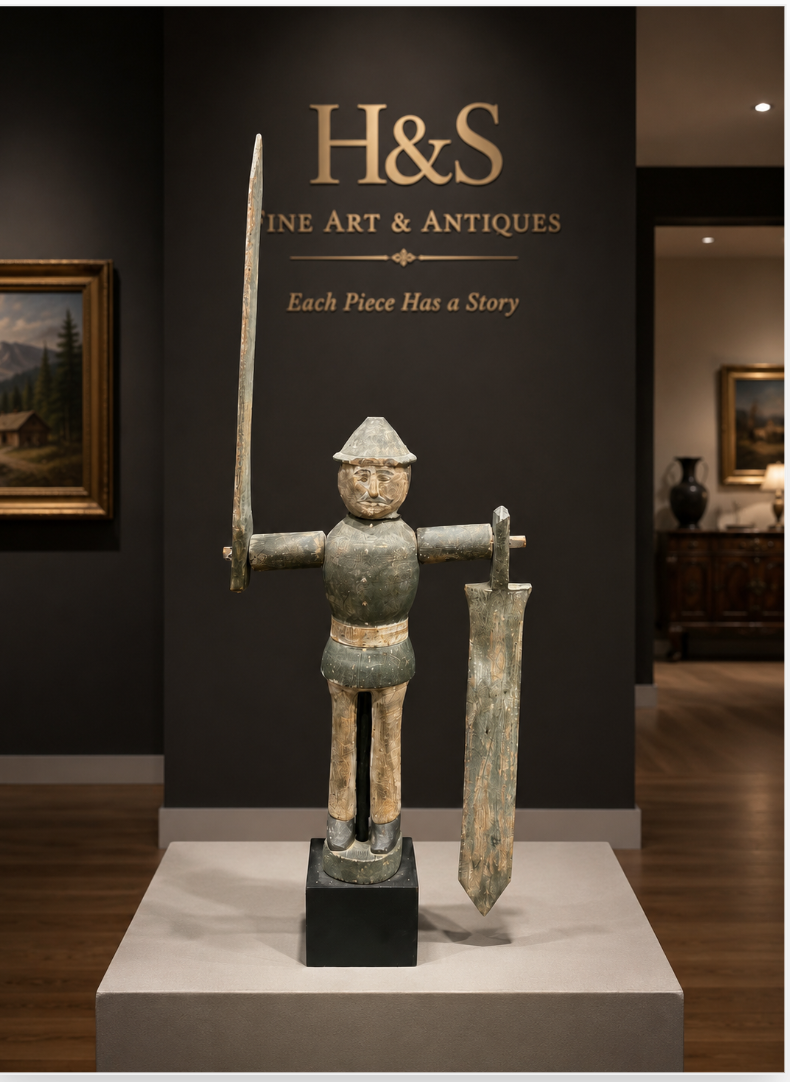 Image 1 of 6
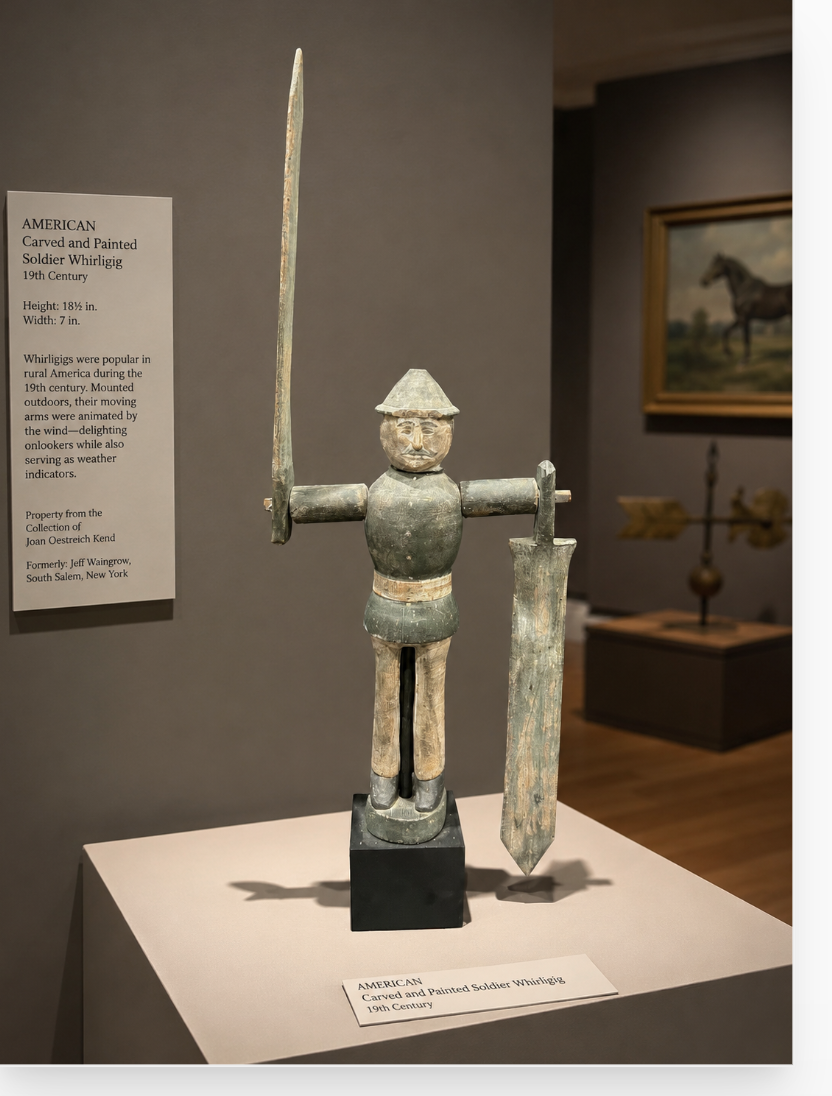 Image 2 of 6
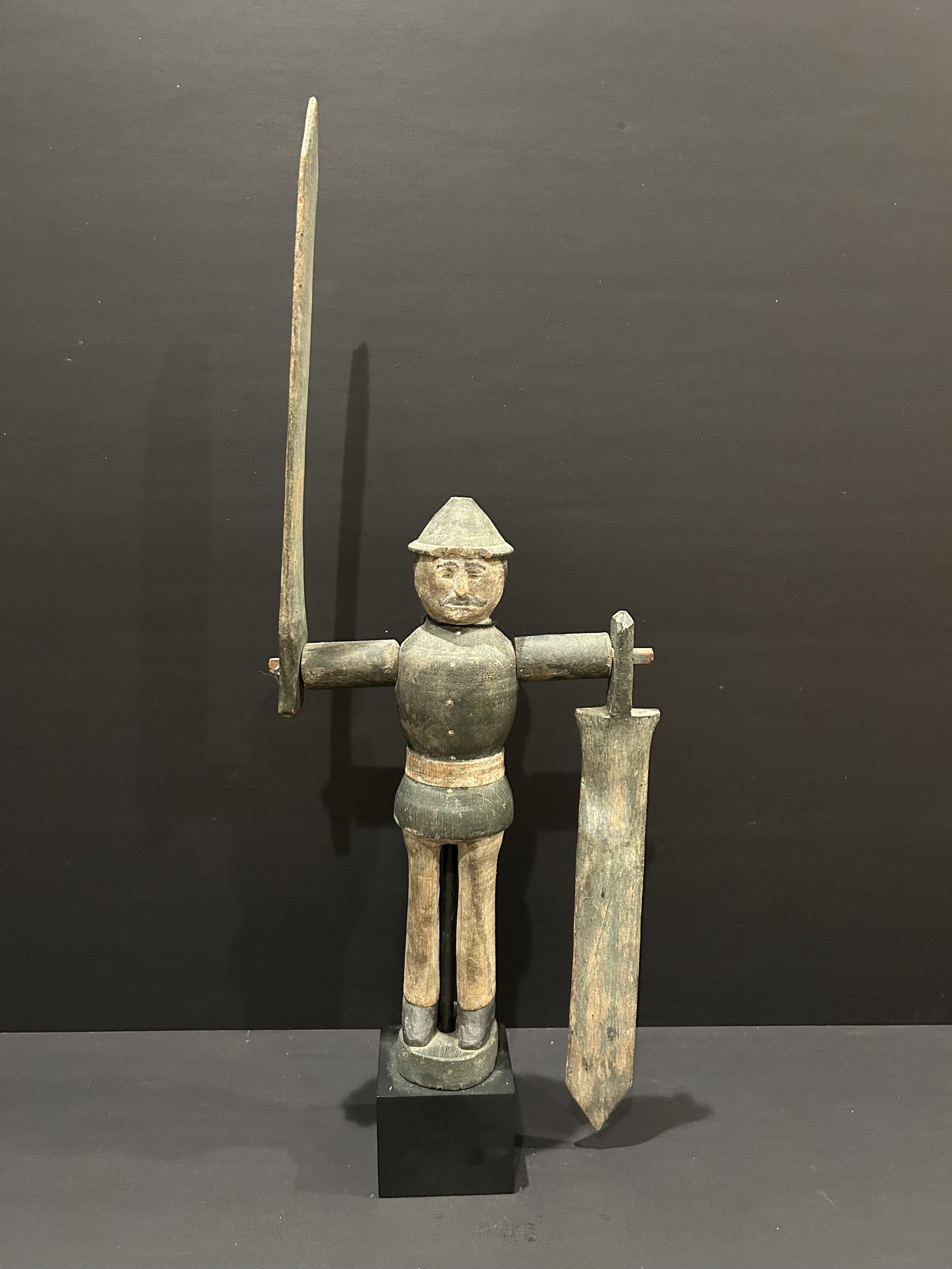 Image 3 of 6
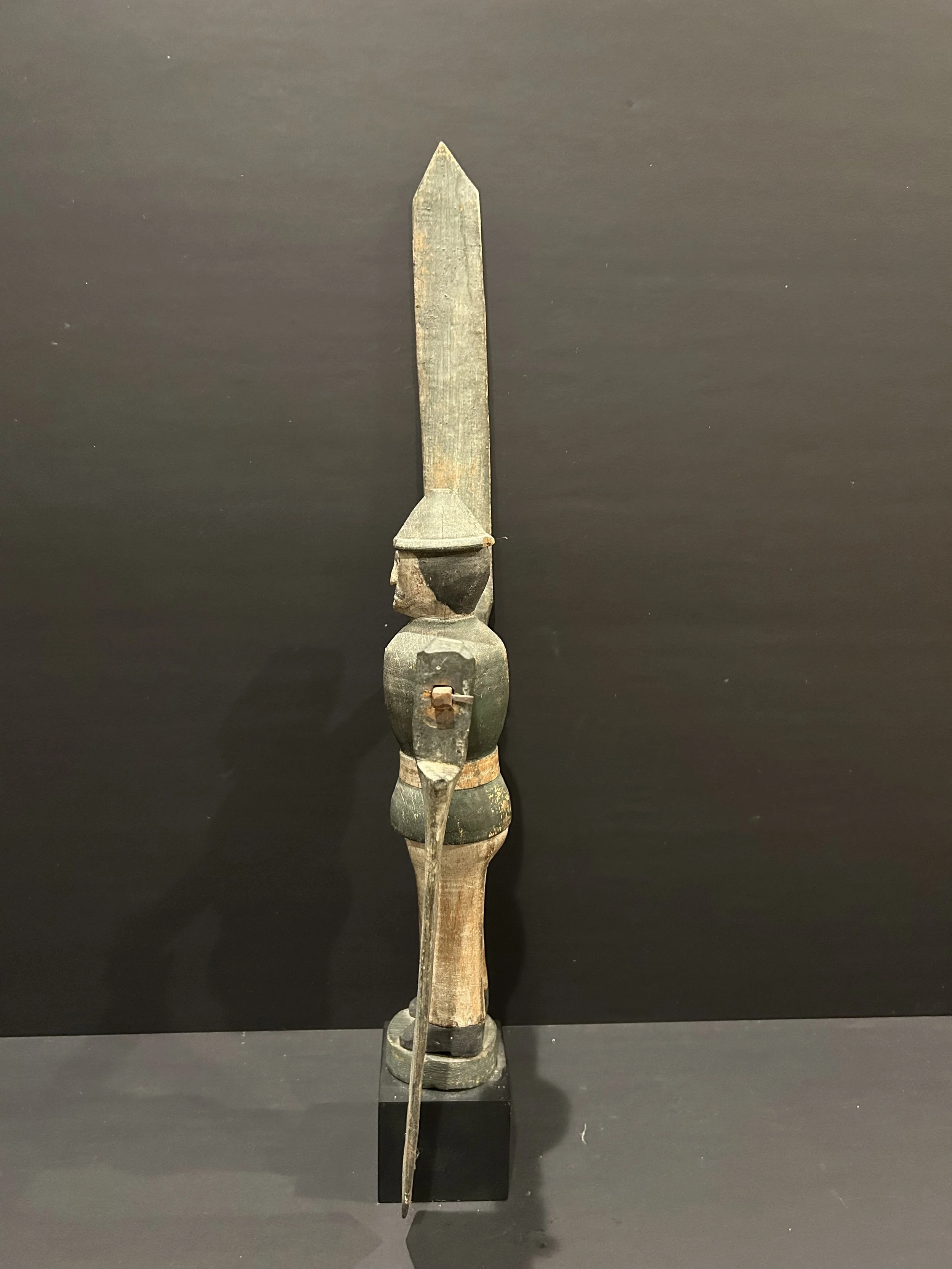 Image 4 of 6
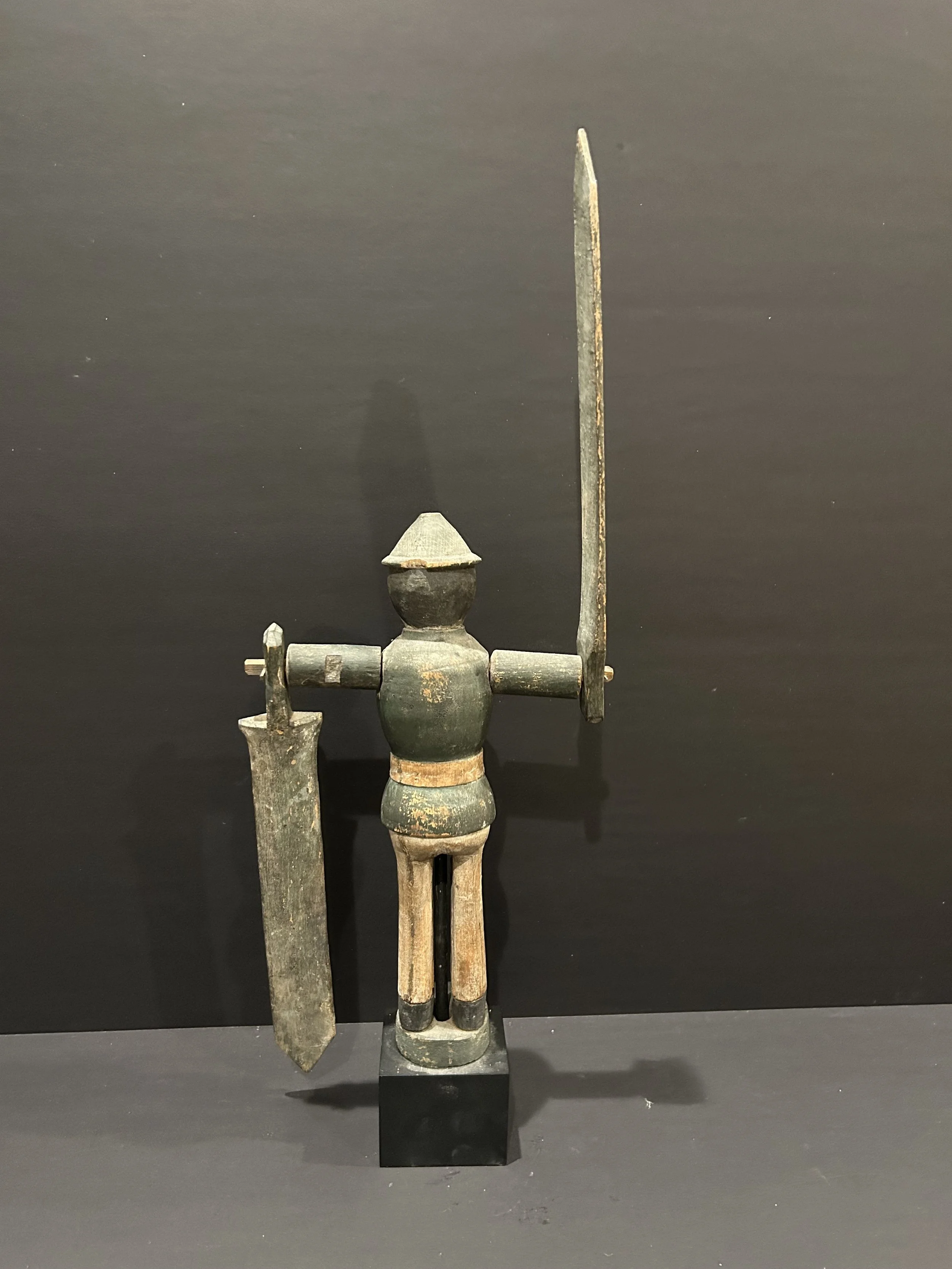 Image 5 of 6
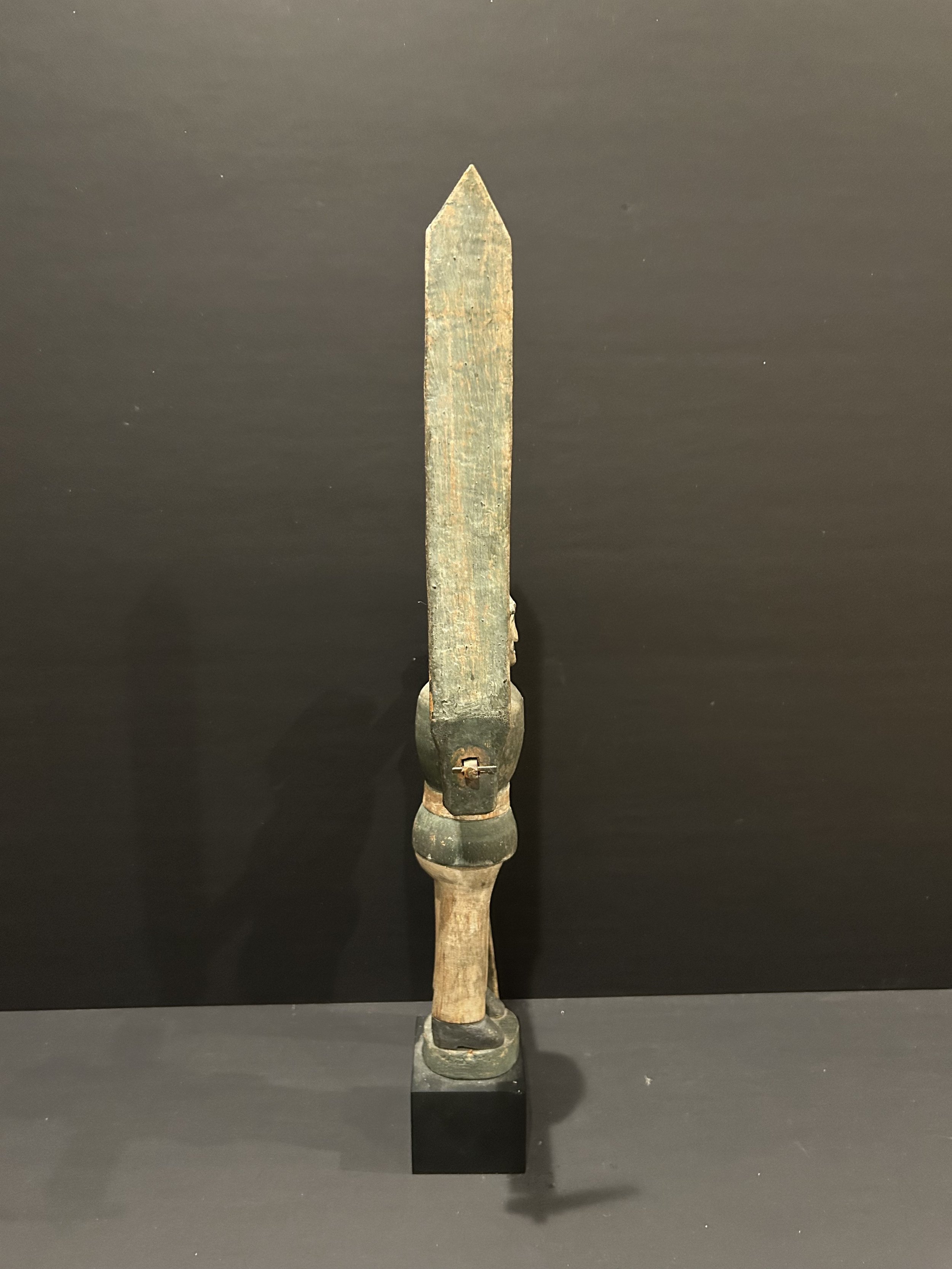 Image 6 of 6