 Image 1 of 3
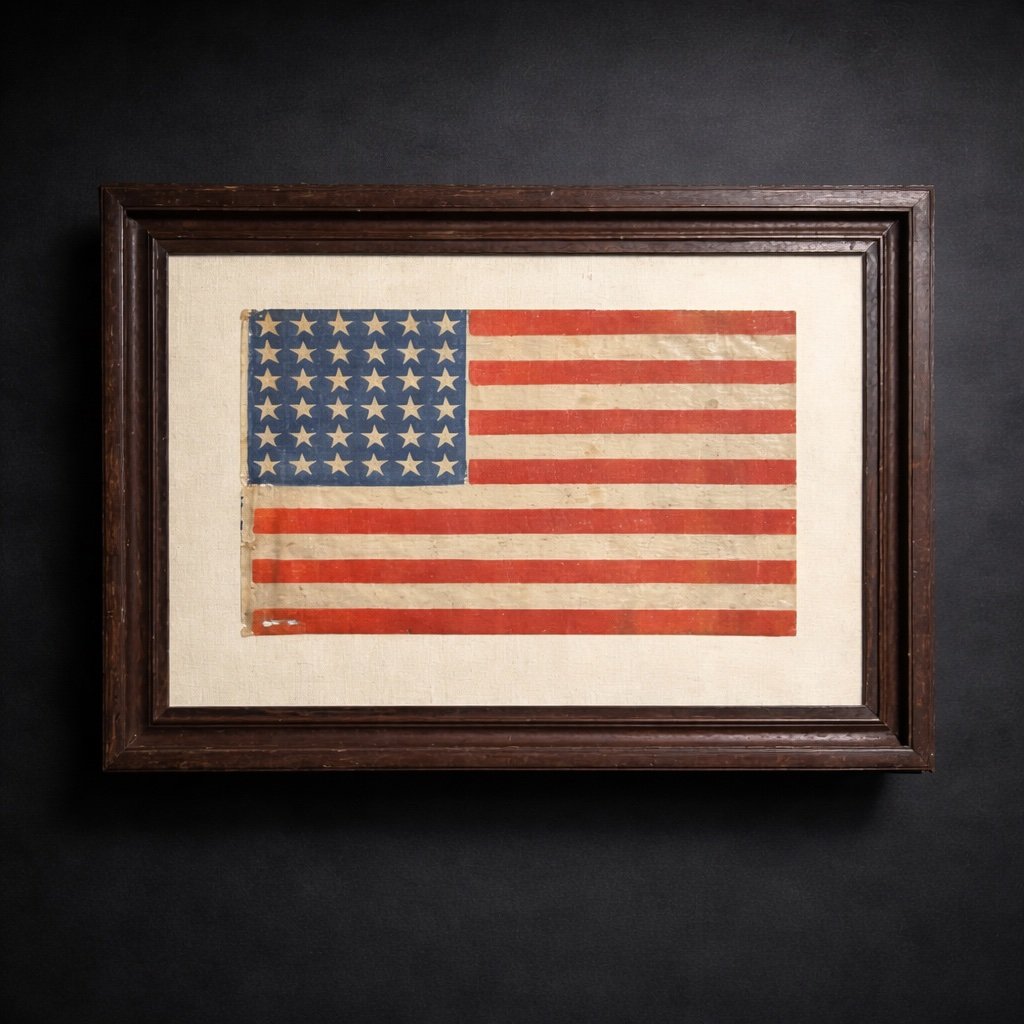 Image 2 of 3
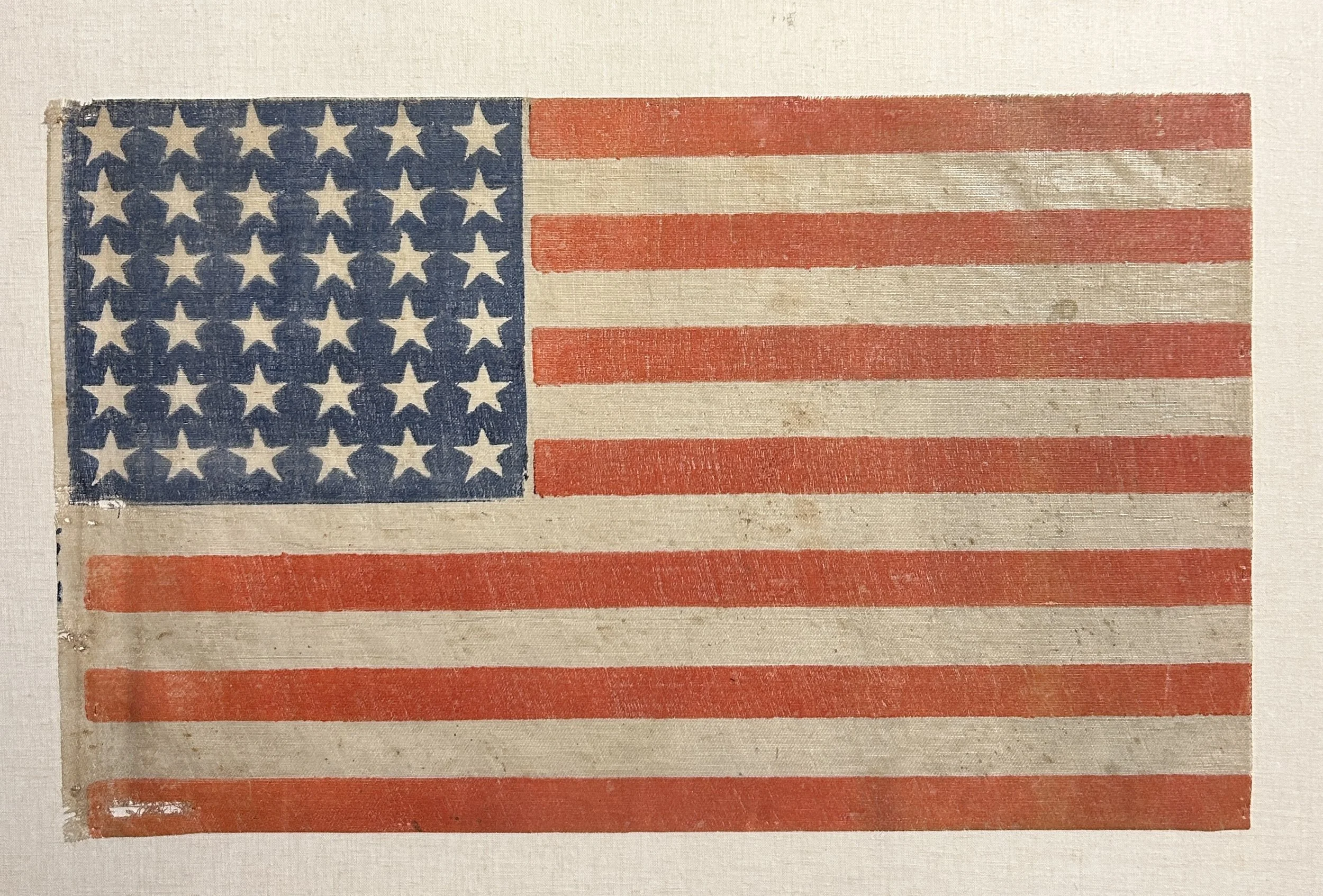 Image 3 of 3
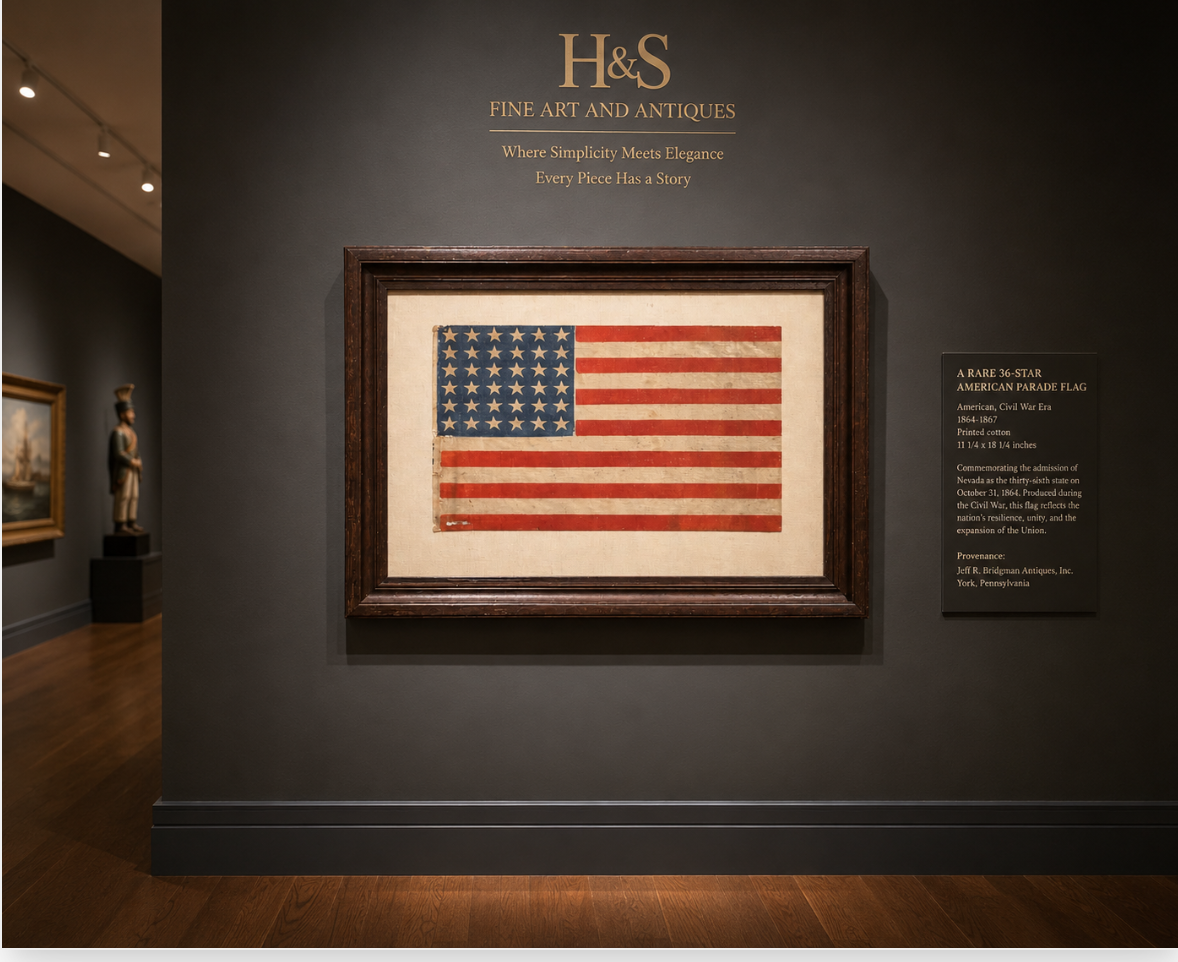
36 Star, Civil War Era Parade Flag, 1864-1867. Nevada Statehood. Height 11 ¼ in. Width 18 ¼ in.
A Rare 36-Star American Parade Flag
Nevada Statehood and the Preservation of the Union
American, Civil War Era, 1864–1867
Printed cotton parade flag
Height: 11¼ in. | Width: 18¼ in.
Provenance: Jeff R. Bridgman Antiques, Inc., York, Pennsylvania.
Exhibition Essay
Among the most historically significant flags produced during the American Civil War, this 36-star parade flag commemorates the admission of Nevada as the thirty-sixth state of the Union. Printed on cotton and retaining remarkably vibrant red and blue coloration, this flag represents both a patriotic object and a tangible symbol of one of the most consequential moments in American history—the preservation of the Union during its darkest hour.
The flag dates from approximately 1864 to 1867, a brief but pivotal period encompassing the final year of the Civil War and the first years of Reconstruction. Small printed flags of this type, commonly called parade flags or hand-wavers, were inexpensive patriotic emblems produced for political rallies, military celebrations, parades, and public commemorations. Their ephemeral nature and extensive use mean that relatively few examples survive in such attractive condition today.
Nevada: The Thirty-Sixth Star
The thirty-sixth star represents the admission of the State of Nevada on October 31, 1864. Nevada's entrance into the Union was not merely an administrative act; it was a strategic political decision driven largely by President Abraham Lincoln's determination to secure the Union's future.
Lincoln strongly advocated for Nevada's admission only eight days before the presidential election of November 8, 1864. Although sparsely populated, Nevada possessed enormous political importance:
It would provide additional electoral votes in support of Lincoln's reelection.
It would strengthen Republican control in Congress.
It would support passage of the proposed Thirteenth Amendment, abolishing slavery.
Its vast mineral resources, particularly the silver from the Comstock Lode, were essential to financing the Union war effort.
Nevada's state constitution was so important that it was transmitted to Washington by telegraph in its entirety, becoming one of the longest and most expensive telegrams ever sent at that time.
A Flag Ahead of Its Time
Under federal law, new stars were officially added to the American flag on the first July 4th following a state's admission. Therefore, the thirty-sixth star did not officially become part of the national flag until July 4, 1865.
Flag makers, however, were entrepreneurs operating in a competitive market. Many anticipated Nevada's admission and began producing 36-star flags as early as July 1864, several months before statehood was formally achieved. Others quickly adopted the new star count immediately after Nevada entered the Union.
This example therefore represents a fascinating intersection of commerce, patriotism, and political forecasting. It is possible that this flag was produced while the Civil War still raged, making it among the earliest expressions of confidence in both Nevada's admission and ultimate Union victory.
Design and Construction
The flag displays:
Thirty-six white stars arranged in orderly horizontal rows within a blue canton.
Thirteen alternating red and white stripes, honoring the original thirteen colonies.
Printed cotton construction with exceptionally strong color retention.
Mounted within an attractive stained walnut frame, emphasizing both its historic and decorative qualities.
Unlike sewn flags intended for military or governmental use, parade flags were printed directly onto cotton, allowing for mass production and widespread public display. These objects transformed ordinary citizens into active participants in national events and political movements.
Nevada and the Civil War
Although Nevada saw no major battles, its contribution to the Union was immense. The state's mining industry generated enormous quantities of silver and gold that helped stabilize federal finances and support military operations.
For this reason, Nevada earned the nickname:
"The Battle Born State."
The phrase refers not to combat fought within its borders, but to its birth during the Civil War itself. The thirty-sixth star therefore symbolizes not merely another state joining the Union, but the nation's determination to survive and redefine itself.
Historical Significance
Few star counts are as deeply associated with a specific moment in American history as the thirty-six-star flag. It embodies:
Abraham Lincoln's wartime leadership
The preservation of the Union
The movement toward the abolition of slavery
The political importance of western expansion
Nevada's contribution to the Civil War effort
The optimism of a nation approaching victory
As a surviving artifact of the Civil War era, this flag serves as both a patriotic emblem and a documentary witness to the transformative events of 1864–1865.
Provenance
Jeff R. Bridgman Antiques, Inc.
York, Pennsylvania
Jeff R. Bridgman is widely regarded as one of America's foremost authorities on historic American flags. Objects from his collection have entered important private collections and institutions and are frequently cited in scholarship relating to early American textiles and patriotic material culture.
Literature & References
Threads of History: Americana Recorded on Cloth, 1775 to the Present
The Stars and the Stripes: The American Flag as Art and as History from the Birth of the Republic to the Present
Smithsonian Institution – Collections and studies of Civil War-era flags and patriotic textiles.
National Museum of American History – Houses one of the world's most important collections of historic United States flags and Civil War material culture.
A Rare 36-Star American Parade Flag
Nevada Statehood and the Preservation of the Union
American, Civil War Era, 1864–1867
Printed cotton parade flag
Height: 11¼ in. | Width: 18¼ in.
Provenance: Jeff R. Bridgman Antiques, Inc., York, Pennsylvania.
Exhibition Essay
Among the most historically significant flags produced during the American Civil War, this 36-star parade flag commemorates the admission of Nevada as the thirty-sixth state of the Union. Printed on cotton and retaining remarkably vibrant red and blue coloration, this flag represents both a patriotic object and a tangible symbol of one of the most consequential moments in American history—the preservation of the Union during its darkest hour.
The flag dates from approximately 1864 to 1867, a brief but pivotal period encompassing the final year of the Civil War and the first years of Reconstruction. Small printed flags of this type, commonly called parade flags or hand-wavers, were inexpensive patriotic emblems produced for political rallies, military celebrations, parades, and public commemorations. Their ephemeral nature and extensive use mean that relatively few examples survive in such attractive condition today.
Nevada: The Thirty-Sixth Star
The thirty-sixth star represents the admission of the State of Nevada on October 31, 1864. Nevada's entrance into the Union was not merely an administrative act; it was a strategic political decision driven largely by President Abraham Lincoln's determination to secure the Union's future.
Lincoln strongly advocated for Nevada's admission only eight days before the presidential election of November 8, 1864. Although sparsely populated, Nevada possessed enormous political importance:
It would provide additional electoral votes in support of Lincoln's reelection.
It would strengthen Republican control in Congress.
It would support passage of the proposed Thirteenth Amendment, abolishing slavery.
Its vast mineral resources, particularly the silver from the Comstock Lode, were essential to financing the Union war effort.
Nevada's state constitution was so important that it was transmitted to Washington by telegraph in its entirety, becoming one of the longest and most expensive telegrams ever sent at that time.
A Flag Ahead of Its Time
Under federal law, new stars were officially added to the American flag on the first July 4th following a state's admission. Therefore, the thirty-sixth star did not officially become part of the national flag until July 4, 1865.
Flag makers, however, were entrepreneurs operating in a competitive market. Many anticipated Nevada's admission and began producing 36-star flags as early as July 1864, several months before statehood was formally achieved. Others quickly adopted the new star count immediately after Nevada entered the Union.
This example therefore represents a fascinating intersection of commerce, patriotism, and political forecasting. It is possible that this flag was produced while the Civil War still raged, making it among the earliest expressions of confidence in both Nevada's admission and ultimate Union victory.
Design and Construction
The flag displays:
Thirty-six white stars arranged in orderly horizontal rows within a blue canton.
Thirteen alternating red and white stripes, honoring the original thirteen colonies.
Printed cotton construction with exceptionally strong color retention.
Mounted within an attractive stained walnut frame, emphasizing both its historic and decorative qualities.
Unlike sewn flags intended for military or governmental use, parade flags were printed directly onto cotton, allowing for mass production and widespread public display. These objects transformed ordinary citizens into active participants in national events and political movements.
Nevada and the Civil War
Although Nevada saw no major battles, its contribution to the Union was immense. The state's mining industry generated enormous quantities of silver and gold that helped stabilize federal finances and support military operations.
For this reason, Nevada earned the nickname:
"The Battle Born State."
The phrase refers not to combat fought within its borders, but to its birth during the Civil War itself. The thirty-sixth star therefore symbolizes not merely another state joining the Union, but the nation's determination to survive and redefine itself.
Historical Significance
Few star counts are as deeply associated with a specific moment in American history as the thirty-six-star flag. It embodies:
Abraham Lincoln's wartime leadership
The preservation of the Union
The movement toward the abolition of slavery
The political importance of western expansion
Nevada's contribution to the Civil War effort
The optimism of a nation approaching victory
As a surviving artifact of the Civil War era, this flag serves as both a patriotic emblem and a documentary witness to the transformative events of 1864–1865.
Provenance
Jeff R. Bridgman Antiques, Inc.
York, Pennsylvania
Jeff R. Bridgman is widely regarded as one of America's foremost authorities on historic American flags. Objects from his collection have entered important private collections and institutions and are frequently cited in scholarship relating to early American textiles and patriotic material culture.
Literature & References
Threads of History: Americana Recorded on Cloth, 1775 to the Present
The Stars and the Stripes: The American Flag as Art and as History from the Birth of the Republic to the Present
Smithsonian Institution – Collections and studies of Civil War-era flags and patriotic textiles.
National Museum of American History – Houses one of the world's most important collections of historic United States flags and Civil War material culture.