 Image 1 of 5
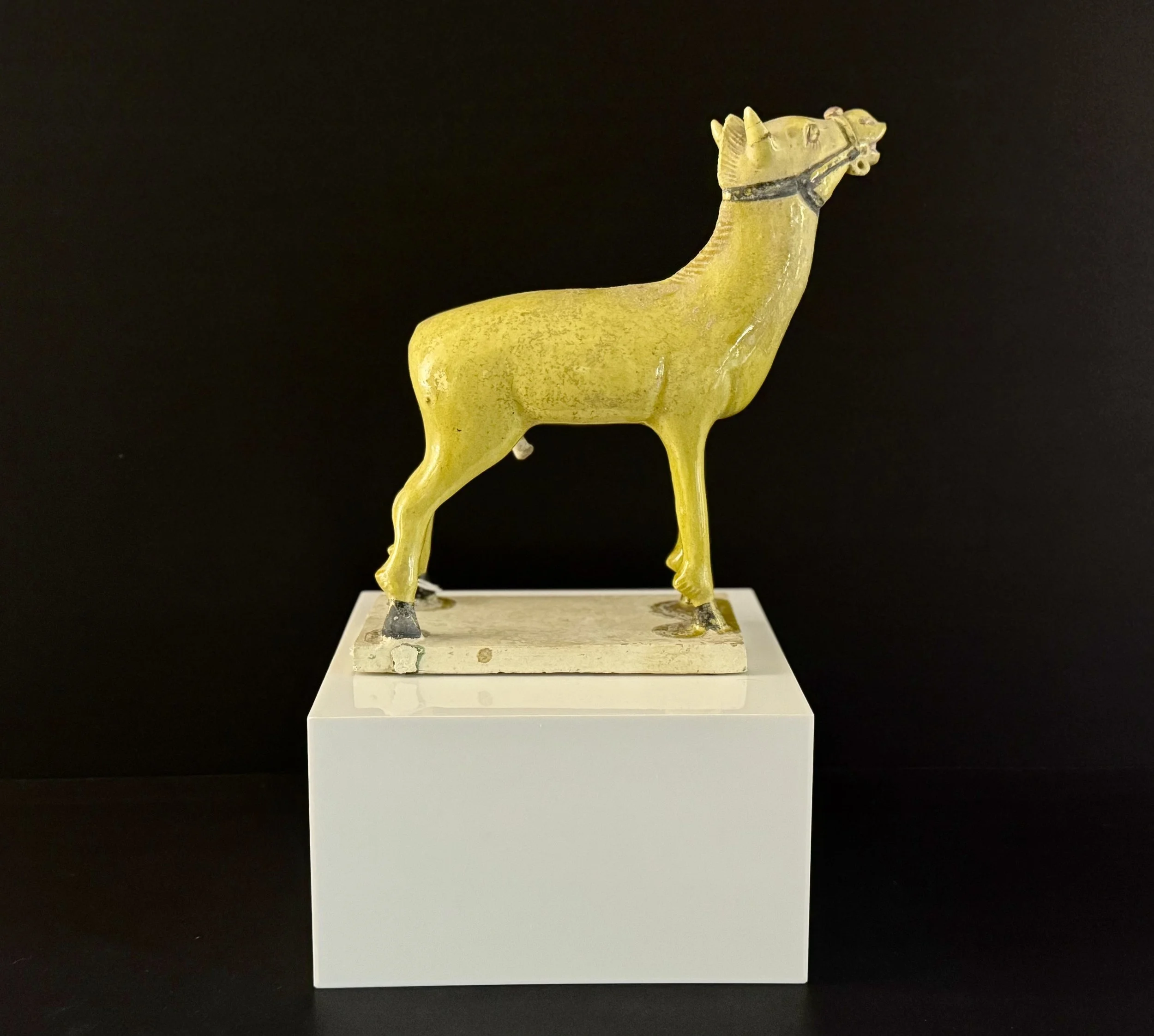 Image 2 of 5
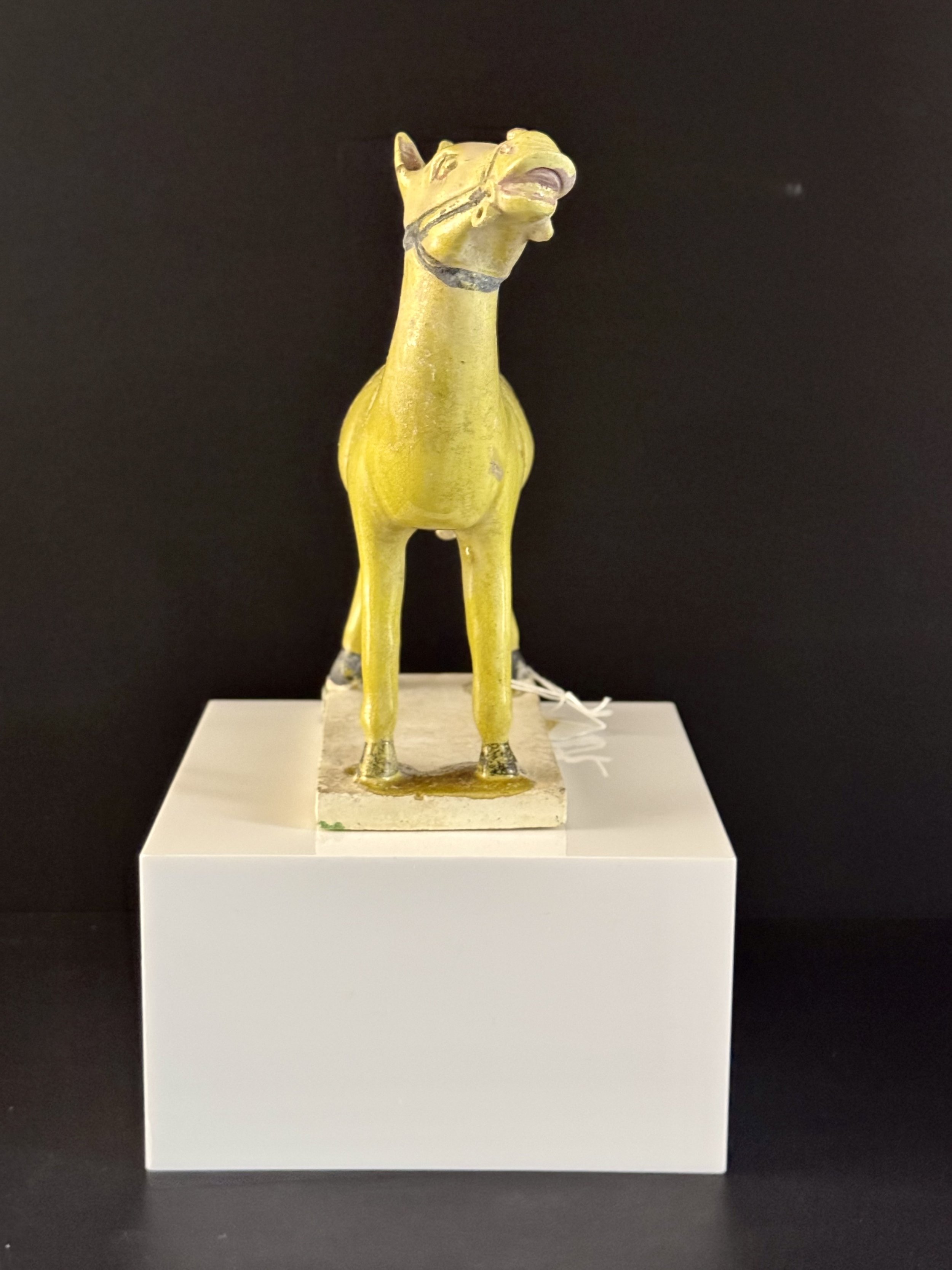 Image 3 of 5
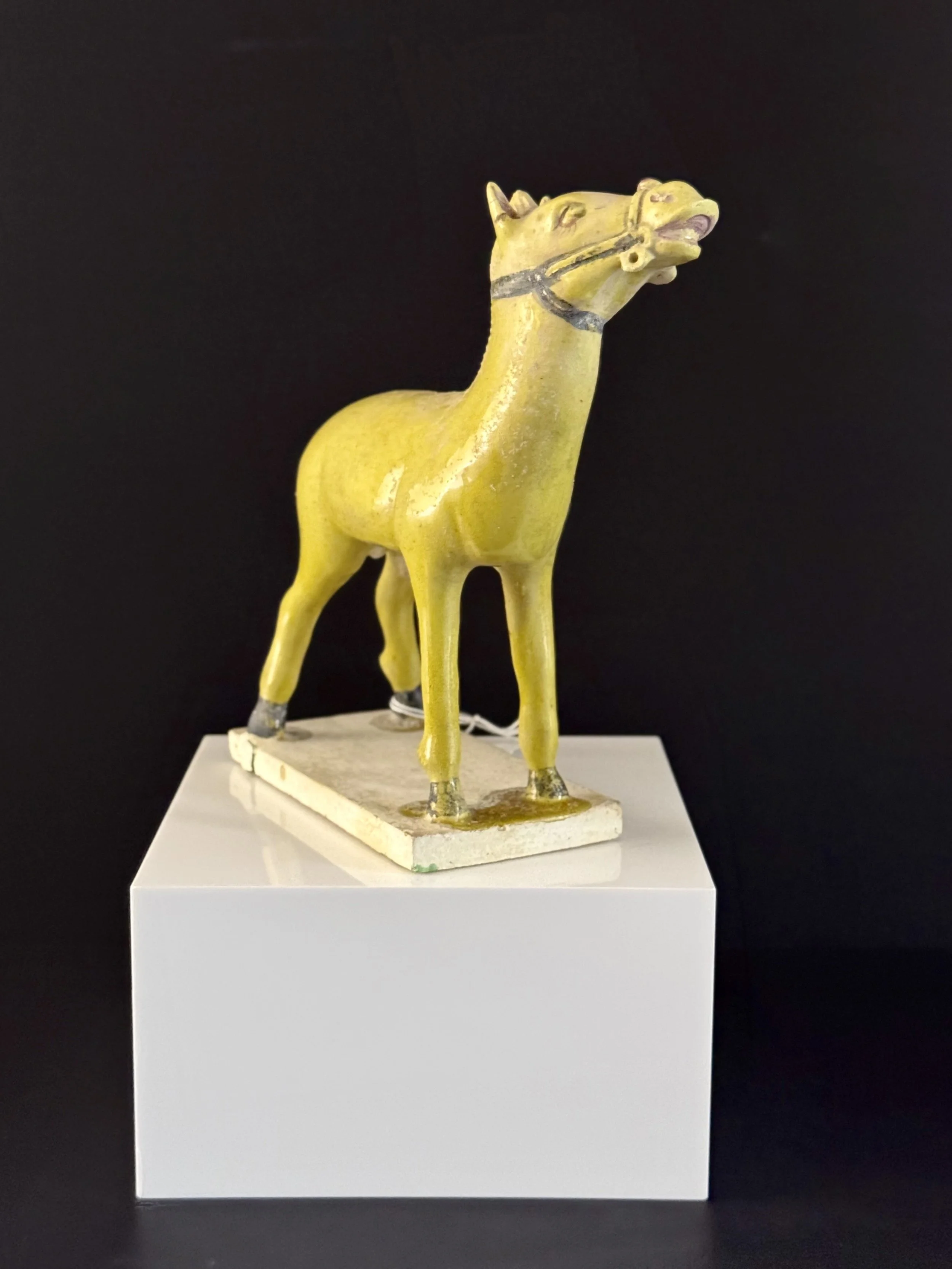 Image 4 of 5
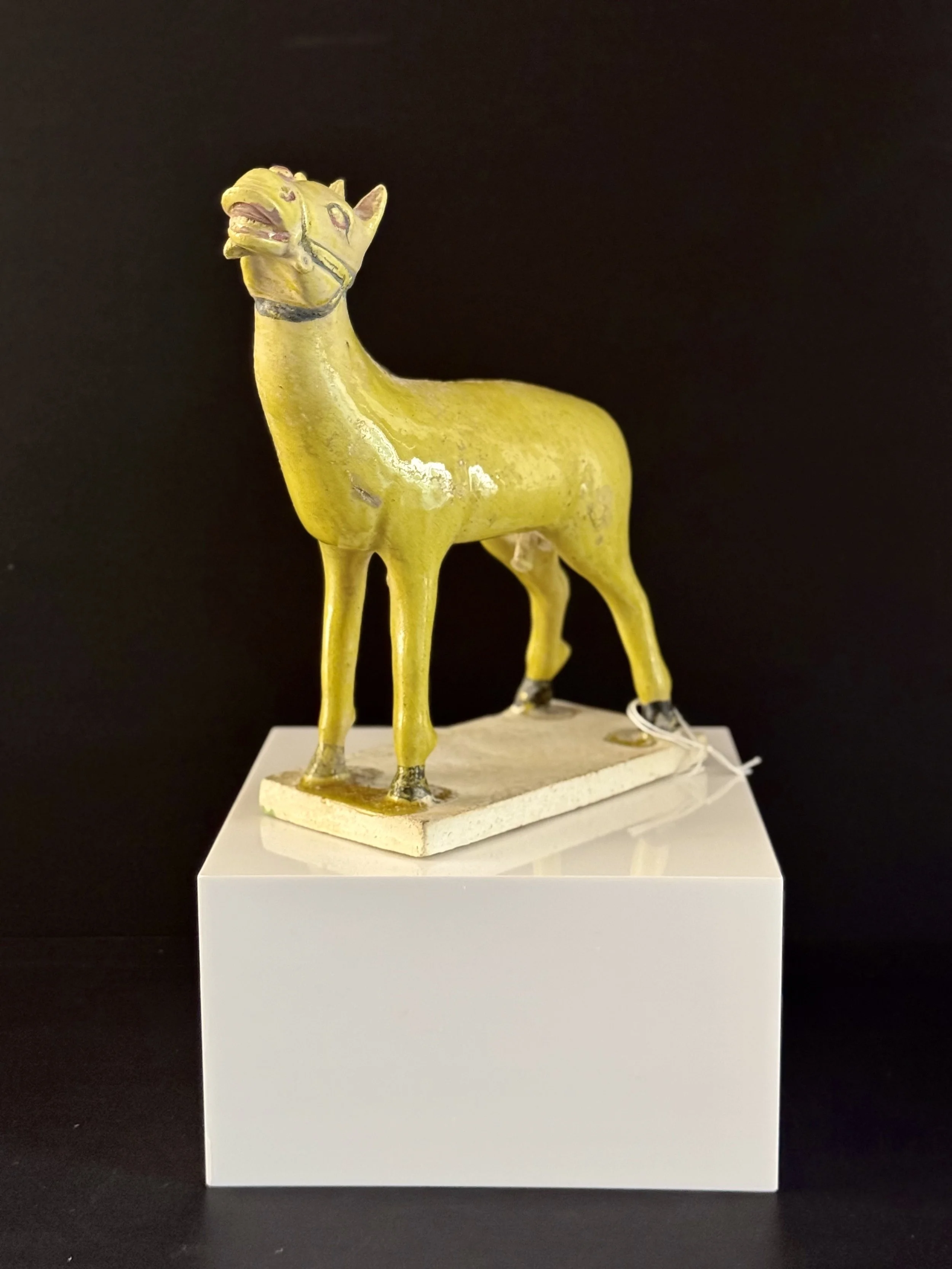 Image 5 of 5
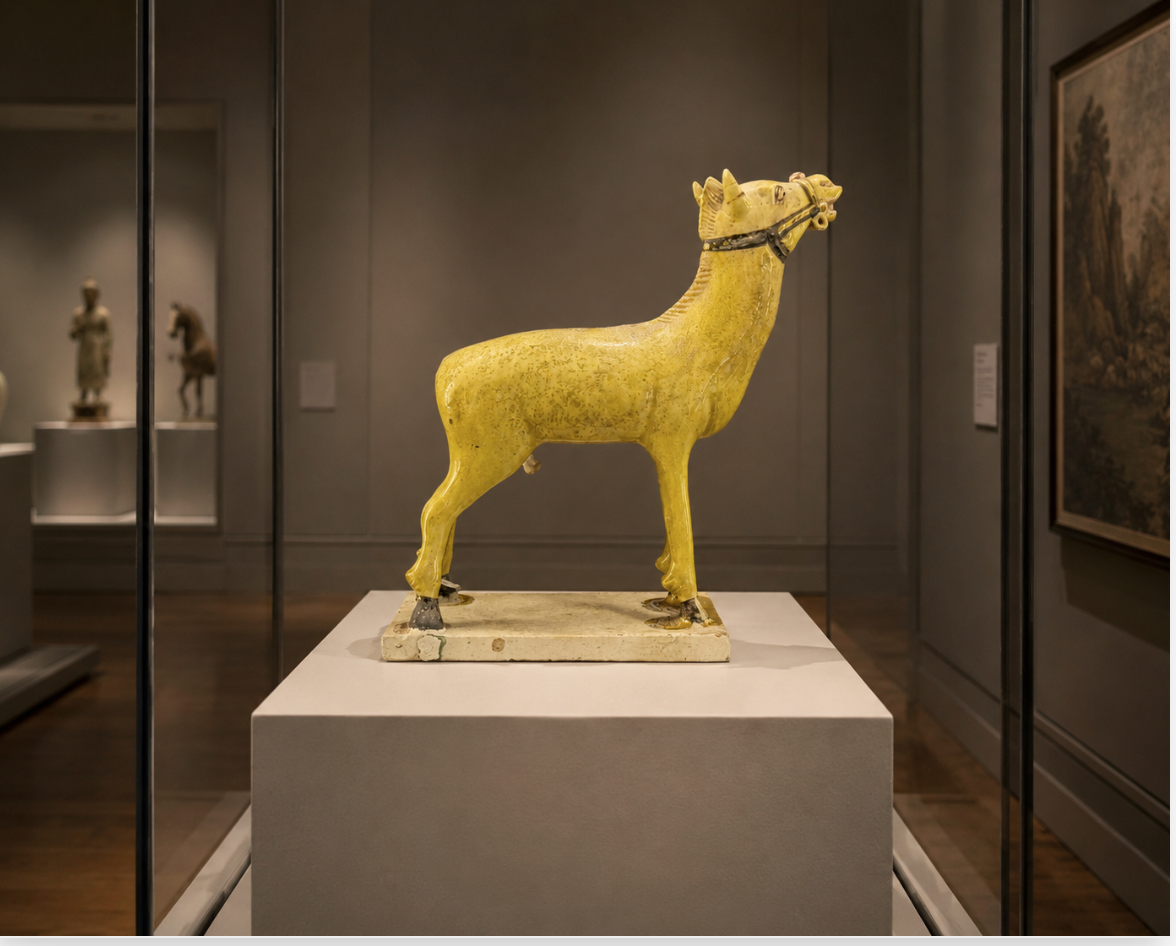
A Rare Yellow-Glazed figure of a pony. Ming Dynasty (1368-1644). Collection of Dorothy Tapper Goldman. TL tested.
A Rare Yellow-Glazed Figure of a Pony
Ming Dynasty (1368–1644)
Height: 8½ inches (approximately 20.5 cm)
Material: Earthenware with monochrome yellow lead glaze
Origin: China
Authentication: Oxford Thermoluminescence Test No. C97f61
Provenance: Dorothy Tapper Goldman Collection
This elegant yellow-glazed pony is a refined example of Ming dynasty funerary ceramics, created to accompany an elite individual into the afterlife. Although modest in size, it belongs to one of the most important traditions of Chinese ceramic sculpture: mingqi (明器), or "spirit objects," made specifically for burial rather than everyday use.
Unlike the large imperial horses associated with the Tang dynasty, Ming ceramic ponies often reflect the practical riding and transport animals of the imperial period. Their restrained elegance, realistic proportions, and monochrome glazes exemplify the refined tastes of early Ming funerary art.
Meaning of Yellow
One of the most remarkable features of this sculpture is its rich yellow glaze.
Yellow occupied an extraordinary position in Chinese culture.
During the Ming dynasty:
Yellow became closely associated with the Emperor.
It symbolized the Earth element in the cosmological Five Elements system.
It represented stability, authority, fertility, and the center of the universe.
Bright yellow roof tiles were reserved almost exclusively for imperial architecture.
While yellow-glazed ceramics were produced outside the palace, monochrome yellow remained a prestigious color associated with wealth and high social rank.
The warm translucent glaze covering this pony gives the sculpture remarkable visual unity while emphasizing its elegant silhouette.
Material and Technique
The pony is made from:
Fine earthenware clay
Hollow-molded body
Individually modeled legs and head
Lead-based yellow glaze
After modeling:
The figure dried completely.
It was biscuit-fired.
Yellow lead glaze was applied.
It underwent a second firing at relatively low temperature.
Lead glazes allowed Chinese potters to achieve brilliant colors impossible with high-fired porcelain glazes.
Function
This figure belongs to the Chinese tradition of mingqi ("spirit objects"), burial sculptures intended to provide the deceased with all the necessities of life in the next world. Placed within a tomb alongside attendants, officials, musicians, and domestic animals, the pony symbolized continued mobility, prosperity, and status in the afterlife.
Provenance
The provenance of this sculpture is particularly distinguished:
Christie's, New York, 25 March 1998, Lot 126
Collection of Dorothy Tapper Goldman
Dorothy Tapper Goldman (1944–2023) was an internationally respected American collector and philanthropist. While widely celebrated for her collection of foundational American historical documents, she also assembled important collections of Chinese ceramics, Ming furniture, American Indian baskets, and modern drawings. Her collections reflected exceptional connoisseurship across multiple fields.
Christie's, New York, 21 March 2024, Lot 806
Accompanied by Oxford Thermoluminescence Test No. C97f61, confirming that the ceramic is consistent with Ming dynasty manufacture.
The Oxford Thermoluminescence Test
An important aspect of this sculpture is its scientific authentication.
The Oxford Thermoluminescence Laboratory issued Test No. C97f61, concluding that the firing date is consistent with the Ming dynasty.
Thermoluminescence (TL) testing measures the accumulated radiation trapped within fired clay since its last firing.
Because ceramic objects are fired only once during manufacture, TL testing provides strong scientific evidence of age and is widely accepted by museums and major auction houses when evaluating ancient Chinese pottery.
Museums with Comparable Chinese Pony Figures
The Palace Museum
The Metropolitan Museum of Art
The Met houses numerous Chinese earthenware equine tomb figures ranging from the Han through Ming dynasties. Among them are several smaller animals that modern scholars recognize as native ponies used for transport and official travel rather than imperial cavalry mounts.
Collections include:
Ming pottery equines
Han pottery ponies
Tang riding ponies
Glazed earthenware mingqi
The British Museum
The British Museum contains one of Europe's largest collections of Chinese tomb sculpture. While many are catalogued simply as "horse," several examples clearly represent the smaller Mongolian or northern Chinese pony type. The museum also holds the celebrated Liu Tingxun tomb group, which demonstrates the importance of equine figures in elite burials.
Freer Gallery of Art
The Smithsonian's Freer Gallery preserves important Chinese equestrian tomb figures excavated near Luoyang. Although many are Tang examples, the collection illustrates the long Chinese tradition of burial equines that continued into the Ming dynasty.
Asian Art Museum
The museum houses Chinese funerary ceramics including glazed pottery animals from the Han, Tang, Song, and Ming periods. Several smaller equines are interpreted as native riding ponies rather than imported war horses.
Kyoto National Museum
Kyoto National Museum preserves exceptional Chinese tomb animals, including rare equine figures illustrating the distinction between imported large horses and native Chinese breeds.
Scholarly References
For your catalogue, these are among the strongest references:
Harrison-Hall, Jessica. Ming Ceramics in the British Museum. British Museum Press, 2001.
Valenstein, Suzanne G. A Handbook of Chinese Ceramics. The Metropolitan Museum of Art.
Pierson, Stacey. Chinese Ceramics. British Museum Press.
Medley, Margaret. The Chinese Potter: A Practical History of Chinese Ceramics.
Rawson, Jessica. Chinese Art.
Although Chinese museum catalogues often use the general term "horse" (馬) for equine tomb figures, the compact proportions, short limbs, and sturdy build of the present sculpture more accurately identify it as a native Chinese pony. Such hardy ponies were indispensable for travel, transport, and military logistics throughout the Ming dynasty and frequently appear among funerary mingqi intended to provide mobility and status in the afterlife.
Literature
The following references are considered standard scholarly works on Chinese ceramics and Ming funerary art:
Medley, Margaret.
The Chinese Potter: A Practical History of Chinese Ceramics.
Phaidon Press, London.One of the classic introductions to Chinese ceramic technology, including glazing methods, kiln practices, and Ming earthenwares.
Kerr, Rose.
Chinese Ceramics: Porcelain of the Qing Dynasty.Although centered on Qing wares, Kerr provides valuable discussions of earlier Ming monochrome glaze traditions and technological developments.
Pierson, Stacey.
Chinese Ceramics.
British Museum Press.An excellent overview of Chinese ceramic production from the Neolithic through the Qing dynasty, with discussion of Ming burial ceramics.
Rawson, Jessica (ed.).
The British Museum Book of Chinese Art.Contains important chapters on Ming funerary sculpture, burial customs, and ceramic production.
Rawson, Jessica.
Chinese Ornament: The Lotus and the Dragon.Useful for understanding symbolic motifs and imperial color symbolism, including the significance of yellow during the Ming dynasty.
Harrison-Hall, Jessica.
Ming Ceramics in the British Museum.
British Museum Press, 2001.One of the definitive scholarly references on Ming ceramics. Although focused primarily on porcelain, it provides valuable historical context for Ming ceramic production and glazing traditions.
Valenstein, Suzanne G.
A Handbook of Chinese Ceramics.
The Metropolitan Museum of Art.A standard museum reference covering Chinese ceramics from the Neolithic through the Qing dynasty, including Ming earthenware tomb figures.
Medley, Margaret.
Illustrated Catalogue of Ming Pottery and Stoneware.An important reference on non-porcelain ceramics of the Ming dynasty.
A Rare Yellow-Glazed Figure of a Pony
Ming Dynasty (1368–1644)
Height: 8½ inches (approximately 20.5 cm)
Material: Earthenware with monochrome yellow lead glaze
Origin: China
Authentication: Oxford Thermoluminescence Test No. C97f61
Provenance: Dorothy Tapper Goldman Collection
This elegant yellow-glazed pony is a refined example of Ming dynasty funerary ceramics, created to accompany an elite individual into the afterlife. Although modest in size, it belongs to one of the most important traditions of Chinese ceramic sculpture: mingqi (明器), or "spirit objects," made specifically for burial rather than everyday use.
Unlike the large imperial horses associated with the Tang dynasty, Ming ceramic ponies often reflect the practical riding and transport animals of the imperial period. Their restrained elegance, realistic proportions, and monochrome glazes exemplify the refined tastes of early Ming funerary art.
Meaning of Yellow
One of the most remarkable features of this sculpture is its rich yellow glaze.
Yellow occupied an extraordinary position in Chinese culture.
During the Ming dynasty:
Yellow became closely associated with the Emperor.
It symbolized the Earth element in the cosmological Five Elements system.
It represented stability, authority, fertility, and the center of the universe.
Bright yellow roof tiles were reserved almost exclusively for imperial architecture.
While yellow-glazed ceramics were produced outside the palace, monochrome yellow remained a prestigious color associated with wealth and high social rank.
The warm translucent glaze covering this pony gives the sculpture remarkable visual unity while emphasizing its elegant silhouette.
Material and Technique
The pony is made from:
Fine earthenware clay
Hollow-molded body
Individually modeled legs and head
Lead-based yellow glaze
After modeling:
The figure dried completely.
It was biscuit-fired.
Yellow lead glaze was applied.
It underwent a second firing at relatively low temperature.
Lead glazes allowed Chinese potters to achieve brilliant colors impossible with high-fired porcelain glazes.
Function
This figure belongs to the Chinese tradition of mingqi ("spirit objects"), burial sculptures intended to provide the deceased with all the necessities of life in the next world. Placed within a tomb alongside attendants, officials, musicians, and domestic animals, the pony symbolized continued mobility, prosperity, and status in the afterlife.
Provenance
The provenance of this sculpture is particularly distinguished:
Christie's, New York, 25 March 1998, Lot 126
Collection of Dorothy Tapper Goldman
Dorothy Tapper Goldman (1944–2023) was an internationally respected American collector and philanthropist. While widely celebrated for her collection of foundational American historical documents, she also assembled important collections of Chinese ceramics, Ming furniture, American Indian baskets, and modern drawings. Her collections reflected exceptional connoisseurship across multiple fields.
Christie's, New York, 21 March 2024, Lot 806
Accompanied by Oxford Thermoluminescence Test No. C97f61, confirming that the ceramic is consistent with Ming dynasty manufacture.
The Oxford Thermoluminescence Test
An important aspect of this sculpture is its scientific authentication.
The Oxford Thermoluminescence Laboratory issued Test No. C97f61, concluding that the firing date is consistent with the Ming dynasty.
Thermoluminescence (TL) testing measures the accumulated radiation trapped within fired clay since its last firing.
Because ceramic objects are fired only once during manufacture, TL testing provides strong scientific evidence of age and is widely accepted by museums and major auction houses when evaluating ancient Chinese pottery.
Museums with Comparable Chinese Pony Figures
The Palace Museum
The Metropolitan Museum of Art
The Met houses numerous Chinese earthenware equine tomb figures ranging from the Han through Ming dynasties. Among them are several smaller animals that modern scholars recognize as native ponies used for transport and official travel rather than imperial cavalry mounts.
Collections include:
Ming pottery equines
Han pottery ponies
Tang riding ponies
Glazed earthenware mingqi
The British Museum
The British Museum contains one of Europe's largest collections of Chinese tomb sculpture. While many are catalogued simply as "horse," several examples clearly represent the smaller Mongolian or northern Chinese pony type. The museum also holds the celebrated Liu Tingxun tomb group, which demonstrates the importance of equine figures in elite burials.
Freer Gallery of Art
The Smithsonian's Freer Gallery preserves important Chinese equestrian tomb figures excavated near Luoyang. Although many are Tang examples, the collection illustrates the long Chinese tradition of burial equines that continued into the Ming dynasty.
Asian Art Museum
The museum houses Chinese funerary ceramics including glazed pottery animals from the Han, Tang, Song, and Ming periods. Several smaller equines are interpreted as native riding ponies rather than imported war horses.
Kyoto National Museum
Kyoto National Museum preserves exceptional Chinese tomb animals, including rare equine figures illustrating the distinction between imported large horses and native Chinese breeds.
Scholarly References
For your catalogue, these are among the strongest references:
Harrison-Hall, Jessica. Ming Ceramics in the British Museum. British Museum Press, 2001.
Valenstein, Suzanne G. A Handbook of Chinese Ceramics. The Metropolitan Museum of Art.
Pierson, Stacey. Chinese Ceramics. British Museum Press.
Medley, Margaret. The Chinese Potter: A Practical History of Chinese Ceramics.
Rawson, Jessica. Chinese Art.
Although Chinese museum catalogues often use the general term "horse" (馬) for equine tomb figures, the compact proportions, short limbs, and sturdy build of the present sculpture more accurately identify it as a native Chinese pony. Such hardy ponies were indispensable for travel, transport, and military logistics throughout the Ming dynasty and frequently appear among funerary mingqi intended to provide mobility and status in the afterlife.
Literature
The following references are considered standard scholarly works on Chinese ceramics and Ming funerary art:
Medley, Margaret.
The Chinese Potter: A Practical History of Chinese Ceramics.
Phaidon Press, London.One of the classic introductions to Chinese ceramic technology, including glazing methods, kiln practices, and Ming earthenwares.
Kerr, Rose.
Chinese Ceramics: Porcelain of the Qing Dynasty.Although centered on Qing wares, Kerr provides valuable discussions of earlier Ming monochrome glaze traditions and technological developments.
Pierson, Stacey.
Chinese Ceramics.
British Museum Press.An excellent overview of Chinese ceramic production from the Neolithic through the Qing dynasty, with discussion of Ming burial ceramics.
Rawson, Jessica (ed.).
The British Museum Book of Chinese Art.Contains important chapters on Ming funerary sculpture, burial customs, and ceramic production.
Rawson, Jessica.
Chinese Ornament: The Lotus and the Dragon.Useful for understanding symbolic motifs and imperial color symbolism, including the significance of yellow during the Ming dynasty.
Harrison-Hall, Jessica.
Ming Ceramics in the British Museum.
British Museum Press, 2001.One of the definitive scholarly references on Ming ceramics. Although focused primarily on porcelain, it provides valuable historical context for Ming ceramic production and glazing traditions.
Valenstein, Suzanne G.
A Handbook of Chinese Ceramics.
The Metropolitan Museum of Art.A standard museum reference covering Chinese ceramics from the Neolithic through the Qing dynasty, including Ming earthenware tomb figures.
Medley, Margaret.
Illustrated Catalogue of Ming Pottery and Stoneware.An important reference on non-porcelain ceramics of the Ming dynasty.