 Image 1 of 5
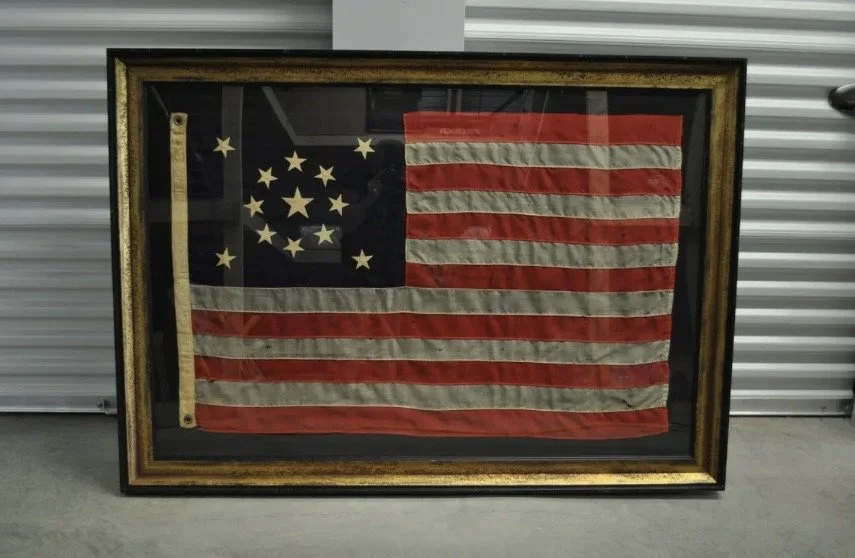 Image 2 of 5
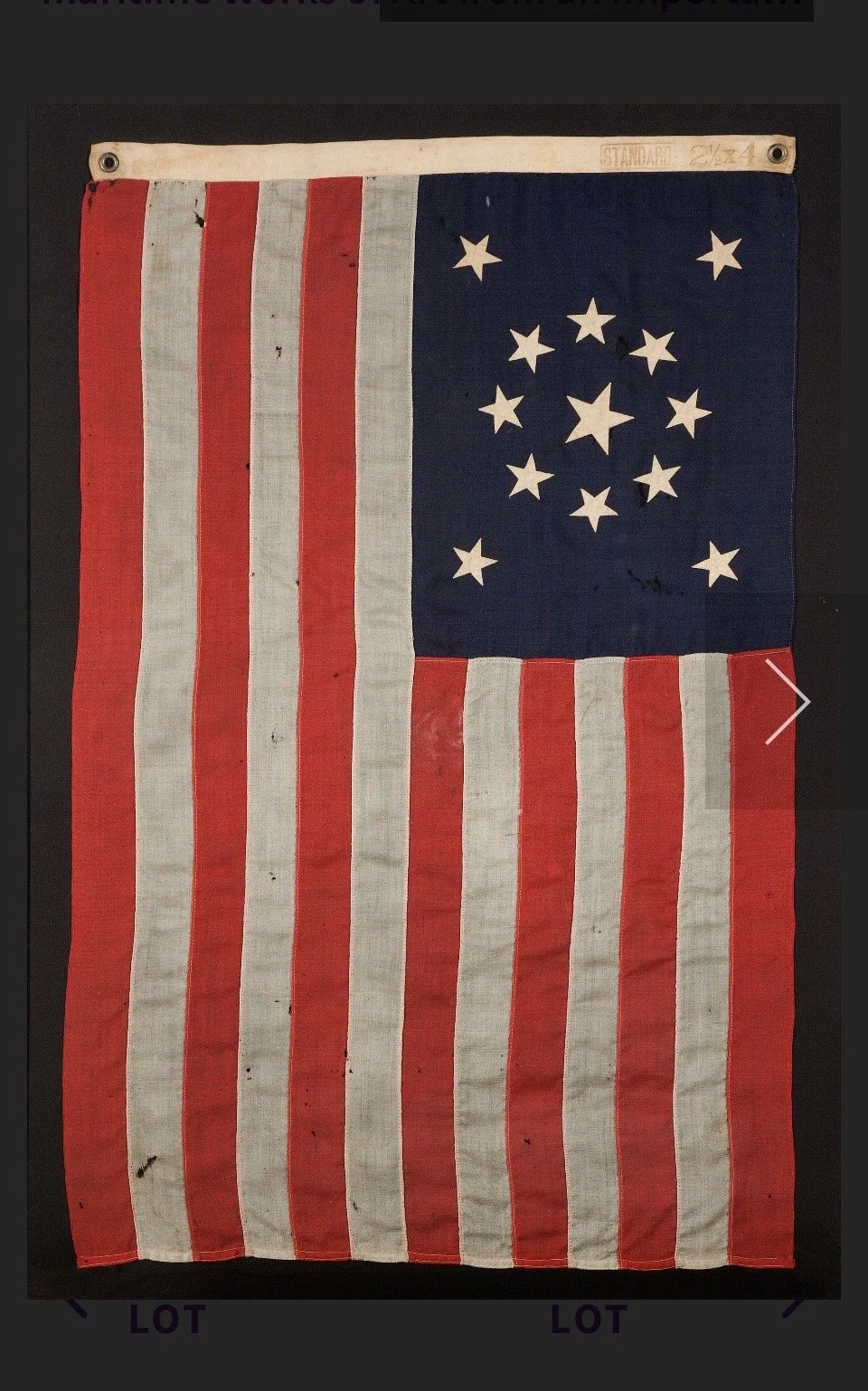 Image 3 of 5
 Image 4 of 5
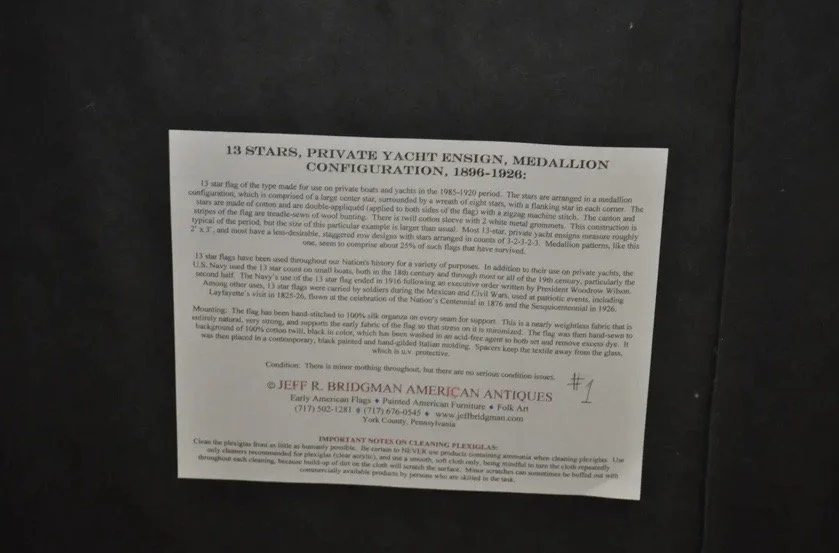 Image 5 of 5
American, circa 1896–1926
Cotton with double-appliquéd stars, zigzag machine stitching
Provenance: Jeff R. Bridgman Antiques, Inc., Historic York County, Pennsylvania
This thirteen-star American flag is a striking late nineteenth- to early twentieth-century patriotic textile, made circa 1896–1926. Although produced long after the United States had grown beyond thirteen states, the flag deliberately returns to the original star count of the American Revolution, honoring the thirteen founding colonies and the birth of the nation.
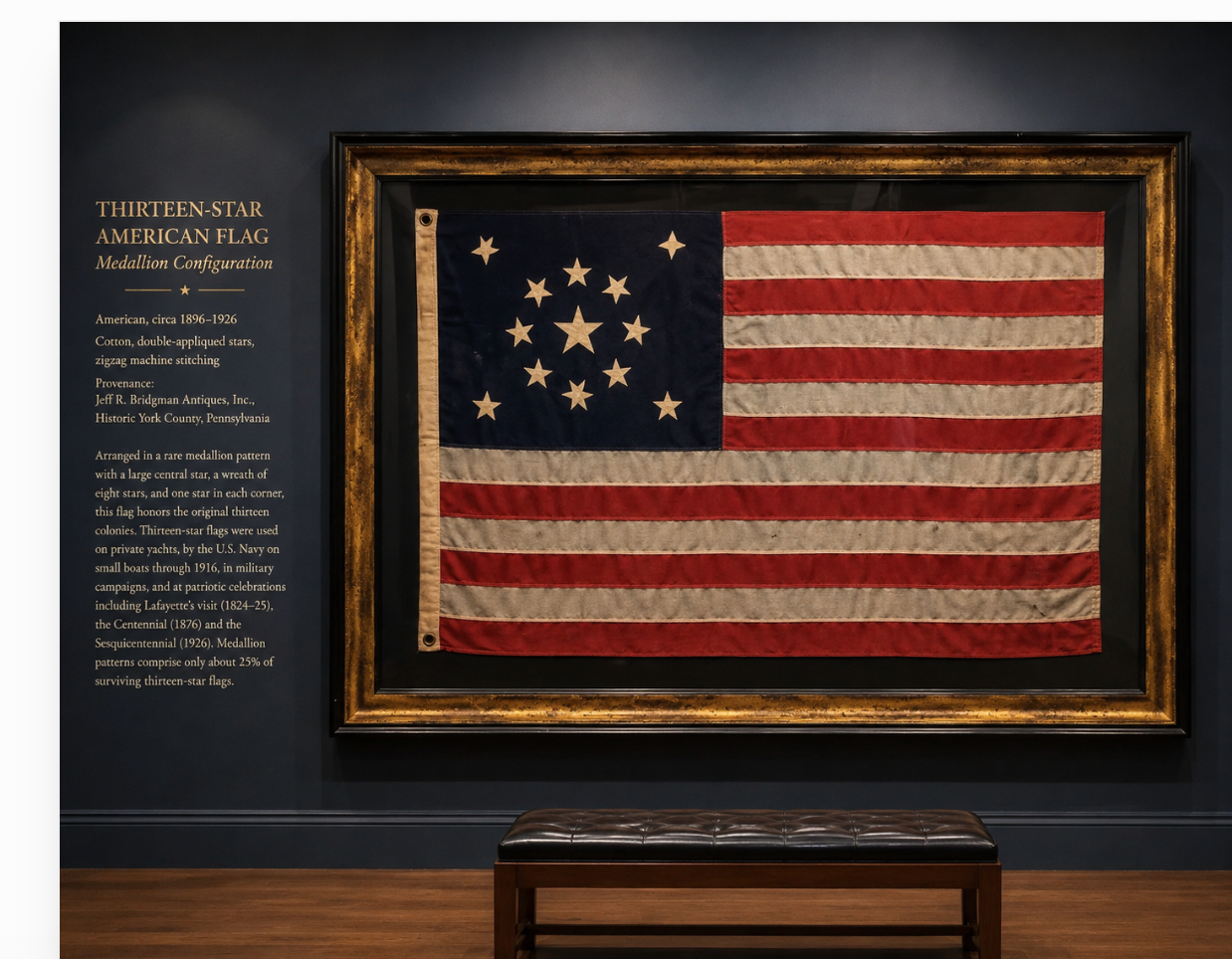
The flag is especially notable for its medallion star configuration. At the center of the canton is a large star, surrounded by a wreath of eight smaller stars, with one additional star placed near each corner. This creates a balanced, almost ceremonial design. Compared with the more common 3-2-3-2-3 staggered row pattern, the medallion arrangement is more decorative, more desirable, and less frequently encountered. According to the description associated with this example, medallion patterns represent roughly one quarter of surviving thirteen-star flags of this type. The stars are made of cotton and are double-appliquéd, meaning they are sewn to both sides of the flag. The use of zigzag machine stitching supports a manufacture date in the late nineteenth or early twentieth century, when machine-sewn flags became common. The larger-than-usual scale also distinguishes this example, as many thirteen-star flags of the period measure approximately 2 by 3 feet.
Historically, thirteen-star flags remained in use throughout American history for patriotic, military, naval, and commemorative purposes. They appeared on private yachts, at civic celebrations, and during major national anniversaries. The U.S. Navy used thirteen-star flags on small boats from the eighteenth century through much of the nineteenth century. This practice ended in 1916, after an executive order issued under President Woodrow Wilson standardized aspects of flag use.
Thirteen-star flags were also carried or displayed during the Mexican War and the Civil War, and they were revived for major commemorative moments such as the Marquis de Lafayette’s American tour of 1824–1825, the Centennial celebration of 1876, and the Sesquicentennial of 1926. These later uses show that the thirteen-star flag was not merely a relic of the Revolution, but a continuing symbol of national memory.
The provenance to Jeff R. Bridgman Antiques, Inc., a recognized specialist in antique American flags, adds importance to the object. Bridgman’s work has helped define the modern collecting and scholarship of historic American flags, especially parade flags, medallion patterns, and unusual star configurations.
The continued production of thirteen-star flags decades after the American Revolution is rooted in both tradition and federal custom.
Thirteen-star flags were commonly flown:
During the American Centennial of 1876
At patriotic celebrations and civic ceremonies
On government buildings and military installations
At historical commemorations and veterans' events
On naval vessels
The United States Navy, in particular, maintained a longstanding preference for thirteen-star flags aboard smaller boats and launches because their reduced star count was easier to distinguish from a distance and possessed a strong symbolic connection to the nation's founding.
By the period between 1896 and 1926, America was experiencing renewed interest in Revolutionary history. The nation celebrated the achievements of the founding generation during an era marked by industrialization, immigration, and expanding national identity. Thirteen-star flags became potent symbols of patriotism and historical continuity.
This flag demonstrates several important characteristics of turn-of-the-century American flag making:
Cotton Construction
Cotton had become the preferred material for practical and ceremonial flags due to its durability and affordability.
Double-Appliquéd Stars
Each star was separately sewn onto both sides of the canton, creating a finished appearance from either direction.
Zigzag Machine Stitching
The use of zigzag stitching indicates modernized industrial production and reflects advances in textile manufacturing during the late nineteenth and early twentieth centuries.
Large Scale
Most surviving thirteen-star flags of this era measure approximately 2 × 3 feet. The larger dimensions of this example distinguish it further and suggest use in prominent public display rather than private decoration.
This flag embodies more than a decorative arrangement of stars and stripes. It represents:
The memory of the American Revolution
The endurance of the original union
National unity across generations
Reverence for the Founding Fathers
The transformation of the flag into a symbol of American identity
Its medallion pattern transforms the canton into a work of folk art, demonstrating how American flag makers exercised considerable creativity before the government standardized star arrangements.
Boleslaw and Marie-Louise D’Otrange Mastai, The Stars and the Stripes: The American Flag as Art and as History, 1973.
Herbert Ridgeway Collins, Threads of History: Americana Recorded on Cloth, 1775 to the Present, Smithsonian Institution Press, 1979.
Whitney Smith, The Flag Book of the United States, 1970.
Grace Rogers Cooper, Thirteen-Star Flags: Keys to Identification, Smithsonian Institution.
American, circa 1896–1926
Cotton with double-appliquéd stars, zigzag machine stitching
Provenance: Jeff R. Bridgman Antiques, Inc., Historic York County, Pennsylvania
This thirteen-star American flag is a striking late nineteenth- to early twentieth-century patriotic textile, made circa 1896–1926. Although produced long after the United States had grown beyond thirteen states, the flag deliberately returns to the original star count of the American Revolution, honoring the thirteen founding colonies and the birth of the nation.
The flag is especially notable for its medallion star configuration. At the center of the canton is a large star, surrounded by a wreath of eight smaller stars, with one additional star placed near each corner. This creates a balanced, almost ceremonial design. Compared with the more common 3-2-3-2-3 staggered row pattern, the medallion arrangement is more decorative, more desirable, and less frequently encountered. According to the description associated with this example, medallion patterns represent roughly one quarter of surviving thirteen-star flags of this type. The stars are made of cotton and are double-appliquéd, meaning they are sewn to both sides of the flag. The use of zigzag machine stitching supports a manufacture date in the late nineteenth or early twentieth century, when machine-sewn flags became common. The larger-than-usual scale also distinguishes this example, as many thirteen-star flags of the period measure approximately 2 by 3 feet.
Historically, thirteen-star flags remained in use throughout American history for patriotic, military, naval, and commemorative purposes. They appeared on private yachts, at civic celebrations, and during major national anniversaries. The U.S. Navy used thirteen-star flags on small boats from the eighteenth century through much of the nineteenth century. This practice ended in 1916, after an executive order issued under President Woodrow Wilson standardized aspects of flag use.
Thirteen-star flags were also carried or displayed during the Mexican War and the Civil War, and they were revived for major commemorative moments such as the Marquis de Lafayette’s American tour of 1824–1825, the Centennial celebration of 1876, and the Sesquicentennial of 1926. These later uses show that the thirteen-star flag was not merely a relic of the Revolution, but a continuing symbol of national memory.
The provenance to Jeff R. Bridgman Antiques, Inc., a recognized specialist in antique American flags, adds importance to the object. Bridgman’s work has helped define the modern collecting and scholarship of historic American flags, especially parade flags, medallion patterns, and unusual star configurations.
The continued production of thirteen-star flags decades after the American Revolution is rooted in both tradition and federal custom.
Thirteen-star flags were commonly flown:
During the American Centennial of 1876
At patriotic celebrations and civic ceremonies
On government buildings and military installations
At historical commemorations and veterans' events
On naval vessels
The United States Navy, in particular, maintained a longstanding preference for thirteen-star flags aboard smaller boats and launches because their reduced star count was easier to distinguish from a distance and possessed a strong symbolic connection to the nation's founding.
By the period between 1896 and 1926, America was experiencing renewed interest in Revolutionary history. The nation celebrated the achievements of the founding generation during an era marked by industrialization, immigration, and expanding national identity. Thirteen-star flags became potent symbols of patriotism and historical continuity.
This flag demonstrates several important characteristics of turn-of-the-century American flag making:
Cotton Construction
Cotton had become the preferred material for practical and ceremonial flags due to its durability and affordability.
Double-Appliquéd Stars
Each star was separately sewn onto both sides of the canton, creating a finished appearance from either direction.
Zigzag Machine Stitching
The use of zigzag stitching indicates modernized industrial production and reflects advances in textile manufacturing during the late nineteenth and early twentieth centuries.
Large Scale
Most surviving thirteen-star flags of this era measure approximately 2 × 3 feet. The larger dimensions of this example distinguish it further and suggest use in prominent public display rather than private decoration.
This flag embodies more than a decorative arrangement of stars and stripes. It represents:
The memory of the American Revolution
The endurance of the original union
National unity across generations
Reverence for the Founding Fathers
The transformation of the flag into a symbol of American identity
Its medallion pattern transforms the canton into a work of folk art, demonstrating how American flag makers exercised considerable creativity before the government standardized star arrangements.
Boleslaw and Marie-Louise D’Otrange Mastai, The Stars and the Stripes: The American Flag as Art and as History, 1973.
Herbert Ridgeway Collins, Threads of History: Americana Recorded on Cloth, 1775 to the Present, Smithsonian Institution Press, 1979.
Whitney Smith, The Flag Book of the United States, 1970.
Grace Rogers Cooper, Thirteen-Star Flags: Keys to Identification, Smithsonian Institution.