A Carved and Polychrome Decorated Model of Pawnee Bill's Wild West Show Bandwagon
Attributed to Carl Furst
Sebastian Wagon Company, New York
Circa 1903
Height 11½ inches; Width 20 inches; Depth 7 inches
Provenance
Sotheby Parke Bernet, New York, February 3, 1979, Lot 1057.
Collection of Gary Herman Dubnoff.
Christie's, New York, Important American Furniture, Folk Art and Silver, January 24, 2020, Lot 238.
Private Collection.
Literature
Robert Bishop, American Folk Sculpture, New York, 1974, pp. 274–275.
Frederick Fried, Artists in Wood, pp. 110–111, figs. 18A–18B.
Among the most captivating survivals from America's Golden Age of the circus is this remarkable carved and polychrome decorated model of Pawnee Bill's celebrated Wild West Show bandwagon, attributed to Carl Furst and produced by the renowned Sebastian Wagon Company of New York around 1903. Richly painted and exquisitely carved, the model stands not merely as a miniature wagon but as a sculptural monument to one of the most colorful chapters in American popular entertainment.
During the closing years of the nineteenth century and the dawn of the twentieth, traveling circuses and Wild West exhibitions occupied a unique place in American culture. Their arrival transformed ordinary towns into centers of excitement and spectacle, and nowhere was this theatrical grandeur more evident than in the magnificent parade wagons that announced their presence. Lavishly carved and brilliantly painted, these rolling masterpieces served as moving advertisements and symbols of the romance and mythology of the American frontier.
This model commemorates one of the most famous commissions undertaken by the Sebastian Wagon Company. In 1903, Major Gordon W. Lillie (1860–1942), better known to the public as "Pawnee Bill," commissioned a new series of parade wagons for his internationally celebrated Wild West Show. The order included thirteen elaborately ornamented wagons and called upon some of the most accomplished craftsmen in America. Among those associated with the project was the distinguished sculptor Samuel Anderson Robb (1851–1928), whose workshop produced many of the carved figures and ornamental elements that adorned circus wagons, cigar-store Indians, carousel figures, and architectural sculpture throughout the country.
The present model faithfully reproduces the grandeur and symbolism of the original full-sized bandwagon. One side depicts Christopher Columbus's arrival in the New World, derived from John Vanderlyn's celebrated historical painting The Landing of Columbus (1775–1852). The opposite side portrays the legendary rescue of Captain John Smith by Pocahontas, a subject deeply rooted in nineteenth-century American historical imagination. Together, these scenes embodied the romantic narratives that captivated audiences during the era and reflected the popular vision of America's origins.
The elaborate acanthus scrollwork, vibrant red and ivory palette, patriotic motifs, and central Native American chief crest all demonstrate the exceptional artistry associated with the finest parade wagons of the period. Although modest in scale, the present model possesses the same visual power and theatrical splendor that made the original wagons icons of the American circus tradition.
The full-sized wagon is illustrated in Robert Bishop's landmark publication American Folk Sculpture (New York, 1974), pages 274–275, and in Frederick Fried's authoritative work Artists in Wood, pages 110–111. These references firmly establish the importance of the original commission within the broader history of American folk sculpture and decorative arts.
The provenance of this model further enhances its significance. It appeared at Sotheby Parke Bernet, New York, on February 3, 1979 (Lot 1057), before entering the distinguished collection of Gary Herman Dubnoff, a noted collector of American folk art. It was subsequently offered by Christie's, New York, as part of their Important American Furniture, Folk Art and Silver sale on January 24, 2020 (Lot 238).
Today, this extraordinary object occupies a unique position at the intersection of American folk art, circus history, Western Americana, and sculptural craftsmanship. Combining rarity, documented provenance, and strong literary references, it represents a rare surviving tribute to the artistry and imagination that defined the great age of the American traveling show.
.Carl Furst and the Sebastian Wagon Company:
The wagon is attributed to Carl Furst, one of the talented craftsmen associated with Sebastian Wagon Company. The company employed some of the finest woodcarvers in America and frequently collaborated with celebrated sculptor Samuel Robb (1851–1928), who was responsible for many of the carved figures and allegorical scenes.
Samuel Robb is best known today for:
Cigar store Indians.
Carousel figures.
Circus wagon carvings.
Architectural ornament.
During the winter of 1902–1903, Robb and his workshop worked under considerable pressure to complete Pawnee Bill's order before the spring touring season.
Iconography of the Wagon
This model reproduces one of the most historically important bandwagons.
Side One: Columbus Discovering America
The relief derives from John Vanderlyn's famous painting The Landing of Columbus.
The scene shows:
Columbus planting the Spanish flag.
Native Americans witnessing the arrival.
European explorers claiming the New World.
This composition closely follows Vanderlyn's celebrated history painting.
Side Two: Pocahontas Saving Captain John Smith
The opposite side depicts:
Together, these two scenes celebrated America's romanticized origins, themes that were enormously popular around 1900.
Construction
The original full-sized wagon featured:
Rich crimson panels.
Elaborate white acanthus scrollwork.
Gilded relief carvings.
Patriotic motifs.
Large carved heads at the corners.
Spoked wheels.
Parade hardware and fittings.
This model faithfully captures these details in miniature.
Importance
This model stands at the intersection of:
Very few models of famous circus wagons survive, and examples connected to Pawnee Bill are particularly scarce.
The Native American Chief Crest
One especially striking feature is the large Indian chief medallion above the center panel. This crest reflects the imagery used by Pawnee Bill's show and reinforces the romanticized vision of the American West that audiences expected. Such carved cresting is a hallmark of the finest circus wagons
Museum Significance
A model of this quality would not look out of place in collections devoted to American folk art or circus history, such as:
Considering its provenance, publication references, and connection to one of the most celebrated circus wagon commissions in America, this is among the more sophisticated and historically interesting examples of American carved folk art from the early twentieth century.
I would consider it less as a model and more as a small-scale sculptural monument to the golden age of the American circus. It possesses significance far beyond its modest size.
A Carved and Polychrome Decorated Model of Pawnee Bill's Wild West Show Bandwagon
Attributed to Carl Furst
Sebastian Wagon Company, New York
Circa 1903
Height 11½ inches; Width 20 inches; Depth 7 inches
Provenance
Sotheby Parke Bernet, New York, February 3, 1979, Lot 1057.
Collection of Gary Herman Dubnoff.
Christie's, New York, Important American Furniture, Folk Art and Silver, January 24, 2020, Lot 238.
Private Collection.
Literature
Robert Bishop, American Folk Sculpture, New York, 1974, pp. 274–275.
Frederick Fried, Artists in Wood, pp. 110–111, figs. 18A–18B.
Among the most captivating survivals from America's Golden Age of the circus is this remarkable carved and polychrome decorated model of Pawnee Bill's celebrated Wild West Show bandwagon, attributed to Carl Furst and produced by the renowned Sebastian Wagon Company of New York around 1903. Richly painted and exquisitely carved, the model stands not merely as a miniature wagon but as a sculptural monument to one of the most colorful chapters in American popular entertainment.
During the closing years of the nineteenth century and the dawn of the twentieth, traveling circuses and Wild West exhibitions occupied a unique place in American culture. Their arrival transformed ordinary towns into centers of excitement and spectacle, and nowhere was this theatrical grandeur more evident than in the magnificent parade wagons that announced their presence. Lavishly carved and brilliantly painted, these rolling masterpieces served as moving advertisements and symbols of the romance and mythology of the American frontier.
This model commemorates one of the most famous commissions undertaken by the Sebastian Wagon Company. In 1903, Major Gordon W. Lillie (1860–1942), better known to the public as "Pawnee Bill," commissioned a new series of parade wagons for his internationally celebrated Wild West Show. The order included thirteen elaborately ornamented wagons and called upon some of the most accomplished craftsmen in America. Among those associated with the project was the distinguished sculptor Samuel Anderson Robb (1851–1928), whose workshop produced many of the carved figures and ornamental elements that adorned circus wagons, cigar-store Indians, carousel figures, and architectural sculpture throughout the country.
The present model faithfully reproduces the grandeur and symbolism of the original full-sized bandwagon. One side depicts Christopher Columbus's arrival in the New World, derived from John Vanderlyn's celebrated historical painting The Landing of Columbus (1775–1852). The opposite side portrays the legendary rescue of Captain John Smith by Pocahontas, a subject deeply rooted in nineteenth-century American historical imagination. Together, these scenes embodied the romantic narratives that captivated audiences during the era and reflected the popular vision of America's origins.
The elaborate acanthus scrollwork, vibrant red and ivory palette, patriotic motifs, and central Native American chief crest all demonstrate the exceptional artistry associated with the finest parade wagons of the period. Although modest in scale, the present model possesses the same visual power and theatrical splendor that made the original wagons icons of the American circus tradition.
The full-sized wagon is illustrated in Robert Bishop's landmark publication American Folk Sculpture (New York, 1974), pages 274–275, and in Frederick Fried's authoritative work Artists in Wood, pages 110–111. These references firmly establish the importance of the original commission within the broader history of American folk sculpture and decorative arts.
The provenance of this model further enhances its significance. It appeared at Sotheby Parke Bernet, New York, on February 3, 1979 (Lot 1057), before entering the distinguished collection of Gary Herman Dubnoff, a noted collector of American folk art. It was subsequently offered by Christie's, New York, as part of their Important American Furniture, Folk Art and Silver sale on January 24, 2020 (Lot 238).
Today, this extraordinary object occupies a unique position at the intersection of American folk art, circus history, Western Americana, and sculptural craftsmanship. Combining rarity, documented provenance, and strong literary references, it represents a rare surviving tribute to the artistry and imagination that defined the great age of the American traveling show.
.Carl Furst and the Sebastian Wagon Company:
The wagon is attributed to Carl Furst, one of the talented craftsmen associated with Sebastian Wagon Company. The company employed some of the finest woodcarvers in America and frequently collaborated with celebrated sculptor Samuel Robb (1851–1928), who was responsible for many of the carved figures and allegorical scenes.
Samuel Robb is best known today for:
Cigar store Indians.
Carousel figures.
Circus wagon carvings.
Architectural ornament.
During the winter of 1902–1903, Robb and his workshop worked under considerable pressure to complete Pawnee Bill's order before the spring touring season.
Iconography of the Wagon
This model reproduces one of the most historically important bandwagons.
Side One: Columbus Discovering America
The relief derives from John Vanderlyn's famous painting The Landing of Columbus.
The scene shows:
Columbus planting the Spanish flag.
Native Americans witnessing the arrival.
European explorers claiming the New World.
This composition closely follows Vanderlyn's celebrated history painting.
Side Two: Pocahontas Saving Captain John Smith
The opposite side depicts:
Together, these two scenes celebrated America's romanticized origins, themes that were enormously popular around 1900.
Construction
The original full-sized wagon featured:
Rich crimson panels.
Elaborate white acanthus scrollwork.
Gilded relief carvings.
Patriotic motifs.
Large carved heads at the corners.
Spoked wheels.
Parade hardware and fittings.
This model faithfully captures these details in miniature.
Importance
This model stands at the intersection of:
Very few models of famous circus wagons survive, and examples connected to Pawnee Bill are particularly scarce.
The Native American Chief Crest
One especially striking feature is the large Indian chief medallion above the center panel. This crest reflects the imagery used by Pawnee Bill's show and reinforces the romanticized vision of the American West that audiences expected. Such carved cresting is a hallmark of the finest circus wagons
Museum Significance
A model of this quality would not look out of place in collections devoted to American folk art or circus history, such as:
Considering its provenance, publication references, and connection to one of the most celebrated circus wagon commissions in America, this is among the more sophisticated and historically interesting examples of American carved folk art from the early twentieth century.
I would consider it less as a model and more as a small-scale sculptural monument to the golden age of the American circus. It possesses significance far beyond its modest size.
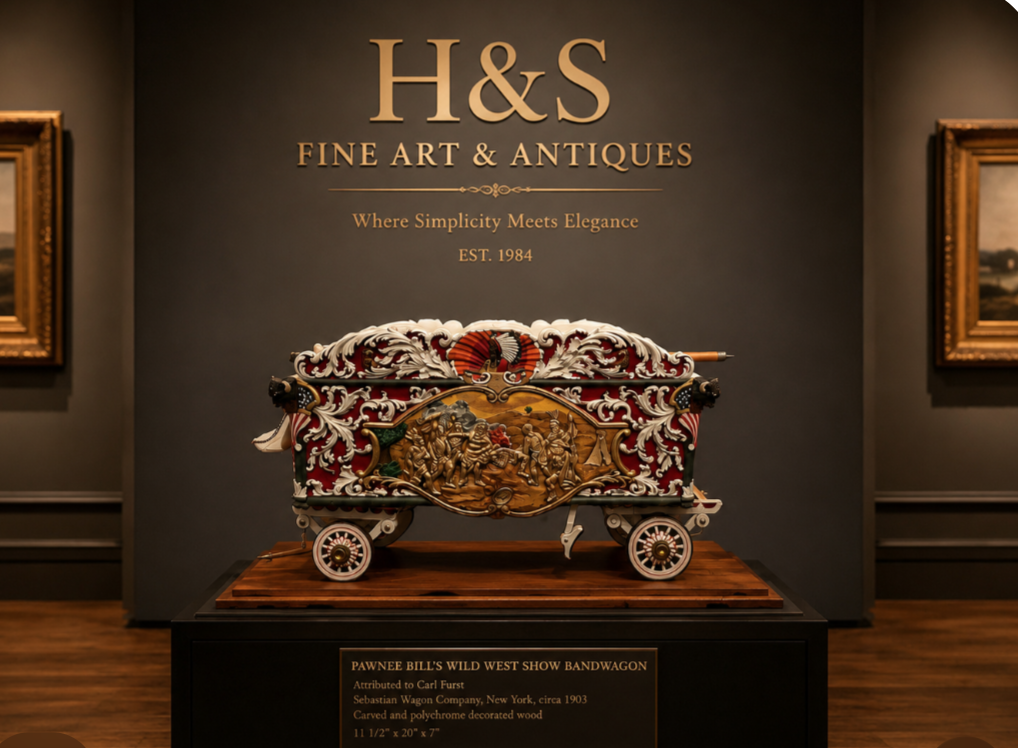 Image 1 of 11
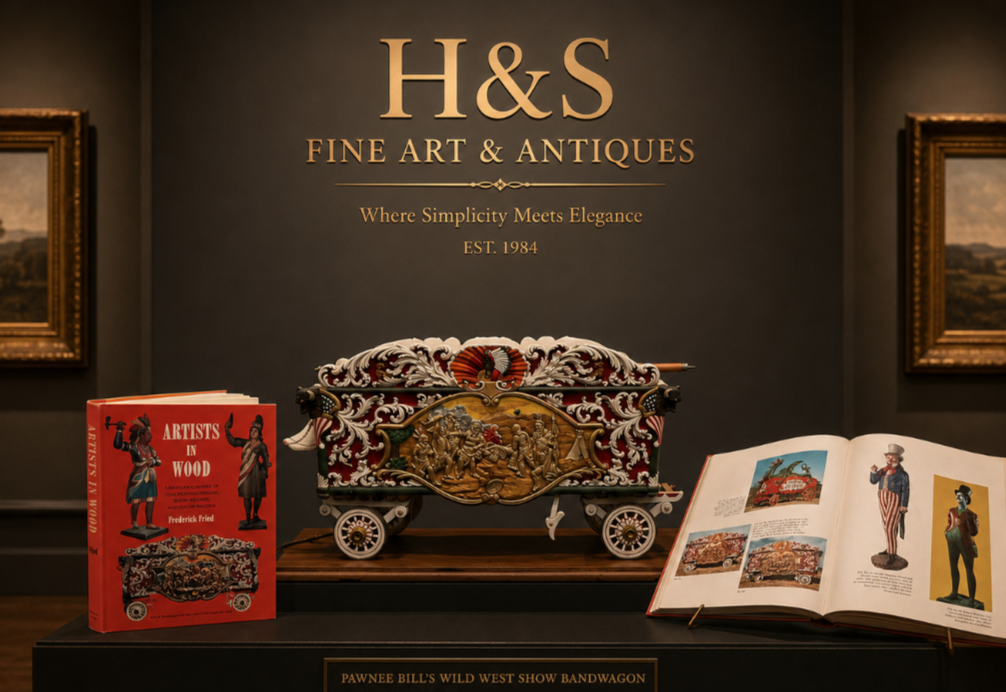 Image 2 of 11
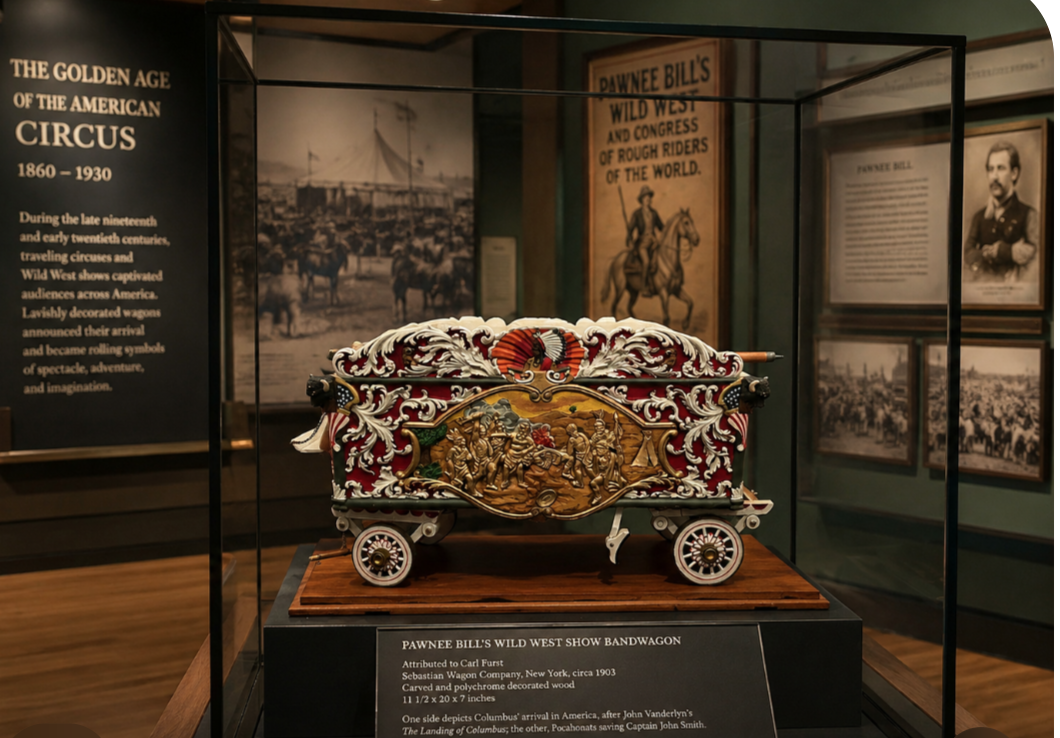 Image 3 of 11
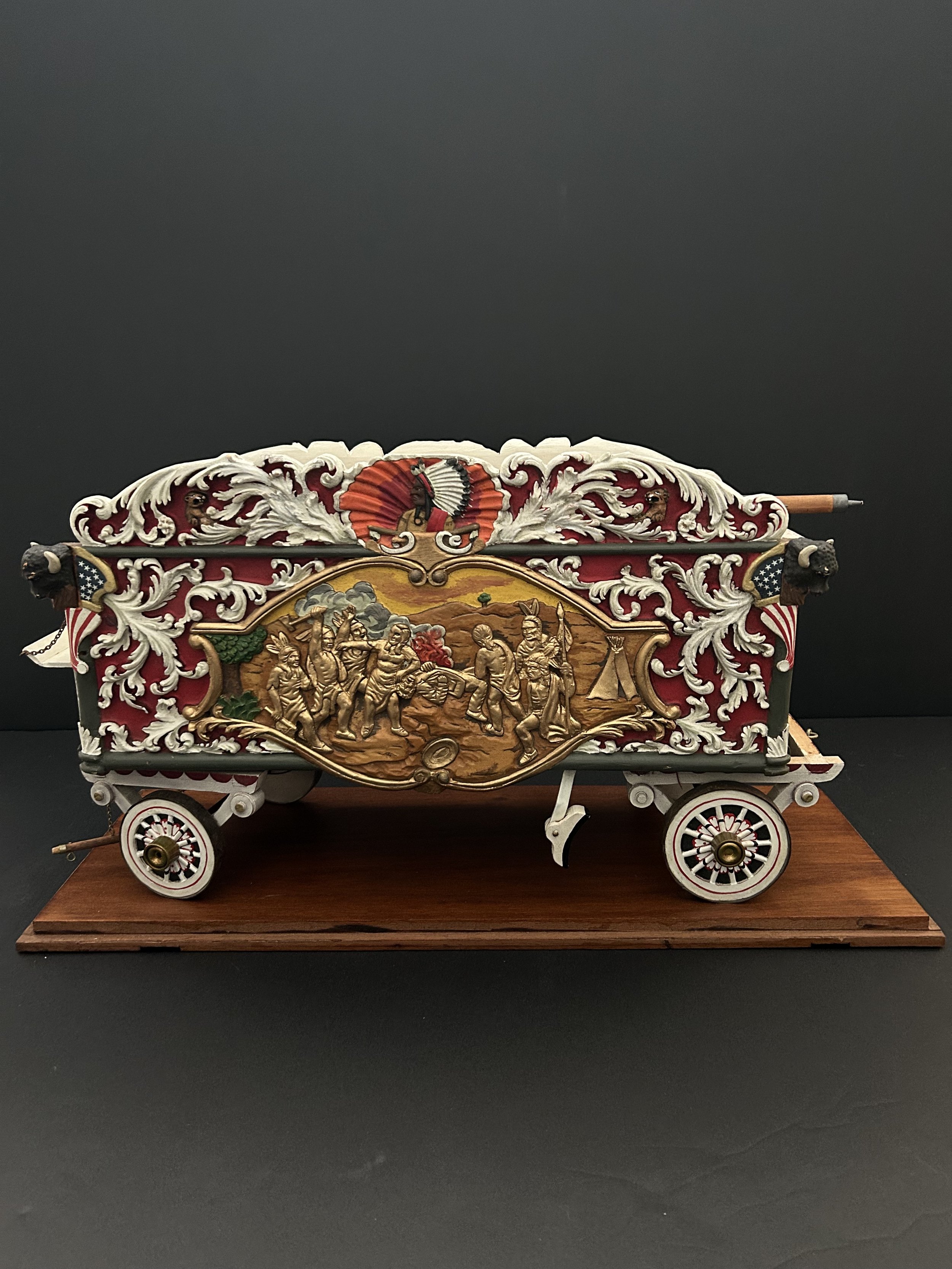 Image 4 of 11
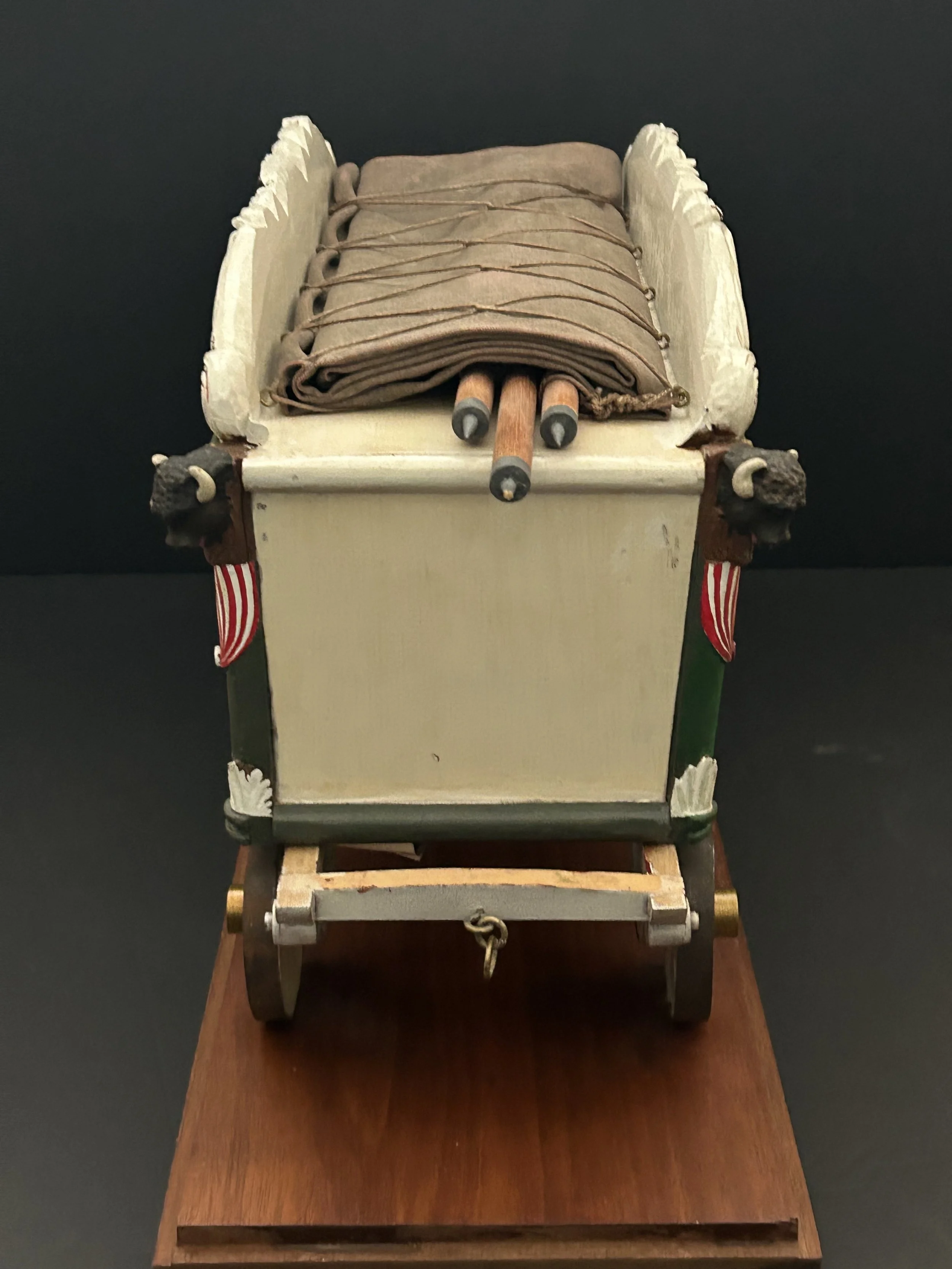 Image 5 of 11
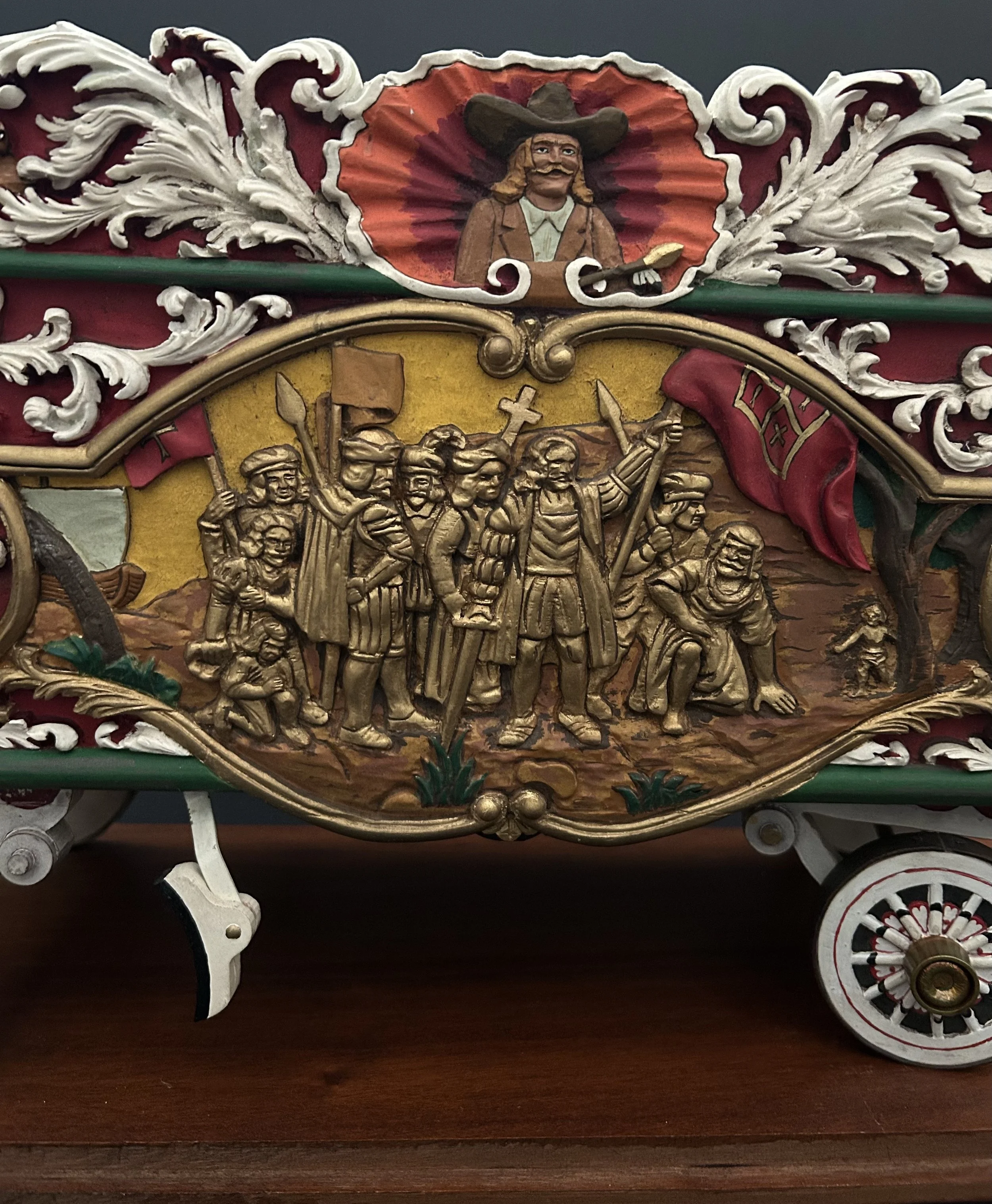 Image 6 of 11
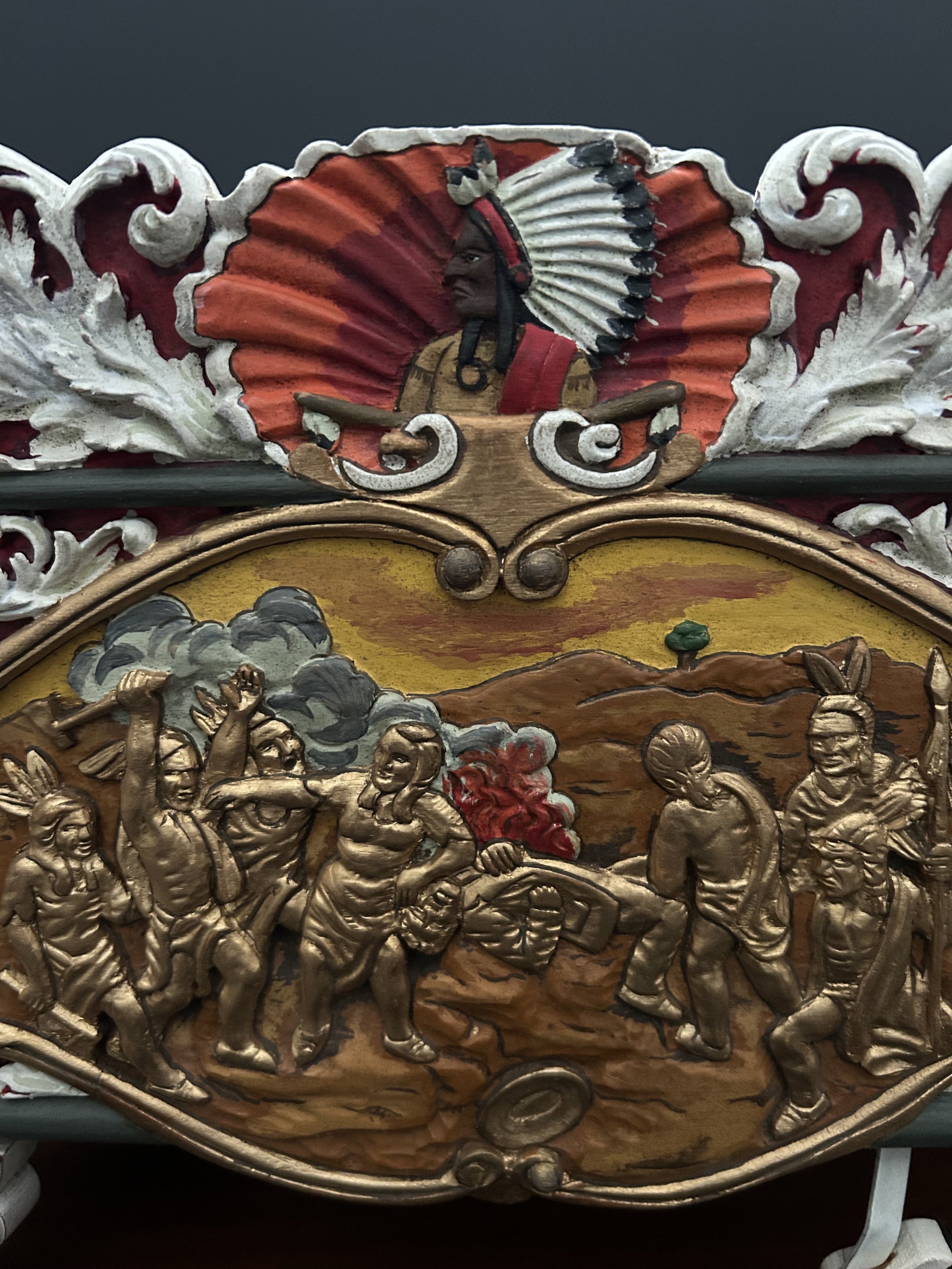 Image 7 of 11
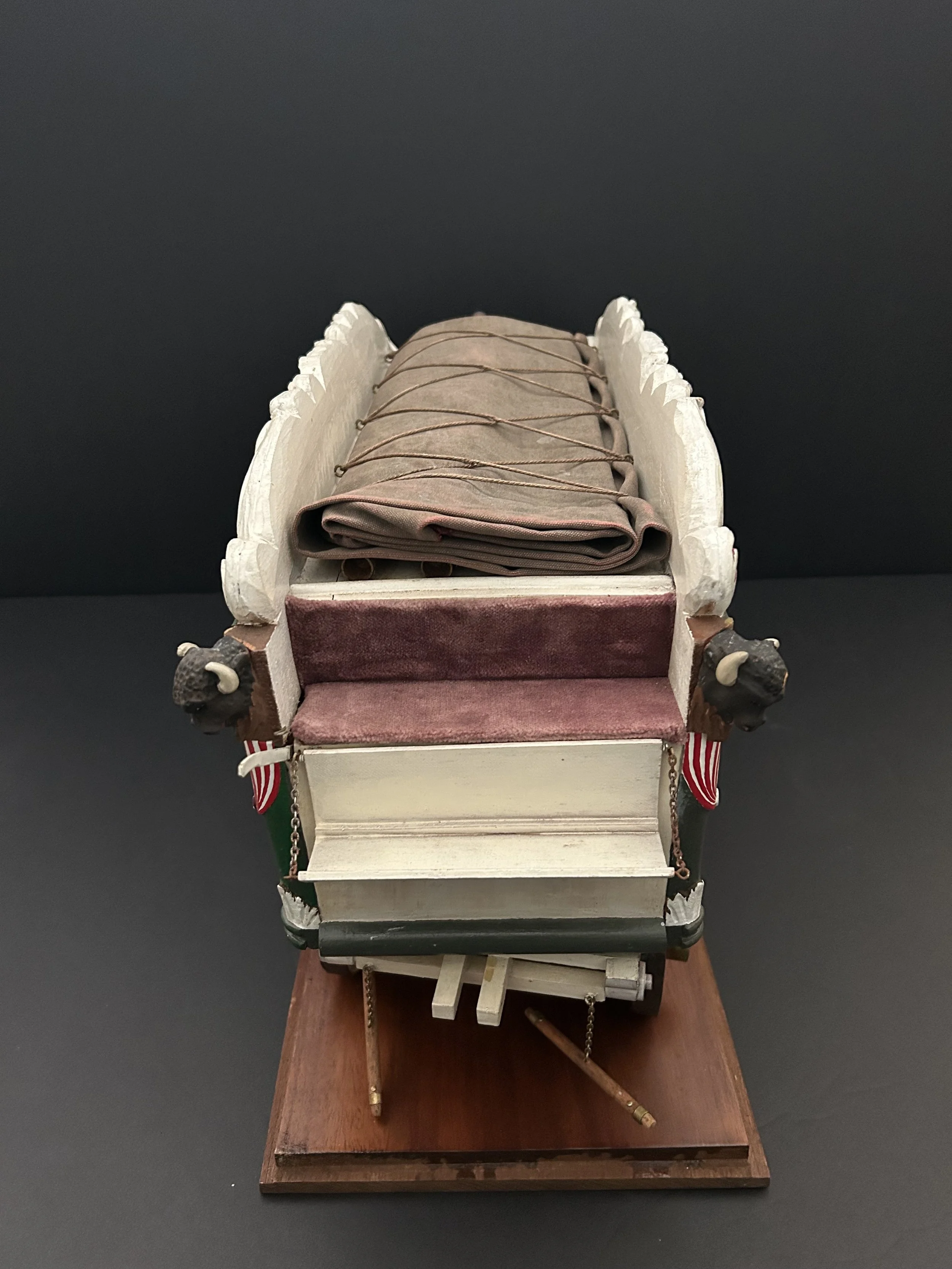 Image 8 of 11
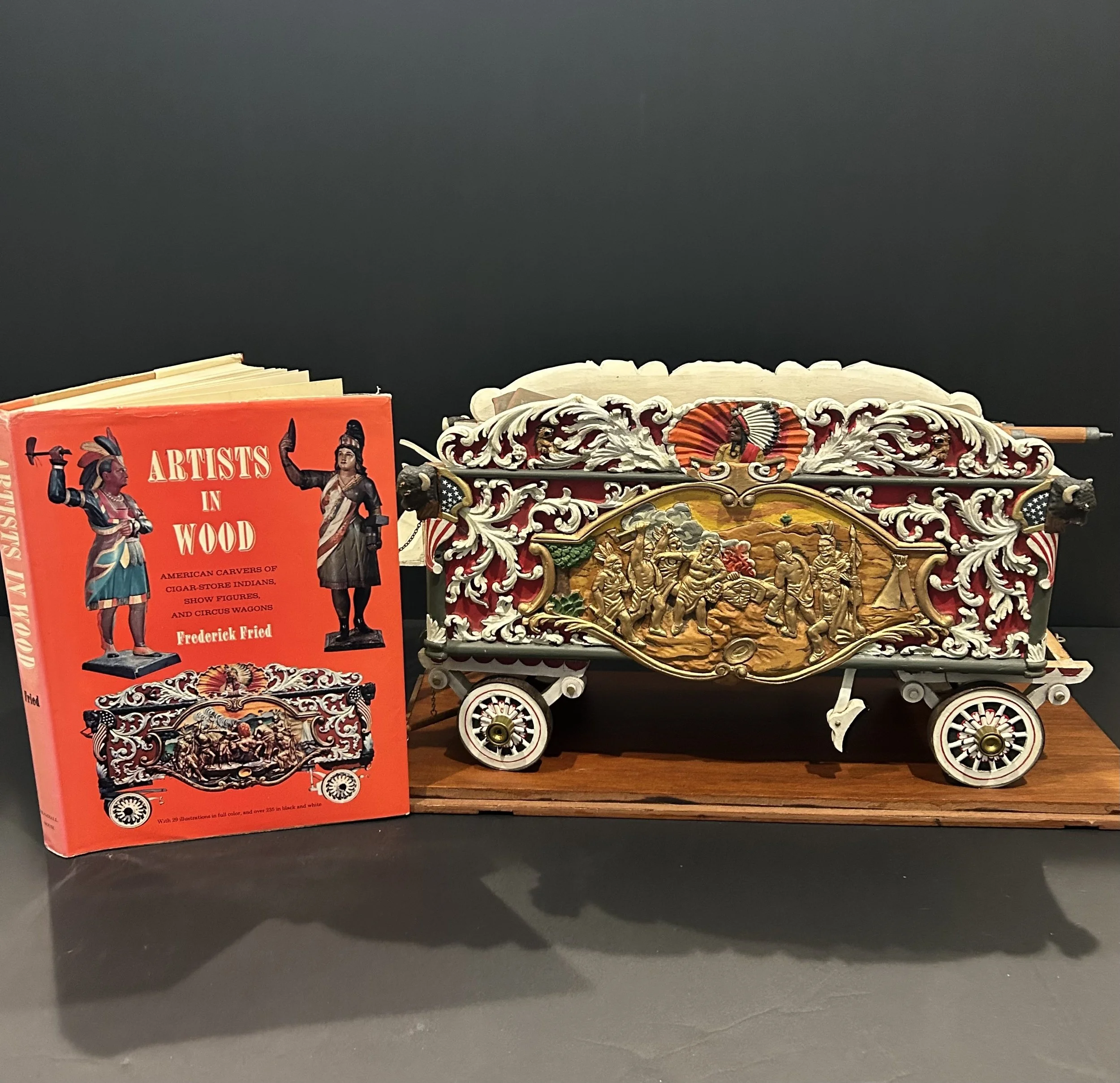 Image 9 of 11
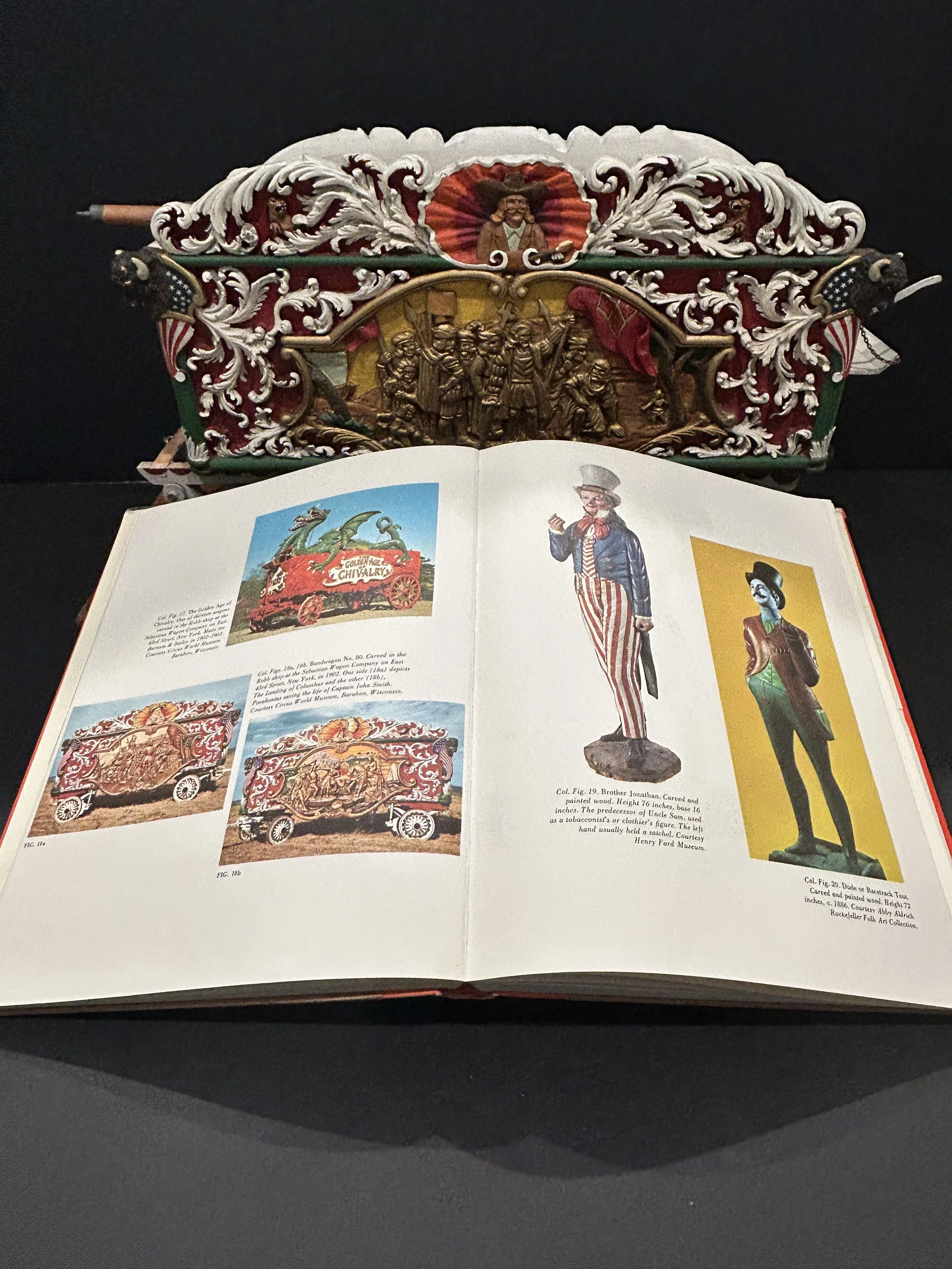 Image 10 of 11
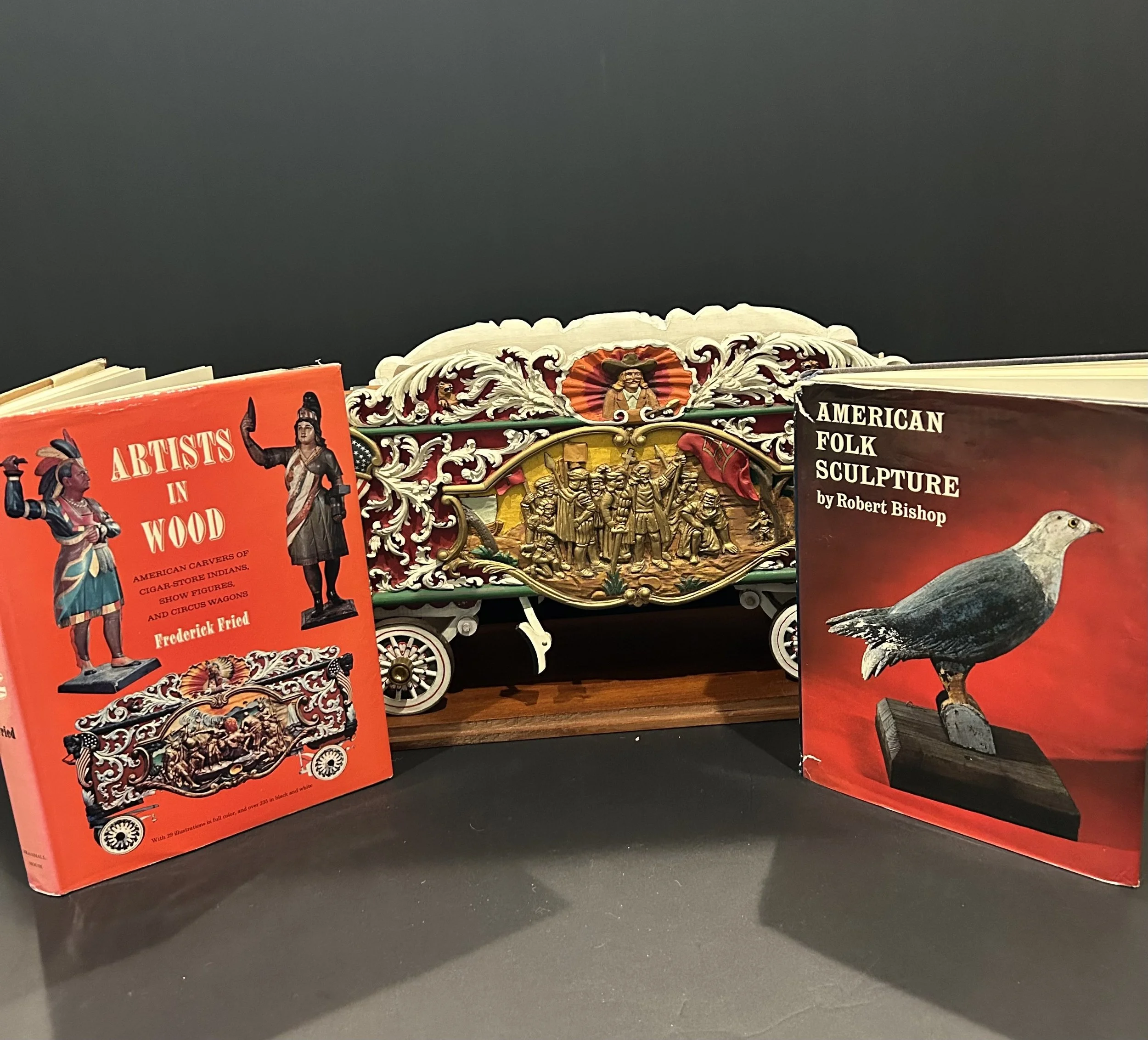 Image 11 of 11