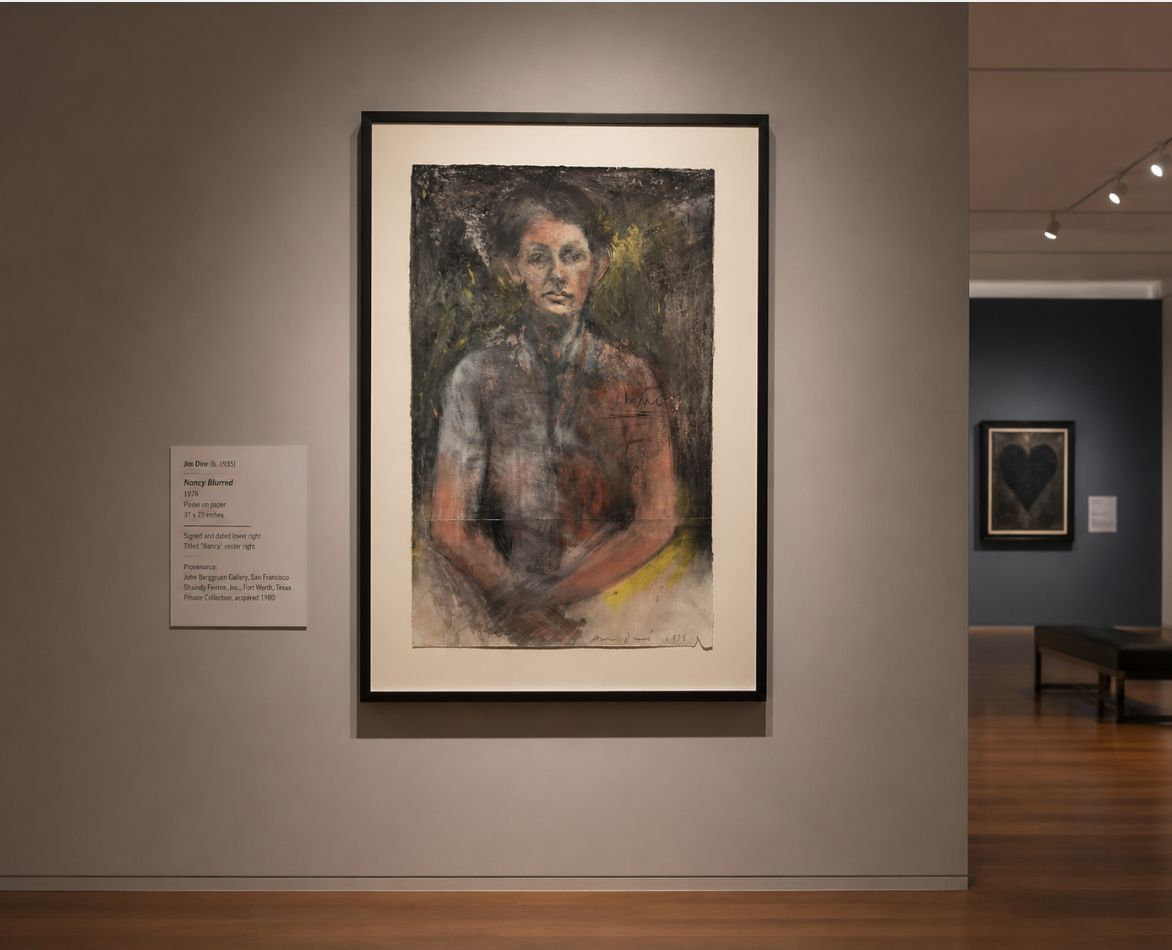
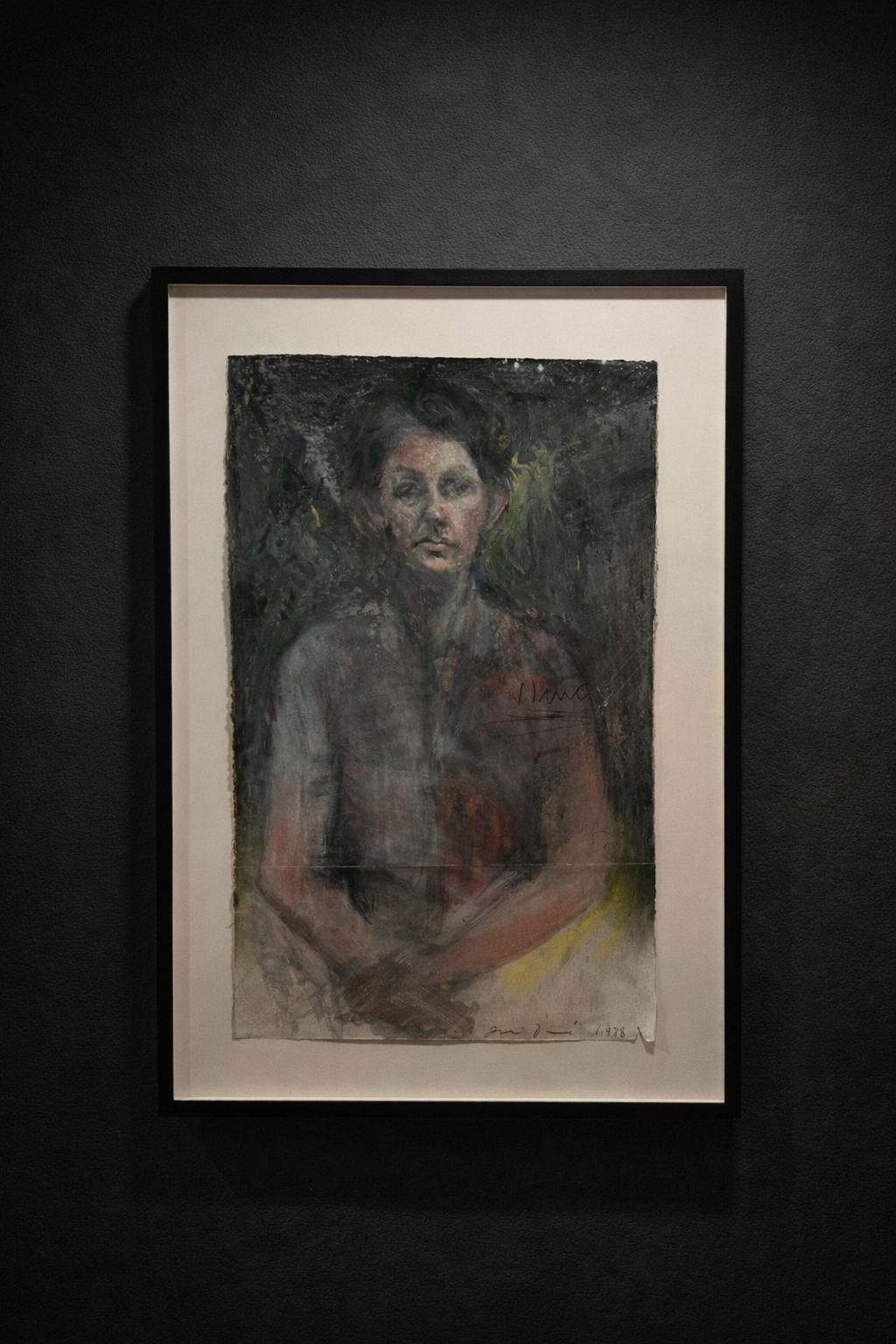
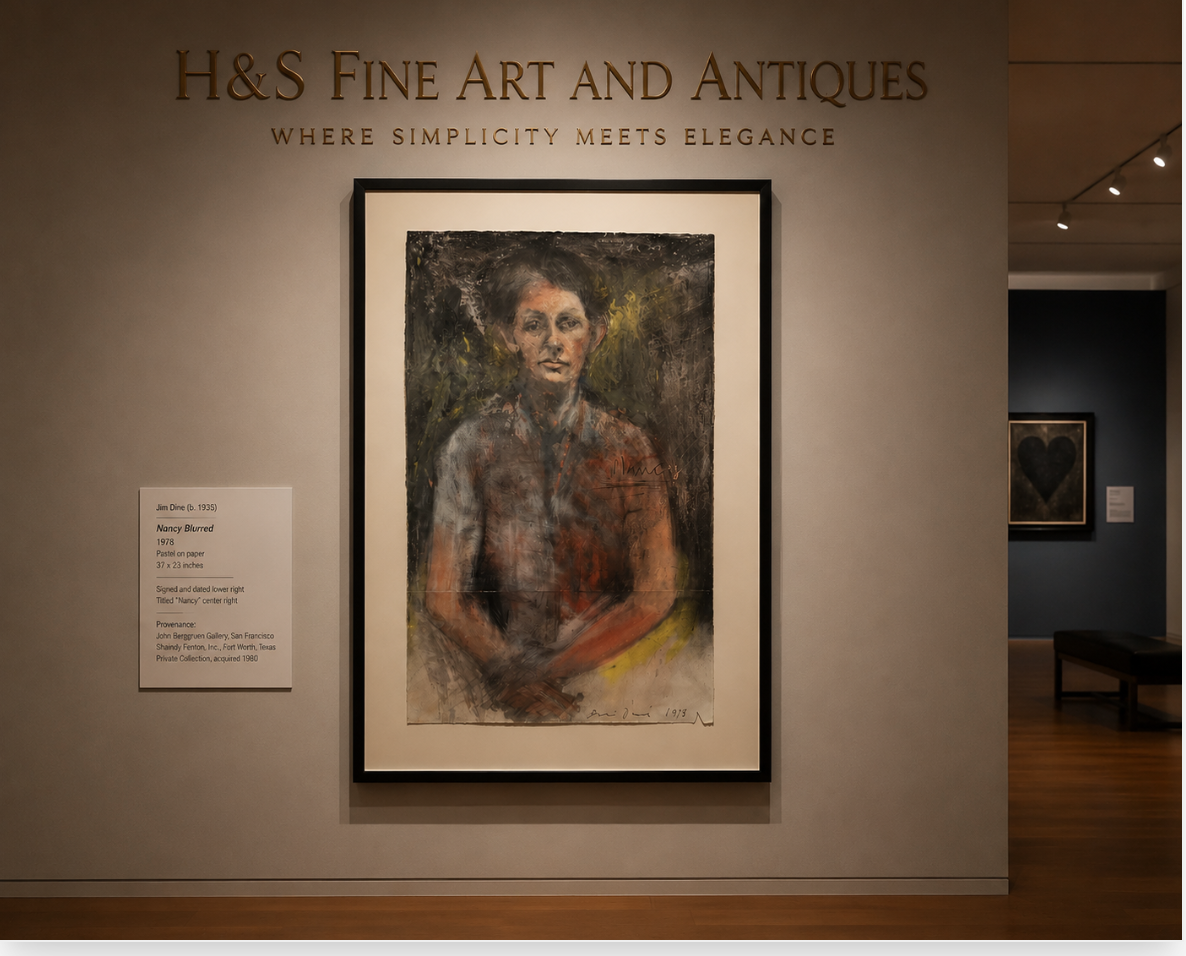
Jim Dine (b. 1935). Nancy Blurred, 1978 Pastel on paper. Signed and dated lower right:

$0.00

Jim Dine (b. 1935)

Nancy Blurred, 1978
Pastel on paper
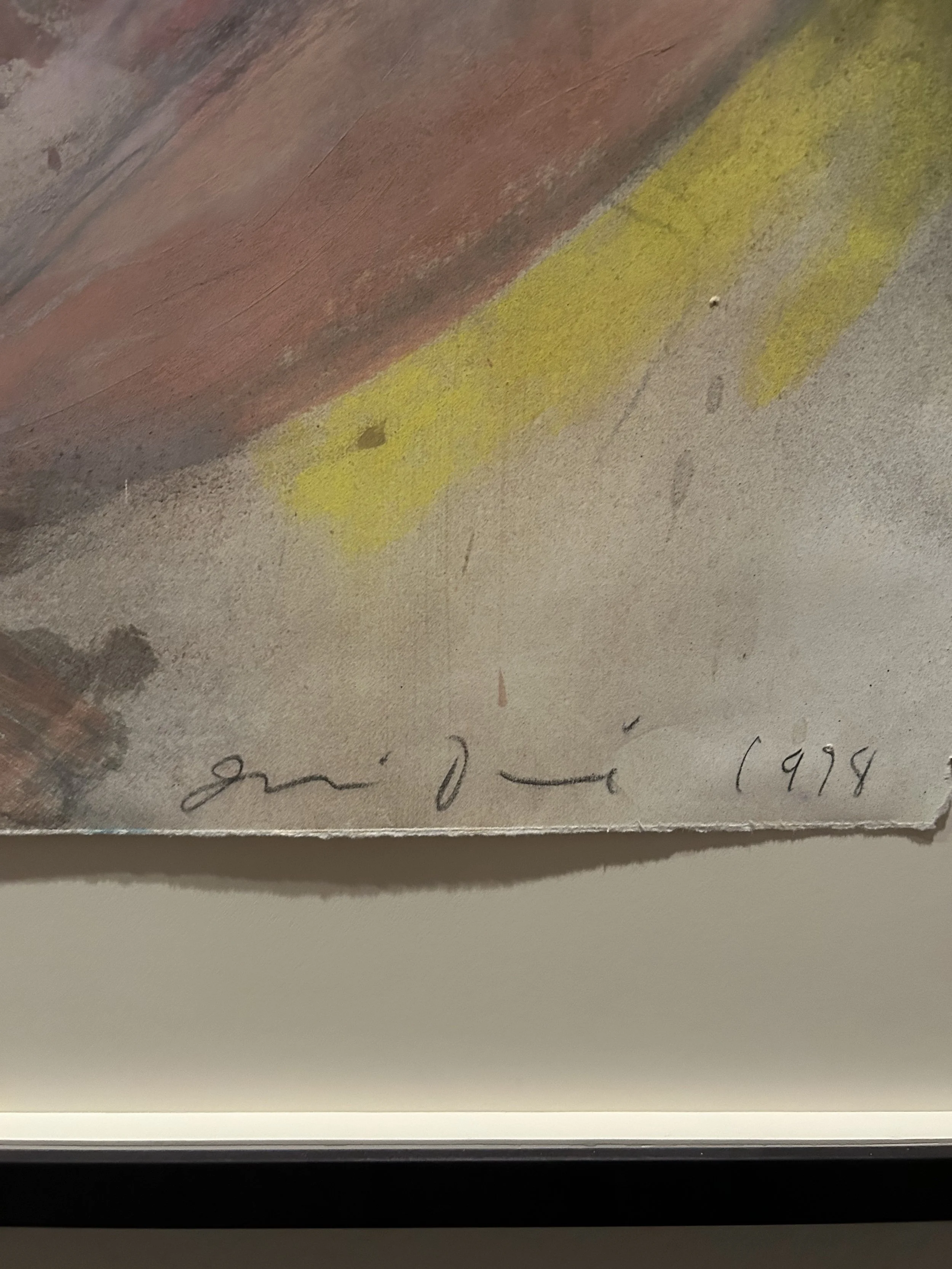
Signed and dated lower right: Jim Dine 1978
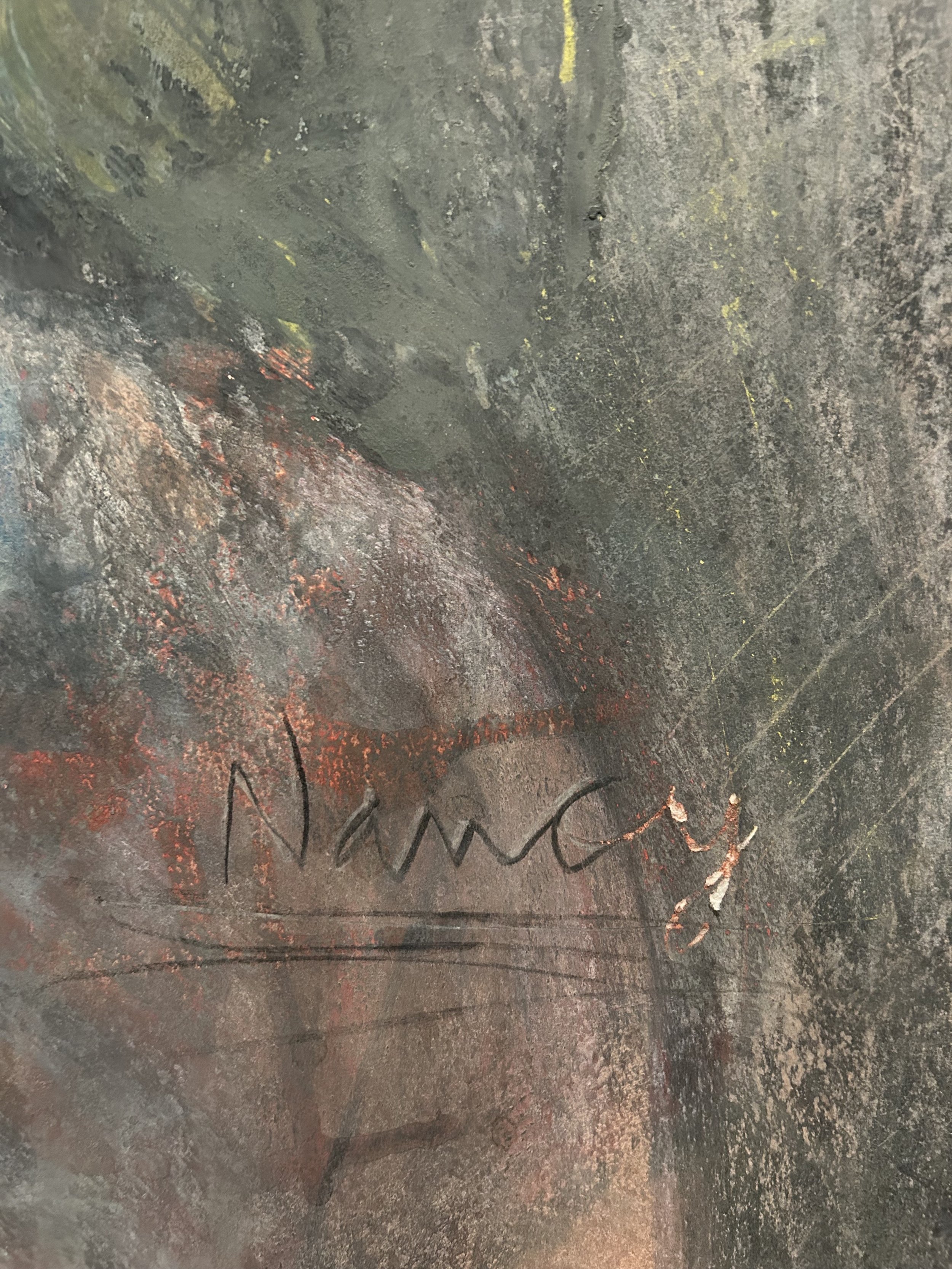
Titled center right: Nancy
Dimensions: 37 × 23 inches (94 × 58 cm)

Provenance

  • John Berggruen Gallery

  • Shaindy Fenton, Inc.

  • Private Collection, acquired from the above in 1980.

    About the Artist

    Jim Dine is one of the most important American artists of the postwar era. Born in Cincinnati, Ohio, he emerged in New York during the late 1950s and became one of the founders of the avant-garde performance events known as the "Happenings," alongside artists such as Allan Kaprow and Claes Oldenburg.

    Although frequently associated with Pop Art, Dine always resisted the label. Unlike many Pop artists who borrowed images from mass media and advertising, Dine used highly personal imagery—robes, tools, hearts, Venus figures, and portraits—as vehicles for memory, identity, and emotion.

    Dine once remarked:

    "I don't use objects as symbols. I use them as autobiographical devices."

    This autobiographical approach is particularly evident in his portrait studies, including Nancy Blurred.

    Who is "Nancy"?

    The identity of "Nancy" is not firmly documented in the published literature surrounding Jim Dine's work. Unlike his many portraits of his wife, Nancy Dine, several works from the 1970s refer simply to "Nancy" without extensive explanation.

    Because the title specifically names the sitter and the work dates to 1978, it is possible that the subject is Nancy Dine, who frequently appeared in Dine's drawings and portraits during this period. However, unless supported by documentation from the artist's archives, catalogue raisonné, or exhibition history, this identification should remain tentative.

    In exhibition labeling, the sitter would best be described as:

    Portrait of "Nancy," an intimate and psychologically charged study of a female figure whose identity remains incompletely documented.

    Description of the Portrait

    The work possesses an extraordinary emotional presence.

    The sitter faces the viewer directly, seated with hands folded quietly before her. Her expression is contemplative and introspective. There is no theatrical gesture and no distracting environment. Instead, Dine focuses entirely upon psychological presence.

    The blurred handling of the pastel is deliberate. Rather than recording physical likeness with precision, Dine allows the image to emerge and dissolve simultaneously.

    The face appears to float in a dark atmosphere of grays, blacks, reds, and muted greens. Areas of pigment have been rubbed and reworked repeatedly, creating an effect akin to memory itself—something seen, remembered, and partly lost.

    This tension between presence and disappearance gives the work tremendous emotional depth.

    Meaning of "Blurred"

    The title Nancy Blurred is particularly important.

    The notion of "blurred" can be understood on several levels:

    Memory

    The image resembles an old photograph or recollection whose details are fading.

    Identity

    The softened features suggest that identity itself is fluid and cannot be completely fixed.

    Psychological Distance

    The sitter seems both present and inaccessible, inviting viewers into an intimate encounter while maintaining an emotional mystery.

    Passage of Time

    The dissolving contours evoke themes of mortality, remembrance, and the impermanence of human experience.

    These concerns recur throughout Dine's work and connect him more closely with Expressionism than with traditional Pop Art.

    Technique

    The pastel medium is exceptionally suited to this image.

    Dine uses:

    • Layered pastel applications

    • Smudging and erasure

    • Repeated reworking of the surface

    • Loose gestural mark-making

    • Thin washes of color beneath darker passages

    The result is painterly rather than purely graphic. The surface appears almost excavated, as though the portrait has emerged from successive layers of memory.

    The dark surrounding space amplifies the luminosity of the face, causing the sitter to appear almost spectral.

    Place Within Dine's Career

    The late 1970s represented a particularly fertile period for Jim Dine.

    During this period he increasingly turned toward:

    • Portraiture

    • Classical imagery

    • Self-examination

    • Themes of memory and identity

    • Expressive drawing and pastel techniques

    Works from this period are often regarded as among his most psychologically profound.

    Rather than depicting contemporary culture, Dine was investigating inner experience and the emotional resonance of human relationships.

    Literature and References

    Important publications for further study include:

    • Jim Dine: Drawings 1973–1987

    • Jim Dine

    • Jim Dine: Five Themes

    • Jim Dine Prints 1977–1985

    • Jim Dine: A Self-Portrait on the Walls

    These publications discuss Dine's use of portraiture, memory, autobiography, and expressive mark-making that directly relate to Nancy Blurred.

    Museum Collections Holding Works by Jim Dine

    Major museums with significant holdings by Jim Dine include:

    • The Metropolitan Museum of Art

    • Art Institute of Chicago

    • Brooklyn Museum

    • Dallas Museum of Art

    • Harvard Art Museums

    • Centre Pompidou

    • Tate

    • Israel Museum

    • Tokyo Metropolitan Art Museum

      Suggested Museum Label

      Jim Dine (American, b. 1935)
      Nancy Blurred, 1978
      Pastel on paper
      37 × 23 in.

      In Nancy Blurred, Jim Dine transforms portraiture into an act of remembrance. The seated female figure emerges from layers of smudged pastel and shadow, her features simultaneously present and dissolving. Rather than pursuing exact likeness, Dine investigates memory, identity, and emotional proximity. The portrait's haunting atmosphere reflects the artist's lifelong exploration of autobiography and human presence. Created during a period of increasing introspection in the late 1970s, the work exemplifies Dine's ability to merge drawing, painting, and psychological inquiry into a profoundly moving image.

      Provenance: John Berggruen Gallery, San Francisco; Shaindy Fenton, Inc., Fort Worth; Private Collection, acquired 1980.
Jim Dine (b. 1935)

Nancy Blurred, 1978
Pastel on paper
Signed and dated lower right: Jim Dine 1978
Titled center right: Nancy
Dimensions: 37 × 23 inches (94 × 58 cm)

Provenance

  • John Berggruen Gallery

  • Shaindy Fenton, Inc.

  • Private Collection, acquired from the above in 1980.

    About the Artist

    Jim Dine is one of the most important American artists of the postwar era. Born in Cincinnati, Ohio, he emerged in New York during the late 1950s and became one of the founders of the avant-garde performance events known as the "Happenings," alongside artists such as Allan Kaprow and Claes Oldenburg.

    Although frequently associated with Pop Art, Dine always resisted the label. Unlike many Pop artists who borrowed images from mass media and advertising, Dine used highly personal imagery—robes, tools, hearts, Venus figures, and portraits—as vehicles for memory, identity, and emotion.

    Dine once remarked:

    "I don't use objects as symbols. I use them as autobiographical devices."

    This autobiographical approach is particularly evident in his portrait studies, including Nancy Blurred.

    Who is "Nancy"?

    The identity of "Nancy" is not firmly documented in the published literature surrounding Jim Dine's work. Unlike his many portraits of his wife, Nancy Dine, several works from the 1970s refer simply to "Nancy" without extensive explanation.

    Because the title specifically names the sitter and the work dates to 1978, it is possible that the subject is Nancy Dine, who frequently appeared in Dine's drawings and portraits during this period. However, unless supported by documentation from the artist's archives, catalogue raisonné, or exhibition history, this identification should remain tentative.

    In exhibition labeling, the sitter would best be described as:

    Portrait of "Nancy," an intimate and psychologically charged study of a female figure whose identity remains incompletely documented.

    Description of the Portrait

    The work possesses an extraordinary emotional presence.

    The sitter faces the viewer directly, seated with hands folded quietly before her. Her expression is contemplative and introspective. There is no theatrical gesture and no distracting environment. Instead, Dine focuses entirely upon psychological presence.

    The blurred handling of the pastel is deliberate. Rather than recording physical likeness with precision, Dine allows the image to emerge and dissolve simultaneously.

    The face appears to float in a dark atmosphere of grays, blacks, reds, and muted greens. Areas of pigment have been rubbed and reworked repeatedly, creating an effect akin to memory itself—something seen, remembered, and partly lost.

    This tension between presence and disappearance gives the work tremendous emotional depth.

    Meaning of "Blurred"

    The title Nancy Blurred is particularly important.

    The notion of "blurred" can be understood on several levels:

    Memory

    The image resembles an old photograph or recollection whose details are fading.

    Identity

    The softened features suggest that identity itself is fluid and cannot be completely fixed.

    Psychological Distance

    The sitter seems both present and inaccessible, inviting viewers into an intimate encounter while maintaining an emotional mystery.

    Passage of Time

    The dissolving contours evoke themes of mortality, remembrance, and the impermanence of human experience.

    These concerns recur throughout Dine's work and connect him more closely with Expressionism than with traditional Pop Art.

    Technique

    The pastel medium is exceptionally suited to this image.

    Dine uses:

    • Layered pastel applications

    • Smudging and erasure

    • Repeated reworking of the surface

    • Loose gestural mark-making

    • Thin washes of color beneath darker passages

    The result is painterly rather than purely graphic. The surface appears almost excavated, as though the portrait has emerged from successive layers of memory.

    The dark surrounding space amplifies the luminosity of the face, causing the sitter to appear almost spectral.

    Place Within Dine's Career

    The late 1970s represented a particularly fertile period for Jim Dine.

    During this period he increasingly turned toward:

    • Portraiture

    • Classical imagery

    • Self-examination

    • Themes of memory and identity

    • Expressive drawing and pastel techniques

    Works from this period are often regarded as among his most psychologically profound.

    Rather than depicting contemporary culture, Dine was investigating inner experience and the emotional resonance of human relationships.

    Literature and References

    Important publications for further study include:

    • Jim Dine: Drawings 1973–1987

    • Jim Dine

    • Jim Dine: Five Themes

    • Jim Dine Prints 1977–1985

    • Jim Dine: A Self-Portrait on the Walls

    These publications discuss Dine's use of portraiture, memory, autobiography, and expressive mark-making that directly relate to Nancy Blurred.

    Museum Collections Holding Works by Jim Dine

    Major museums with significant holdings by Jim Dine include:

    • The Metropolitan Museum of Art

    • Art Institute of Chicago

    • Brooklyn Museum

    • Dallas Museum of Art

    • Harvard Art Museums

    • Centre Pompidou

    • Tate

    • Israel Museum

    • Tokyo Metropolitan Art Museum

      Suggested Museum Label

      Jim Dine (American, b. 1935)
      Nancy Blurred, 1978
      Pastel on paper
      37 × 23 in.

      In Nancy Blurred, Jim Dine transforms portraiture into an act of remembrance. The seated female figure emerges from layers of smudged pastel and shadow, her features simultaneously present and dissolving. Rather than pursuing exact likeness, Dine investigates memory, identity, and emotional proximity. The portrait's haunting atmosphere reflects the artist's lifelong exploration of autobiography and human presence. Created during a period of increasing introspection in the late 1970s, the work exemplifies Dine's ability to merge drawing, painting, and psychological inquiry into a profoundly moving image.

      Provenance: John Berggruen Gallery, San Francisco; Shaindy Fenton, Inc., Fort Worth; Private Collection, acquired 1980.

Jim Dine (b. 1935, Cincinnati, Ohio ) is an american artist who rose to prominence in late 1950’s New York. He played a key role in creating the first “ Happenings “ and thereafter was closely associated with pop art movement. His work can be found in public collections throughout the world, including The Art Institute of Chicago, IL; Brooklyn Museum, Brooklyn, NY; Cincinnati Art Museum, OH; Cleveland Museum of Art, Cleveland, OH; Dallas Museum of Art, Dalles, TX; Fog Art Museum, Harvard University, Cambridge, MA; Israel Museum, Jerusalem; Indianapolis Museum of Art, Indianapolis, IN; Metropolitan Museum of Art, New York, NY; Center George Pompidou, Paris, France; Tate Gallery, London, UK; Tokyo Metropolitan Museum, Tokyo, Japan, and among others.