This rare 35-star American guidon dates to the Civil War era and reflects the official star count adopted following the admission of West Virginia as the 35th state on July 4, 1863. The distinctive swallowtail form identifies the flag as a guidon, a type of military standard commonly carried by cavalry units and mounted troops for battlefield identification and command.
Constructed of silk, a material frequently used for presentation and ceremonial military flags, the guidon features a striking medallion star configuration arranged in a circular pattern. Such design were popular during the mid-19th century and are highly prized among collectors and historians today.
Civil War guidons were exposed to harsh condition in the field, and comparatively few silk examples have survived. Their fragility, combined with their direct connection to one ot the defining periods in American history, makes surviving examples exceptionally important historical artifacts.
This flag was preserved within a Massachusetts museum collection before entering private hands. Its survival offers a tangible connection to the soldiers, cavalry regiments, and citizens who experienced the American Civil War during the final years of the conflicts. Provenance: Massachusetts Museum; Amoskeag Auction of New Hampshire, 2004; The Union Drummer Boy of Gettysburg.
This rare 35-star American guidon dates to the Civil War era and reflects the official star count adopted following the admission of West Virginia as the 35th state on July 4, 1863. The distinctive swallowtail form identifies the flag as a guidon, a type of military standard commonly carried by cavalry units and mounted troops for battlefield identification and command.
Constructed of silk, a material frequently used for presentation and ceremonial military flags, the guidon features a striking medallion star configuration arranged in a circular pattern. Such design were popular during the mid-19th century and are highly prized among collectors and historians today.
Civil War guidons were exposed to harsh condition in the field, and comparatively few silk examples have survived. Their fragility, combined with their direct connection to one ot the defining periods in American history, makes surviving examples exceptionally important historical artifacts.
This flag was preserved within a Massachusetts museum collection before entering private hands. Its survival offers a tangible connection to the soldiers, cavalry regiments, and citizens who experienced the American Civil War during the final years of the conflicts. Provenance: Massachusetts Museum; Amoskeag Auction of New Hampshire, 2004; The Union Drummer Boy of Gettysburg.
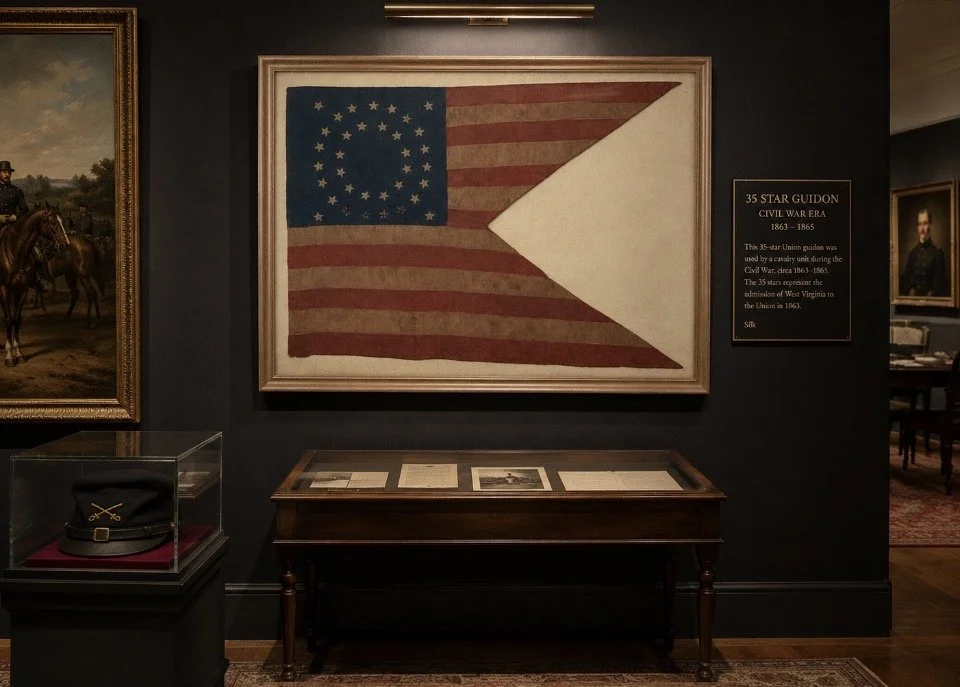 Image 1 of 7
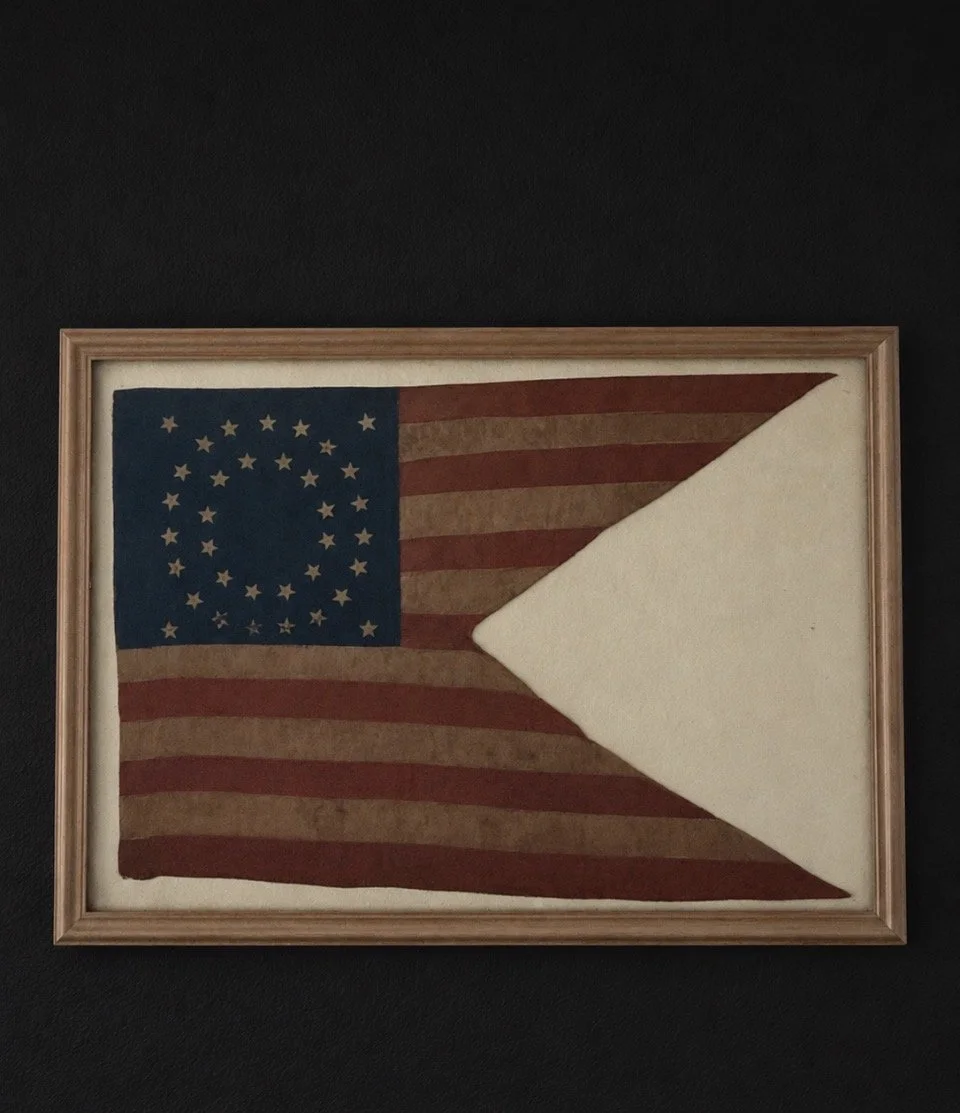 Image 2 of 7
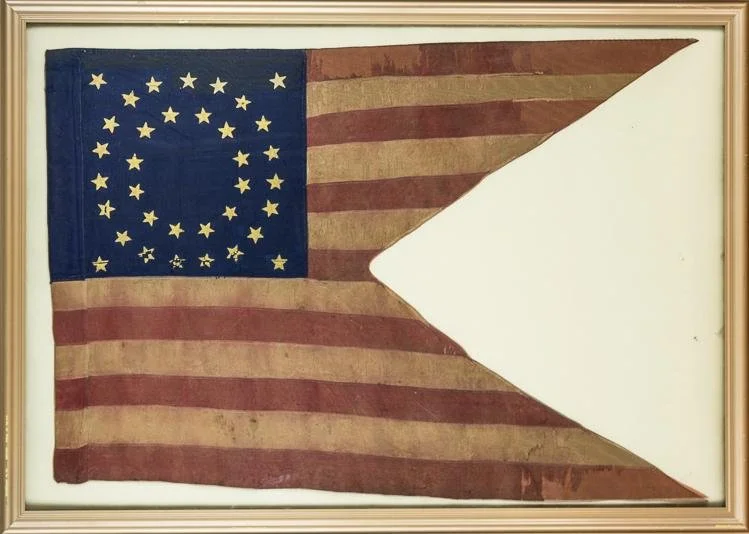 Image 3 of 7
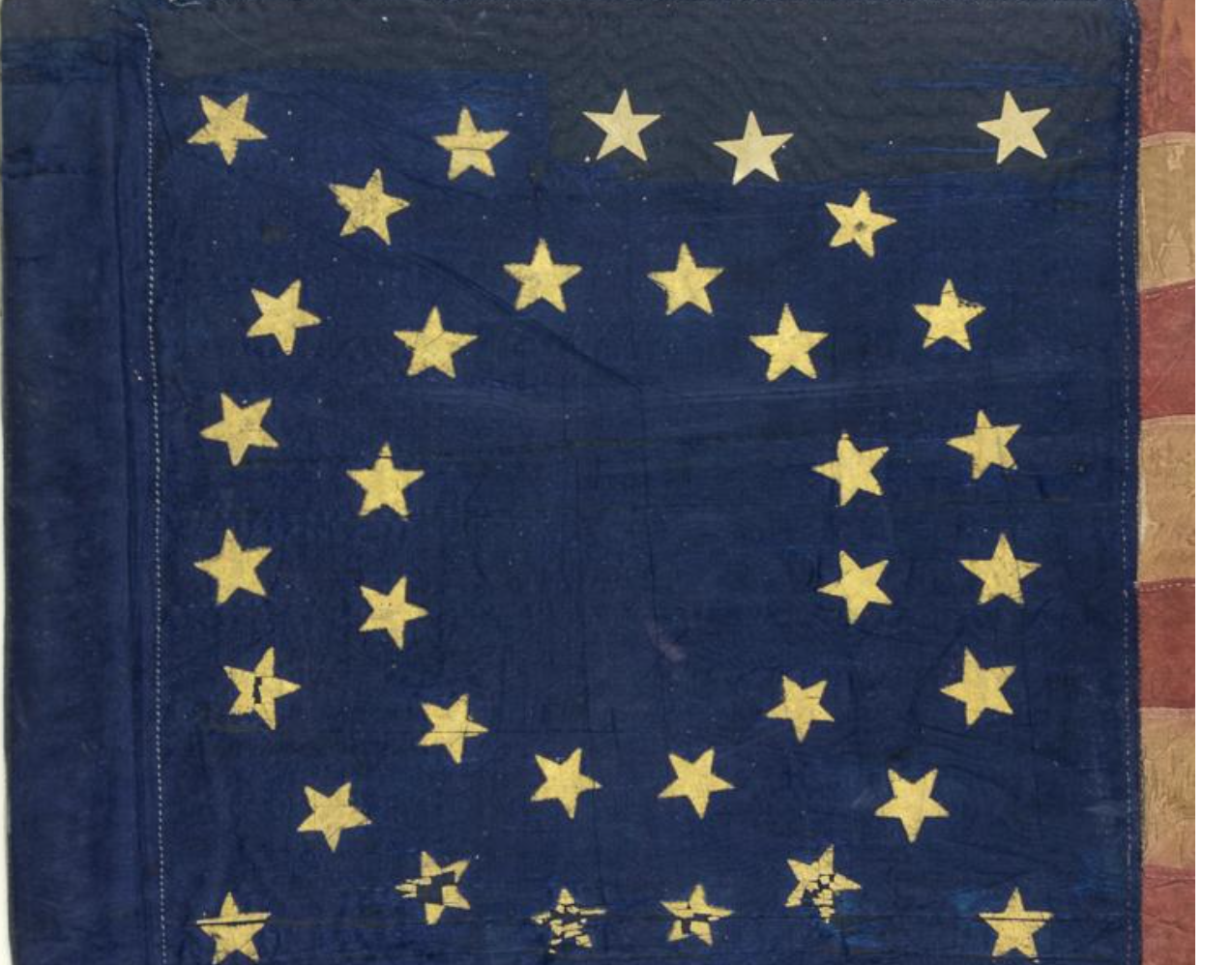 Image 4 of 7
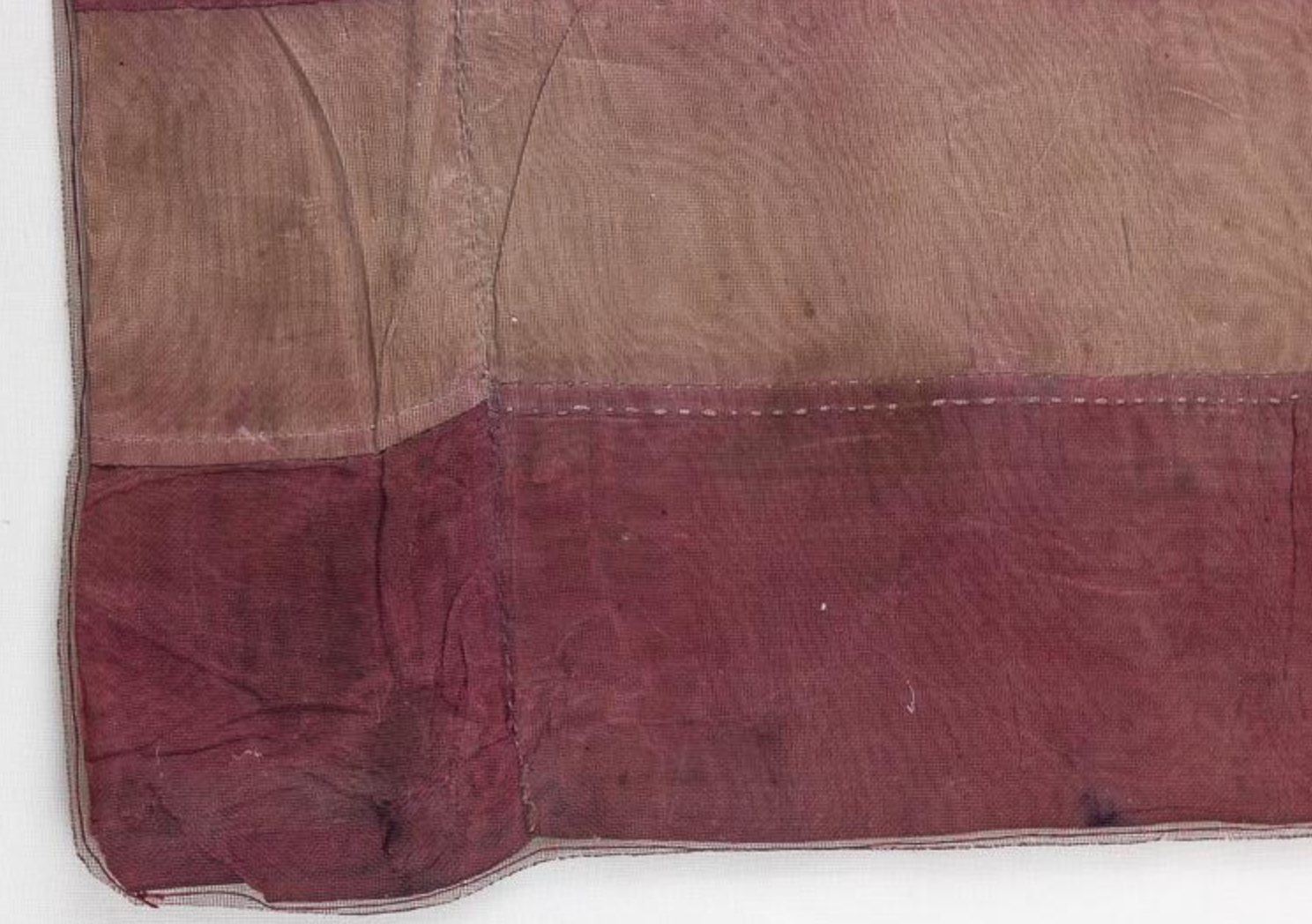 Image 5 of 7
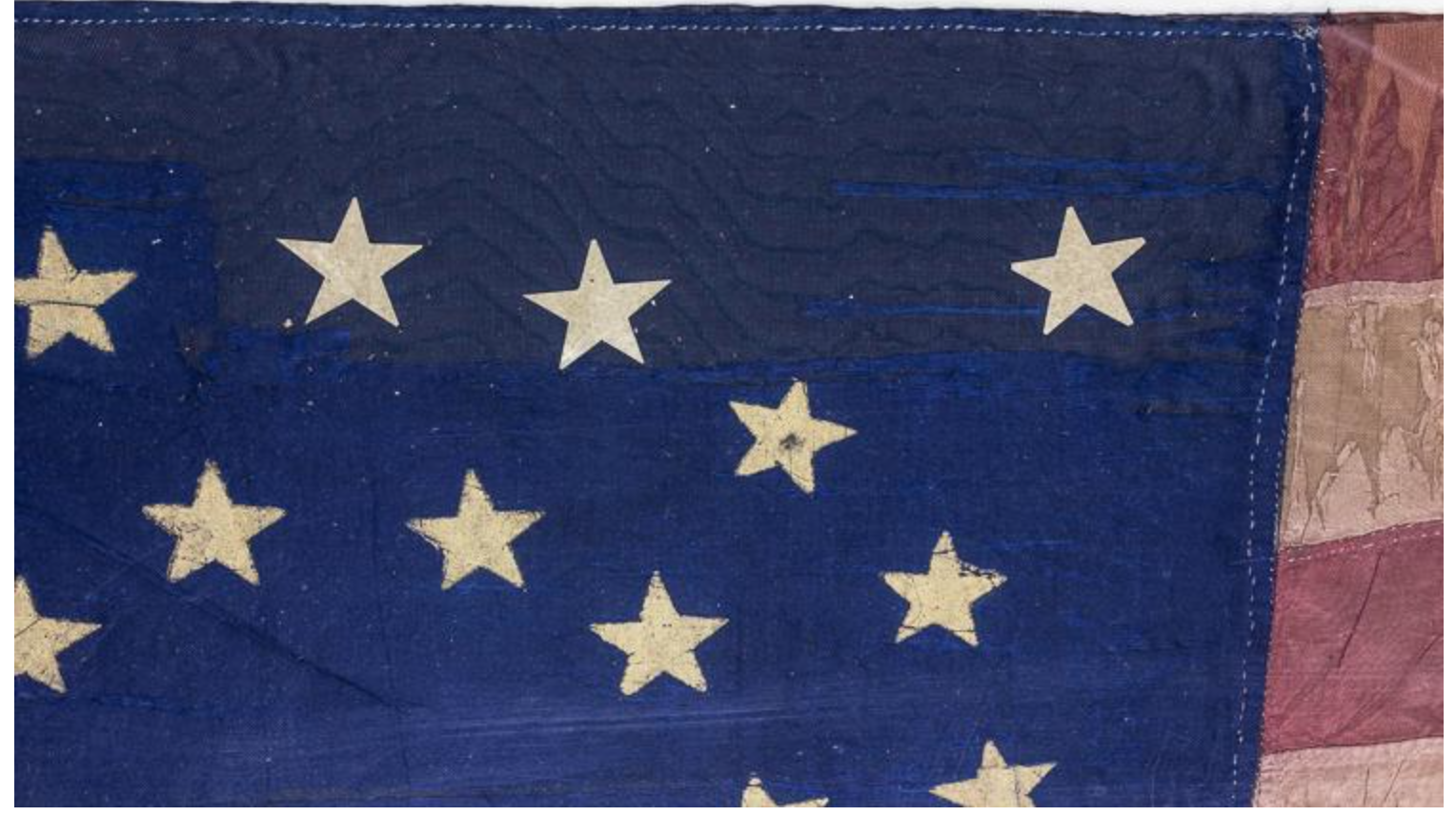 Image 6 of 7
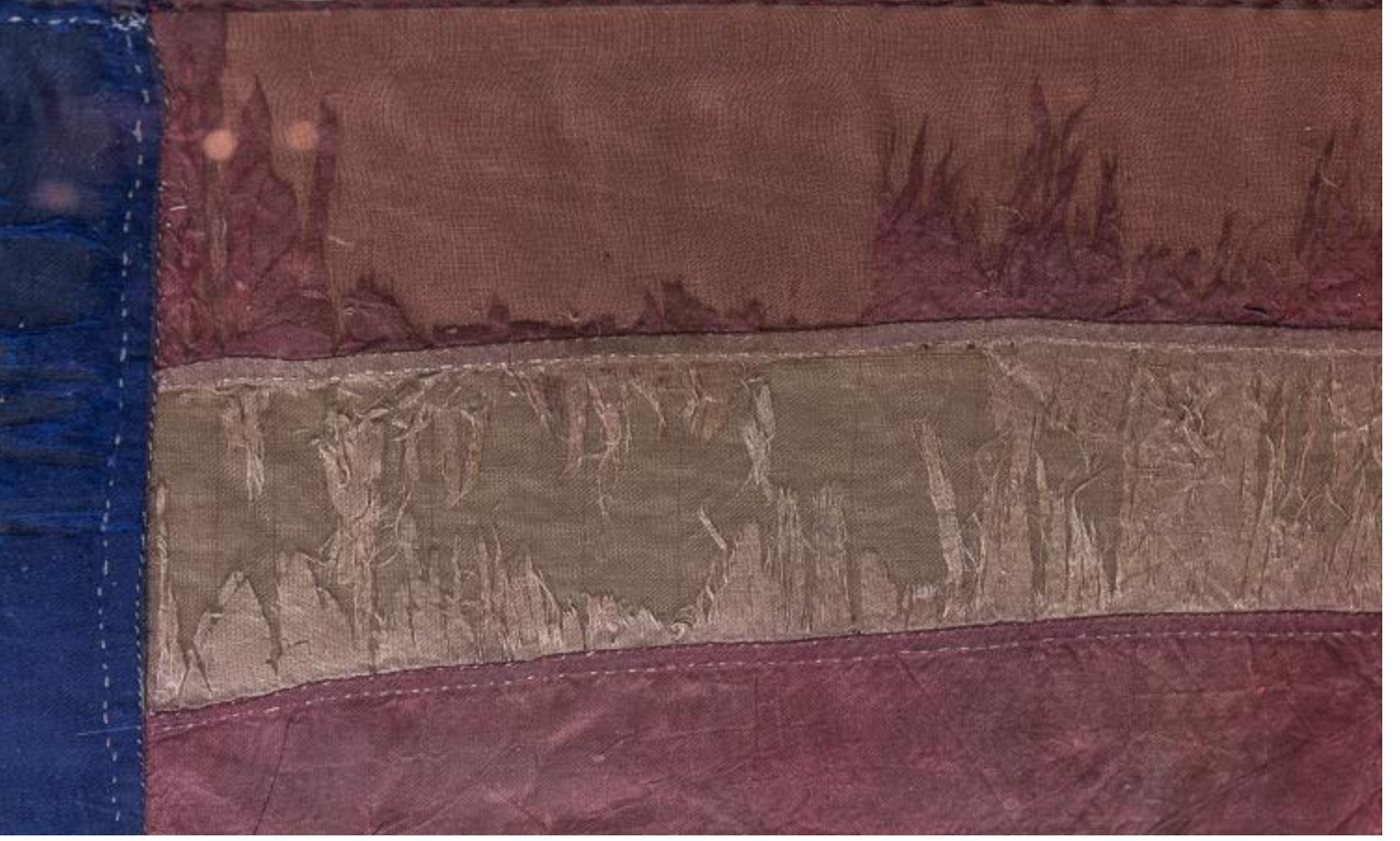 Image 7 of 7